Deducting Health Insurance Premiums on Italian Taxes
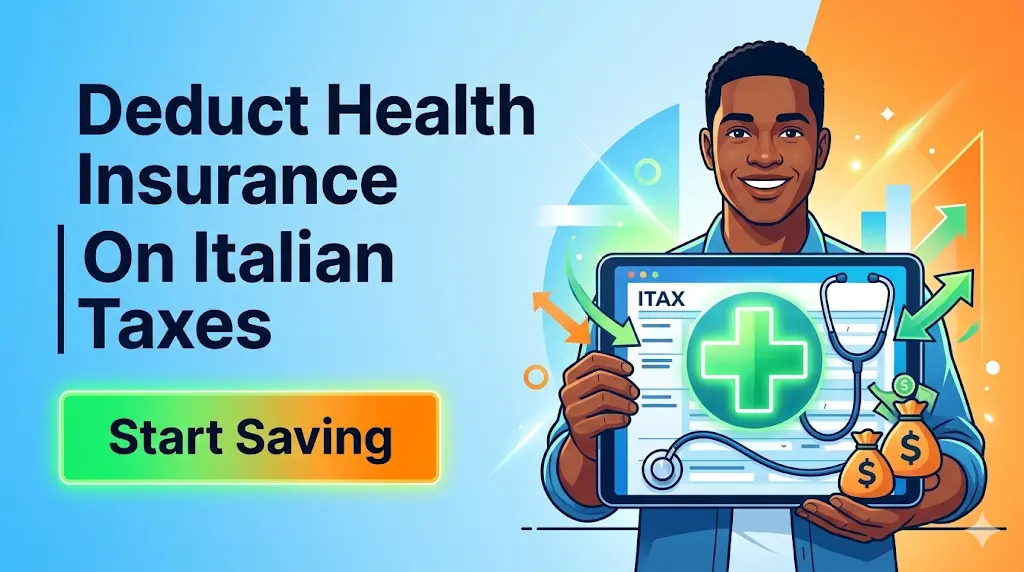
Understanding how to deduct health insurance premiums from your Italian taxes can lead to significant savings. This guide explores the specific rules for IRPEF deductions, mandatory vs. voluntary contributions, and how expatriates can optimize their annual tax returns.
Disclosure: This post may contain affiliate links. We may earn a commission at no extra cost to you if you make a purchase through these links. Read full disclosure.
Navigating Health Insurance Deductions in the Italian Tax System
For many expatriates settling into the “Bel Paese,” the Italian tax system can appear as a labyrinth of acronyms and complex regulations. However, within this complexity lies several opportunities to reduce your overall tax burden through deductions and credits. One of the most common questions for international residents is whether the money spent on health insurance premiums can be reclaimed or deducted during the annual tax filing process.
As Italy continues to modernize its fiscal landscape, the rules surrounding health-related tax breaks remain a cornerstone of the national social policy. These incentives are designed to encourage residents to supplement the public healthcare system with private coverage or to ease the financial burden of mandatory contributions. Whether you are a salaried employee, a freelancer, or a retiree, understanding these mechanisms is a vital part of Handling Finances as an Expat in Italy: from Taxes to Investments to ensure you are not leaving money on the table.
The Difference Between Tax Deductions and Tax Credits
Before diving into the specifics of health insurance, it is essential to distinguish between a tax deduction (deduzione) and a tax credit (detrazione). While both serve to lower your final tax bill, they do so in fundamentally different ways.
A tax deduction reduces your taxable income—the base upon which your income tax (IRPEF) is calculated. For example, if you earn €40,000 and have a €2,000 deduction, you only pay tax on €38,000. Conversely, a tax credit is a direct reduction of the tax itself. If you owe €10,000 in tax and have a €500 tax credit, your final bill becomes €9,500. Some health insurance premiums in Italy fall under the category of tax credits, specifically at a rate of 19%, though certain specific contributions function as deductions.
Deducting Private Health Insurance Premiums
Private health insurance is increasingly popular among expats who prefer shorter waiting times and access to English-speaking specialists. In Italy, you can generally claim a tax credit for life and accident insurance premiums, but “health-only” insurance has very specific limitations.
The 19% Tax Credit Rule
Under the Italian Tax Code (TUIR), a tax credit of 19% is available for premiums paid for insurance policies covering the risk of death or permanent disability (invalidità permanente) of not less than 5%. However, pure “health” policies that cover medical expenses (hospitalization, surgery, visits) are generally not deductible for individuals unless they are part of a specific collective bargaining agreement or a mutual aid society.
Mutual Aid Societies (Società di Mutuo Soccorso)
Expats often find that joining a Società di Mutuo Soccorso (SOMS) is a more tax-efficient way to secure private coverage. Contributions paid to these non-profit mutual aid societies are deductible up to a maximum of €1,291.14 per year. This is a “true deduction” from your taxable income, making it a powerful tool for those in higher tax brackets. If you are currently Choosing Private Health Insurance Plans in Italy, checking if the provider is a SOMS should be a priority.
Voluntary Contributions to the National Health Service (SSN)
Non-EU residents often have to pay a voluntary contribution to enroll in the Servizio Sanitario Nazionale (SSN). This is common for students, au pairs, or those on an elective residence visa.
Deductibility of SSN Contributions
The good news for many is that mandatory or voluntary contributions to the SSN are generally deductible from your total income. This includes the “contributo volontario” paid via the F24 form. These payments are considered “oneri deducibili” (deductible charges) and can significantly lower your taxable base. This is a critical factor when evaluating the Cost of Healthcare in Italy: What Expats Need to Know during your first year of residency.
Mandatory Health Insurance for Freelancers and Professionals
If you are working for yourself in Italy, your relationship with health insurance and taxes changes. Freelancers operating under the Regime Forfettario or the Regime Ordinario have different paths.
Partita IVA and INPS Contributions
Most freelancers do not pay a “health insurance premium” in the traditional sense; instead, they pay social security contributions to INPS (usually the Gestione Separata). These contributions are fully deductible from your business income. A portion of these INPS payments is diverted by the state to fund the national healthcare system.
Professional Funds (Cassa)
If you belong to a regulated profession (like architects, lawyers, or engineers), you pay into a specific Cassa. These payments often include a mandatory integrated health insurance component. Much like INPS contributions, these are fully deductible from your gross professional income before applying IRPEF.
Tax Benefits for Specific Health Conditions and Long-Term Care
Italy provides enhanced tax breaks for those dealing with chronic illnesses or those requiring long-term care (LTC) insurance.
Long-Term Care Insurance
Premiums for “Non-Self-Sufficiency” insurance (Long-Term Care) are eligible for a 19% tax credit on a maximum amount of €1,291.14. This is specifically for policies that pay out if the insured person loses the ability to perform basic daily activities.
Deducting Medical Expenses Directly
While not a “premium” deduction, it is worth noting that 19% of most medical expenses (specialist visits, surgeries, prescription drugs) can be claimed as a tax credit on the portion exceeding the €129.11 franchise. This includes expenses incurred abroad, provided they are translated and legalized.
Table: Summary of Health Insurance Tax Treatments 2026
| Type of Coverage | Tax Treatment | Maximum Limit | Requirements |
| SSN Voluntary Enrollment | Deduction | No Limit | Paid via F24 for SSN access |
| Mutual Aid (SOMS) | Deduction | €1,291.14 | Must be a registered SOMS |
| Life/Disability Insurance | 19% Tax Credit | €530.00 | Covers death or 5%+ disability |
| Long-Term Care (LTC) | 19% Tax Credit | €1,291.14 | Covers non-self-sufficiency |
| Standard Private Health | None (Individual) | N/A | Usually not deductible for individuals |
| Employer-Provided Health | Deduction | €3,615.20 | Must be part of a company plan |
Employer-Provided Health Insurance: The Fringe Benefit Advantage
If you are a salaried employee in Italy, you may benefit from a company health fund (Fondo Sanitario). This is often one of the most tax-advantaged ways to have private health insurance.
The €3,615.20 Threshold
Contributions paid by the employer or the employee to health funds that have solely welfare purposes are not included in your taxable income up to a limit of €3,615.20. This means the premium paid on your behalf is essentially “tax-free” income. For many expats, this is a significant “fringe benefit” that should be negotiated during the hiring process.
How to Claim These Deductions on Your Tax Return
To benefit from these tax breaks, you must correctly file your annual tax return, typically using the Modello 730 or the Modello Redditi.
Documentation is Key
The Italian Revenue Agency (Agenzia delle Entrate) requires strict proof of payment. For insurance premiums, you need:
- The insurance policy contract.
- The annual certification issued by the insurance company stating the deductible portion of the premium.
- Proof of payment via “traceable” means (bank transfer, credit card, or check). Cash payments for insurance premiums are not deductible.
The Pre-Filled Tax Return (730 Precompilato)
Many insurance companies and the SSN transmit payment data directly to the tax office. When you log in to your 730 Precompilato, you may see these deductions already listed. However, it is your responsibility to verify they are correct.
Common Pitfalls and Misunderstandings
Expats often run into trouble when they assume the tax laws of their home country apply in Italy.
- Foreign Insurance Policies: Premiums paid to a foreign insurance company (e.g., a US or UK provider) are generally not deductible in Italy unless the company is authorized to operate in Italy and the policy complies with Italian law.
- Family Members: You can usually deduct premiums paid for “fiscally dependent” family members. However, the definition of “dependent” in Italy is strict (income below €2,840.51, or €4,000 for children under 24).
- The “Franchigia” Confusion: Many believe the €129.11 franchise applies to insurance premiums. It does not; it only applies to direct medical expenses like pharmacy bills or doctor visits.
Conclusion
Deducting health insurance premiums and medical costs is an effective way to manage your fiscal residency in Italy. While individual private health policies have limited deductibility, voluntary SSN contributions, Mutual Aid Society memberships, and employer-provided funds offer clear paths to reducing your IRPEF bill.
By staying organized, using traceable payment methods, and understanding the 2026 limits, you can ensure that your health coverage provides both physical and financial peace of mind.
References
Primary sources (official)
- Agenzia delle Entrate – Guida alle Spese Sanitarie: The official Italian Revenue Agency guide to deductible medical and insurance expenses. https://www.agenziaentrate.gov.it/portale/spese-sanitarie-detraibili-e-deducibili
- Ministero della Salute – SSN Enrollment: Official information on voluntary and mandatory registration with the National Health Service. https://www.salute.gov.it/portale/assistenzaSanitaria/dettaglioContenutiAssistenzaSanitaria.jsp?lingua=italiano&id=1764&area=Assistenza%20sanitaria&menu=vuoto
Other helpful sources
- PwC Italy Tax Summary: A comprehensive technical breakdown of deductions and credits for individuals in Italy. https://taxsummaries.pwc.com/italy/individual/deductions
Disclaimer
The information provided in this article is for general informational and educational purposes only and does not constitute professional tax, legal, or financial advice. Italian tax laws, specifically those regarding health insurance deductions (IRPEF), are subject to annual changes in the Budget Law (Legge di Bilancio). Every taxpayer’s situation is unique, and eligibility for deductions can vary based on residency status, income type, and the specific nature of the insurance contract. Always consult with a certified Italian accountant (Commercialista) or a CAF office before filing your tax return in Italy.