Italy visa quotas: how to ensure a spot in the Flussi decree
Watching the portal crash at 9:00 AM on ‘click day’ is a uniquely terrifying expat initiation. I once lost a crucial work opportunity because my employer submitted my application three minutes too late. This guide breaks down the Decreto Flussi quotas and provides actionable strategies to secure your spot before the system locks you out.
Disclosure: This post may contain affiliate links. We may earn a commission at no extra cost to you if you make a purchase through these links. Read full disclosure.
Decoding the Decreto Flussi Quota System
What is the Decreto Flussi?
The Decreto Flussi (Flow Decree) is the Italian government’s highly anticipated, heavily regulated annual immigration quota system. Because Italy does not allow non-EU citizens to simply move to the country and look for a job, the government strictly dictates exactly how many foreign workers can enter the country each year. This decree sets numerical limits across various employment sectors, spanning seasonal agricultural work, non-seasonal construction or transport jobs, and incredibly limited self-employment categories.
Historically, the government issued this decree annually, leading to a chaotic scramble every single spring. However, the Italian government has recently shifted toward a triennial planning framework (such as the 2023-2025 or 2026-2028 decrees). This multi-year plan outlines projected quotas for the next three years, though the actual application windows still open on specific, highly restricted dates each year. Understanding this multi-year roadmap is the very first step in Understanding the Decreto Flussi in Italy.
The quota sizes fluctuate heavily based on the political climate and the lobbying efforts of Italian trade unions. For example, a recent decree allocated roughly 80,000 total spots nationwide, with the vast majority reserved for seasonal laborers in agriculture and hospitality. If your profession does not perfectly align with the specific sectors outlined in the current decree, you are completely locked out of the system, forcing you to explore alternatives like the highly specialized EU Blue Card.
The Brutal Reality of Click Day
The defining, heart-stopping moment of the entire Italian immigration process is “click day.” This is the exact date and time—usually strictly enforced down to the millisecond at 9:00 AM Rome time—when the Portale Servizi ALI (the Ministry of the Interior’s online immigration portal) begins accepting applications.
The system operates on a ruthless first-come, first-served basis. The portal is flooded with hundreds of thousands of simultaneous login attempts from employers and immigration lawyers across the peninsula. If your employer clicks “submit” at 9:04 AM, there is a very high probability that the quotas for your specific nationality or job sector are already completely exhausted. The system will accept the application but place it on a perpetual waitlist, where it essentially dies.
Because the margin for error is non-existent, preparation is everything. The government typically opens a “pre-compilation” window several weeks before click day. This allows employers to fill out the dense, bureaucratic forms, save them as drafts in the portal, and simply hit the final submission button the second the clock strikes 9:00 AM. Surviving this digital bottleneck is just as stressful as Navigating Italian Bureaucracy Comune and Prefettura in person.

Essential Preparation Before the Portal Opens
Securing an Employer and the Nulla Osta
The most critical misconception expats have about the Decreto Flussi is that they can apply for it themselves. If you are seeking subordinate employment (either seasonal or non-seasonal), you are legally forbidden from initiating the application. An Italian employer, or an authorized Italian employment agency, must log into the portal using their digital identity (SPID) and apply on your behalf.
This means you cannot simply wait for the decree to be published and then start looking for a job. You must secure a willing Italian employer months in advance. You have to convince them to navigate a highly complex bureaucratic maze for a candidate who isn’t even in the country yet. They must apply for a Nulla Osta (security clearance and work authorization) through the Sportello Unico per l’Immigrazione (SUI). The employer also has to verify with the local employment center (Centro per l’Impiego) that no local Italian or EU citizens are available to fill the role before they can officially request you.
Securing an employer willing to sponsor you requires absolute transparency about the timeline. You must educate them on the upcoming click day dates and ensure their administrative staff is prepared to utilize the pre-compilation window. If your employer is unfamiliar with the process, you must familiarize yourself with the structural realities of Types of Italian Employment Contracts Contratti di Lavoro so you can guide them through the contractual promises they must make to the Italian state.
Translating and Validating Your Documents
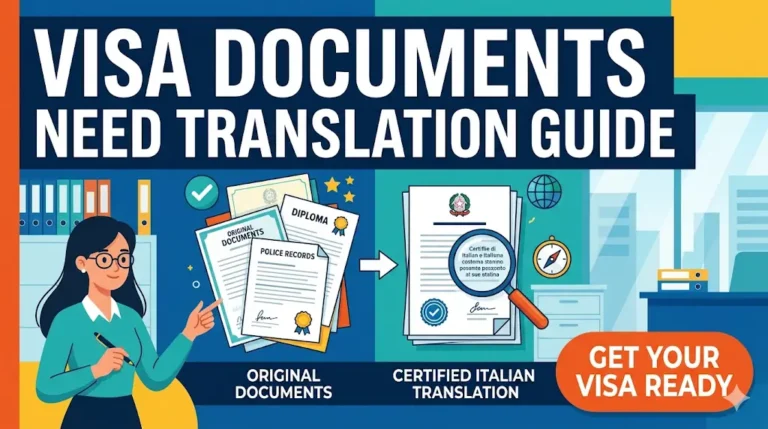
When the pre-compilation window opens, your employer will need a massive portfolio of your personal documents to upload into the system. If you are applying for specialized quotas, converting a visa, or proving your professional qualifications, your foreign documents are legally useless unless they are perfectly translated into Italian.
Getting your documents legalized and translated is a massive, time-consuming bottleneck. You can use RushTranslate to get certified translations of your university degrees, police background checks, and professional certifications. Because the Italian immigration authorities scrutinize every single syllable, using RushTranslate ensures your documents meet the strict legal standards required by the SUI. Applications have been rejected simply because an amateur translator misspelled a middle name on a birth certificate.
Make sure your employer has all your RushTranslate documents securely in their possession weeks before the pre-compilation phase begins. RushTranslate is recognized for accuracy, which is critical because a single typo on the Nulla Osta application can force your employer to abandon the draft and start over, guaranteeing you will miss the click day deadline. Ensuring your identity documents are flawless is the first step toward eventually Checking Your Italian Tax Code Codice Fiscale Status.
Navigating Self-Employed and Conversion Quotas
Converting an Existing Visa to a Work Permit
Many expats believe that if they are already living in Italy legally on a student visa, they are immune to the chaos of the Decreto Flussi. This is a devastatingly common trap. If you graduate from an Italian university and find a local company willing to hire you full-time, you must still apply through the Decreto Flussi to officially convert your permesso di soggiorno from study to work.
The quotas allocated for visa conversions are shockingly small. In a typical year, the government might only set aside 4,000 to 6,000 spots nationwide for students transitioning to subordinate work. Because you are competing against thousands of other international graduates, the click day pressure is immense. If your academic transcripts require sworn translations for the conversion process, RushTranslate provides these quickly so you don’t miss the narrow submission window.
If you miss the conversion quota on click day, you are in a perilous legal limbo. You cannot legally sign a permanent employment contract, and if your student visa expires, you must leave the Schengen Zone. Understanding this intense pressure is vital for anyone planning to utilize the pathways outlined in Converting a Student Visa to a Work Visa in Italy and Renewing Your Italian Permesso di Soggiorno.
The Autonomous Work (Self-Employment) Illusion
The most romanticized expat dream is moving to a Tuscan villa and working as a freelance consultant or opening a small boutique. The Italian government violently crushes this dream through the Decreto Flussi. The quota for lavoro autonomo (self-employment) is almost non-existent.
Typically, the government allocates a mere 500 spots for the entire country. Furthermore, you cannot simply be a generic freelance graphic designer or writer to claim one of these spots. The autonomous quotas are strictly reserved for highly specific, heavily vetted categories: entrepreneurs willing to invest a minimum of €500,000 into the Italian economy, startup founders approved by the Ministry of Economic Development, renowned artists, or professionals in highly regulated corporate roles (like board members of Italian joint-stock companies).
If you fall into one of these incredibly narrow categories, you must submit a mountain of financial proof, business plans, and housing guarantees. Because the spots are so limited, the scrutiny is absolute. If you are pursuing this route, you must deeply analyze the restrictive requirements detailed in Italian Self-Employment Visa Partita IVA Requirements and consider alternative pathways like the Italian Elective Residence Visa VRE Complete Guide.
| Visa Category | Typical Flussi Quota Size | Who Applies | Difficulty Level |
| Seasonal Subordinate | ~40,000 – 80,000 | Farm workers, hospitality staff | Moderate (Employer driven) |
| Non-Seasonal Subordinate | ~25,000 – 45,000 | Truck drivers, construction, mechanics | High (Employer driven) |
| Visa Conversions | ~4,000 – 6,000 | Current student/trainee visa holders | Very High (Individual/Employer driven) |
| Lavoro Autonomo (Self-Employed) | ~500 | Entrepreneurs, startup founders, artists | Extreme (Individual driven) |
Post-Quota Approval and Health Insurance
The Visa Issuance at the Consulate
If the digital gods smile upon you and your employer successfully secures a spot on click day, the wait is far from over. The local SUI office will spend anywhere from 30 to 120 days verifying your employer’s tax records and your criminal background before officially issuing the Nulla Osta. Once this magical document is issued, it is digitally transmitted to the Italian consulate in your home country.
You then have a limited window (usually 180 days) to book an appointment at your local consulate and apply for the actual entry visa. The consulate will not just hand you the visa because you have a Nulla Osta; they will conduct their own secondary review. They will demand to see your flight itineraries, proof of secure housing in Italy, and often, comprehensive private health insurance to cover your arrival period.
Consulates are notoriously strict, and minor paperwork discrepancies at this stage can delay your flight for months. You must arrive at your consular appointment over-prepared, treating it with the same level of seriousness as your eventual battle with Registering with the Italian Public Healthcare System SSN.
Securing Health Coverage for Your Arrival
The Italian public healthcare system is fantastic, but you cannot access it the moment you step off the plane. You must first secure your Residenza and your physical permesso di soggiorno, a bureaucratic process that can easily take three to six months. During this massive transition gap, you are completely uninsured and vulnerable.
When you take your Nulla Osta to the consulate, they will scrutinize your health coverage. Using Cigna Global is a bulletproof way to satisfy the strict Schengen health insurance requirements mandated by consular officials. Cigna Global provides comprehensive expat health insurance that bridges the dangerous gap until your SSN is officially active. If you are applying for the fiercely competitive self-employment quota, presenting a robust Cigna Global policy demonstrates your absolute financial independence to the immigration authorities.
Having Cigna Global ensures that if you face a sudden medical emergency, a severe allergic reaction, or a chronic flare-up during your chaotic first month in Italy, you won’t be bankrupted by private clinic bills. Securing this premium safety net protects your physical health and your savings while you navigate the exhausting, beautiful reality of relocating to the Mediterranean, an essential survival tactic we cover in Healthcare in Italy An Expats Guide.
References
Primary sources (official)
- Ministero dell’Interno – Portale Servizi ALI (Sportello Unico Immigrazione) – https://portaleservizi.dlci.interno.it/
- Ministero del Lavoro e delle Politiche Sociali – Decreto Flussi Overview – https://www.lavoro.gov.it/
Other helpful sources
- Studio Legale Metta – Italian Work Visa and Decreto Flussi Guide – https://www.studiolegalemetta.com/
Disclaimer
The information provided in this article is for educational and informational purposes only and does not constitute official legal or immigration advice. The Decreto Flussi quotas, application timelines (“click days”), and eligible job sectors are strictly governed by the Italian Ministero dell’Interno and the Ministero del Lavoro and are subject to change via unannounced ministerial decrees. A successful submission through the Sportello Unico per l’Immigrazione (SUI) does not guarantee the issuance of a Nulla Osta or a final entry visa by the consulate. Always consult a registered Italian immigration attorney (avvocato immigrazionista) to navigate the complexities of subordinate and autonomous work visas.