How to Pay Italian Taxes With an F24 Form
Navigating the Italian tax system can feel like being dropped into a labyrinth without a map, especially when you are first handed a cryptic, grid-filled document known as the F24. I remember the paralyzing anxiety I felt the first time my accountant emailed me one of these forms with a brief note saying "pay by Monday." This guide solves the mystery of the F24, walking you through every box, code, and payment method available to expats.
Disclosure: This post may contain affiliate links. We may earn a commission at no extra cost to you if you make a purchase through these links. Read full disclosure.
Understanding the F24 Form: The Universal Key to Italian Payments
The F24 form, or Modello F24, is the primary vehicle used by the Italian tax authority, the Agenzia delle Entrate, to collect almost every type of tax imaginable. Whether you are a freelance professional paying your social security contributions, a homeowner settling your municipal property tax, or a resident paying your annual income tax, you will inevitably come face-to-face with this document. It is designed for "unitary payment," meaning it allows you to pay multiple types of taxes across different authorities—state, regional, and municipal—in a single transaction.
For many of us moving from countries with automated withholding or simpler online portals, the manual nature of the F24 can be a shock. You aren't just clicking a "pay now" button on a website; you are often responsible for ensuring the right codes are entered into the right sections. If you are struggling to understand the broader context of these obligations, reading about Understanding Italy's Tax System: A Guide for Foreigners can provide the necessary background before you dive into the payment mechanics.
The beauty of the F24, if one can call it that, is its versatility. It allows for compensazione, or offsetting. If the state owes you money from a previous overpayment or a tax credit, you can actually use that "credit" within the F24 form to reduce the amount of "debt" you are currently paying. This is a lifesaver for freelancers, though it requires a high level of precision. If your situation involves complex international income, consulting with specialists like Taxes for Expats can help ensure your credits are calculated correctly before you ever touch an F24.
Anatomy of the F24: Decoding the Grid
When you look at an F24, it is divided into several horizontal sections, often referred to as Sezioni. Each section corresponds to the entity receiving the money. The top part is always dedicated to your personal data—the Contribuente. Here, you must enter your Obtaining a Codice Fiscale (Italian Tax Code) Step-by-Step results accurately. A single digit error in your tax code will result in the payment being attributed to someone else, or worse, lost in the bureaucratic void.
The most common sections you will interact with include the Sezione Erario (State taxes like IRPEF or IVA), the Sezione INPS (Social security contributions), and the Sezione IMU e Altri Tributi Locali (Municipal taxes). Within these rows, you will see columns for the Codice Tributo (Tax Code), Rateazione (Installment number), Anno di Riferimento (Reference year), and finally, the amounts due or being credited.
The Codice Tributo is a four-digit number that tells the government exactly what you are paying for. For example, "4001" is the code for the main balance of your personal income tax (IRPEF). If you are Filing an Italian Tax Return: Step-by-Step Guide, your accountant will usually provide these codes for you. It is highly discouraged to guess these codes yourself; always verify them against official lists or your professional's instructions. Using a service like Taxes for Expats can be particularly helpful if you are trying to reconcile these Italian codes with your home country's tax reporting requirements.
| Payment Method | Best For | Pros | Cons |
|---|---|---|---|
| Home Banking | Residents with Italian accounts | Convenient, instant receipt | Requires Italian bank access |
| F24 Web (Agenzia Entrate) | Those with SPID | Direct, official record | Interface is entirely in Italian |
| Poste Italiane | Cash payments / Non-digital | Human verification | Long queues, paper-heavy |
| Commercialista | Busy professionals | Error-free, hands-off | Additional service fees |
How to Execute the Payment: Online and Offline Options
Once your F24 is filled out, the next hurdle is actually moving the money. For most expats, the easiest route is through an Italian home banking portal. Almost every Italian bank has a dedicated "F24" section in their app or website. You simply copy the data from your PDF into the corresponding digital fields. If you haven't set up a local account yet, you might want to look into the Best Bank Accounts for Expats in Italy: Fees and Benefits to find a provider that offers a user-friendly English interface for these payments.
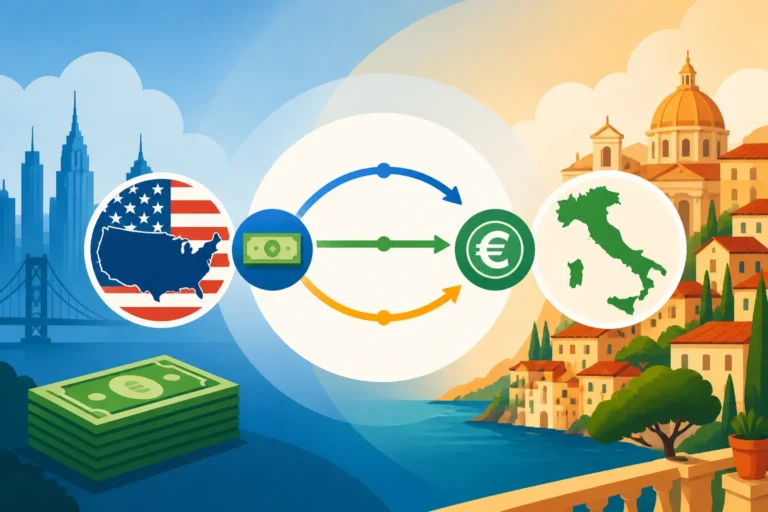
If you do not have an Italian bank account, things get significantly trickier. The F24 system is deeply integrated with the Italian interbank circuit. You cannot typically pay an F24 via a standard international wire transfer from a US or UK bank. This is where services like Wise become essential. You can use Wise to transfer your home currency into Euros and deposit them into an Italian account (or a digital equivalent with an IBAN that supports F24 payments) to ensure you have the liquid funds available for the deadline.
For those who prefer the traditional route, or if your digital access is blocked, you can print the F24 and take it to any branch of the Poste Italiane or a local bank. You can pay in cash (up to legal limits) or with an Italian debit card. The clerk will stamp the form and provide you with a Quietanza di Pagamento (receipt). Never lose this piece of paper. In Italy, the burden of proof is on you to show you paid, and that stamped slip is your only shield against future "Cartelle Esattoriali" (tax bills) claiming you missed a payment. To access more advanced digital payment portals, make sure you understand how to use SPID and Digital Identity for Italian Tax and Services.
Handling Deadlines and Correcting Mistakes
The Italian tax calendar is relentless, with major deadlines often falling in June, July, and November. Missing a deadline for an F24 payment isn't the end of the world, but it does trigger immediate penalties and interest. However, Italy offers a "grace" mechanism called Ravvedimento Operoso. This allows you to spontaneously "repent" for a late payment by paying a significantly reduced penalty. The sooner you pay, the lower the fine.
If you realize you made a mistake on a form you already paid—perhaps you typed the wrong year or the wrong tax code—don't panic. You can often correct this through a process called Civis on the Agenzia delle Entrate website, or by sending a formal Istanza in Autotutela (request for self-correction) to your local tax office. This is quite technical, so having a professional on hand is wise. You can find help by searching for How to Find an English-Speaking Commercialista in Italy to guide you through the correction process.
Remember that the F24 is also used for the "Bollo Auto" (car tax) and sometimes even for utility-related administrative fees. It is the lifeblood of Italian financial administration. To stay organized, I recommend creating a digital folder for every year, saving both the PDF of the F24 provided by your accountant and the digital receipt provided by your bank. If you are moving money from abroad to cover these costs, using Wise can help you track exactly how much you spent in your home currency versus the Euro amount on the form, making your personal budgeting much clearer.
Pro-Tips for Expats Facing Their First F24
My first piece of advice is: do not wait until the day of the deadline. Italian banking websites are notorious for "maintenance" or slowing down during peak tax season (the end of June is particularly bad). If you are paying via your bank's app, double-check if there is a daily or monthly transfer limit that might prevent a large tax payment from going through. It is a nightmare to be ready to pay €5,000 only to find your app limit is capped at €2,000.
Secondly, pay close attention to the "Saldo Finale" (Final Balance). If your F24 has a balance of zero because your credits perfectly offset your debts, you still must file the form. A "Zero-balance F24" must be submitted through the Agenzia delle Entrate's own portal (Entratel/Fisconline); you usually cannot "pay" a zero-balance form through a standard banking app. Failing to submit a zero-balance F24 can result in fines, even though you technically didn't owe any money.
Lastly, keep an eye on Important Tax Deadlines in Italy: Calendar 2026 to stay ahead of the curve. The more you normalize the F24 process, the less power it has to stress you out. It is simply a part of the price we pay for the Italian lifestyle—the coffee, the history, and the sun. Once you've mastered the grid, you're truly an "insider" in the Italian system.
Disclaimer
This guide is for informational purposes only and does not constitute professional tax, legal, or financial advice. The Italian tax system is notoriously complex and subject to frequent legislative changes. Always consult with a qualified commercialista or a professional tax advisor before submitting any payments or forms to the Agenzia delle Entrate. The author and publisher are not responsible for any penalties, errors, or financial losses resulting from the use of this information.