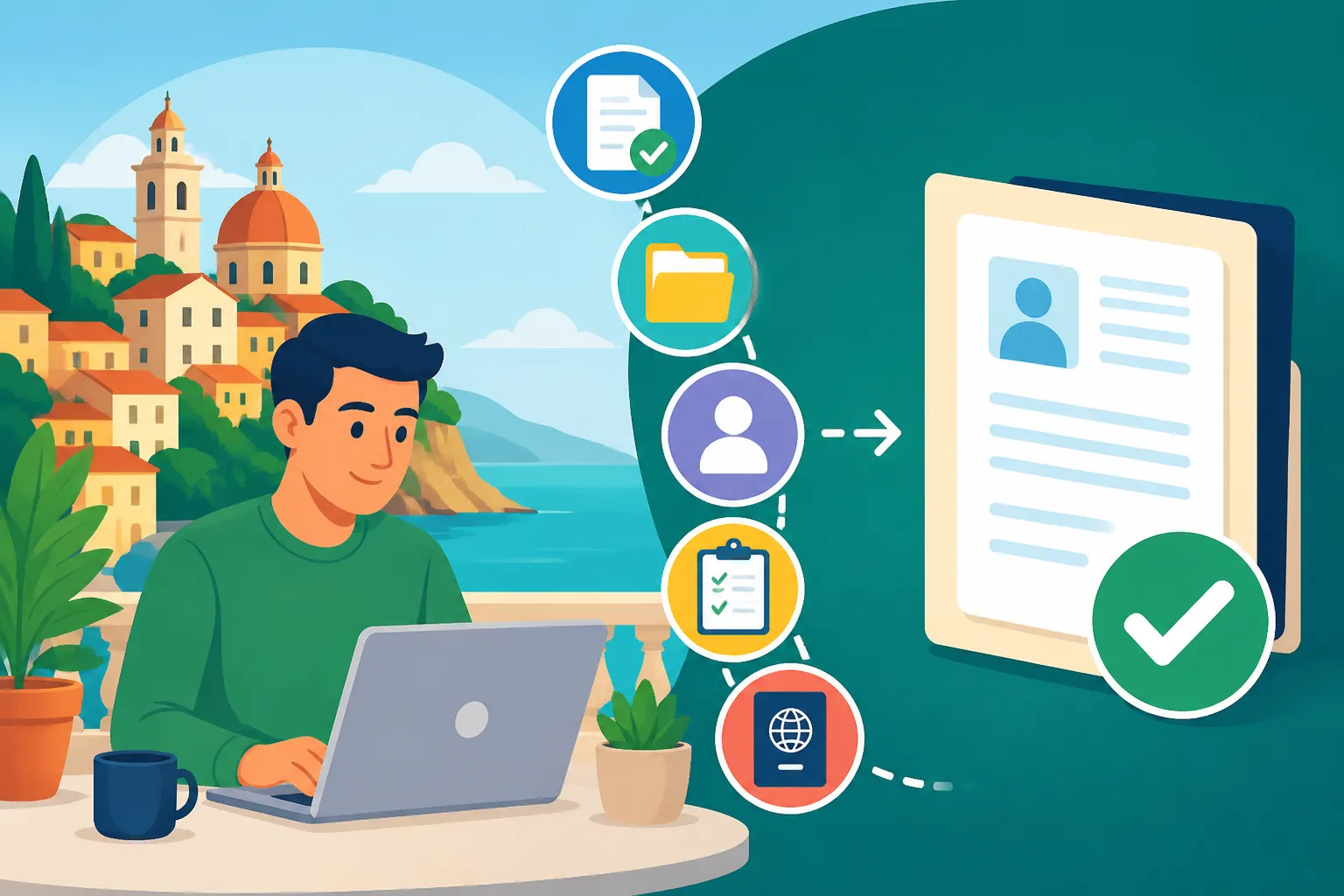
How to Apply for the Italy Digital Nomad Visa Step-by-Step
Navigating Italian bureaucracy often feels like being an uninvited guest at a very complex, high-stakes dinner party where everyone is speaking a dialect you haven't mastered yet. I remember sitting in a drafty hallway in Rome for four hours just to get a single stamp, questioning every life choice that brought me here. This guide breaks down the Italy Digital Nomad Visa process into manageable steps so you can skip the existential dread and start your Mediterranean life.
Disclosure: This post may contain affiliate links. We may earn a commission at no extra cost to you if you make a purchase through these links. Read full disclosure.
Understanding the Italy Digital Nomad Visa Framework
For years, those of us living the remote work lifestyle had to squeeze ourselves into the ill-fitting "Self-Employment Visa" category, which was governed by strict annual quotas and a mountain of paperwork that rarely made sense for a software engineer or a freelance consultant. The introduction of the dedicated Digital Nomad Visa changed the landscape, but it didn't necessarily remove the Italian flair for "complicating the simple." Unlike the traditional work permits, this visa is specifically designed for non-EU citizens who perform highly qualified work activities through the use of technological tools.
The Italian government distinguishes between two types of applicants: the "Digital Nomad," who is a freelancer or self-employed individual, and the "Remote Worker," who is an employee of a company based outside of Italy. While the application path is similar, the documentation required for your employment status differs slightly. Understanding this distinction is the first step in ensuring your paperwork isn't rejected at the first window. You are essentially proving that you are not taking a job from a local, but rather bringing your own income and spending power into the Italian economy.
One of the most significant advantages of this specific visa is the bypass of the "Nulla Osta" or the work authorization decree. Historically, getting an Italian employer or a local prefecture to issue this was the ultimate bottleneck. For the Digital Nomad Visa, you go straight to the consulate in your home country, which theoretically speeds up the process. However, "speed" in Italy is a relative term that often involves several espresso breaks and a bit of patience.
Eligibility and the Highly Skilled Requirement
The biggest hurdle for many is the "highly skilled" requirement. Italy isn't just looking for anyone who can work on a laptop; they are looking for professionals who fall under specific categories defined by Italian law. This usually means you need to demonstrate significant experience in your field—typically at least six months of documented activity—or hold a professional qualification or degree that aligns with your remote work.
The income requirement is another non-negotiable factor. You must prove that you earn at least three times the minimum level required for exemption from participation in healthcare costs in Italy. In practical terms, this usually hovers around €28,000 annually, though the exact figure can fluctuate. It is always wise to show a buffer above this amount to convince the consulate that you are financially stable. For more details on the financial side, you might want to look into What Income Do You Need for the Italy Digital Nomad Visa? to ensure your bank statements meet the mark.
Beyond the numbers, you need to prove that your work is actually "digital." If you are a consultant, you’ll need contracts; if you are an employee, you’ll need a signed declaration from your employer. This is where many expats get tripped up—the Italian consulate wants to see a clear link between your skills, your tools, and your income. They aren't just checking boxes; they are looking for a cohesive story of a professional who can sustain themselves without relying on the Italian social safety net.
Preparation Phase Gathering Your Documents
Before you even think about booking an appointment at the consulate, you need to become a master of document organization. Italy runs on paper. Even today, a digital file is often treated with suspicion unless it is accompanied by a physical copy with a signature. You will need a valid passport, proof of a clean criminal record from every place you’ve lived in the last few years, and most importantly, proof of accommodation.
Finding a place to live before you have a visa is the ultimate "chicken and egg" problem. Many expats use long-term Airbnb rentals or services like Spotahome to secure a lease that satisfies the requirement. The consulate usually wants to see a registered lease agreement or at least a confirmed booking for the first few months. Proving you have a roof over your head is vital for the Italian Residence Permit (Permesso di Soggiorno) Explained process that follows your arrival.
Then comes the translation. Any document not in Italian—your bank statements, your diplomas, your criminal record—must be translated and often apostilled. This is not the time for Google Translate. You need "traduzione giurata" (sworn translation). Companies like RushTranslate or Translayte are frequently used by expats to handle these requirements quickly and accurately. Having a professional handle this prevents the "this is not official enough" rejection that has haunted so many of us in those consulate waiting rooms.
Document Checklist for the Digital Nomad Visa
| Document Type | Requirement | Notes |
|---|---|---|
| Passport | Valid for at least 15 months | Must have at least two blank pages |
| Proof of Income | Last 12 months of bank statements | Should exceed approx. €28,000/year |
| Employment Proof | Contract or Employer Declaration | Must specify remote work capability |
| Health Insurance | Comprehensive coverage in Italy | Brands like Cigna Global are popular |
| Accommodation | Registered lease or long-term booking | Must cover at least the first 6 months |
| Criminal Record | State and Federal background checks | Must be apostilled and translated |
The Step by Step Application Process
The actual application is a three-act play. Act one takes place in your home country. You must book an appointment at the Italian Consulate that has jurisdiction over your place of residence. These slots are notoriously hard to get, often requiring you to refresh the booking page at midnight Italian time. Once you have your appointment, you present your mountain of paperwork, pay the visa fee (usually around €116), and wait. The processing time can range from a few weeks to a few months.
Once your visa is glued into your passport, act two begins. You have eight days from the moment you land in Italy to "declare" your presence. This isn't just a polite hello to the border police; it involves going to a local post office (Poste Italiane) and asking for a "Kit Postale." This is a large envelope with various forms (Modulo 1 and Modulo 2) that you must fill out in black ink. It is a rite of passage for every expat. You will also need to have already figured out How to Get a Codice Fiscale in Italy (and Why You Need One), as this tax code is required for almost every form in the kit.
Act three is the "Questura" (Police Headquarters) appointment. After you mail your kit from the post office, you will receive a receipt (the "ricevuta") and an appointment date. This receipt is gold—it proves you are legally in the country while you wait for your actual card. At the Questura, they will take your fingerprints and verify your original documents again. It is a long, often frustrating day of waiting in lines, but it is the final hurdle before you receive your plastic Permesso di Soggiorno.
Health Insurance and Social Security
One of the nuances of the Digital Nomad Visa that differs from the Student or Tourist visa is the requirement for health insurance that covers you for the duration of your stay. While Italy has an incredible public health system, you won't have access to it the moment you step off the plane. You need a private policy first. Many nomads opt for Cigna Global because their policies are specifically designed to meet the high limits required by European consulates.
Once you have your residency, you have the option to "voluntarily" enroll in the Servizio Sanitario Nazionale (SSN). This involves paying a fee based on your income, but it gives you access to a family doctor and the public hospital system. Learning How to Register for Italian Healthcare (SSN) as a Foreigner is a vital step once you are settled, as it provides a much more stable long-term solution than relying solely on travel or expat insurance.
Social security is the other "hidden" detail. If you are a freelancer (Digital Nomad), you will likely need to register for a Partita IVA (VAT number) and contribute to INPS (the Italian social security system). This can be complex, and the rates are not always low. If you are a remote employee, your company might need to navigate bilateral social security agreements to ensure you aren't being taxed twice. It is highly recommended to seek professional advice, and knowing How to Find an English-Speaking Commercialista in Italy will save you thousands of euros in potential fines and overpayments.
Settling Into Your New Italian Life
Once the plastic card is in your hand, the real fun begins. But the bureaucracy doesn't stop. To truly live as a resident, you must go to the "Comune" (Town Hall) to register your "Residenza." This is different from just having a visa; it’s the act of telling the local government that you officially live at a specific address. This is the trigger for many local services, including lower utility rates and the ability to buy a car or sign up for a long-term gym membership. You can find more about this in Registering Residency in Italy (Residenza and Anagrafe).
Living in Italy as a digital nomad is a dream, but it requires a shift in mindset. Things move slower. The post office will be closed when you need it most. The internet technician might show up three days late with a shrug and a "scusi." But then you’ll walk out for an aperitivo, see the sunset over an ancient piazza, and realize why you went through all the paperwork.
To make your daily life easier, you’ll also want to look into How to Open a Bank Account in Italy: Requirements and Tips. While many nomads use online banks like Revolut or Wise, having a local IBAN is often necessary for paying utility bills or receiving certain local payments. It’s another layer of the "integration" process that makes you feel less like a tourist and more like a neighbor.
Managing Taxes and the Partita IVA
The most frequent question I get from fellow nomads is about the tax implications. Italy has several tax regimes that can be quite favorable to new residents, including the "Impatriati" scheme or the "Regime Forfettario" for small businesses and freelancers. If you qualify for the Forfettario, you could pay as little as 5% or 15% in income tax for the first few years, which is a massive incentive.
However, you must be careful. If you stay in Italy for more than 183 days in a calendar year, you are generally considered a tax resident. This means you owe taxes to Italy on your worldwide income. Navigating this without a professional is like trying to drive through Naples at rush hour with a blindfold on—highly discouraged. For a broader look at how the medical and social side ties into your new resident status, check out Healthcare in Italy: An Expats' Guide to understand what your tax euros are actually funding.
The Digital Nomad Visa is a fantastic bridge to a new life, but it requires a commitment to the "Italian way" of doing things. This means keeping every receipt, making copies of every form, and always carrying a folder of your original documents. It might feel overkill until the one day a clerk asks for a specific document you thought you'd never need again, and you're able to produce it with a smile.
Disclaimer
The information provided in this article is for general informational purposes only and does not constitute legal, financial, or professional immigration advice. Visa regulations and requirements in Italy are subject to frequent changes. Always consult with the official website of the Italian Ministry of Foreign Affairs or a qualified immigration professional before beginning your application process.