Door-to-Door vs Port-to-Port Moves to Italy: What Each Quote Includes
Moving your entire life to Italy is an exhilarating prospect, but as any expat who’s done it will tell you, the excitement can quickly give way to the overwhelming reality of logistics. One of the biggest hurdles is figuring out how to get your belongings from your old home to your new Italian abode. The choice between a door-to-door and a port-to-port international move often feels like trying to read a menu in a foreign language—confusing, with hidden costs lurking around every corner. This comprehensive guide will strip away the mystery, meticulously detailing what each type of move includes in its quote, the pros and cons, and how a service like Sirelo can be your trusted guide in comparing these complex options to make your relocation to Italy as smooth as a Tuscan olive oil.
Disclosure: This post may contain affiliate links. We may earn a commission at no extra cost to you if you make a purchase through these links. Read full disclosure.
What Exactly is a Door-to-Door Move to Italy?
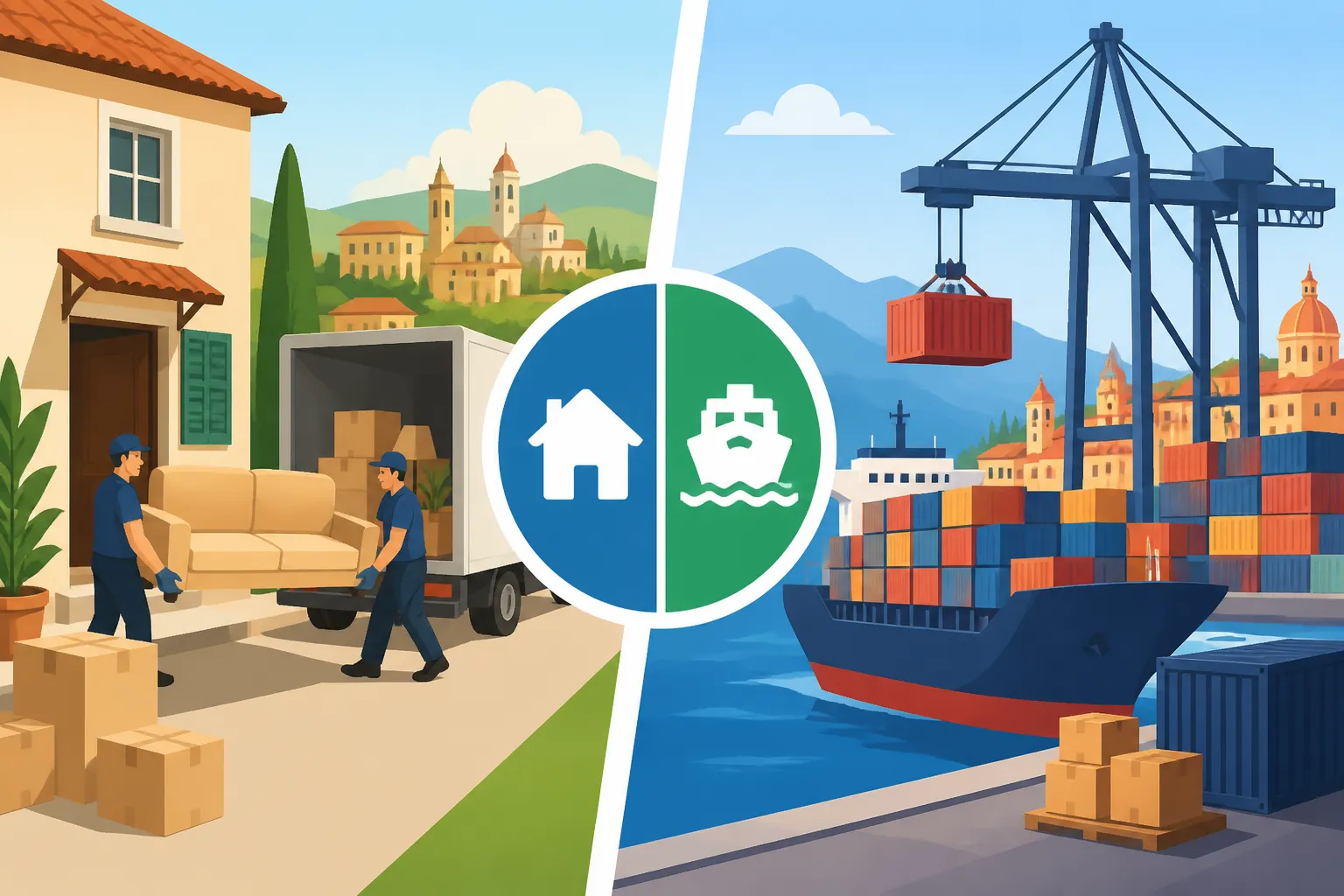
Imagine waving goodbye to your old home, knowing that the next time you see your beloved couch, it will be sitting comfortably in your new Italian living room. That's the dream a door-to-door move promises. It's the full-service package, designed to take virtually all the heavy lifting – both physical and administrative – off your plate. For many expats navigating the often-labyrinthine world of Italian bureaucracy for the first time, this can be an absolute lifesaver.
What's Included in a Door-to-Door Quote?
A door-to-door moving quote is essentially an all-encompassing package. It typically covers every step of the relocation process, ensuring a seamless transition of your belongings from your current residence to your new one in Italy. This means the moving company you choose, often sourced through platforms like Sirelo, will dispatch a team to your home to pack all your items professionally, using appropriate materials for international transit. They’ll create detailed inventories, disassemble furniture if necessary, and load everything onto the transport vehicle.
From there, your belongings are transported to the port or airport of origin, where the moving company handles all the export customs clearance paperwork – a process that can be surprisingly intricate and time-consuming. Once cleared, your shipment embarks on its journey across the sea or through the air to Italy. Upon arrival at an Italian port like Genoa or Livorno, or a major airport, the real magic (and relief for you!) begins. The mover’s local partners in Italy take over, managing all the import customs clearance, paying any necessary duties and taxes on your behalf (which should be factored into your quote, though sometimes paid separately depending on agreement), and arranging the onward transport to your new home. Finally, they deliver, unload, and even unpack your items, and reassemble basic furniture. Often, basic transit insurance is also included, offering peace of mind.
The Benefits for Expats in Italy
For those relocating to Italy, especially if it’s your first time living abroad, the benefits of a door-to-door service are immense. First and foremost, it drastically reduces stress. You're already juggling so much – learning some survival Italian, figuring out your Permesso di Soggiorno (Italian Residence Permit) Explained, and adapting to a new culture. The last thing you need is to become an expert in international shipping logistics. With door-to-door, you have a single point of contact for your entire move, simplifying communication and accountability.
This type of move saves you an incredible amount of time. Instead of spending hours coordinating different companies, filling out complex customs forms in Italian, and arranging local transport, you can focus on settling into your new life. Imagine arriving in Italy, dealing with your initial residency paperwork at the Comune, and within a few days, your belongings arrive at your new apartment without you having to lift a finger at a busy port. This is particularly valuable for families, busy professionals, or anyone who simply wants to minimize the logistical headaches inherent in an international move. It allows you to focus on discovering your new neighborhood, getting your utilities set up with Navigating Italian Utilities: Electricity, Water, Gas, Internet, and soaking up the Italian lifestyle.
Potential Downsides and When It Might Not Be for You
While the convenience of a door-to-door move is undeniable, it does come with a higher price tag compared to other options. This is the trade-off for the comprehensive service and peace of mind. For expats on a very tight budget, this might be a significant hurdle. Furthermore, while the moving company manages most of the process, you might have less direct control over specific aspects, such as the exact timing of certain stages or the choice of local partners at the destination.
If you’re embarking on an extremely minimalist move, perhaps only bringing a few boxes and suitcases, or if you're an experienced international mover with a deep understanding of logistics and a willingness to do significant legwork, a door-to-door service might be overkill. For those who thrive on DIY projects and speak fluent Italian, managing the various stages yourself could be a rewarding, albeit challenging, experience. However, for most newcomers to Italy, especially those bringing a significant household, the investment in a full-service move often pays dividends in reduced stress and conserved energy.
Understanding Port-to-Port Moves: The DIY Approach
A port-to-port move is the more hands-on, self-managed option for getting your belongings to Italy. It's often chosen by those looking to save money, or by seasoned international movers who are comfortable navigating complex logistics in a foreign country. Think of it as purchasing the core transportation service, with all the peripheral tasks falling squarely on your shoulders.
Breaking Down a Port-to-Port Quote
When you receive a port-to-port quote, it generally covers the fundamental act of transporting your packed goods from a designated port or terminal in your origin country to a major port in Italy. This typically includes the ocean freight (for sea shipments) or air cargo costs, along with terminal handling charges at both the origin and destination ports. These charges cover the cost of moving your container or crates within the port facilities.
However, a critical distinction is what's excluded from this quote. You’ll be responsible for packing your own belongings, loading them onto a truck to get them to the origin port, and then handling all the customs procedures for export. Once your shipment arrives at the Italian port, you become the active manager of its fate. This means you are responsible for arranging customs brokerage in Italy, paying all import duties, taxes (like IVA/VAT), and port storage fees, as well as managing the "drayage" – the trucking of your container from the port to your new home. Crucially, the quote does not include unloading at your new residence, unpacking, or assembly. It truly is a "port-to-port" service, meaning the service ends when your goods arrive at the destination port.
The Responsibilities on Your Shoulders
If you opt for a port-to-port move, you essentially become the project manager for your own international relocation. This isn't a task for the faint of heart, especially in a country like Italy, where administrative processes can be notoriously slow and opaque. You’ll need to research and hire local transport at both ends, ensuring your items get to the origin port and from the destination port to your home. Crucially, you must understand and execute all the Italian import customs procedures. This often involves hiring a local customs broker ( spedizioniere doganale) who can navigate the complex paperwork and liaise with the Agenzia delle Dogane e dei Monopoli on your behalf.
You'll need documents like your Codice Fiscale, proof of residency (Dichiarazione di Residenza), your Ultimate Guide to Visas and Immigration in Italy paperwork, and a detailed inventory of your goods. Missteps can lead to significant delays and costly storage fees at the port. You also need to coordinate the delivery of your items to your home, factoring in things like street access, parking, and potential ZTLs (limited traffic zones) that can make delivery tricky in many Italian cities. This level of self-management requires not just time, but also resilience and a good grasp of the Italian language or strong local support. It's a lot to handle, especially if you're also trying to get your Italian Rental Contracts 101: 4+4, 3+2, and Transitorio sorted and settle into a new routine.
When a Port-to-Port Move Makes Sense
Despite the significant responsibilities, a port-to-port move can be a viable option for certain individuals. It primarily appeals to those with a very tight budget who are willing to invest a substantial amount of their own time and effort to save money. If you have a small shipment – perhaps just a few boxes of personal effects that don't require specialized packing or handling – and you're not in a rush, managing it yourself could be more cost-effective.
This option is also suitable for seasoned international movers who have experience with customs procedures and logistics, or for those who have robust local support in Italy. Perhaps you have Italian family or friends who can help with local transport, customs declarations, and coordination. For instance, if you're a student bringing minimal items and your Italian host family can assist with pickup and paperwork at the port, a port-to-port move might work. However, always ensure you have a clear understanding of all potential costs and responsibilities before committing. Don't underestimate the complexity; an initial "cheap" quote can quickly balloon into an expensive nightmare if you're unprepared for the hidden fees and bureaucratic hurdles.
Comparing the Costs and Effort: Door-to-Door vs. Port-to-Port
The decision between door-to-door and port-to-port often boils down to a fundamental trade-off: money versus effort and peace of mind. It’s not simply about comparing the initial numbers on a quote; it’s about understanding the true financial outlay and the intangible costs of time and stress.
A Realistic Look at Financial Outlays
At first glance, a port-to-port quote will almost always appear significantly cheaper than a door-to-door one. This is because the former is a bare-bones service covering only the shipping itself. However, this is where many expats fall into a trap. The "hidden" or additional costs associated with a port-to-port move can quickly add up, often bringing the total cost close to, or even exceeding, a full-service door-to-door move.
Consider the following for a port-to-port move:
- Packing materials and labor: If you're not doing it yourself, hiring professional packers.
- Inland transport: Getting your goods from your home to the departure port, and from the arrival port (e.g., Naples, La Spezia) to your new home. This can involve hiring trucking companies, which can be pricey.
- Customs brokerage: You'll almost certainly need a spedizioniere doganale (customs broker) in Italy to navigate the complex import procedures. Their fees vary but can be substantial.
- Port storage fees: If there are delays in customs clearance or arranging onward transport, your goods might sit at the port, accruing daily storage fees. These can escalate rapidly.
- Duties and taxes (IVA/VAT): While many personal effects for residents might be exempt from duties, VAT (IVA) can still apply, or you might need a bond to guarantee future tax payment if your residency isn't fully established. This is a complex area.
- Insurance: You'll need to arrange your own transit insurance.
- Unloading and unpacking: Hiring local movers or a team to help you unload and place items in your home.
With a door-to-door service, most of these costs are consolidated into one predictable figure. While the initial quote is higher, you gain certainty and avoid unexpected financial blows. When budgeting for your new life, factor in the Cost of Living in Italy 2026: Budgeting for Expats and how these moving expenses fit into your overall financial plan. Using a platform like Sirelo allows you to get transparent, itemized quotes for both types of services, making it easier to see what exactly you're paying for in each scenario.
Time and Stress: The Unquantifiable Factors
Money isn't the only currency in a move; time and mental energy are equally, if not more, valuable. A door-to-door move offers an unparalleled saving in both. The entire process, from start to finish, is managed by professionals, freeing you up to deal with other crucial aspects of your relocation. You avoid the stress of coordinating multiple parties, chasing paperwork, and making urgent phone calls in a foreign language.
On the other hand, a port-to-port move demands a significant personal investment of time and energy. You'll spend hours researching local transport companies, understanding customs regulations, filling out forms, and troubleshooting inevitable issues. This can be incredibly taxing, especially when you're already exhausted from the move and trying to settle into a new country. I once had a friend who chose the port-to-port route to save a few hundred euros. She spent weeks dealing with phone calls to the port authority and customs agents, lost precious time looking for a local truck company, and almost incurred massive storage fees because she misunderstood a critical customs deadline. She eventually conceded that the "savings" were not worth the mental anguish and lost time she could have used to secure her Registering Residency in Italy (Residenza and Anagrafe) or connect with expat communities. Sometimes, the peace of mind is worth more than the upfront cost.
Navigating Customs and Italian Bureaucracy
This section deserves a special call-out because Italian bureaucracy is legendary, and customs is no exception. For most expats, this is the biggest stumbling block in a port-to-port move. The rules are intricate, documentation must be precise, and communication can be challenging if you're not fluent in Italian.
To import personal effects duty-free, you generally need to prove you're moving your residenza (residency) to Italy, that you've owned and used the goods for at least six months, and that you won't sell them for a certain period after import. This requires official documents like your Codice Fiscale, your Permesso di Soggiorno (or proof of its application), and a dichiarazione di residenza or other proof of having established yourself in Italy. Even with an English-speaking customs broker, it's a complicated dance with forms like Modello 408 (Dichiarazione di Valore) and a detailed inventory signed by you. Mistakes in any of these steps can lead to delays, fines, or even the rejection of your shipment. It’s a stark reminder that in Italy, even something as "simple" as getting your items can be complex. While a Hiring an Accountant in Italy: Costs and Benefits might seem overkill for a move, sometimes their expertise can even extend to navigating complex tax implications if your shipment contains high-value items or vehicles.
Making the Right Choice for Your Move to Italy
Deciding between a door-to-door and port-to-port move isn't a one-size-fits-all situation. It truly depends on your individual circumstances, financial resources, and personal tolerance for administrative complexities in a new country.
Assessing Your Budget and Timeline
Take a long, hard look at your finances. If budget is your absolute top priority, and you are genuinely prepared for the legwork and potential frustrations of a DIY approach, a port-to-port move can still be the cheaper option, but only if you meticulously account for all the potential hidden costs we discussed earlier. Don't just look at the initial shipping quote; factor in customs broker fees, potential storage charges, local transport, and even the value of your own time. A realistic calculation often reveals that the price difference isn't as vast as it first appears, especially for larger shipments.
Your timeline is also crucial. If you need your belongings quickly and without interruption, door-to-door offers a more streamlined and often faster process once it begins, as all aspects are coordinated by a single entity. If you have plenty of time, are flexible, and don't mind potential delays while you sort out Italian paperwork, port-to-port might align with your schedule. Remember, even getting a seemingly minor administrative detail like How to Book a Questura Appointment When Slots Are Full can cause unforeseen delays in Italy, so imagine the impact on a large shipment.
Your Comfort Level with Italian Logistics
This is arguably the most critical factor. How comfortable are you dealing with bureaucracy, phone calls, and potentially complex negotiations in Italian? Even if you have some language skills, navigating official processes and understanding legal jargon is a different beast entirely. Do you have reliable local contacts in Italy who can genuinely assist you with customs, transport, and troubleshooting?
If the thought of calling an Italian port authority or arguing with a customs agent makes your blood run cold, then paying for the full-service, door-to-door experience is likely a wise investment. You're not just paying for transport; you're paying for expertise, convenience, and peace of mind from professionals who handle these exact situations daily. Many expats find the sheer amount of paperwork and process for simply Getting Your Residence Permit Kit in Italy: Step-by-Step daunting enough, without adding a shipping container to the mix. Consider the mental load and whether you want to dedicate your initial energy in Italy to unpacking boxes or exploring your new neighborhood and figuring out Settling In Italy: Daily Life Tips for Expats.
How to Get the Best Quotes (and Use Sirelo!)
Regardless of which moving option you lean towards, the absolute best way to make an informed decision is to gather multiple, detailed quotes. This is precisely where a trusted platform like Sirelo becomes invaluable. Sirelo connects you with vetted, reputable international moving companies, allowing you to easily request and compare quotes for both door-to-door and port-to-port services.
Here's how Sirelo can help you cut through the confusion:
- Direct Comparison: You can specify your needs and receive quotes that clearly outline what's included in each type of service from various movers. This transparency is crucial for avoiding hidden fees later on.
- Vetted Movers: Sirelo works with pre-screened companies, giving you a greater sense of security than simply searching online.
- Customer Reviews: You can read reviews from other expats who have used these services, gaining insights into their experiences with different movers and specific service types.
Before you commit to anything, use Sirelo to get free, no-obligation quotes from several companies. Ask very specific questions about what's included and what's not. If considering port-to-port, ask about estimated customs brokerage fees, typical port storage charges, and local delivery options in your Italian city. If you're moving your whole family, and planning to How to Apply for Family Reunification in Italy, you’ll already have enough on your plate without managing complex shipping logistics. Empower yourself with information from a reliable source like Sirelo, and you'll be one step closer to a smooth, stress-free move to your beautiful new home in Italy.
| Feature | Door-to-Door | Port-to-Port |
|---|---|---|
| Service Scope | Full service from old home to new home | Port of origin to port of destination |
| Packing/Loading | Usually included | Your responsibility |
| Transportation | Arranged by mover | Arranged by carrier, managed by you |
| Customs | Handled by mover's broker (both ends) | Your responsibility (hire broker, paperwork) |
| Unloading/Setup | Usually included | Your responsibility |
| Cost (Upfront) | Higher | Lower |
| Cost (Total) | Predictable, often all-inclusive | Potentially higher due to hidden fees, delays |
| Effort/Stress | Minimal | High (significant time and coordination needed) |
| Ideal For | Busy expats, families, complex moves | Budget-conscious, experienced movers, small items |
| Payment Method | Often a single invoice for major costs (part upfront, part upon delivery) | Multiple payments to different vendors (carrier, broker, local transport) |
| Communication | Single point of contact (moving company) | Multiple points of contact, requires your coordination |
Disclaimer
Please remember that while this guide provides general information, immigration laws, customs regulations, and specific moving company services can change. Always consult with official government sources, reputable moving companies, and potentially legal or financial advisors for the most up-to-date and personalized advice for your specific situation.