Budgeting for Italy: Cost of Living by City
Planning a move to Italy requires a deep dive into regional price variations. This comprehensive guide breaks down the cost of living across major Italian cities, helping expats budget for housing, utilities, and lifestyle expenses.
Disclosure: This post may contain affiliate links. We may earn a commission at no extra cost to you if you make a purchase through these links. Read full disclosure.
The North-South Economic Divide
The most prominent feature of the Italian cost of living is the North-South divide. Historically, Northern Italy has been the economic engine of the country, home to global fashion houses, automotive giants, and financial institutions. Consequently, cities like Milan, Turin, and Bologna command higher prices for almost everything. In contrast, Southern Italy offers a significantly lower cost of living, though this often comes with a more challenging local job market and different infrastructure standards.
Moving to Italy is a dream for many, but the financial reality of the “Bel Paese” varies significantly depending on whether you choose the industrious north, the historic center, or the sun-drenched south. While Italy is often perceived as a single entity, it is effectively a patchwork of micro-economies. A monthly budget that allows for a luxury lifestyle in Palermo might barely cover the rent for a studio apartment in Milan. As we navigate the economic landscape, understanding these regional disparities is the cornerstone of a successful relocation strategy.
For expatriates, digital nomads, and retirees, the goal is often to find the “sweet spot” where the quality of life meets financial sustainability. This involves more than just looking at rent; it requires a holistic view of local taxes, grocery costs, and transportation expenses. Before you pack your bags, it is essential to align your expectations with the local job market or your remote income.
When budgeting, you must consider the “hidden” costs associated with each region. In the north, heating during the cold winters can be a major expense, whereas in the south, the cost of air conditioning during blistering summers takes center stage. Furthermore, municipal taxes vary by region. If you are planning to settle long-term, understanding Property Taxes in Italy: IMU, TASI, and More Explained is crucial, as these local levies can impact your monthly housing budget whether you are an owner or a renter through indirect costs.
Milan: The Financial and Fashion Hub
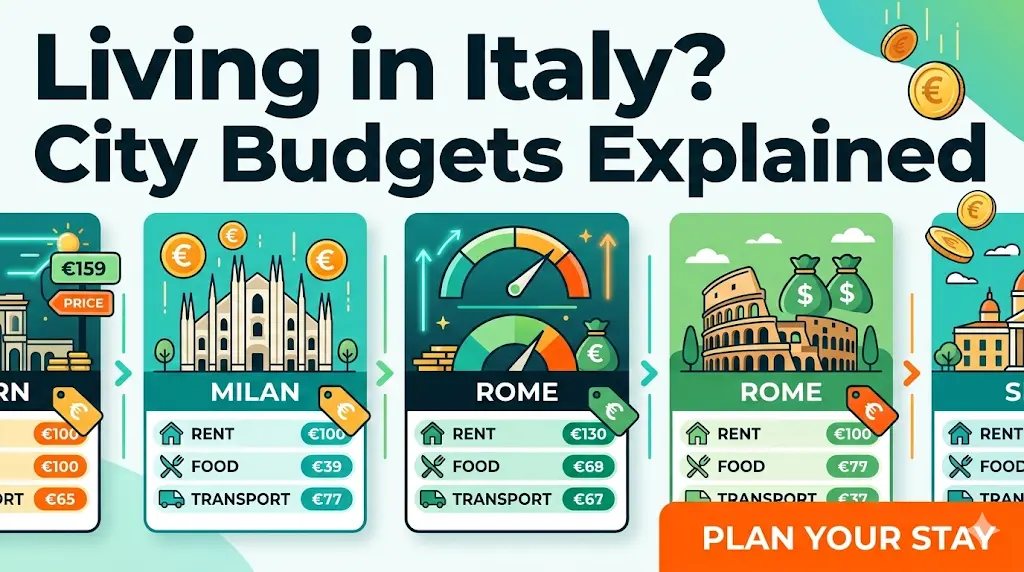
Milan is undisputedly the most expensive city in Italy. It is a fast-paced metropolis that mirrors other major European hubs like London or Paris in terms of pricing. However, it also offers the highest salaries and the most robust international job market.
Housing in Milan
Rent is the primary driver of the high cost of living in Milan. In 2026, a one-bedroom apartment in the city center can easily cost between €1,500 and €2,200 per month. Moving further out to neighborhoods like Lambrate or Bicocca might bring the price down to €1,100, but competition remains fierce.
Lifestyle and Dining
Dining out in Milan ranges from the affordable “aperitivo”—where a €12–€15 drink includes access to a buffet—to high-end Michelin-starred restaurants. A typical monthly budget for a single person in Milan, including rent, utilities, and a moderate social life, usually starts at €2,500. For those moving with a family, this figure can quickly double. To manage these higher costs, many expats utilize Money Transfer Services: Sending Money to Italy to ensure they get the best exchange rates when moving savings from abroad.
Rome: The Eternal City’s Budget Realities
Rome offers a slightly lower cost of living than Milan, but it remains a premium destination. The capital city is a sprawling mix of tourist hotspots and residential suburbs, each with its own price tag.
The Rental Market in Rome
In Rome, the neighborhood defines the budget. Historic areas like Trastevere or Monti are expensive, with rents for small apartments hovering around €1,300–€1,700. However, many expats find value in areas like Garbatella or Monteverde, where the Roman “village” feel comes at a slightly more accessible price point.
Public Transport and Commuting
Rome’s public transport is more affordable than Milan’s, but it is also less reliable. Many Romans rely on scooters or small cars, which introduces costs for fuel, insurance, and maintenance. Despite the administrative chaos the city is sometimes known for, Rome remains the heart of Italian diplomacy and tourism-related employment.
Florence and the Tuscan Dream
Florence is a mid-sized city with a heavy tourist influence, which inflates the cost of living, particularly in the historic center (Centro Storico).
Living as an Expat in Florence
Outside of the tourist zones, Florence is surprisingly livable. Areas like Oltrarno offer a vibrant community feel with grocery prices that reflect local rather than tourist rates. A monthly budget of €1,800 to €2,200 is generally sufficient for a comfortable life here. However, because Florence is a smaller city, the rental stock is limited, making it essential to have your paperwork ready. Knowing Why Codice Fiscale Is Essential for Foreigners in Italy is vital here, as you cannot sign a lease or set up utilities without this identification number.
Turin: The Affordable Northern Alternative
Turin is often overlooked in favor of Milan, but it offers a high quality of life at a fraction of the price. As the former capital of Italy and the home of the automotive industry, Turin boasts grand architecture, world-class museums, and excellent infrastructure.
Why Turin is Budget-Friendly
You can rent a beautiful, spacious apartment in Turin’s city center for €800–€1,100—roughly half the price of a comparable unit in Milan. Grocery costs and dining out are also more affordable, making it a favorite for digital nomads and students. It is a city that provides the “Northern efficiency” without the “Milanese premium.”
Southern Italy: Naples, Sicily, and Puglia
The south of Italy is where your budget will stretch the furthest. Cities like Naples, Palermo, and Bari offer a lifestyle that is deeply rooted in tradition and exceptionally affordable by Western standards.
The Cost of Living in Naples and Palermo
In Palermo, a large apartment in a good neighborhood can be found for €500–€700 per month. Fresh produce at local markets is incredibly cheap, and the culture of “street food” means you can eat well for a few euros. For a retiree or a remote worker earning a foreign salary, the south offers an unparalleled level of luxury for a relatively small monthly outlay.
Comparative Cost of Living Table (Monthly Estimates)
The following table provides a comparative look at the estimated monthly costs for a single person in various Italian cities for 2026. These figures include rent (one-bedroom outside center), utilities, groceries, and basic leisure.
| City | Estimated Total Monthly Budget | Average Rent (1BR) | Utility Costs (Average) |
| Milan | €2,400 – €2,800 | €1,300 | €180 |
| Rome | €1,900 – €2,300 | €1,000 | €170 |
| Florence | €1,800 – €2,200 | €950 | €160 |
| Turin | €1,400 – €1,700 | €700 | €150 |
| Bologna | €1,600 – €1,900 | €850 | €160 |
| Naples | €1,100 – €1,400 | €600 | €140 |
| Palermo | €900 – €1,200 | €450 | €130 |
Essential Budgeting Categories for Expats
When building your Italian budget, it is important to look beyond the “big ticket” items. Small, recurring costs can significantly impact your bottom line.
Utilities: Electricity, Gas, and Water
Energy costs in Italy have seen fluctuations in recent years. In 2026, a standard small apartment should budget around €150–€200 per month for combined utilities. This includes the “canone RAI” (TV license fee), which is automatically added to your electricity bill.
Connectivity: Mobile and Internet
Italy has some of the cheapest mobile and internet rates in Europe. You can get a high-speed fiber home connection for €25–€30 per month and a mobile plan with 100GB of data for as little as €10. This is a huge win for remote workers and those who need to stay connected with family back home.
Groceries and Food
The cost of food in Italy is highly dependent on where you shop. Supermarket chains like Esselunga and Conad offer a wide range of prices, but shopping at local open-air markets is often cheaper and provides higher-quality produce. Budgeting €300–€400 per month for groceries allows for a very high-quality diet.
Hidden Costs: Taxes and Healthcare
Italy’s social safety net is funded through taxation and social security contributions. If you are working locally, these will be deducted from your gross salary.
Healthcare (SSN)
Residents are entitled to the Servizio Sanitario Nazionale (SSN). While the service is largely free, you may be required to pay a small co-pay (ticket) for specialist visits or diagnostic tests. Some expats choose private health insurance to bypass waiting lists, which can add €500–€1,500 to your annual budget.
Local Taxes and Duties
Don’t forget the TARI (trash tax), which is paid annually to the municipality. The amount depends on the size of your property and the number of occupants. For a small apartment, expect to pay €150–€300 per year.
Tips for Saving Money in Italy
- Shop Seasonally: Prices for fruits and vegetables drop significantly when they are in season.
- Use Public Transport: Major cities have excellent transit networks. A monthly pass is significantly cheaper than maintaining a car.
- Drink the Tap Water: In most parts of Italy, tap water is perfectly safe and high-quality. This saves money and reduces plastic waste.
- Avoid the “Apericena” in Tourist Zones: Walk two blocks away from the main piazza, and prices often drop by 30%.
- Master the “Precompilata”: When it comes time to file your taxes, the pre-filled return provided by the government can save you money on accountant fees for simple situations.
Conclusion
Budgeting for Italy is a study in contrasts. While Milan and Rome require a robust financial cushion, cities like Turin or Palermo offer a sophisticated lifestyle at a fraction of the cost. The key to a successful move is flexibility and local knowledge. By understanding the regional differences in rent, utilities, and lifestyle expenses, you can choose a destination that not only fits your bank account but also enriches your life.
Whether you are drinking a €1 espresso in a Neapolitan piazza or attending a high-fashion event in Milan, Italy remains one of the most rewarding places in the world to call home.
References
Primary sources (official)
- ISTAT (Italian National Institute of Statistics): Official data on inflation, consumer price indices, and regional cost variations. https://www.istat.it/en/
- Ministero dell’Economia e delle Finanze: Source for information on national and local tax rates, including TARI and IMU. https://www.mef.gov.it/en/
Other helpful sources
- Numbeo – Cost of Living in Italy: A user-contributed database providing real-time price comparisons for cities across Italy. https://www.numbeo.com/cost-of-living/country/Italy
Disclaimer
The information provided in this article is for general informational and educational purposes only and does not constitute professional financial, tax, or legal advice. Cost of living figures are estimates based on 2026 market trends and can vary significantly based on individual lifestyle choices, inflation, and changes in local government policy. Always consult with a certified financial advisor or an Italian accountant (commercialista) to verify your specific obligations and budget requirements.