Getting an Auto Loan in Italy as a Foreigner
Walking into an Italian dealership ready to buy a car, only to be laughed out of the finance office because your foreign credit history does not exist here, is infuriating. I was denied a basic auto loan despite having a pristine American credit score and solid income. This guide explains how to bypass the systemic bias and secure vehicle financing in Italy.
Disclosure: This post may contain affiliate links. We may earn a commission at no extra cost to you if you make a purchase through these links. Read full disclosure.
The Expat Credit Void in Italy
Why Your Foreign Credit Score Means Nothing
The absolute hardest pill to swallow for newly arrived expats is that your financial history simply does not cross the border. You could have an 800+ FICO score in the United States, a flawless UK credit file, or a history of paying off luxury vehicles in your home country. In the eyes of an Italian bank, you are a ghost. Italy does not import credit data from Experian, Equifax, or TransUnion.
When you apply for a loan (finanziamento), the bank queries the Centrale dei Rischi (managed by the Bank of Italy) and private credit bureaus like CRIF. These databases only track your Italian financial history. If you have never held an Italian credit card, paid an Italian utility bill in your name, or had an Italian mortgage, you have no score. Banks are notoriously risk-averse, and lending 20,000 euros to a foreigner with zero local track record sets off every alarm in their system. The Catch-22 is brutal: you need credit to build an Italian credit score, but no one will give you credit until you have a score.
The Permesso di Soggiorno Hurdle
If the lack of a credit score is the first hurdle, your immigration status is the brick wall. Italian lending laws and internal bank policies strictly tie the maximum duration of a loan to the expiration date of your Permesso di Soggiorno (residence permit).
If you are buying a car and want a standard 48-month or 60-month financing plan to keep the payments low, but your residence permit expires in 12 months, the computer system will automatically reject your application. The bank will not lend you money past the date the state says you are legally allowed to remain in the country. This creates a massive headache for expats waiting on renewals. Even if you have the postal receipt (ricevuta) proving your renewal is processing, finance companies routinely reject receipts because they lack a definitive future expiration date.
Managing your residency paperwork perfectly is the only way to keep your financing options open. You must be hyper-aware of the Timelines for picking up your permesso di soggiorno in Italy to ensure you have the physical plastic card in hand before walking into a dealership. Furthermore, you must guard your documents fiercely; the administrative chaos detailed in our guide on the Consequences of losing your permesso di soggiorno card will immediately freeze your ability to secure any local credit.
Required Documents and Proof of Income
Navigating Employment Contracts for Approval
To offset your lack of credit history, you must present an airtight employment profile. Italian lenders worship the contratto a tempo indeterminato (permanent employment contract). If you hold one of these, you are halfway to an approval. If you hold a contratto a tempo determinato (fixed-term contract), the bank will generally refuse to finance the car past the end date of your employment contract, regardless of your salary.
When you sit down with the finance manager, you will be asked for your last three buste paga (payslips) and your most recent Certificazione Unica or CUD (the annual tax summary provided by your employer). They will scrutinize your net income to ensure the monthly car payment does not exceed roughly one-third of your take-home pay. If you are still in your probationary period (periodo di prova), do not even bother applying; you will be denied instantly. To understand exactly how your employment status dictates your financial power, review the Types of Italian Employment Contracts Contratti di Lavoro. Additionally, knowing the Italian Employer Obligations When Hiring Non EU Workers can help you ensure your HR department has filed all your paperwork correctly, so nothing looks suspicious when the bank runs your background check.
Self Employed and Freelancer Nightmares
If securing a car loan as a standard employee is hard, securing one as a freelancer with a Partita IVA (VAT number) borders on impossible during your first two years. Banks view self-employed expats as the ultimate high-risk category.
Instead of payslips, you must provide your Modello Redditi (annual tax return) and the ricevuta di presentazione (the official receipt proving it was filed with the revenue agency). Most lenders require at least two full years of Italian tax returns before they will even process an application for a self-employed individual. They will average out your declared net income over those two years to determine your borrowing capacity. If you are an entrepreneur trying to plan your initial move, closely studying the Acceptable financial proof for Italy self-employment visa will give you a baseline understanding of what the state—and subsequently the banks—expect to see regarding your cash flow.
Dealership Financing vs Traditional Bank Loans
The Convenience of the Concessionaria
You generally have two options for financing: walking into your high-street bank (like Intesa Sanpaolo or UniCredit) and asking for a personal loan, or financing directly through the dealership (concessionaria).
As an expat, you will almost always have better luck at the dealership. Dealerships use “captive finance” companies—entities like Stellantis Financial Services or Volkswagen Financial Services—that exist specifically to help the dealership move inventory. Because their primary goal is selling the car, they are often slightly more lenient with their underwriting guidelines than traditional banks. Furthermore, the dealership finance manager acts as your advocate, pushing the application through the system and occasionally pulling strings to get a borderline application approved.
Moving Money and Bypassing Local Banks
Even if you secure financing through the dealership, you will almost certainly be required to put down a massive deposit (anticipo)—often 20% to 30% of the vehicle’s value—to offset your lack of local credit history. Moving this much cash requires strategic planning.
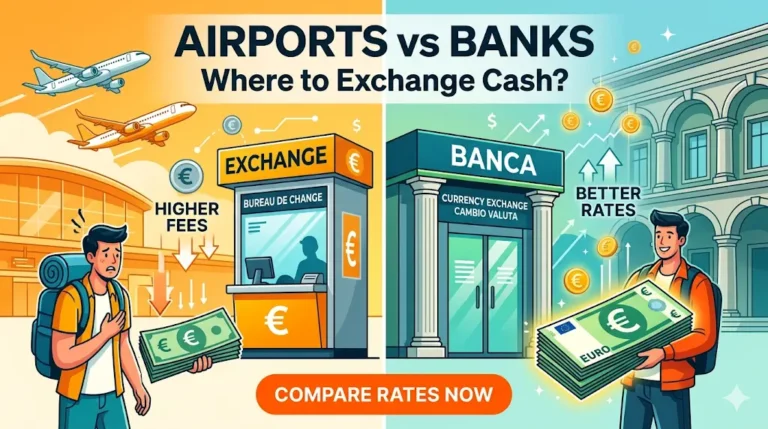
Instead of accepting awful exchange rates from your local bank to pay the dealership’s deposit, I highly recommend using Wise to convert your foreign currency. You can then use your Wise account to execute a standard SEPA transfer directly to the concessionaria.
If the bank absolutely refuses to finance your vehicle, you might be forced to buy it in cash by liquidating assets from your foreign brokerage, like Interactive Brokers. Transferring those liquidated funds from Interactive Brokers directly to an Italian bank usually triggers massive international wire fees and places you at the mercy of institutional exchange rates. By routing the withdrawal through Wise, you completely bypass the institutional markups. Keeping your core investments growing in a platform like Interactive Brokers ensures your wealth isn’t tied up in depreciating Italian assets, while using Wise for your day-to-day cross-border logistics keeps your purchasing power intact.
Alternative Options if You Are Denied
Leasing and Long Term Rentals Noleggio Lungo Termine
If traditional financing fails, Italy has a booming market for Noleggio Lungo Termine (NLT), or long-term rentals. This is functionally similar to an American lease but often includes insurance, routine maintenance, roadside assistance, and even tire changes bundled into one fixed monthly payment.
NLT companies (like Arval or Leasys) still require proof of income and a valid Permesso di Soggiorno, but because they retain ownership of the vehicle, their risk is much lower. If you stop paying or flee the country, they simply recover their asset. Consequently, their approval criteria for expats can be significantly more flexible than a bank handing you a 25,000-euro cash loan.
| Financing Method | Vehicle Ownership | Maintenance Included? | Expat Approval Difficulty |
| Traditional Bank Loan | You (Immediate) | No | Extremely High |
| Dealership Financing | You (with a lien) | Sometimes (Can be bundled) | High |
| Noleggio Lungo Termine | The Rental Company | Yes (Comprehensive) | Moderate |
| Standard Leasing | The Finance Company | Optional | Moderate to High |
Co Signers and Guarantors Garante
The ultimate “get out of jail free” card in the Italian financial system is the garante (guarantor). If you have an Italian spouse, a trusted business partner, or a close Italian friend with a flawless credit history and a permanent employment contract, they can co-sign your loan.
When a garante signs your contract, the bank essentially ignores your lack of credit history and bases the approval entirely on the guarantor’s financial stability. However, this is a massive legal request. If you default on the car payment, the bank will immediately seize the funds from your guarantor’s bank account or garnish their wages. Asking someone to be your garante is a deeply serious cultural and financial favor.
Before you commit to buying a car, you must carefully evaluate the ancillary costs. Insurance, regional ownership taxes (bollo auto), and staggering fuel prices will drastically impact your monthly budget. Read our guide on the Cost of Living in Italy 2026 Budgeting for Expats to ensure you aren’t making yourself “car poor.” Furthermore, registering the vehicle requires dealing with municipal offices and the motor vehicle department; reviewing Navigating Italian Bureaucracy Comune and Prefettura will prepare you for the paperwork required to finally get your license plates and hit the road.
References
Primary sources official
- Banca d’Italia – Centrale dei Rischi (Central Credit Register) – https://www.bancaditalia.it/servizi-cittadino/servizi/accesso-cr/
- CRIF – Mappa del Credito and Credit Information Systems – https://www.crif.it/
Other helpful sources
- Stellantis Financial Services Italia – https://www.stellantis-financial-services.it/
- ABI (Italian Banking Association) – Consumer Credit Guidelines – https://www.abi.it/
Disclaimer
The information provided in this article is for educational and informational purposes only and does not constitute official legal, financial, or tax advice. Italian consumer credit laws, lending criteria enforced by the Centrale dei Rischi, and specific bank policies regarding the Permesso di Soggiorno are highly complex and subject to frequent changes. Always consult directly with a certified Italian financial advisor, your local bank manager, or the dealership’s finance department regarding your specific employment contract and residency status before applying for a loan or signing a financial guarantee.