Tax Implications of Using Airbnb Long-Term
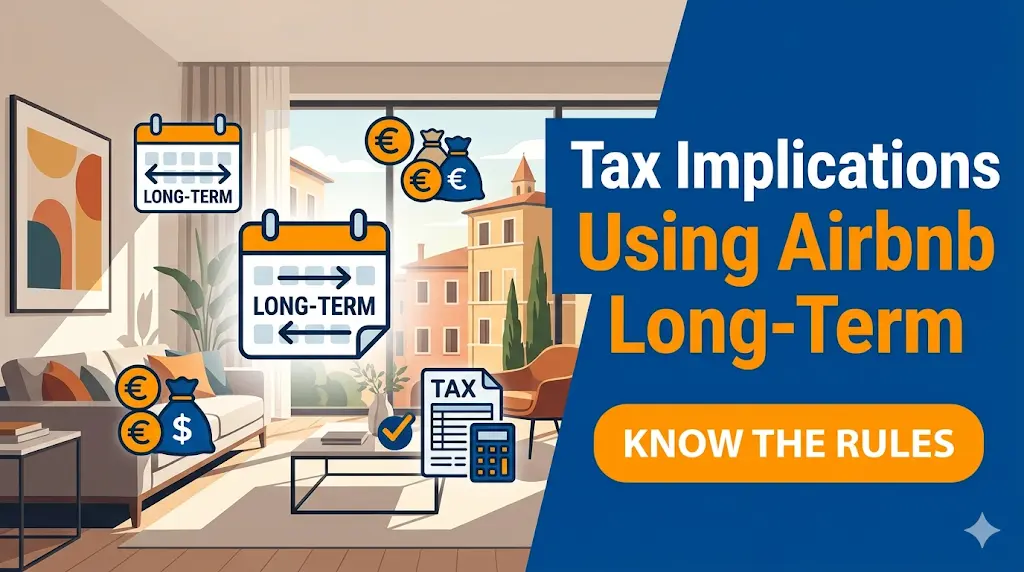
Thinking you outsmarted the brutal Italian rental market by booking a six-month Airbnb feels great until the hidden tax implications destroy your budget. I spent my first four months paying illegal tourist taxes and completely jeopardized my expat tax breaks because I lacked a registered address. This guide explains the severe financial and tax consequences of using short-term rentals long-term in Italy.
Disclosure: This post may contain affiliate links. We may earn a commission at no extra cost to you if you make a purchase through these links. Read full disclosure.
The Hidden Trap of the Tourist Tax
Daily Fees and Algorithmic Errors
When you book an Airbnb for several months, you naturally assume you will be treated like a local resident, not a passing tourist. However, the platform classifies your stay under the umbrella of a short-term tourist rental (locazione turistica). This means you are automatically subjected to the municipal tourist tax, known as the Tassa di Soggiorno. Depending on the specific Italian city, this tax ranges from two to ten euros per night, per person.
While most Italian municipalities cap this tax after a certain number of days—for example, you are usually only supposed to pay for the first ten or fourteen consecutive nights—the automated booking platforms frequently make errors. If you book a three-month stay by stringing together a series of back-to-back thirty-day reservations to take advantage of monthly discounts, the platform’s algorithm will often reset the tourist tax counter. You will end up paying this daily fee repeatedly. Attempting to refund this municipal tax through platform customer service is nearly impossible. Managing these hidden daily leaks is a harsh lesson in accurately projecting your Cost of Living in Italy 2026 Budgeting for Expats.
Why Airbnb Hosts Cannot Waive It
You might try to negotiate directly with your host to drop the tourist tax, especially since you are staying for half a year. They will almost always refuse. In Italy, hosts act as sostituti d’imposta (withholding agents). They are legally required to collect this money and remit it to the local municipal government. If they fail to collect it from you, they are held personally financially liable and face severe administrative fines from the local tax police.
Furthermore, hosts taking bookings through these platforms are often utilizing the cedolare secca flat-tax regime specifically designed for short rentals (under 30 days at a time). To maintain their own compliance with the Italian Revenue Agency (Agenzia delle Entrate), they must maintain a strict paper trail classifying you as a transient tourist. They cannot legally treat you as a long-term tenant without entirely changing their business model, paying higher income taxes, and drafting a formal, registered contract. If you attempt to stay under the radar, you put yourself and the host at immense legal risk.
Residency and Your Official Status
The Locazione Turistica Blockade
The most devastating consequence of living long-term in an Airbnb is the complete inability to establish your official Italian residency. To exist legally in the eyes of the Italian state, you must register your permanent address at the local town hall to obtain your Residenza Anagrafica. This is the absolute foundation of your life here; without it, you cannot access the public healthcare system, buy a vehicle, or even open a standard resident bank account.
To get your Residenza, the town hall requires you to present a legally registered, long-term rental contract. Because an Airbnb is classified as a tourist rental, the host will explicitly forbid you from using the address to register for residency at the municipality. Doing so would grant you intense tenant rights, making you incredibly difficult to evict, and massively complicate the host’s property taxes. You are essentially trapped in an administrative ghost town, completely blocked from Navigating Italian Bureaucracy Comune and Prefettura while your visa clock ticks down. Before attempting to solve this, you must have your basic identification sorted by Checking Your Italian Tax Code Codice Fiscale Status.
The 183-Day Rule and Tax Residency
While you are failing to secure your administrative residency, you might accidentally trigger your tax residency. Under Italian law, if you spend more than 183 days in the country during a single calendar year, you are automatically considered an Italian tax resident. This means you are legally obligated to declare and pay taxes on your global income to the Italian government.
This creates a horrifying paradox for expats relying on Airbnbs. You have triggered the legal obligation to pay Italian income taxes because of your physical presence, but you lack the official Residenza documentation required to actually file those taxes correctly or access the social benefits that your taxes pay for. Trying to explain to a local accountant that you have been living in a vacation rental for seven months while trying to file your annual returns is a fast track to hefty fines and intense audits by the Revenue Agency.
Missing Out on Expat Tax Breaks
The Lavoratori Impatriati Regime
Italy offers one of the most generous expat tax breaks in Europe, known historically as the Lavoratori Impatriati regime. If you qualify, the government slashes your taxable Italian income by 50 percent for five years. However, this massive financial incentive comes with a strict, non-negotiable requirement: you must officially transfer your Residenza to Italy within a specific timeframe after your arrival.
If you waste your first six months living in an Airbnb where the host refuses to let you register your residency, you will miss the statutory deadline to apply for the impatriate tax regime. I personally know expats who lost tens of thousands of euros in tax savings simply because they thought a long-term tourist rental was a smart, flexible bridge. You cannot outsmart the Agenzia delle Entrate; they require hard proof of a registered residential lease to grant these benefits. If your employment depends on these breaks, you must deeply understand the nuances of Types of Italian Employment Contracts Contratti di Lavoro.
Financial Consequences of Unregistered Contracts
Beyond missing out on the impatriate regime, staying in an unregistered tourist rental completely disqualifies you from primary home tax benefits. If you decide to buy property in Italy later, you will not be able to claim the Prima Casa (Primary Home) tax breaks if you cannot prove a continuous, registered residency history. You will be forced to pay the much higher Seconda Casa registration taxes, a complex and expensive scenario detailed in Eligibility for Dual Residence in Italy Two Homes.
Additionally, you are paying a massive premium on the utilities baked into the nightly Airbnb rate. Short-term rentals are billed at commercial or non-resident utility tariffs, which are significantly higher than standard resident rates. You are subsidizing these inflated costs through your monthly payments. To understand how drastically these rates differ once you actually become a registered resident, you must review the process of Setting Up Utilities in Italy.
| Feature / Benefit | Long-Term Airbnb (Locazione Turistica) | Registered Transitional Contract |
| Official Residency (Residenza) | Blocked by host / Illegal to register | Legally permitted and encouraged |
| Tourist Tax (Tassa di Soggiorno) | Mandatory (Often charged daily) | Exempt |
| Expat Tax Regime Eligibility | Invalidates eligibility due to timeline | Fully qualifies you for tax breaks |
| Utility Costs | Inflated (Non-resident commercial rates) | Standard (Lower resident tariffs) |
| Legal Tenant Protections | None (Platform can evict you anytime) | High (Governed by Italian Civil Code) |
Smarter Alternatives for Mid-Term Housing
Securing a Transitional Contract
To avoid the tourist tax trap and secure your expat tax benefits, you must transition to a legally registered lease immediately. You do not need to sign a binding four-year contract on your first day. The ideal solution is a contratto transitorio (transitional contract), which is specifically designed to last between one and eighteen months. This contract is officially registered with the government, allowing you to legally establish your Residenza and secure your tax breaks without being locked in for years.
To find these specific contracts without dealing with predatory local classifieds, veteran expats use Spotahome. By booking your mid-term apartment through Spotahome, you can explicitly filter for verified properties where the landlords proactively offer registered residential leases instead of tourist contracts. Spotahome acts as a secure intermediary, completely removing the anxiety of fake listings and ensuring you get the exact legal paperwork you need to satisfy the Italian government. Securing your base through Spotahome is the absolute smartest way to bridge the gap discussed in Long-Term Airbnb vs Lease Pros and Cons in Italy.
Setting Up Your Permanent Base
Once you use Spotahome to secure your residency and finalize your tax status, you will eventually move into a permanent, long-term apartment. Be warned: permanent Italian rentals are often completely empty. You will likely have to purchase everything from the mattress to the kitchen sink. Instead of dragging heavy furniture across cobblestones on a crowded tram, I relied entirely on Amazon Italy to outfit my permanent home. You can order massive dehumidifiers, heavy winter bedding, and essential small appliances directly from Amazon Italy and have them delivered safely to your new, officially registered address.
During these chaotic transitions—whether you are dealing with a difficult Airbnb host refusing a refund, communicating with your accountant about strict tax deadlines, or tracking your Amazon Italy deliveries—you must maintain a secure internet connection. Public Wi-Fi is notoriously unsafe for transmitting banking and tax documents. I highly recommend downloading a data eSIM from Airalo. Keeping Airalo active on your smartphone ensures you have continuous, encrypted cellular data to manage your digital life and financial transfers without interruption. Relying on Airalo gives you the connectivity necessary to finalize Signing an Italian Rental Contract without ever being digitally stranded or compromised.
References
Primary sources (official)
- Agenzia delle Entrate – Disciplina fiscale delle locazioni brevi – https://www.agenziaentrate.gov.it/portale/documents/20143/6317129/Locazioni_Brevi_disciplina_fiscale_e_regole_per_intermediari.pdf
- Ministero dell’Economia e delle Finanze – Dipartimento delle Finanze: Imposta di Soggiorno – https://www.finanze.gov.it/
Other helpful sources
- Studio CLU – Locazioni brevi: la guida completa (aggiornata alle regole 2025–2026) – https://www.studioclu.it/le-guide-di-clu/locazioni-brevi-guida-completa/
- Arletti & Partners – Chiarimenti dell’Agenzia delle Entrate sul regime impatriati – https://arlettipartners.com/it/chiarimenti-dellagenzia-delle-entrate-sul-regime-impatriati-e-trasferimento-della-residenza-in-altra-regione/
Disclaimer
The information provided in this article is for educational and informational purposes only and does not constitute official legal, tax, or real estate advice. The 183-day rule establishing Italian tax residency and the strict eligibility requirements for the Lavoratori Impatriati tax regime are governed by the Agenzia delle Entrate and are subject to frequent legislative updates. Short-term tourist rentals (locazioni turistiche) do not confer long-term tenant rights under the Italian Civil Code and cannot legally be used to establish Residenza Anagrafica. Always consult directly with a certified Italian commercialista (tax advisor) to evaluate your personal tax residency status and liabilities.