Finding Gluten-Free Products in Italian Stores
Moving to the undisputed capital of pasta and pizza while strictly avoiding gluten sounds like an absolute dietary nightmare. I spent my first grocery trip in Milan staring blankly at endless aisles of wheat products, completely terrified I would accidentally buy the wrong thing. This guide explains how to safely and affordably navigate Italian grocery stores for gluten-free foods.
Disclosure: This post may contain affiliate links. We may earn a commission at no extra cost to you if you make a purchase through these links. Read full disclosure.
The Medical Approach to Gluten in Italy
A Surprisingly Celiac-Friendly Culture
Before you arrive, you likely picture Italy as an impossible landscape for anyone with gluten intolerances. The reality is the exact opposite. Italy is arguably the most celiac-friendly country in the world. Because the traditional Mediterranean diet relies so heavily on wheat, the Italian medical community identified celiac disease (celiachia) early on and treats it with extreme seriousness. It is not viewed as a trendy lifestyle diet or a mild preference; it is legally recognized as a chronic systemic autoimmune disease.
When you walk into a store or a restaurant and declare you need food senza glutine (without gluten), you will not be met with eye rolls or confusion. The staff is highly trained to understand the severe implications of cross-contamination. Every child in Italy is screened for celiac disease if they show any developmental delays or gastrointestinal distress, meaning awareness is baked into the culture from a young age. Managing your diet here is significantly easier than you think, provided you understand how the system is structured.
This high level of medical integration is one of the massive benefits we explore in Healthcare in Italy An Expats Guide. However, to fully access this incredibly supportive ecosystem, you have to formally enter the Italian medical registry, which requires navigating a labyrinth of initial paperwork.
The AIC and the Pharmacy Voucher System
The absolute gold standard for finding safe food in Italy is looking for the Spiga Sbarrata (the crossed ear of wheat) logo. This is the official certification of the Associazione Italiana Celiachia (AIC). If a product bears this logo, it has been rigorously tested and contains less than 20 parts per million of gluten. The AIC also maintains a massive digital directory of safe products, restaurants, and supermarkets.
What truly shocks expats is that the Italian government actually pays for your gluten-free groceries. The Servizio Sanitario Nazionale (SSN) provides diagnosed celiacs with a monthly monetary stipend—usually ranging between €90 and €120, depending on your age and gender—specifically to purchase certified gluten-free food. This allowance is digitally loaded onto your regional health card (Tessera Sanitaria).
To claim this incredible benefit, you cannot just show a doctor’s note from your home country. You must be officially registered as a resident, possess an Italian tax code, and undergo an official diagnosis through an Italian gastroenterologist via the public health system. If you have not secured your foundational identity documents yet, you must immediately review Checking Your Italian Tax Code Codice Fiscale Status. Because gluten-free products are notoriously expensive, securing this monthly stipend is a massive financial relief that you must factor in when mapping out your Cost of Living in Italy 2026 Budgeting for Expats.
Navigating Italian Supermarkets and Pharmacies
The Supermarket Aisles: Where to Look
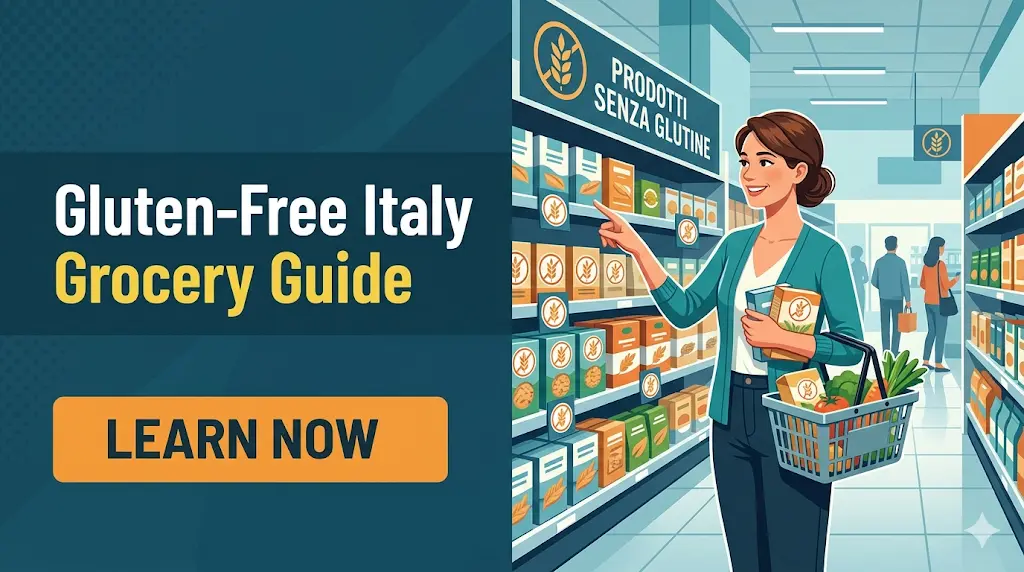
When you enter a massive Italian supermarket (ipermercato) like Esselunga, Coop, or Conad, you will initially be overwhelmed by the sheer volume of standard pasta. You need to look for specific signage reading Prodotti Dietetici or Senza Glutine. In larger stores, there is an entire, dedicated aisle strictly for gluten-free pasta, cookies, bread, and baking flours. Top Italian brands like Schär, Nutrifree, and Rummo dominate these shelves.
However, you must become militant about reading ingredient labels for products mixed into the regular aisles, like sauces or cured meats. Under European Union law, all major allergens must be highlighted in bold text within the ingredient list. You are looking for the words grano (wheat), orzo (barley), segale (rye), and farro (spelt). You must also watch out for the dreaded phrase può contenere tracce di glutine (may contain traces of gluten).
Translating dense Italian ingredient lists on the fly requires an immediate, reliable internet connection. Massive grocery stores are often built like concrete bunkers, and your home carrier’s roaming signal will frequently drop. Before I go grocery shopping, I ensure I have an active data eSIM from Airalo. Keeping Airalo active on your smartphone guarantees you have high-speed local cellular data to instantly translate labels and scan barcodes using the AIC mobile app without wandering the aisles looking for a signal. Relying on Airalo ensures you never accidentally purchase a contaminated product simply because you were digitally stranded.
The Local Farmacia: Your Secret Weapon
In Italy, the pharmacy (farmacia) is not just a place to pick up aspirin; it is a primary distributor of highly specialized dietary foods. When you walk into a standard neighborhood pharmacy, you will find entire walls dedicated to premium gluten-free products, including fresh baked goods, frozen artisanal pizzas, and specialty pastas that you cannot find in standard supermarkets.
The reason pharmacies stock so much food is directly tied to the government voucher system. Historically, the monthly SSN stipend could only be spent at official pharmacies. While many regions have modernized their systems to allow you to swipe your health card at the supermarket checkout, the pharmacy remains the most reliable, fully stocked haven for medical-grade gluten-free living. If you need a highly specific item, the pharmacist can usually order it from their distributor to arrive by the next afternoon. This level of personalized service is a stark contrast to the rigid bureaucracy you face when Navigating Italian Bureaucracy Comune and Prefettura.
| Shopping Location | Product Selection | Price Point | SSN Voucher Acceptance |
| Supermarket (Coop/Conad) | Good (Basics: pasta, bread, snacks) | Moderate | Yes (In most modernized regions) |
| Pharmacy (Farmacia) | Excellent (Premium brands, frozen foods) | High | Yes (Universally accepted) |
| Discount Stores (Eurospin) | Limited (In-house generic GF brands) | Low | Rarely |
| Negozi Specializzati | Massive (100% dedicated GF stores) | High | Yes (Always accepted) |
Practical Expat Workarounds for Gluten-Free Living
Sourcing Specialty Items and Bulk Ordering
While Italy is an absolute paradise for finding gluten-free pasta and pizza bases, you will quickly realize that certain international staples are nearly impossible to find locally. If you are looking for gluten-free soy sauce (tamari), gluten-free tortillas, or specific xanthan gum flour blends for your own baking, the local Italian supermarket will fail you. Furthermore, finding safe oats (avena) is incredibly difficult, as Italian oats are almost universally cross-contaminated unless specifically certified.
When I cannot find my specific dietary staples locally, I rely exclusively on Amazon Italy. You can easily order bulk packs of certified gluten-free oats, international sauces, and specialty flour blends directly from Amazon Italy. Having these heavy, bulk items delivered directly to your front door via Amazon Italy saves you from trying to haul them across the city on a crowded bus. Utilizing Amazon Italy to fill the gaps in the local market ensures your pantry remains stocked with the exact international brands your stomach trusts.
Managing Temporary Housing and Kitchen Cross-Contamination
Finding gluten-free food in the store is only half the battle; cooking it safely is the other. If you are extremely sensitive or have celiac disease, cross-contamination in your own kitchen is a massive threat.
If you rent a shared apartment with local Italian roommates, you are stepping into a hazard zone. Shared wooden spoons, scratched non-stick pans, and communal toasters are heavily contaminated with wheat flour from daily pasta and bread consumption. You cannot safely prepare a gluten-free meal on a counter covered in semolina dust. To protect my health when I first relocated, I used Spotahome to secure a mid-term rental. Because I could filter for entire, private apartments, Spotahome allowed me to secure a pristine, isolated kitchen where I had absolute control over the environment.
Booking a private space through Spotahome shielded me from the severe anxiety of roommate cross-contamination while I took my time looking for a permanent home. Having your own safe space is the primary advantage discussed in Long-Term Airbnb vs Lease Pros and Cons in Italy. Once you transition to a permanent lease, you will likely have to build your kitchen from scratch, forcing you to navigate the intense logistical hurdles of Signing an Italian Rental Contract and Setting Up Utilities in Italy. Keeping your kitchen completely isolated and relying on verified digital platforms for your housing and groceries will ensure your Italian experience remains healthy and stress-free.
References
Primary sources (official)
- Associazione Italiana Celiachia (AIC) – Official Website and Guidelines – https://www.celiachia.it/
- Ministero della Salute – Registro Nazionale degli Alimenti Senza Glutine – https://www.salute.gov.it/portale/nutrizione/dettaglioContenutiNutrizione.jsp?lingua=italiano&id=5096&area=nutrizione&menu=vuoto
Other helpful sources
- Schär – How to get your celiac diagnosis and vouchers in Italy – https://www.schaer.com/it-it/a/buoni-celiachia-regioni-italia
- The Local Italy – How easy is it to be gluten-free in Italy? – https://www.thelocal.it/
Disclaimer
The information provided in this article is for educational and informational purposes only and does not constitute official medical advice. The monthly monetary allowance (buoni spesa) provided by the Servizio Sanitario Nazionale (SSN) for the purchase of gluten-free foods requires a formal medical diagnosis from an Italian public health facility (ASL) and is strictly regulated. The digitization of these vouchers and their acceptance at large-scale retail supermarkets (Grande Distribuzione Organizzata) varies significantly by individual Italian region. Always consult an Italian gastroenterologist and your local ASL office to understand your specific diagnostic and financial eligibility.