How to Set Up SPID From Abroad for Italian Services
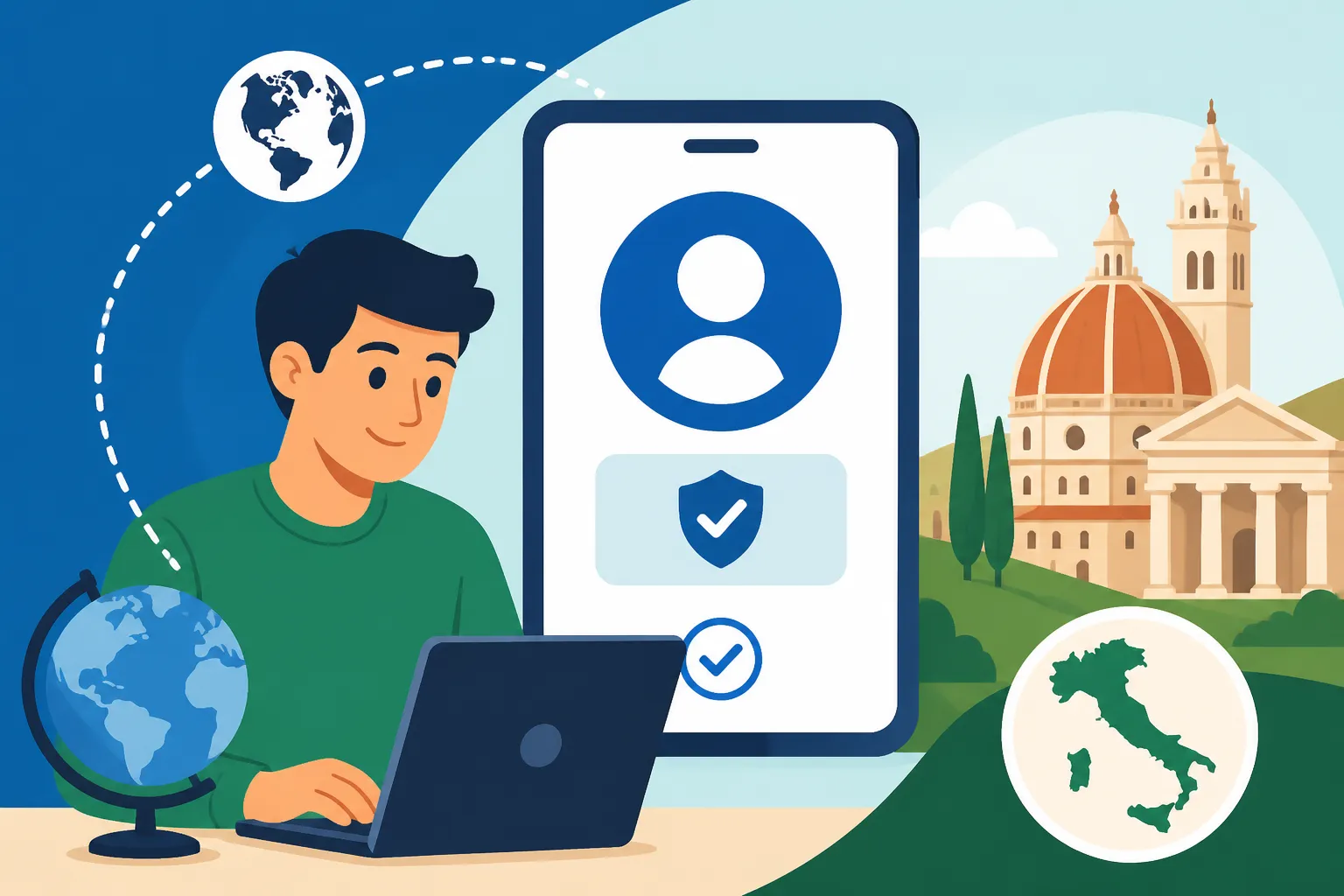
Trying to access Italian government portals from another country often feels like being locked out of your own house while watching through the window as your mail piles up. I vividly remember the hair-pulling frustration of trying to check my residency status from abroad only to be met with a digital wall that required a login I didn't have. This guide solves that exact problem by walking you through the precise steps to secure your SPID (Sistema Pubblico di Identità Digitale) without ever stepping foot in Italy.
Disclosure: This post may contain affiliate links. We may earn a commission at no extra cost to you if you make a purchase through these links. Read full disclosure.
Why You Need SPID Even Before You Land in Italy
If you are planning a move or already have ties to the peninsula, SPID is the master key to the Italian digital kingdom. It is not just a "nice-to-have" convenience; it is increasingly the only way to communicate with public administrations. Without it, you are effectively invisible to the systems that manage your taxes, your healthcare, and your legal status. For those of us living between two worlds, setting this up early is the single best favor you can do for your future self.
One of the most critical uses is accessing the Electronic Health Record in Italy (Fascicolo Sanitario Elettronico). Even if you are still in the process of moving, being able to see your digital health records or eventually book appointments through the regional health portals is a game-changer. I have seen countless expats arrive in Italy and wait weeks for a family doctor because they couldn't log into the system to see who was available in their neighborhood.
Furthermore, if you have any financial interests in Italy, such as a rental property or previous employment, you will need SPID to manage your obligations. For instance, Filing Taxes in Italy: Modello 730 vs Redditi PF is almost impossible to do independently without a digital ID. The Agenzia delle Entrate (Tax Agency) has moved almost all of its personal dashboard features behind the SPID/CIE login wall. If you are working with specialized firms like Taxes for Expats to handle your cross-border filings, having your SPID ready allows you to pull the necessary pre-filled forms that your accountant will inevitably ask for.
The Essential Prerequisites for Remote SPID Setup
Before you even look at a provider's website, you need to gather your "Italian toolkit." You cannot bypass these requirements, and trying to do so will only result in a rejected application. The most important piece of the puzzle is your tax code. You must know How to Get a Codice Fiscale in Italy (and Why You Need One) before you begin, as this 16-character alphanumeric code is the foundation of your digital identity. If you don't have one yet, you can usually apply through your local Italian consulate.
The second requirement is a valid identification document. While Italian citizens can use their Italian ID card or passport, foreigners usually need to provide their national passport. Note that some SPID providers are more "foreign-passport friendly" than others. You will also need a smartphone and a mobile phone number. There is a common myth that you absolutely must have an Italian SIM card to get a SPID. While it makes things easier, several providers now accept foreign mobile numbers, though you should check the compatibility list for your specific country.
Lastly, you need a way to pay for any verification fees. While the SPID itself is technically free, the remote "de visu" (face-to-face) verification via webcam usually carries a small fee. This is where having a versatile financial tool like Wise becomes invaluable. Using a Wise account to handle these small Euro-denominated payments ensures you aren't hit with massive international transaction fees or poor exchange rates from your home bank. Having a European IBAN, which Wise provides, also simplifies many of the subsequent steps once your SPID is active.
Choosing the Right Identity Provider from Abroad
Not all Identity Providers (IdPs) are created equal when it comes to serving the expat community. Some are heavily geared toward residents with a physical presence in Italy, while others have built robust systems for the "Italiani all'estero" (Italians abroad) and foreign residents. You need to choose a provider that offers "Riconoscimento via Webcam" or "Riconoscimento via App" using an electronic passport.
The most popular choices for those abroad are:
- SielteID: Often cited by the expat community as one of the most flexible. They have a long history of allowing webcam verification for a relatively low fee (or sometimes free for certain categories). They generally handle foreign mobile numbers well.
- PosteID (Poste Italiane): The giant of the Italian postal system. Their app is quite advanced. If you have a biometric passport (the ones with the little chip icon on the cover) and an NFC-enabled smartphone, you can often verify your identity for free by simply scanning your passport with your phone.
- Namirial or Aruba: These are private companies that offer very professional, albeit usually paid, verification services. They are excellent if you need a high level of support and want a reliable webcam appointment.
| Provider | Remote Verification Method | Foreign Number Support | Estimated Cost |
|---|---|---|---|
| SielteID | Webcam / App | High | 0 – 10 EUR |
| PosteID | App (NFC) / Webcam | Medium | 0 – 12 EUR |
| Namirial | Webcam / Video | High | 15 – 25 EUR |
| Aruba | Webcam / Remote | High | 15 – 20 EUR |
| InfoCert | Webcam | High | 20 – 30 EUR |
When making your choice, think about your long-term needs. If you're also looking into Healthcare in Italy: An Expats' Guide, you'll want a SPID provider that has a simple mobile app for generating the "Level 2" security codes required for most medical portals. PosteID and SielteID both have very user-friendly apps for this purpose.
Step-by-Step Tutorial: Setting Up Your Identity Remotely
The process can be broken down into three distinct phases: Registration, Verification, and Activation. I’ve gone through this myself, and the biggest tip I can give you is to ensure your lighting is perfect during the verification stage. If they can’t see the holograms on your passport clearly, they will cancel the call and make you start over.
Phase 1: The Online Application
Visit the website of your chosen provider and select the "Privati" (Private) option. You will be asked to enter your personal details exactly as they appear on your Codice Fiscale and your passport. Do not use nicknames or shortened versions of your name. If your Codice Fiscale has a middle initial that isn't on your passport, or vice-versa, this can cause a "discrepancy error."
During this phase, you will also set your credentials. You'll create a username (often your email address) and a strong password. This will be your "Level 1" security. Most government sites also require "Level 2," which involves a one-time password (OTP) sent via SMS or generated by an app on your phone. If you are working with Filing an Italian Tax Return: Step-by-Step Guide, you will find that the tax portal almost always demands this second level of security.
Phase 2: The Identification Process
This is where the magic (or the frustration) happens. If you chose the webcam method, you will book a slot. A real human will call you via a secure browser link. You will need to hold your passport up to the camera, move it to show the security features, and read out a series of numbers or phrases. It’s a bit like a digital interrogation, but as long as your documents are valid, it takes about ten minutes.
If you are using the NFC app method (like with PosteID), the app will ask you to place your phone on top of your biometric passport. The phone’s NFC reader will "talk" to the chip in your passport to verify your identity. This is the "holy grail" of SPID setup because it’s instant and usually free. However, it requires a very steady hand and a modern smartphone.
Phase 3: Activation and Testing
Once the provider verifies your identity, you will receive an activation email. This might happen within an hour or take up to two business days. Once active, the first thing you should do is try to log into a non-critical site to test the credentials. I recommend trying the How to Use SPID to Book Health Appointments in Italy portal or the INPS website. If you can get in there, your SPID is fully functional.
Overcoming Common Hurdles for Non-Residents
The road to a SPID is rarely paved with gold. One of the most frequent issues is the "SMS lag." If you are using a non-Italian number, the OTP (One-Time Password) can sometimes take minutes to arrive, by which time the session has timed out. If this happens consistently, you might want to consider getting a virtual Italian mobile number or a low-cost Italian eSIM that supports roaming.
Another common pain point is the address field. Many Italian forms are not designed for foreign addresses. They might insist on an Italian "Provincia" or "Comune." If the SPID provider’s form doesn't let you select "Estero" (Abroad), look for a "Foreign Address" checkbox. If you're stuck, reaching out to an English-speaking professional can help. Knowing How to Find an English-Speaking Commercialista in Italy can be useful even for these minor bureaucratic hurdles, as they deal with these systems daily.
If your primary concern is taxes, keep in mind that Understanding Italy's Tax System: A Guide for Foreigners requires a long-term view. Your SPID is your link to the "Cassetto Fiscale" (Tax Drawer), where all your records are kept. If you ever have a dispute with the authorities, being able to log in and see exactly what they see is your best defense. This is another area where Taxes for Expats can provide significant value, as they can guide you on which documents to pull from your digital drawer to ensure your US and Italian filings are perfectly synced.
Managing Your Italian Digital Life Post-Activation
Once your SPID is live, you are no longer a "ghost" in the system. You can now look into Best Bank Accounts for Expats in Italy: Fees and Benefits with a much clearer perspective. Many modern Italian banks, especially the online-only ones, allow for faster onboarding if you can identify yourself via SPID. It streamlines the "Know Your Customer" (KYC) process significantly.
When it comes to the actual movement of money, remember that while SPID handles your identity, you still need efficient ways to move your capital. I always suggest that new expats stick with Opening a Bank Account in Italy: Requirements and Tips while keeping a Wise account as their primary bridge. You can pay your Italian utility bills (which you can now manage online via SPID!) using your Wise Euro balance, avoiding the high fees often associated with traditional Italian bank transfers for non-residents.
Your digital identity is an evolving tool. Every few months, log in just to ensure your password hasn't expired and that your contact details are up to date. The Italian government is constantly adding new features to the SPID ecosystem, such as the ability to sign digital documents with a "Firma Elettronica" that has the same legal weight as a handwritten signature. For someone living abroad, the ability to sign an Italian contract from their living room in New York or London is the ultimate expression of modern expat life.
Disclaimer
This guide is for informational purposes only. Bureaucratic procedures in Italy are subject to frequent changes, and the requirements for SPID providers can be updated without notice. Always verify the current terms and conditions on the official SPID.gov.it website or with your chosen Identity Provider before proceeding. The author is not a legal or tax professional.