The Electronic Health Record in Italy (Fascicolo Sanitario Elettronico)
You are standing in a crowded Italian pharmacy, the line is stretching out the door, and you realize you have left that tiny, critical paper prescription on your kitchen counter in Trastevere. I have been there, sweating under the pharmacist's impatient gaze while trying to explain my chronic medication history in broken Italian. This guide to the Fascicolo Sanitario Elettronico (FSE) solves that specific, recurring nightmare by teaching you how to digitize your entire medical existence in Italy.
Disclosure: This post may contain affiliate links. We may earn a commission at no extra cost to you if you make a purchase through these links. Read full disclosure.
Understanding the Fascicolo Sanitario Elettronico
The Fascicolo Sanitario Elettronico, or FSE, is essentially your digital health diary, mandated by the Italian government to centralize every medical interaction you have within the public system. For years, being an expat in Italy meant carrying around a literal accordion folder of blood test results, X-ray films, and handwritten notes from specialists. When I first moved to Tuscany, I was horrified to find that if I saw a doctor in Florence, my local GP in the countryside had zero visibility into those results unless I physically brought the papers to him. The FSE was designed to kill that inefficiency.
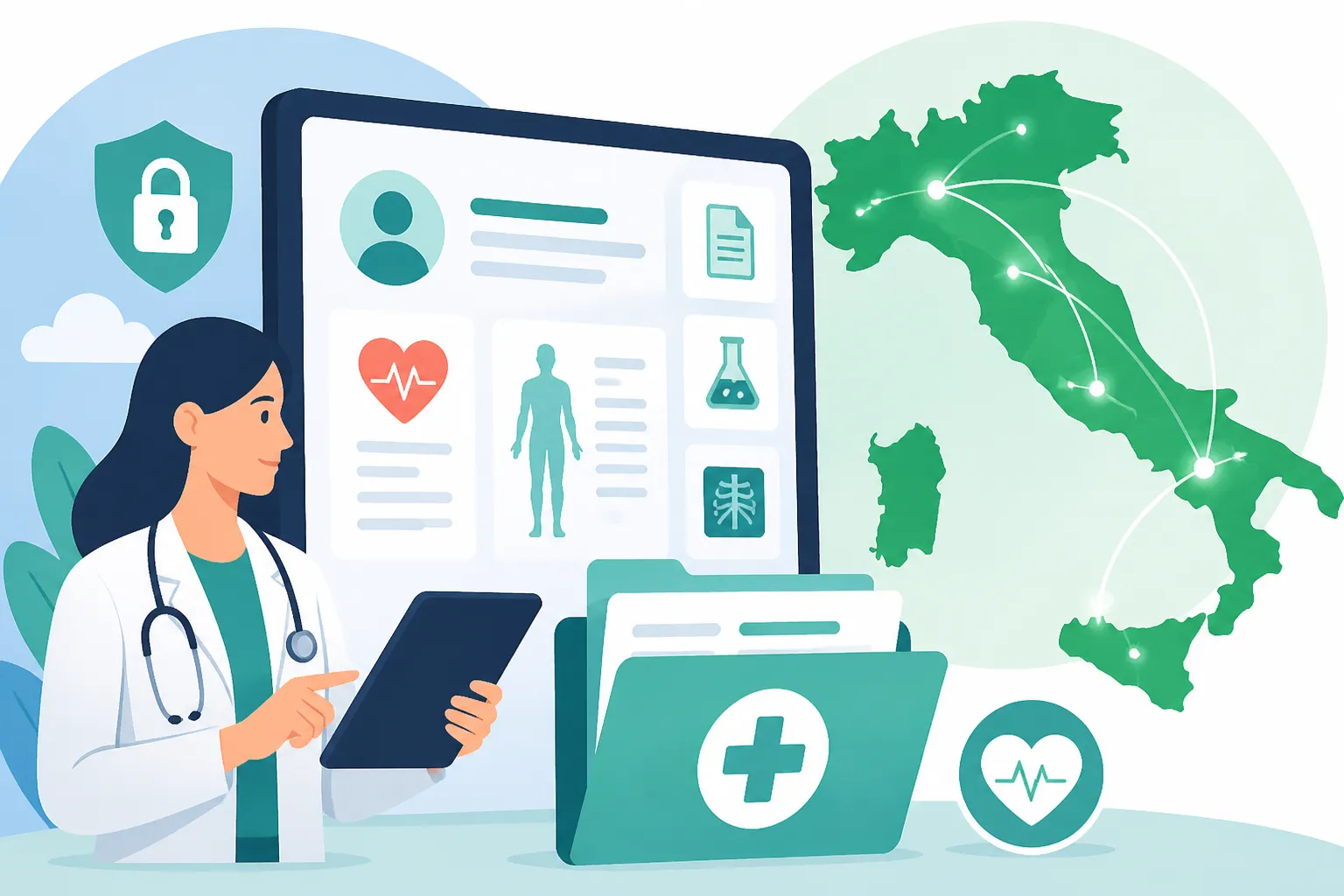
In the grand scheme of Healthcare in Italy: An Expats' Guide, the FSE is the bridge between the administrative bureaucracy of the ASL (Azienda Sanitaria Locale) and the actual clinical care you receive. It is a secure, online portal where all your health data—including hospital discharge summaries, laboratory reports, and even your vaccination history—is stored. It is not just a storage locker; it is a live document that follows you across regional borders, which is a revolutionary concept in a country where regional autonomy often creates silos of information.
The Scope of the Digital Health Record
The scope of the FSE is surprisingly broad, covering everything from your birth (or your arrival in Italy) to your most recent pharmacy visit. It includes "red" prescriptions (ricette rosse), which are the subsidized ones, and the newer "dematerialized" versions that exist only as a barcode in the system. Beyond just records of visits, the FSE holds your "Patient Summary" (Profilo Sanitario Sintetico), which is a document created by your family doctor that outlines your allergies, major surgeries, and long-term conditions.
If you are currently Managing a Chronic Condition Under Italy's SSN, having an updated FSE is a game-changer. Imagine being in a different city, perhaps on a weekend trip to the Dolomites, and needing emergency care. The doctors there can, with your prior consent, look up your FSE and see exactly which medications you are on. This prevents dangerous drug interactions and saves you from having to remember complex medical terminology in a high-stress situation.
Regional Autonomy and the Digital Divide
While the FSE is a national initiative, the actual portal you log into is managed by your specific region. This is where the classic Italian regional divide comes into play. If you live in Lombardia or Emilia-Romagna, you will likely find a sleek, highly functional app and website. If you are further south, the interface might feel a bit more dated, or the integration of private clinic results might be less seamless.
It is important to understand that your FSE is tied to your residency. If you move from Milan to Rome, you don't just keep the same portal; you essentially "transfer" your health data to the Lazio regional system. For those who are still in the process of Registering for Italian Healthcare (SSN) as a Foreigner, the FSE will only become available once you have your physical Tessera Sanitaria and are fully inscribed in the system. If you are a temporary visitor or a digital nomad using something like SafetyWing for your initial months, you won't have access to the FSE until you transition to formal residency and the public system.
Accessing Your Records and the Technical Hurdle
The biggest hurdle for most expats isn't understanding the medical side of the FSE; it's the digital gatekeeping. To see your records, you cannot simply create a username and password. Italy uses a unified digital identity system to protect sensitive medical data. This means you must have a SPID (Sistema Pubblico di Identità Digitale) or a CIE (Carta d’Identità Elettronica) with its associated PIN and PUK codes.
I remember spending an entire afternoon at a Poste Italiane office just to get my SPID verified. It felt like an unnecessary obstacle at the time, but once it was done, the FSE opened up to me. Using your SPID, you can log into your regional health portal or the national "Salute.gov.it" site. If you haven't set this up yet, you should look into SPID and Digital Identity for Italian Tax and Services immediately, as you’ll need it for everything from taxes to healthcare.
The Importance of Digital Consent
Once you log in for the first time, you will be faced with a series of consent forms (Consenso alla consultazione). This is a critical step that many expats ignore because the legal language is dense. If you do not tick "Yes" to these boxes, your FSE remains a private vault that only you can see. Your family doctor, the emergency room specialists, and even the pharmacists will be blocked from viewing your history.
By giving consent, you are allowing healthcare professionals within the National Health Service (SSN) to access your data during the course of your treatment. You can also choose to hide specific documents—like sensitive mental health records—while leaving the rest of the file open. It is a flexible system, but without that initial consent, the FSE loses its most powerful feature: the ability to coordinate your care across different providers.
Setting Up Your Profile for the First Time
The first time you enter the portal, you need to verify your contact information. Ensure your Italian mobile number and email address are correct, as the system will send you notifications whenever a new report is uploaded or a prescription is issued. Some regions even allow you to choose your family doctor directly through the FSE portal, which is much easier than visiting the ASL office in person.
For those who are Registering With Your Local ASL in Italy: A Practical Guide, the FSE setup should be your very next step after getting your tax code and residency card. Once your profile is live, I recommend uploading any previous medical records from your home country. While they won't be "official" SSN documents, many regional portals allow a "taccuino" or notebook section where you can store PDFs of foreign records. This is incredibly helpful when Finding and Using Pharmacies in Italy to explain why you need a specific medication you’ve taken for years abroad.
Key Features and Daily Usage
The true magic of the FSE happens when you stop seeing it as a government database and start using it as a personal health assistant. The most used feature by far is the "Prescription" section. When your doctor issues a referral for a specialist or a prescription for medicine, it appears here instantly. You no longer need to worry about the doctor’s printer being broken or losing that flimsy slip of paper.
You can simply show your smartphone to the pharmacist, and they will scan the barcode directly from your FSE. This is also how the Specialist Referrals in Italy: How the Impeignativa Works in the digital age. When you book a visit through the CUP (Centro Unico di Prenotazione) system, the operator can see your digital referral in real-time, eliminating the need for you to read out long alphanumeric codes over the phone.
Accessing Lab Results and Imaging
Waiting for blood test results used to involve a second trip to the clinic just to pick up a paper envelope. With the FSE, results are usually pushed to your portal the moment they are validated by the lab. You can download them as PDFs and send them to specialists or keep them for your own records. This speed is essential if you are worried about a specific health marker or if you are using private insurance like Cigna Global to see a non-SSN specialist who needs to see your public lab results.
The FSE also stores "Referti di Pronto Soccorso" or emergency room reports. If you ever have to Call 112 in Italy: What to Say and What Happens, the resulting hospital visit will be documented in your FSE. This provides a clear trail of what tests were performed, what medication was administered, and what the follow-up instructions were, which is invaluable for your regular family doctor who might not otherwise know you were in the hospital.
Vaccination Records and Historical Data
Another life-saving feature of the FSE is the "Libretto Vaccinale" or vaccination booklet. In recent years, this has become vital for school enrollments and international travel. Instead of digging through childhood boxes for a yellow paper card, you can download an official, stamped PDF of your entire vaccination history in Italy. If you received vaccines abroad, you can often take your foreign certificates to the ASL and ask them to manually enter the data into your FSE.
This digitized history is particularly useful for expats who need to track Mandatory Vaccinations for Living in Italy for their children. Having a digital record that is recognized by the school system and the health ministry simplifies the annual administrative tasks that can otherwise feel like a full-time job.
| Feature | Description | Who can see it? |
|---|---|---|
| Ricette (Prescriptions) | Digital vouchers for medications and specialist visits. | You, Pharmacist, Doctor |
| Referti (Reports) | Results from blood tests, X-rays, and specialist exams. | You, Your Family Doctor (if consent given) |
| Profilo Sintetico | A summary of allergies, chronic conditions, and surgeries. | You, Any SSN Physician (if consent given) |
| Lettere di Dimissione | Summaries from hospital stays or ER visits. | You, Your Family Doctor |
| Libretto Vaccinale | Complete history of vaccinations administered in Italy. | You, School Health Officers |
Navigating Regional Variations and Technical Issues
Because Italy’s healthcare is decentralized, the "flavor" of your FSE depends heavily on your region. Each region has its own name for the service. In Lombardia, it is part of the "Fascicolo Sanitario" app; in Lazio, it is accessed through "Salute Lazio." The discrepancy in user experience can be frustrating. I have found that Northern regions tend to integrate private hospital data more effectively than Southern ones, meaning if you pay for a private scan at a "convenzionato" clinic, it is more likely to show up automatically in your FSE in Milan than in Naples.
If you are Choosing the Best Neighborhood in Italy’s Major Cities, it’s worth asking local expats about the efficiency of the regional health portal. While it shouldn’t be your only reason for moving, a functional digital health system saves countless hours of standing in lines.
Troubleshooting the "Missing Record" Problem
A common complaint among expats is: "I had my blood tested yesterday, but it’s not in my FSE!" This usually happens for one of three reasons. First, the laboratory might not be fully integrated into the regional digital network. Second, you might not have provided your "Codice Fiscale" correctly at the time of the test. Third, and most common, is that the doctor hasn't "closed" the file yet.
If a record is missing, your first point of contact should be the "Ufficio Relazioni con il Pubblico" (URP) of the hospital or clinic where the test was done. You can also mention the issue to your Medico di Base (Family Doctor), as they often have a back-end view of the system that is slightly more detailed than the patient portal. For expats using private healthcare like Cigna Global, keep in mind that many purely private clinics do not automatically upload to the FSE; you will often have to upload those results manually to the "Taccuino" section.
Moving Between Regions
When you move and change your residency (residenza), your FSE does not automatically "teleport" with you. You will need to register with the new ASL in your new region. Once the administrative move is complete, your new regional portal should eventually be able to pull your data from the national bridge. However, I always recommend downloading a full backup of your reports from your old region before you leave. It is much easier to have the PDFs on your hard drive than to try and resolve a cross-regional data sync issue six months later when you need an old report.
This transition period is often when people feel most vulnerable. If you are in the middle of a move and haven't yet secured your new Tessera Sanitaria, having a short-term plan like SafetyWing can provide a safety net while you navigate the move between the digital health systems of two different Italian regions.
Privacy and Data Management for the Concerned Expat
It is natural to feel a bit uneasy about the Italian government having a centralized digital file of your entire medical history. However, the FSE is governed by strict European GDPR regulations and Italian privacy laws. The data is encrypted, and every time someone accesses your file, it leaves a digital footprint. You can log into your portal and see exactly who has looked at your records and when.
If you are Using Medical Translation and Interpretation Services, you might be worried about a translator having access. Rest assured that access is restricted to medical professionals with a smart card and your specific consent. You have the right to revoke your consent at any time, although doing so will effectively turn the FSE back into an empty digital shell.
Who Can See Your Data?
By default, only you have access. Once you give "Consenso alla consultazione," your family doctor becomes the primary viewer. In an emergency, a doctor in a public hospital can use the "Informativa di Emergenza" to view your records even if you haven't given prior consent, provided it is a life-or-death situation. This is a crucial safety feature.
Administrative staff at the ASL cannot see your clinical data (the results of your tests); they can only see the administrative data (that a test was performed and how much you paid). This separation of clinical and administrative information is one of the pillars of the FSE's security architecture. For those worried about Mental Health Support and Services in Italy, you can specifically request that mental health records be "obscured" so that they are not visible even to other doctors unless you specifically allow it.
Your Rights to Rectification
If you find an error in your FSE—perhaps a test result that isn't yours or an incorrect allergy listing—you have the right to have it corrected. This process is called "Rettifica." You must contact the healthcare facility that generated the document to have them issue a corrected version. Your family doctor can help facilitate this, but they cannot personally edit a report issued by a hospital or an independent lab.
Maintaining an accurate FSE is part of being an empowered expat. Just as you keep your The Italian Health Card (Tessera Sanitaria): Uses and How to Get One safe in your wallet, you must keep your digital profile accurate. It is your best tool for ensuring that your medical history isn't "lost in translation" as you navigate your new life in Italy.
Practical Tips for Living Digitally in Italy
To make the most of the FSE, I recommend downloading your region's specific health app. For example, in Lombardia, the "Salute Utile" app allows you to book appointments, view your prescriptions, and even check wait times at local emergency rooms. Having these tools on your phone makes the Italian healthcare system feel significantly less like a 19th-century bureaucracy and more like a modern service.
When you go to a specialist visit, don't assume they have checked your FSE. Even if you've given consent, doctors are busy. I always start a consultation by saying, "Dottore, ho il Fascicolo Sanitario aggiornato, vuole vederlo?" (Doctor, I have an updated health record, would you like to see it?). This often prompts them to pull it up on their screen, which provides them with a much clearer picture of your health than any summary you could give in person.
The "Taccuino" Feature for Foreign Records
As an expat, you likely have a medical history that predates your arrival in Italy. The "Taccuino dell'Assistato" (Patient's Notebook) is a specific section of the FSE where you can upload your own documents. These are not considered "certified" by the SSN, but they are incredibly helpful for your Italian doctor.
I uploaded my surgical records from the US and my old immunization records from the UK. When I finally sat down with my new Italian GP, we spent fifteen minutes going through the Taccuino together. It allowed him to create a much more accurate "Patient Summary" in the official part of my FSE. This proactive approach is the best way to bridge the gap between your old life and your new one in Italy.
Using FSE for Family Management
If you have children or are caring for elderly parents in Italy, you can often link their FSE profiles to your own SPID. This allows you to manage their prescriptions and view their lab results without having to log in and out of different accounts. This is a massive time-saver for parents trying to coordinate school health requirements or for those managing the Elder Care: Home Nurses and Assisted Living in Italy for a loved one.
The process for linking accounts usually requires a specific form submitted to the ASL (Delega), but once it is set up, it makes family healthcare management infinitely simpler. You'll be the one who always has the vaccination records ready for the school secretary or the pediatrician, and in Italy, that kind of organization is truly a superpower.
Disclaimer
This guide is for informational purposes only and does not constitute legal or medical advice. Healthcare regulations and digital portal interfaces in Italy change frequently. Always consult with your local ASL office or a qualified legal professional for specific administrative issues.