How to Call 112 in Italy: What to Say and What Happens
Staring at a phone screen during a medical crisis while your heart is racing is a nightmare every foreigner in Italy fears. I remember standing over a friend who had collapsed in a piazza in Florence, realizing my years of classroom Italian hadn't prepared me for the adrenaline of a real-life emergency. This guide solves that panic by explaining exactly how to navigate the 112 system, what to say to the operator, and how the triage process works once help arrives.
Disclosure: This post may contain affiliate links. We may earn a commission at no extra cost to you if you make a purchase through these links. Read full disclosure.
Understanding the 112 Single Emergency Number in Italy
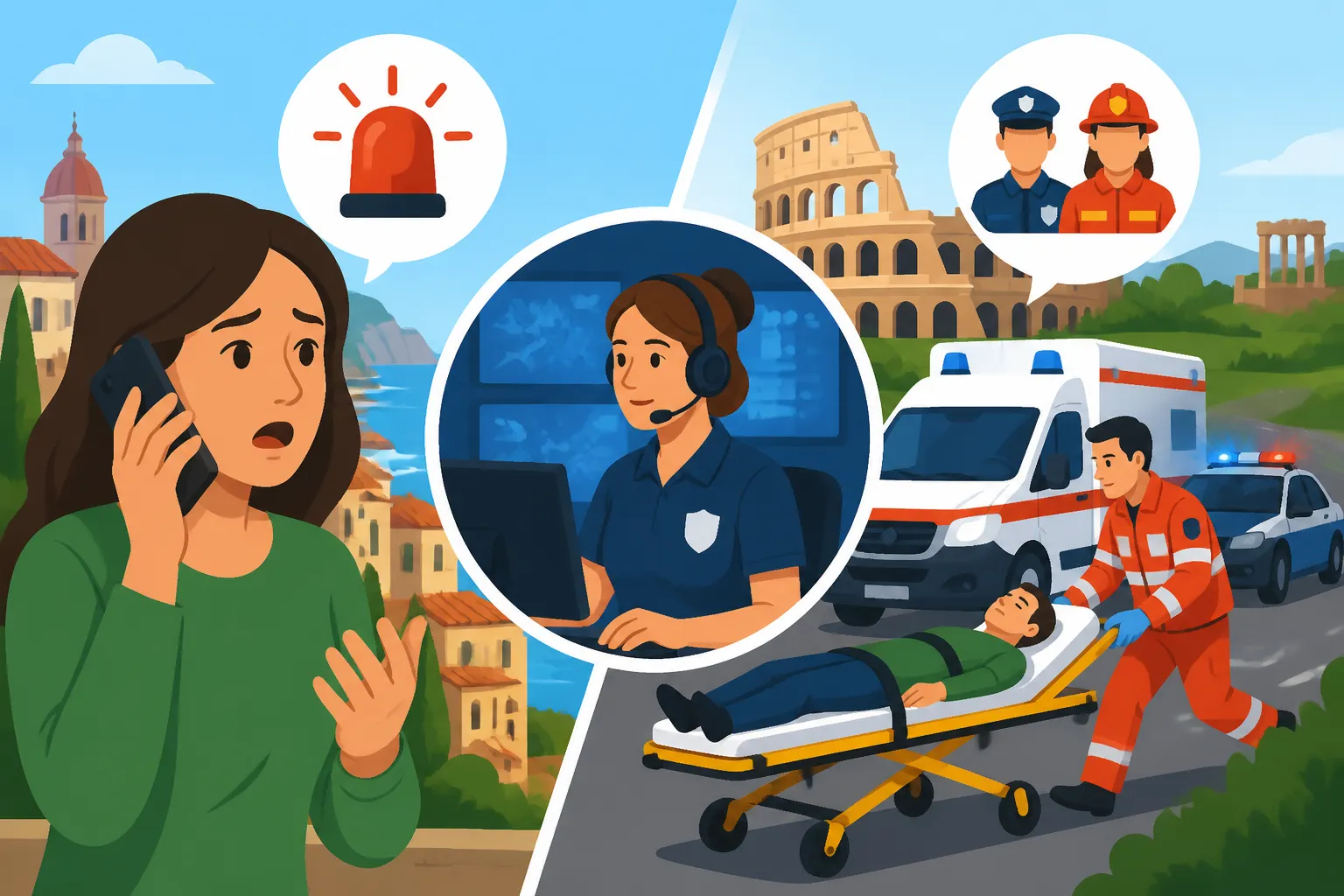
The first thing you need to know is that Italy has moved toward a unified system known as the NUE (Numero Unico di Emergenza). For years, Italy had a confusing web of different numbers for different crises, which was a significant hurdle for those of us moving here from countries with a single "911" or "999" system. Now, 112 serves as the primary gateway for all emergencies, whether you need the police, the fire department, or an ambulance.
When you dial 112, you are typically connected to a first-level response center. This is a sorting office. The operator’s job is to identify who you are, where you are, and what kind of help you need. Once they have that basic data, they will transfer you to the specific dispatch for the carabinieri, the fire brigade (Vigili del Fuoco), or the medical emergency service (formerly 118). It is vital to stay on the line during this transfer; do not hang up thinking the call has failed just because there is a moment of silence or a different voice picks up.
The Transition to the Universal 112 System
While the 112 number is active throughout the European Union, its implementation as a "Single Emergency Number" in Italy happened in phases. Today, most of the country is covered by this unified service. This means that if you are in Lombardy, Rome, or Sicily, dialing 112 will put you through to a central hub that can geolocate your call. This geolocation is a lifesaver for expats who might not know the exact street address or are lost in a rural area.
However, the beauty of the system is that even if you are in a region that hasn't fully integrated the NUE hub yet, the old numbers still function. If you find yourself in a panic and accidentally dial 118 for medical help, the call will still go through. To get a deeper sense of the infrastructure, you can read more about Emergency Medical Services in Italy: 112 and Hospitals. Understanding that these layers exist can lower your anxiety when you actually have to pick up the phone.
Are 113, 115, and 118 Still Active
Yes, these numbers are still operational and generally redirect to the 112 central hub or the specific agency required. 113 is for the State Police (Polizia di Stato), 115 is for the fire department, and 118 is specifically for medical emergencies. In my experience, if you have a clear medical emergency, dialing 118 can sometimes save you thirty seconds of "sorting" time if you are in a region without the 112 hub, but 112 is the safest bet for any situation where you are unsure. For a full breakdown of what each number handles, check our guide on Emergency Medical Numbers in Italy (112, 118, 1500).
Making the Call: Step-by-Step and Language Barriers
When the 112 operator answers, the first thing they will say is usually "Centrale Unica di Emergenza, quale servizio le occorre?" (Single Emergency Center, which service do you need?). At this point, even if your Italian is shaky, you need to state the service you need clearly: "Ambulanza" (Ambulance), "Polizia" (Police), or "Vigili del Fuoco" (Firefighters).
It is a common myth that every operator in Italy speaks fluent English. While the 112 system is designed to have access to interpreters and many operators in major cities like Rome or Milan do speak English, you cannot guarantee it. If you are struggling, say "Parlo Inglese" (I speak English) or "C’è qualcuno che parla inglese?" (Is there someone who speaks English?). If the situation is dire and you cannot find the words, focusing on the location and the nature of the emergency is paramount. You should familiarize yourself with How to Handle a Medical Emergency in Italy Without Italian to have a few key phrases memorized.
What to Say When They Answer
The operator will ask for your location first. This is because if the call drops, they need to know where to send help. Be as specific as possible. If you are at a landmark, name it. If you are at home, have your address written down near your door or on your fridge—including the floor number and the name on the doorbell (citofono), which is often different from the resident's name in Italy.
After location, they will ask "Cosa è successo?" (What happened?). Use short, direct sentences.
- "C’è stato un incidente" (There has been an accident).
- "C’è una persona svenuta" (There is a person who has fainted).
- "Dolore al petto" (Chest pain).
- "Non respira" (He/She is not breathing).
The operator may give you instructions over the phone. Stay calm and follow them. They will stay on the line until the dispatch team has confirmed the ambulance is on the way.
Language Support and English-Speaking Operators
Italy has made great strides in providing multilingual support. In many regions, the 112 center uses a simultaneous translation service that can handle dozens of languages. If the operator realizes you don't speak Italian, they may put you on a brief hold to patch in an interpreter. This process usually takes less than a minute.
During my first few months here, I was constantly worried about this exact scenario. Having a nomad-friendly insurance like SafetyWing can provide a bit of peace of mind for the aftermath of a call, as they understand the complexities of navigating foreign systems. However, in the heat of the moment, the 112 operator is your primary lifeline regardless of your insurance status.
| Emergency Category | Italian Phrase | Meaning |
|---|---|---|
| Medical | Mi serve un'ambulanza | I need an ambulance |
| Police | Mi serve la polizia | I need the police |
| Fire | C'è un incendio | There is a fire |
| Location | Sono in Via… | I am at Street… |
| Critical | È un'emergenza grave | It is a serious emergency |
Triage and What Happens After the Call
Once you hang up, the dispatch sends the nearest available vehicle. In Italy, the ambulance service is often staffed by highly trained volunteers from organizations like the Croce Rossa (Red Cross) or Misericordia, alongside professional doctors or nurses for more critical calls. When they arrive, they will perform an initial assessment.
Don't be surprised if they don't immediately rush the patient to the hospital. Italian emergency teams are trained to stabilize on-site first. They will ask for identification and, if possible, the patient's "Codice Fiscale" or "Tessera Sanitaria." If you are a visitor, your passport or a European Health Insurance Card (EHIC) will suffice. For more on the paperwork side of things, see Healthcare in Italy: An Expats' Guide.
Understanding Triage Color Codes
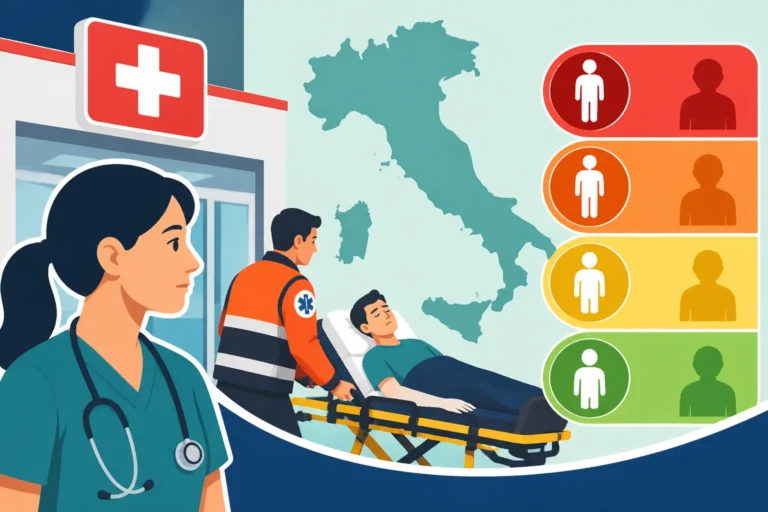
When the patient arrives at the "Pronto Soccorso" (Emergency Room), they are assigned a color code. This is the triage system that determines the order of treatment. It is not first-come, first-served.
The codes generally follow this logic:
- Red (Rosso): Critical, immediate life-threatening condition.
- Orange (Arancione): High priority, risk of deterioration.
- Blue (Blu): Stable but needs urgent care.
- Green (Verde): Low priority, non-urgent.
- White (Bianco): Non-emergency.
If you are assigned a "White Code," be prepared to wait for several hours and potentially pay a small co-payment (ticket), as you are using emergency services for a non-emergency. You can find a deeper dive into this in our article on Emergency Rooms in Italy (Pronto Soccorso) and Triage Codes.
Hospital Transport and the Public vs. Private Reality
In Italy, the 112 system will always take you to a public hospital. The public healthcare system (SSN) is excellent for trauma and acute emergencies. You do not get to "choose" a fancy private clinic when you call 112; the ambulance goes to the nearest facility equipped to handle the specific pathology.
For long-term residents, having comprehensive coverage through Cigna Global can be helpful for follow-up care or elective procedures in private facilities once the emergency is stabilized. However, for the initial life-saving intervention, the Italian public system is where you will be. People often ask about the financial hit of an emergency; you should review the Cost of an Ambulance Ride in Italy to understand when it is free and when you might see a bill. Usually, for genuine emergencies, the cost is covered by the state for residents and those with proper insurance.
Essential Preparation and Practical Tips for Expats
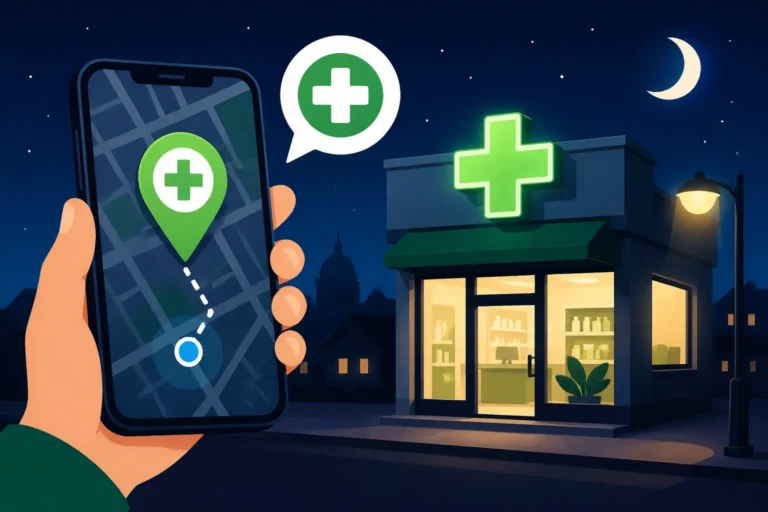
Living in Italy means accepting that bureaucracy and emergency services can be a bit different than what you are used to back home. Preparation is the only antidote to the stress of a crisis. One of the most important things you can do today is download the "Where ARE U" app. This is the official 112 app for Italy. It allows you to call the emergency number with a single touch and automatically sends your GPS coordinates to the operator. This eliminates the need to describe your location in broken Italian.
I also highly recommend keeping a "medical "cheat sheet" in your wallet. This should list your blood type, any allergies, current medications (using their generic names, not just brand names which vary by country), and an emergency contact. For those still setting up their lives here, Finding Doctors and Hospitals in Italy is a great resource to identify the facilities in your neighborhood before you actually need them.
Having Your Medical Info Ready
When the paramedics arrive, they will be moving fast. If you have chronic conditions, it is helpful to have these translated into Italian. Knowing the local names for your medications is vital; for example, acetaminophen is "paracetamolo" here.
If you are a non-EU citizen, ensure your insurance details are easily accessible. While the hospital will treat you regardless of your ability to pay in a life-or-death situation, having International Health Insurance Options for Italy or a plan from SafetyWing ready to show the administrative staff later will make the process much smoother. If you haven't yet navigated the local system, read up on Getting Health Insurance in Italy: Public and Private Options to make sure you are fully protected.
What to Expect at the Hospital
Once at the hospital, the environment can feel chaotic. Italian hospitals are often crowded, and the "Pronto Soccorso" is a high-pressure zone. You may not be allowed to stay with the patient in the treatment area depending on the severity and the hospital's specific rules.
Communication will largely be in Italian, although you can often find a doctor who speaks English. If you are alone and struggling to communicate, you can ask for a "mediatore culturale" (cultural mediator), though they are not always available 24/7. Staying calm and patient is key. The Italian medical staff are generally very skilled, even if the facilities look a bit older than what you might expect in North America or Northern Europe.
Disclaimer
This guide is intended for informational purposes only and does not constitute legal or medical advice. Emergency procedures and phone numbers can change based on regional regulations. Always verify local emergency protocols in your specific Italian municipality. In the event of a life-threatening emergency, dial 112 immediately.