How to Handle a Medical Emergency in Italy Without Italian
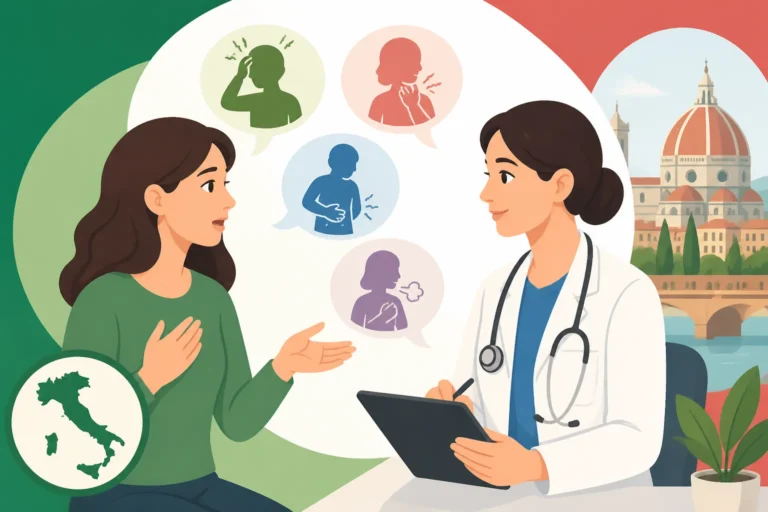
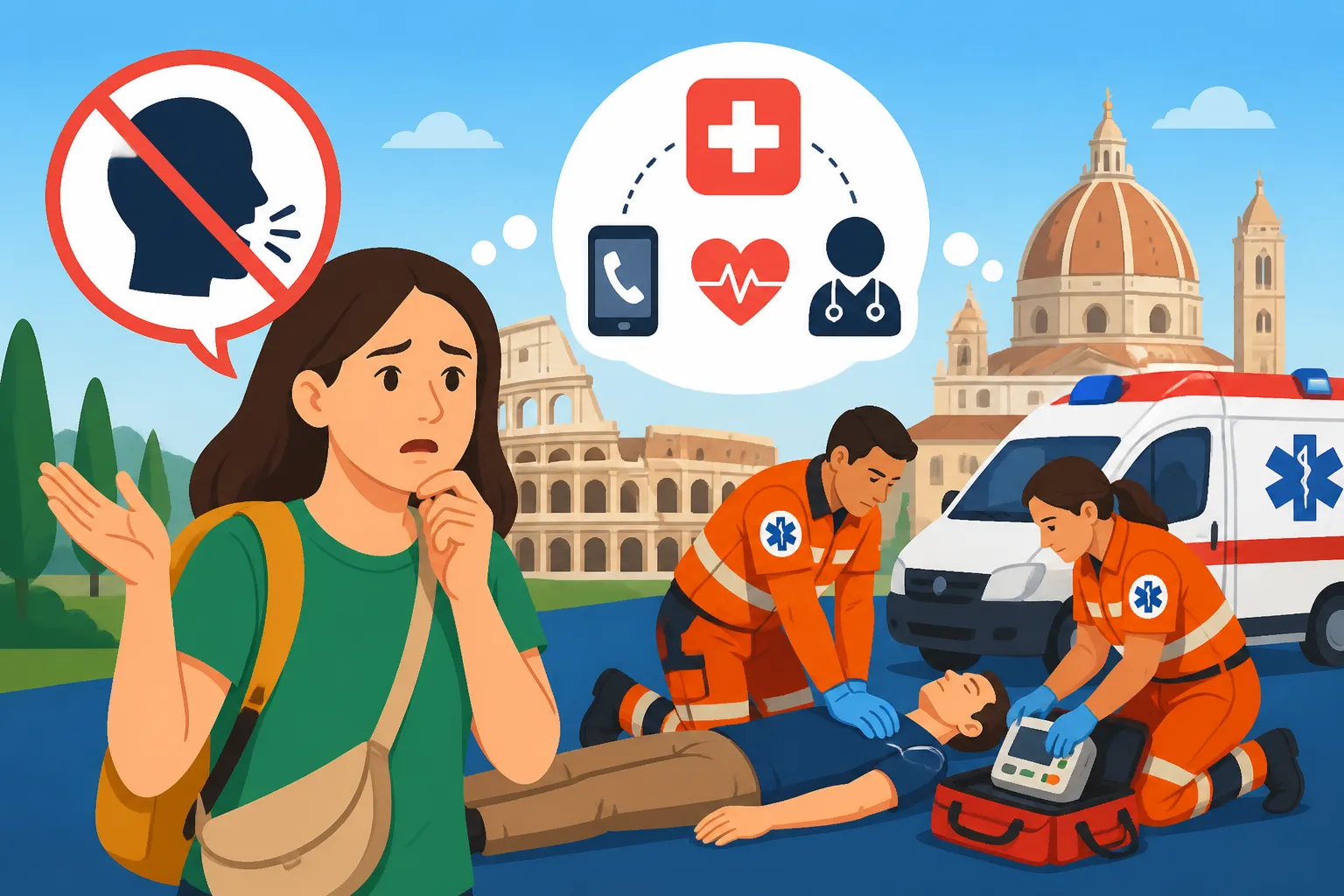
Waking up with a crushing pain in your chest or watching a loved one collapse while on vacation in Italy is a nightmare scenario made worse by the language barrier. I remember my first major health scare in Florence, standing frozen with a phone in my hand, terrified that my high school Italian would fail me when it mattered most. This guide provides the exact steps to navigate the Italian emergency system, from making the call to understanding hospital triage, even if you do not speak a word of the local language.
Disclosure: This post may contain affiliate links. We may earn a commission at no extra cost to you if you make a purchase through these links. Read full disclosure.
Immediate Action: How to Call for Help in Italy
The moment a crisis hits, your brain usually goes into a fog. In Italy, the primary number you need to memorize is 112. This is the European universal emergency number, and it is your best bet for English-speaking assistance. When you dial 112, you are connected to a central dispatcher who can route your call to the police, the fire department, or medical services. In many large metropolitan areas like Rome, Milan, or Naples, 112 dispatchers have access to interpretation services or are proficient enough in English to handle basic emergency data.
However, there is also 118, which is the specific number for medical emergencies. If you are in a more rural area, dialing 118 might connect you directly to the local ambulance dispatch. While the 112 system is designed to be multi-lingual, 118 operators may only speak Italian. If you find yourself talking to someone who doesn't understand you, stay calm and repeat the word "Ambulanza" followed by "Inglese." For a deeper dive into the technicalities of these services, you should read our guide on Emergency Medical Numbers in Italy (112, 118, 1500).
When the dispatcher answers, they will ask for your location. This is the most critical piece of information. If you are in a hotel, give the name and the street address. If you are on the street, look for the nearest "Tabacchi" shop or restaurant and read the sign. It is also helpful to know How to Call 112 in Italy: What to Say and What Happens so you aren't caught off guard by the dispatcher's specific questions regarding the patient's condition.
Navigating the Pronto Soccorso: Triage and Treatment
Once the ambulance arrives or you make your own way to the hospital, you will be heading to the "Pronto Soccorso" (Emergency Room). This is where the cultural and administrative differences really start to show. In Italy, the ER does not operate on a first-come, first-served basis; it operates on a strict color-coded triage system. When you walk in, a triage nurse will assess the severity of your condition and assign you a color.
If you are assigned "Rosso" (Red), you are seen immediately. "Bianco" (White), on the other hand, means you have a non-urgent issue that could have been handled by a general practitioner. For "Bianco" cases, you might wait for six to ten hours and will likely be charged a "ticket" (a co-payment fee). Understanding Emergency Rooms in Italy (Pronto Soccorso) and Triage Codes is essential to managing your expectations and knowing why people who arrived after you are being treated first.
The language barrier in the Pronto Soccorso can be frustrating. While many younger doctors speak some English, nursing staff and administrative personnel often do not. I have found that having a translation app like Google Translate downloaded for offline use is a lifesaver. You can type out your symptoms and show the screen to the nurse. For more specialized communication, you might consider Using Medical Translation and Interpretation Services if the situation is complex and requires detailed medical history.
| Triage Code | Severity Level | Estimated Wait Time | Cost Implications |
|---|---|---|---|
| Rosso (Red) | Life-threatening | Immediate | Free for everyone |
| Arancione (Orange) | High urgency, risk of worsening | Under 15-20 minutes | Usually free |
| Azzurro (Blue) | Stable but needs specialist care | 1 – 2 hours | Small co-pay (Ticket) |
| Verde (Green) | Minor urgency | 3 – 8 hours | Co-pay required |
| Bianco (White) | Non-urgent / GP level | Lowest priority | Full co-pay (approx. €25-€50) |
Communicating Symptoms Without the Language
If you are conscious and stable but in pain, the pressure to communicate clearly is intense. I always recommend that expats and long-term travelers keep a "Crisis Card" in their wallet. This card should list your name, blood type, allergies, current medications, and your insurance details, such as those from Cigna Global or SafetyWing, in both English and Italian.
When you are actually in front of a doctor, try to use simple, clinical terms. Instead of saying "My stomach feels like it is being twisted by a hot iron," say "Severe abdominal pain, level 8 out of 10." Pointing to the area of pain is universal. If the hospital is in a major city, you can ask if there is an English-speaking volunteer or a "mediatore culturale" (cultural mediator) on staff. If you are looking for more permanent solutions to language gaps, check our resources on Where to Find English-Speaking Doctors and Clinics for follow-up care.
It is also helpful to understand What to Expect at an Italian Pronto Soccorso Visit. For example, you will be asked for your "Codice Fiscale" (tax code) if you have one, or your passport if you are a tourist. Do not let the lack of an Italian health card stop you from seeking help; by law, Italian hospitals must treat emergency cases regardless of your ability to pay at that exact moment.
Managing Costs and Insurance for Emergencies
Italy has a public healthcare system (SSN), but for those without residency, the billing process for an emergency can be confusing. If you are an EU citizen, your EHIC card covers most costs. If you are from outside the EU, you will likely be billed for your ER visit unless it was a life-threatening "Red" code. This is where having robust private coverage becomes your best friend.
For digital nomads or short-term travelers, SafetyWing provides an excellent safety net that is easy to navigate through their app during a crisis. If you are an expat living in Italy long-term, you might prefer a more comprehensive plan like Cigna Global, which often includes direct billing with private clinics and higher-tier hospitals, potentially bypassing the long waits of the public Pronto Soccorso for non-life-threatening issues. Knowing the Cost of Healthcare in Italy: What Expats Need to Know helps you decide whether to head to a public hospital or a private "Casa di Cura."
In some cases, your insurance provider like Cigna Global may even offer a 24/7 tele-health line where you can speak to an English-speaking doctor who can then explain your situation to the Italian hospital staff over the phone. This can be a massive relief when you are struggling to understand a diagnosis. For a broader comparison of your options, look at International Health Insurance Options for Italy.
After-Hours Care: The Guardia Medica
Not every "emergency" requires a hospital bed. Sometimes you have a high fever at 11 PM or a localized infection that just can't wait until Monday morning. In Italy, the solution for this is the "Guardia Medica" (Continuity of Care service). This is essentially a group of doctors who work nights, weekends, and holidays when normal GP offices are closed.
The Guardia Medica is a fantastic resource, but it is almost entirely Italian-speaking. If you need to use this service, I highly recommend asking a bilingual neighbor or a hotel receptionist to call them for you. They can perform basic exams, write prescriptions, and determine if you actually need to go to the Pronto Soccorso. To find the one nearest to you, you can read our guide on After-Hours Care in Italy: Guardia Medica Explained.
If the doctor at the Guardia Medica gives you a prescription, your next stop is the "Farmacia di Turno." Italian pharmacies take turns staying open all night and on Sundays. Every pharmacy in Italy is required to display a sign in its window listing the nearest open locations. You can also learn How to Find a Farmacia di Turno (Night Pharmacy) in Italy using several local apps and websites that track these rotations in real-time.
Preparation is the Best Medicine
The best way to handle a medical emergency without Italian is to prepare for it before it happens. Most of the panic comes from the unknown. Once you know that 112 will get you help, that the triage system determines your wait, and that your insurance from SafetyWing or Cigna Global has your back, the situation becomes a series of steps rather than a chaotic event.
Take a few minutes today to find the nearest Pronto Soccorso to your home or hotel. Write down its name and address. Download a medical translation app. These small actions can save you precious minutes when the unthinkable happens. Italy's medical professionals are some of the best in the world; they see foreigners every day and are generally very patient, even if the communication isn't perfect. Stay calm, be persistent, and don't be afraid to use every tool at your disposal to make yourself understood.
Disclaimer
The information provided in this article is for informational purposes only and does not constitute professional medical or legal advice. Always seek the advice of a qualified healthcare provider or emergency services in the event of a medical crisis. Healthcare regulations and emergency numbers in Italy may change; always verify local details upon arrival.