Frequency of Dental Check-ups in Italy for Children
Ensuring optimal oral health for your child while living in Italy requires understanding local dental guidelines. This comprehensive guide covers the recommended frequency of pediatric dental check-ups, public versus private care options, typical costs, and essential orthodontic milestones.
Disclosure: This post may contain affiliate links. We may earn a commission at no extra cost to you if you make a purchase through these links. Read full disclosure.
Introduction
In Italy, pediatric dentistry—known as Odontoiatria Pediatrica or Pedodonzia—has evolved significantly over the past few decades. Historically, dental visits were often reactionary, scheduled only when a child complained of a toothache. Today, the Italian Ministry of Health, alongside professional dental associations, strongly advocates for a preventative approach. This shift mirrors international standards, focusing on early intervention, regular monitoring, and extensive parental education regarding diet and hygiene.
The Italian healthcare system, the Servizio Sanitario Nazionale (SSN), guarantees certain essential levels of care, but dental care is notoriously decentralized and heavily privatized compared to general pediatrics. Consequently, parents must make informed decisions about whether to pursue care through the public system, which may entail longer wait times, or opt for private clinics that offer immediate scheduling and specialized pediatric environments. Understanding the recommended frequency for these visits is the first step in creating a proactive dental care plan for your child in your new home country.
The Importance of Early and Regular Dental Visits
The foundation of a child’s lifelong oral health is laid during their earliest years. Pediatric dentists in Italy emphasize that early visits are not just about checking for cavities; they are comprehensive assessments of a child’s overall oral and facial development.
Regular check-ups serve multiple critical functions. First, they allow the dentist to monitor the eruption of primary teeth (baby teeth) and ensure they are coming in correctly. Second, they provide an opportunity for professional applications of fluoride and dental sealants, which act as formidable barriers against tooth decay. Third, frequent visits acclimate the child to the dental environment, reducing the likelihood of dental anxiety or phobia later in life. In Italy, where the cultural emphasis on aesthetics and a beautiful smile (un bel sorriso) is prominent, ensuring your child is comfortable in the dentist’s chair is a priority for most families.
Furthermore, regular check-ups allow the dentist to educate parents. An Italian pediatric dentist will often discuss the impact of prolonged pacifier use (il ciuccio), thumb sucking, and the dietary habits specific to life in Italy, such as the consumption of natural fruit juices, sweet breakfast pastries, and occasional gelato, all of which can impact dental enamel.
Recommended Frequency by Age Group
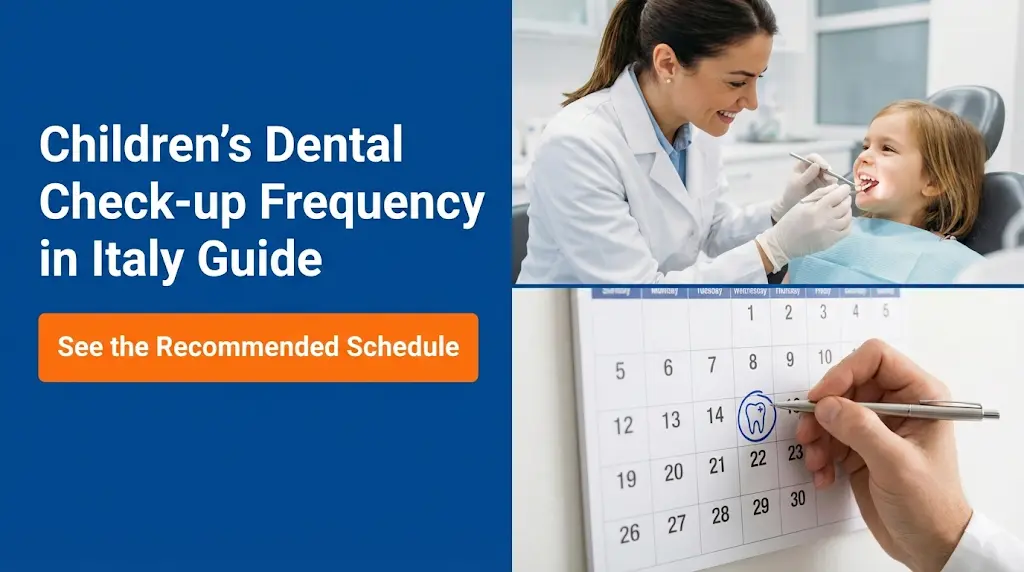
The consensus among Italian pediatric dental associations is that a proactive, age-specific schedule is the best defense against oral health issues. While every child is different and those with a higher risk of cavities may need more frequent visits, the following is the standard recommended timeline for dental check-ups in Italy.
Infancy to Two Years Old
The Italian Ministry of Health guidelines suggest that a child’s first dental visit should occur when their first tooth erupts, or no later than their first birthday. This initial visit is largely informational. The dentist will perform a gentle examination to ensure normal development of the jaw and gums, check for conditions like tongue-tie (frenulo corto), and demonstrate proper cleaning techniques using a soft finger brush or cloth. Following this initial appointment, a check-up once a year is generally recommended until the age of three, unless the pediatrician or dentist identifies a specific concern.
Three to Five Years Old
During the preschool years, all twenty primary teeth have usually erupted. This is a critical period for establishing brushing routines and monitoring for early childhood caries (cavities). At this age, the frequency of visits should increase to every six to twelve months. The exact frequency will depend on the dentist’s assessment of the child’s cavity risk. Children with deep grooves in their teeth or those who consume a higher amount of sugary foods may be asked to visit every six months. During these visits, the dentist may begin introducing professional cleanings and fluoride varnishes.
Six to Twelve Years Old
This is the phase of mixed dentition, where primary teeth begin to fall out and permanent adult teeth emerge. It is also the most critical time for preventative and interceptive dentistry. Check-ups during this window should occur strictly every six months. The emergence of the first permanent molars (usually around age six) prompts Italian dentists to highly recommend fissure sealants (sigillature dei solchi). Additionally, this is the age when dentists begin closely monitoring the child’s bite and jaw alignment to determine if an orthodontic evaluation is necessary.
Adolescence
Teenagers should continue visiting the dentist every six months. Adolescence brings hormonal changes that can increase the risk of gingivitis (gum inflammation). Furthermore, diets often become less supervised, and the consumption of acidic sports drinks or sodas may increase. Regular check-ups allow the dentist to reinforce good hygiene habits, monitor the potential eruption or impaction of wisdom teeth (denti del giudizio), and maintain ongoing orthodontic care if the teen wears braces.
Summary Table of Dental Check up Frequencies
| Age Group | Recommended Frequency | Key Focus Areas During the Visit |
| 0 – 2 Years | Every 12 months | First tooth eruption, parental education on cleaning, pacifier weaning. |
| 3 – 5 Years | Every 6 to 12 months | Cavity prevention, monitoring primary teeth, introducing fluoride. |
| 6 – 12 Years | Every 6 months | Fissure sealants, orthodontic screening, monitoring adult tooth eruption. |
| 13 – 18 Years | Every 6 months | Gingivitis prevention, wisdom teeth evaluation, ongoing orthodontic care. |
Understanding Public Dental Care for Children in Italy
One of the most complex aspects of Italian healthcare for expats to grasp is how dentistry is funded. The public healthcare system provides an umbrella of care, but dental services are heavily restricted compared to general medicine.
To access public health services, your child must be registered with the local health authority.
Under the SSN, children aged 0 to 14 are entitled to certain preventative and therapeutic dental services. The national guidelines mandate that public facilities provide vulnerability screenings, tooth extractions, and in some regions, fissure sealants and basic fillings for children. However, the availability and quality of public dental care vary drastically from region to region. In regions like Lombardy or Emilia-Romagna, the public dental infrastructure is quite robust. In other areas, resources may be strained.
The primary drawback of relying on the public system for your child’s bi-annual check-ups is the waiting list (lista d’attesa). Booking a routine cleaning or check-up through the public Centro Unico di Prenotazione (CUP) can sometimes take months. Additionally, while the visits are subsidized, they are not always entirely free; parents above a certain income bracket may be required to pay a co-pay known as a ticket.
The Role of the Private Pediatric Dentist
Because of the wait times and the limited scope of the public dental system, the vast majority of Italian families opt for private pediatric dentistry. The private sector in Italy offers state-of-the-art facilities, highly specialized pediatric dentists (pedodontisti), and a child-friendly environment that public hospitals simply cannot match.
Private clinics often feature waiting rooms with toys, screens above the dental chairs playing cartoons, and staff trained specifically in managing pediatric anxiety. Furthermore, the private sector allows parents to strictly adhere to the six-month check-up schedule without fighting the bureaucracy of the public booking system.
Naturally, this convenience comes at a cost. If you are budgeting for your family’s healthcare, understanding the financial landscape is crucial. For a comprehensive breakdown of typical out-of-pocket expenses and private insurance options, review our dedicated post on Dental Care in Italy: Costs and Insurance Coverage. Generally, a routine private pediatric check-up and cleaning in Italy will cost between 60 and 120 Euros, depending on the city and the prestige of the clinic.
The Pediatrician as the First Line of Defense
In Italy, a child’s primary care physician, the pediatra di libera scelta, plays an active role in early dental monitoring. During the routine well-baby visits (bilanci di salute), the pediatrician will always ask the parent to open the child’s mouth.
The pediatrician checks for oral thrush in infants, notes the timeline of tooth eruption, and looks for early signs of decay or enamel defects. While they do not perform dental cleanings, they are trained to spot red flags and will issue a referral (impegnativa) to a pediatric dentist if they notice anything concerning. Establishing a good relationship with your pediatrician is vital, as they are your gateway to all specialist referrals. For more information on this essential relationship, see our article on Postnatal Care and Pediatrician Follow-Up in Italy.
Orthodontic Screenings and Braces in Italy
Orthodontics (ortodonzia) is a massive component of pediatric dentistry in Italy. It is incredibly common for Italian children to wear braces (l’apparecchio).
The frequency of dental check-ups becomes especially important between the ages of six and eight, as this is when the pediatric dentist will conduct an interceptive orthodontic screening. They evaluate the child’s bite (occlusion), the spacing of the teeth, and the development of the palate. If an issue like an underbite, severe overbite, or crossbite is detected, the dentist may recommend early interceptive treatment using expanders or functional appliances to guide the growth of the jaw before all the adult teeth have even come in.
Later, typically between the ages of twelve and fourteen, traditional fixed braces or clear aligners may be recommended to straighten the permanent teeth. It is important to note that the public SSN rarely covers the cost of orthodontic treatment unless the child has a severe functional malocclusion (such as a cleft palate or a condition that significantly impairs chewing or speech). For standard cosmetic or minor functional straightening, parents must pay out of pocket at a private clinic. Orthodontic treatment usually requires visits every four to six weeks for adjustments, representing a significant commitment of both time and finances.
Sedation Dentistry for Anxious Children
For children who suffer from severe dental anxiety, or for those who require extensive dental work such as multiple fillings or complex extractions, maintaining the recommended frequency of visits can be traumatic. Italian private pediatric dentistry has largely adopted the use of conscious sedation (sedazione cosciente) to alleviate this issue.
Conscious sedation typically involves the administration of nitrous oxide (laughing gas) mixed with oxygen through a small nasal mask. The child remains awake and responsive but feels completely relaxed and slightly euphoric. This technique has revolutionized pediatric care in Italy, transforming frightening procedures into stress-free experiences. If your child is fearful of the dentist, seeking out a clinic that explicitly advertises sedazione cosciente can ensure they do not skip their crucial bi-annual check-ups.
Dental Emergencies What to Do if Your Child Chipped a Tooth
Children are naturally active, and dental trauma is a common occurrence. Whether it is a fall at the playground or a sports injury, knowing what to do in a dental emergency is critical for expat parents.
If your child chips, breaks, or completely knocks out a tooth, immediate action is required. If you are registered with a private pediatric dentist, you should call their emergency number immediately. Many private clinics keep dedicated slots open for trauma cases.
If the accident occurs after hours, on a weekend, or if you do not have a private dentist, you should head to the nearest major public hospital that features a Pronto Soccorso Odontoiatrico (Dental Emergency Room). These specific departments are equipped to handle acute dental trauma, severe oral infections, and facial swelling. Remember, if a permanent tooth is knocked out, keep it moist (preferably in a container of cold milk or the child’s own saliva) and seek dental care within thirty minutes for the best chance of saving the tooth.
Overcoming the Language Barrier at the Dentist
One of the biggest hurdles for expats maintaining their child’s dental check-up schedule is the language barrier. Medical and dental terminology can be confusing even in your native language.
Finding a dentist who can communicate clearly in English will significantly ease your anxiety and allow your child to understand instructions during the visit. Many major Italian cities, such as Rome, Milan, and Florence, have international medical centers or private dentists who cater specifically to the expat community. To locate a professional who can bridge this communication gap, consult our resource on Websites to Find Doctors Who Speak English in Italy.
To help you during your visits, here is a brief glossary of common Italian pediatric dental terms:
- Dentista / Odontoiatra: Dentist
- Pedodontista: Pediatric Dentist
- Denti da latte: Baby teeth / Primary teeth
- Denti permanenti: Adult teeth / Permanent teeth
- Carie: Cavity / Tooth decay
- Gengiva: Gum
- Smalto: Enamel
- Sigillatura: Sealant
- Apparecchio: Braces
- Spazzolino: Toothbrush
- Dentifricio: Toothpaste
Fostering Good Dental Hygiene Habits at Home
While scheduling check-ups every six months is the clinical gold standard, the daily habits practiced at home ultimately determine your child’s oral health. Raising a child in Italy means exposing them to a wonderful culinary tradition, but it requires vigilance regarding sugar intake.
The Mediterranean diet is generally excellent for overall health, but the Italian culture of sweet breakfasts (such as biscuits dipped in milk or cornetti) and frequent treats like artisanal gelato requires parents to enforce strict brushing routines. Dentists recommend brushing twice a day for a full two minutes using a fluoridated toothpaste appropriate for the child’s age.
An interesting cultural aspect of the Italian school system is the approach to dental hygiene during the day. In many Italian elementary schools that feature a mensa (school canteen) for lunch, children are historically asked to bring a small pouch containing a toothbrush and toothpaste to brush their teeth after their midday meal. While some schools paused this practice due to recent global health protocols, it remains a heavily encouraged habit that reinforces the importance of oral care outside the home.
Regarding fluoride, expats frequently ask about the water supply. Unlike some countries that artificially fluoridate their municipal tap water, Italy does not. The fluoride levels in Italian tap water and bottled mineral water vary naturally depending on the geographical source. Because of this, pediatricians and dentists will often assess the child’s specific fluoride intake and, if necessary, prescribe fluoride drops or tablets during the early years to ensure strong enamel development.
Conclusion
Establishing a routine of regular dental check-ups is one of the most proactive steps you can take for your child’s health while living in Italy. By adhering to the recommended frequency—starting with the first tooth and settling into a reliable six-month cadence from the age of six onward—you provide your child with the best defense against tooth decay and developmental issues.
Navigating the choice between the subsidized but slower public SSN system and the efficient, child-friendly private sector is a decision every expat family must make based on their budget and needs. Regardless of the path you choose, Italy offers world-class dental professionals equipped to keep your child’s smile bright. Embrace the preventative culture, foster strong daily hygiene habits at home, and do not let the language barrier deter you from scheduling that vital next appointment. Your child’s future oral health depends on the foundations you build today.
References
Primary sources (official)
- Ministero della Salute: The official website of the Italian Ministry of Health, providing national guidelines on pediatric dental care, preventative measures, and SSN entitlements. https://www.salute.gov.it
- Associazione Nazionale Dentisti Italiani (ANDI): The primary national association for dentists in Italy, offering resources on standards of care and public health initiatives. https://www.andi.it
Other helpful sources
- Società Italiana di Odontoiatria Infantile (SIOI): The Italian Society of Pediatric Dentistry, featuring extensive scientific guidelines and recommendations specifically tailored to the oral health of children and adolescents. https://www.sioi.it
Disclaimer
The information provided in this article is for general informational and educational purposes only and does not constitute professional medical or dental advice, diagnosis, or treatment. Healthcare protocols, public funding for dental services, and wait times in Italy are subject to change based on regional regulations and national legislation. Always seek the advice of a qualified and licensed dentist or pediatrician in Italy with any questions you may have regarding your child’s specific oral health condition or recommended treatment frequency. In the event of a severe dental emergency, please contact your local emergency services or proceed to the nearest hospital with a dedicated dental emergency department (Pronto Soccorso Odontoiatrico).