Postnatal Care and Pediatrician Follow-Up in Italy
Navigating life with a newborn in a new country can be complex. This guide explores the Italian postnatal care system, explaining how to register your baby for healthcare, choose a pediatrician, and access essential support services for a healthy start.
Disclosure: This post may contain affiliate links. We may earn a commission at no extra cost to you if you make a purchase through these links. Read full disclosure.
Introduction to Postnatal Care and Pediatrician Follow-Up in Italy
Postnatal care in Italy begins the second your baby is born and continues through a series of structured check-ups, vaccinations, and developmental screenings. Unlike some countries where pediatric care might be handled by a general practitioner, Italy utilizes a specialized system where every child is assigned their own dedicated pediatrician, known as a Pediatra di Libera Scelta. This doctor becomes the primary guardian of your child’s health from birth until age 14, or in some cases, age 16.
For expats, the transition from hospital to home requires a clear understanding of how to activate these services. The “fourth trimester” is supported not just by doctors, but also by Consultori Familiari (family clinics) which offer breastfeeding support, psychological counseling, and maternal check-ups. Navigating this path involves securing the right documentation, such as the Codice Fiscale for the newborn, and understanding the schedule of the Bilanci di Salute (well-baby visits). This guide provides a comprehensive roadmap for managing postnatal care and pediatrician follow-ups in Italy, ensuring your baby receives the best possible start in their new home.
The Immediate Postpartum Period in the Hospital
In Italy, a standard hospital stay for a vaginal delivery is typically 48 to 72 hours, while a Cesarean section may require a stay of three to five days. During this time, the hospital’s neonatology team performs several essential screenings. These include the “Guthrie Test” (a neonatal heel prick to screen for metabolic disorders), hearing tests, and a physical examination to check for hip dysplasia and congenital heart issues.
Before discharge, the hospital will provide you with a “Discharge Summary” (Lettera di Dimissione) for both the mother and the baby. This document is crucial, as it contains the baby’s birth weight, blood type, and the results of early screenings. You must present this document to your future pediatrician during the first visit. If you are still weighing your options for where to give birth, understanding the Cost of Childbirth in a Public vs Private Hospital can help you prepare for the financial aspects of these initial days.
Administrative First Steps: Registering Your Newborn
Before you can access long-term postnatal care, you must navigate the Italian bureaucracy. This is the most time-sensitive part of the process for expat parents.
1. The Declaration of Birth (Denuncia di Nascita)
Within three days of the birth, you must register the birth at the hospital’s administrative office, or within ten days at the Comune (Town Hall) of the city where the baby was born or where the parents reside. You will receive a birth certificate, which is necessary for all subsequent steps.
2. Obtaining the Codice Fiscale
The Codice Fiscale (tax code) is the universal identifier in Italy. For newborns, the Agenzia delle Entrate often issues this automatically once the birth is registered, but as an expat, you may need to visit the office in person or apply online to ensure the record is linked correctly to your residency status. You cannot register the baby with the national health system without this number.
3. Registration with the SSN
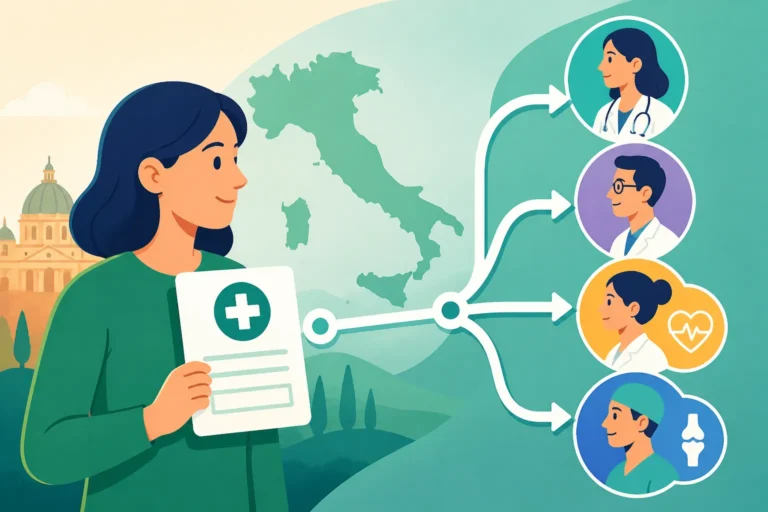
Once you have the Codice Fiscale, you must visit the local health authority, the Azienda Sanitaria Locale (ASL). Here, you will officially enroll the baby in the SSN and choose your pediatrician. To understand the broader requirements for expat health eligibility, you can review the Residency Requirements for Health Coverage in Italy.
Choosing Your Pediatra di Libera Scelta
In Italy, you do not just go to any pediatric clinic; you are assigned to a specific doctor who operates within your residential district. The Pediatra di Libera Scelta is a public doctor who provides care free of charge.
How to Select a Pediatrician
At the ASL office, you will be shown a list of available pediatricians. It is highly recommended to research local doctors beforehand. Many expat parents seek out bilingual doctors, and while the official ASL lists may not always specify language skills, you can find recommendations in local community groups. For those living in major hubs, Finding an English-Speaking GP in Rome or Milan can be a useful starting point for identifying clinics that cater to international families.
The Pediatrician’s Role
Your pediatrician is responsible for:
- Regular growth and development check-ups (Bilanci di Salute).
- Issuing prescriptions for medications.
- Providing referrals (impegnative) for specialized medical tests or visits.
- Administering or monitoring the vaccination schedule.
- Issuing medical certificates for daycare or school.
The Schedule of Well-Baby Visits (Bilanci di Salute)
Italy follows a highly structured schedule for postnatal check-ups, known as Bilanci di Salute. These visits are designed to monitor physical growth, neurological development, and the achievement of motor milestones.
The standard schedule for these visits is generally as follows:
| Visit Number | Timing | Key Focus Areas |
| 1st Visit | Within the first 15 days | Weight check, jaundice screening, umbilical cord healing, breastfeeding support. |
| 2nd Visit | 1 to 2 months | Neurological development, growth charts, discussion of vaccinations. |
| 3rd Visit | 4 to 5 months | Motor skills (rolling over), sleep patterns, introduction to solid foods discussion. |
| 4th Visit | 7 to 9 months | Sitting up, first teeth, hearing and vision checks. |
| 5th Visit | 10 to 12 months | Standing, vocalization/language development, social interactions. |
| 6th Visit | 15 to 18 months | Walking, complex motor tasks, behavioral milestones. |
| 7th Visit | 2 to 3 years | Language proficiency, fine motor skills, social integration. |
Support from the Consultorio Familiare
While the pediatrician handles the baby’s clinical health, the mother’s postnatal recovery and the family’s social-emotional needs are often supported by the Consultorio Familiare. These are public clinics staffed by midwives (ostetriche), psychologists, and social workers.
Breastfeeding and Lactation Support
Many Consultori offer walk-in hours for breastfeeding assistance. If you are struggling with a latch or have concerns about milk supply, the midwives can provide hands-on help.
Maternal Mental Health
Postnatal depression and anxiety are taken seriously in Italy. The Consultorio provides access to free or low-cost psychological counseling for new mothers. If you are feeling overwhelmed, these centers offer a safe space to discuss the challenges of the “fourth trimester” without judgment.
Pelvic Floor Rehabilitation
It is common in Italy for midwives at the Consultorio to offer or recommend pelvic floor rehabilitation (riabilitazione del pavimento pelvico) after delivery. This is a standard part of postnatal care aimed at helping mothers recover physically from childbirth.
Vaccinations and Preventative Care
Italy has a mandatory vaccination law for children. To enroll your child in daycare (Asilo Nido) or preschool (Scuola dell’Infanzia), you must provide proof of vaccination. Your pediatrician will monitor this schedule, but the actual administration of vaccines usually takes place at a dedicated vaccination center (Centro Vaccinale) managed by the ASL.
The mandatory vaccines include:
- Polio
- Diphtheria
- Tetanus
- Hepatitis B
- Pertussis (Whooping Cough)
- Haemophilus influenzae type b
- Measles
- Mumps
- Rubella
- Varicella (Chickenpox)
Specialist Visits and Referrals
If your pediatrician detects an issue that requires a specialist—such as an ophthalmologist for a vision check or an orthopedist for hip concerns—they will issue a referral called an impegnativa.
In Italy, you can choose to see a specialist through the public system or privately.
- Public System: You pay a small co-pay (ticket), but waiting lists can be long.
- Private System: You pay the full cost out of pocket, but you can usually secure an appointment within a few days.
As an expat, you might find that having private insurance helps cover these costs. If you are a non-EU resident, you should investigate SSN Services for Non-EU Expatriates: How to Qualify to understand your rights regarding specialized pediatric care.
Postnatal Care for the Mother
Postnatal care in Italy is not just for the baby. The mother is usually scheduled for a check-up with her gynecologist four to six weeks after delivery. If you delivered in a public hospital, you may return to the hospital’s outpatient clinic, or you can see your private gynecologist.
During this visit, the doctor will check:
- Uterine involution (the uterus returning to its normal size).
- Healing of any incisions or tears.
- General physical health and blood pressure.
- Contraception options and family planning.
Italy provides strong protections for working mothers, including mandatory maternity leave and breastfeeding breaks.
Cultural Nuances: The Italian Approach to Infancy
Understanding the cultural context of Italian parenting will make your interactions with doctors much smoother.
- Outdoor Air: Italians firmly believe in the benefits of “aria pulita” (clean air). Even in winter, you will see parents taking babies for walks, though the baby will likely be very bundled up.
- The “Colpo d’Aria”: There is a cultural fear of drafts or sudden temperature changes. Your pediatrician might advise you to keep the baby’s ears covered or avoid fans.
- Family Involvement: It is very common for grandparents to be heavily involved in postnatal care. If you are an expat without family nearby, the community at the Consultorio becomes even more vital.
Emergency Situations: What to Do
If your baby develops a high fever or has an accident after hours, you have two main options:
- Guardia Medica Pediatrica: This is an out-of-hours pediatric service. In some large cities, there are specific pediatric versions of the Guardia Medica.
- Pronto Soccorso Pediatrico: Most major hospitals have a dedicated pediatric emergency room. This is where you should go for serious emergencies.
Summary of Postnatal Tasks for Expats
| Task | Deadline | Location |
| Denuncia di Nascita | 3 – 10 days | Hospital or Comune |
| Codice Fiscale | ASAP | Agenzia delle Entrate |
| SSN Registration | ASAP | Local ASL Office |
| First Pediatrician Visit | Within 15 days | Pediatrician’s Clinic |
| Maternal Check-up | 4 – 6 weeks | Gynecologist / Consultorio |
| First Vaccinations | ~3 months | ASL Vaccination Center |
Conclusion
Postnatal care and pediatrician follow-up in Italy offer a robust safety net for new families. By navigating the initial bureaucratic steps—registering the birth, obtaining a Codice Fiscale, and enrolling in the SSN—you unlock a system of dedicated care that prioritizes your child’s long-term development. The partnership with your Pediatra di Libera Scelta will be one of the most important relationships you maintain during your time in Italy.
While the system requires a proactive approach, especially regarding paperwork and appointment scheduling, the quality of care and the community support available at the Consultori Familiari ensure that you are never alone on your parenting journey. Embracing the Italian approach to child health—focused on prevention, regular monitoring, and family support—will provide your little one with a healthy and happy start in the Bel Paese.
References
Primary sources (official)
- Ministero della Salute: The official portal for the Italian Ministry of Health, detailing neonatal screenings and pediatric rights. https://www.salute.gov.it/
- Istituto Superiore di Sanità (ISS): Italy’s main center for research and control on public health, focusing on childhood developmental milestones. https://www.iss.it/
Other helpful sources
- SICuPP (Società Italiana Cure Primarie Pediatriche): An association of pediatricians providing guidelines on the Bilanci di Salute. https://www.sicupp.org/
- Expatica Italy: A guide for international families on navigating the Italian school and health systems. https://www.expatica.com/it/
Disclaimer
The information provided in this article is for general informational purposes only and does not constitute professional medical, legal, or administrative advice. Healthcare protocols, mandatory vaccination requirements, and administrative procedures in Italy are subject to change and may vary significantly between regions. Always consult with a licensed Italian pediatrician or your local Azienda Sanitaria Locale (ASL) for the most up-to-date information regarding your child’s health and legal requirements. In the event of a medical emergency, please dial the universal European emergency number 112 or proceed to the nearest pediatric emergency room immediately.