Bringing Prescription Medications into Italy
Relocating to or visiting Italy requires careful preparation when traveling with essential medications. This comprehensive guide covers customs regulations, documentation requirements, navigating controlled substances, finding local equivalents, and transitioning your health management safely into the Italian medical system.
Disclosure: This post may contain affiliate links. We may earn a commission at no extra cost to you if you make a purchase through these links. Read full disclosure.
Introduction
Many expatriates and international travelers mistakenly assume that their home country’s medical prescriptions are globally recognized and universally protected. This misconception can lead to severe anxiety, medical emergencies, or even legal complications at the Italian border. The reality is that sovereign nations, including Italy, maintain their own rigorous pharmaceutical classification systems. A medication that is readily available at a standard drugstore in the United States, Canada, or the United Kingdom might be heavily restricted, available only through a specialist, or completely illegal in Italy.
Navigating this transition requires meticulous planning. You cannot simply pack a year’s supply of pills into your checked luggage and expect to breeze through customs without scrutiny. Furthermore, you cannot rely on international mail forwarding services to send you refills from your home pharmacy once you run out. The Italian Ministry of Health, in conjunction with national customs agencies, strictly regulates the importation of all drugs to combat unregulated distribution and protect public safety.
This extensive guide is designed to completely demystify the process of bringing your prescription medications into Italy. We will thoroughly explore the specific documentation you need to carry, the strict limitations on the quantities you are legally allowed to import, and the severe restrictions placed on controlled substances such as strong painkillers and psychiatric medications. Additionally, we will provide actionable advice on how to translate your medical history, navigate the local pharmacy system, and effectively transfer your ongoing care to an Italian physician. By mastering these regulations well before your flight, you can ensure a seamless transition and focus your energy on enjoying your beautiful new Italian life.

Navigating Customs and Border Regulations
When you arrive at an Italian international airport, such as Rome Fiumicino or Milan Malpensa, you must pass through customs after collecting your luggage. Italy enforces the broader regulations of the European Union, but local border police and customs agents hold the ultimate authority over what enters the country.
The fundamental rule for bringing any medication into Italy is that it must be strictly for personal use. Italian customs officials are trained to look for individuals attempting to import pharmaceuticals for commercial distribution. Therefore, the way you pack, present, and document your medications will directly influence how you are treated at the border.
If you are traveling from within the European Union or the Schengen Area, border checks are minimal, but you are still legally required to follow the personal use guidelines. If you are arriving from a non-EU country, you are subject to random customs screenings. If you are pulled aside for a baggage check and officials discover a massive quantity of unlabeled pills, you risk having the medication immediately confiscated, facing heavy fines, or even being denied entry into the country. Understanding the specific legal boundaries is your first line of defense against these stressful scenarios.
Essential Documentation for Traveling with Medication
To prove that your medications are legally prescribed and intended solely for your personal use, you must carry a very specific portfolio of documents. Preparation is key; you should gather these documents several weeks before your departure.
First and foremost, your medication must absolutely remain in its original, pharmacy-issued packaging. Never consolidate your pills into unlabelled daily pill organizers or generic plastic bags for the flight. The original bottles or blister packs must clearly display the printed pharmacy label, which should include your full legal name, the exact name of the drug, the prescribed dosage, and the issuing pharmacy’s contact information. Your name on the prescription label must perfectly match the name printed on your passport.
Secondly, you must carry an official letter from your prescribing physician. This letter must be written on the doctor’s official letterhead and physically signed. The letter should clearly state:
- Your full name and date of birth.
- A brief summary of your medical condition or diagnosis.
- The generic, international name of the active ingredient in your medication (brand names vary by country, so the generic chemical name is vital).
- The exact dosage and frequency of your treatment.
- A declaration that the medication is essential for your continuous personal health during your stay in Italy.
- The duration of your intended stay in the country.
Finally, it is highly recommended to bring physical copies of the original written prescriptions. While a foreign prescription is not valid for purchasing refills at an Italian pharmacy, it serves as an excellent supplementary document to prove the legitimacy of your medical needs to customs officials.
The Thirty to Ninety Day Supply Rule
One of the most critical regulations expatriates must understand is the legal limit on the quantity of medication you can bring across the Italian border.
The general standard enforced by Italian customs is that travelers may bring a thirty-day supply of their prescription medication. This rule is designed to accommodate the average tourist or short-term visitor. However, if you are relocating to Italy on a long-stay visa, a study visa, or a retirement visa, managing a transition within thirty days can be highly stressful.
Under specific circumstances, and supported by robust medical documentation, customs officials generally permit a maximum of a ninety-day supply of non-narcotic prescription medication for personal use. To bring a ninety-day supply, your doctor’s letter must explicitly state that you require this specific quantity to cover your health needs while you establish residency and secure a local physician in Italy.
It is vital to understand that bringing more than a ninety-day supply is highly risky. Even with a doctor’s note, customs officials may view a six-month or twelve-month supply as a commercial import. In such cases, the excess medication is routinely seized and destroyed at the border. Therefore, you must plan to transition your medical care to an Italian doctor within your first two to three months of arrival.
Controlled Substances and Highly Regulated Drugs
The rules shift dramatically when your prescription involves controlled substances. Medications that affect the central nervous system, including strong opioids, sedatives, tranquilizers, and certain psychiatric drugs, are subject to intense international scrutiny under narcotic control laws.
Rules for Schengen Area Residents
If you are a resident of another country within the Schengen Area and you are traveling to Italy with a controlled substance, you must obtain a specific document known as a Schengen Certificate. This certificate must be issued by the competent health authority in your home country and is valid for a maximum of thirty days. Without this standardized certificate, carrying narcotics across Schengen borders is illegal.
Rules for Non EU Travelers
If you are arriving from a non-EU country, such as the United States, bringing controlled substances into Italy requires exceptional caution. You must declare these medications at the customs “Goods to Declare” channel upon arrival. You must have the original packaging, a highly detailed physician’s letter, and the prescription copies.
It is also crucial to note that some medications legally prescribed in your home country are completely banned in Italy. The most prominent example is medication used to treat Attention Deficit Hyperactivity Disorder (ADHD).
In the United States, Adderall (a combination of amphetamine salts) is a highly common prescription. In Italy, Adderall is strictly illegal. It is classified as an illegal narcotic, and it is neither prescribed nor sold in the country. Bringing Adderall into Italy, even with a valid US prescription, can lead to severe legal consequences, including arrest for drug trafficking. The primary legal alternative for ADHD treatment in Italy is Methylphenidate (Ritalin), but it is heavily restricted, rarely prescribed to adults, and requires a complex diagnostic process by an Italian specialist to obtain.
Similarly, medical marijuana is handled very differently in Italy. While certain cannabis-based derivatives are available for highly specific, severe neurological conditions under strict medical supervision, you cannot legally cross the Italian border with medical marijuana products, THC oils, or cannabis flower prescribed by a foreign doctor.
Status of Common Regulated Medications in Italy
To help you understand the landscape of controlled drugs, the following table outlines the general status of several common medications when brought into Italy:
| Medication Category / Common Name | Active Ingredient | Legal Status and Availability in Italy |
| ADHD Stimulants (Adderall) | Amphetamine Salts | Illegal. Banned substance. Do not bring into Italy. |
| ADHD Stimulants (Ritalin) | Methylphenidate | Highly Restricted. Legal to bring up to 30 days with strict documentation. Local refills require a specialized psychiatric diagnostic plan. |
| Anxiety/Panic (Xanax, Valium) | Benzodiazepines | Regulated. Legal to bring personal supply. Local refills require an Italian doctor’s prescription (Class C out-of-pocket drug). |
| Strong Opioids (OxyContin, Vicodin) | Oxycodone, Hydrocodone | Highly Regulated. Bring only short-term supply with extensive documentation. Rarely prescribed locally for non-terminal chronic pain. |
| Medical Marijuana | THC / CBD formulations | Illegal to Import. Foreign medical marijuana cards hold no legal validity at the Italian border. |
| Sleep Aids (Ambien) | Zolpidem | Regulated. Legal to bring personal supply. Widely available locally with an Italian prescription. |
Note: Always consult with the Italian Embassy or Consulate in your home country regarding the current legal status of any controlled substance before your departure.
Mailing and Shipping Prescription Drugs to Italy
One of the most common and devastating mistakes made by new expatriates is attempting to have their medication mailed to them from their home country. When an expat realizes their ninety-day supply is running low, they often ask a family member to fulfill a prescription at their local hometown pharmacy and ship it via international courier services like FedEx, UPS, or DHL.
You must absolutely never do this.
Under Italian law, it is strictly prohibited for private individuals to import pharmaceutical products through the postal or courier system. The Italian Customs Agency and the Ministry of Health monitor incoming international packages meticulously. When a package containing prescription drugs, or even high-dose over-the-counter vitamins from a non-EU country, reaches the Italian border, it will be flagged and seized by customs.
To legally clear a package containing medication, the recipient must provide an import permit issued by the Italian Ministry of Health, a document that is incredibly difficult, if not impossible, for a private individual to obtain for routine personal medications. The package will remain stuck in a customs warehouse indefinitely, and you will receive a formal letter demanding documentation. If you cannot provide the specialized permits, the medication will eventually be destroyed, and you may face administrative fines for attempting an unauthorized pharmaceutical import.
The only safe, legal, and reliable way to maintain your medication regimen in Italy is to transition your care to a local Italian physician who can prescribe the local equivalents of your necessary drugs.
Transitioning to the Italian Healthcare System
Because you cannot ship medications and can only carry a limited supply across the border, your ultimate goal must be to establish a relationship with an Italian doctor as quickly as possible. The Italian National Healthcare System, known as the Servizio Sanitario Nazionale (SSN), provides excellent care, but the bureaucratic transition takes time.
If you are a legal resident and have registered with the SSN, you will be assigned a primary care physician, known as a Medico di Base. This doctor is the gatekeeper to your medical care in Italy. You must schedule an appointment with them to discuss your ongoing medical conditions. Bring your translated medical history, your original foreign prescriptions, and your doctor’s letter.
The Medico di Base will evaluate your health and write an official Italian prescription, known as a ricetta. Depending on the classification of the drug, this medication may be provided to you completely free of charge, for a small co-pay, or out-of-pocket. If you want a detailed breakdown of how to navigate this ongoing process and understand the local refill culture, be sure to read our guide on Refilling Chronic Prescription Drugs in Italy.
If your condition requires highly specialized care, or if you are taking a medication that requires a specialist’s authorization, your Medico di Base will write a referral for you to see an endocrinologist, cardiologist, or psychiatrist within the public system. Alternatively, many expats choose to bypass the public waiting lists by paying out-of-pocket to see a private specialist immediately, ensuring no interruption in their medication supply.
Understanding Active Ingredients versus Brand Names
When transitioning your prescriptions to an Italian doctor, you will quickly discover that the brand names you are familiar with likely do not exist in Italy. The global pharmaceutical market is highly regionalized.
For example, if you take the popular asthma medication Singulair in the United States, you will not find a box labeled “Singulair” in an Italian pharmacy. However, the active ingredient, Montelukast, is widely available under different local brand names or as a generic drug (farmaco equivalente).
This is why the doctor’s letter you brought through customs must specify the generic, chemical name of your medication rather than the commercial brand name. When you sit down with your new Italian doctor, providing the active ingredient allows them to easily look up the Italian equivalent in their national pharmaceutical database. Italy has a very robust generic drug market, and Italian law actually mandates that pharmacists offer the generic, cheaper equivalent of a medication unless the prescribing doctor has specifically stated that the brand name is non-substitutable for medical reasons.
Navigating the Local Pharmacy Experience
Once you have secured your localized Italian prescription, you must fulfill it at an Italian pharmacy. The pharmacy culture in Italy is vastly different from that of North America or the UK. You will not find massive, warehouse-style drugstores that sell everything from prescription antibiotics to lawn chairs and cheap snacks.
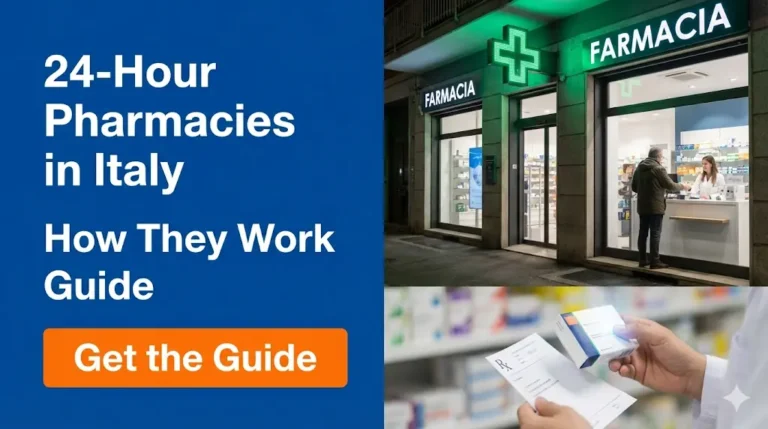
In Italy, a pharmacy is known as a Farmacia and is easily identified by a glowing green cross located above the entrance. These establishments are dedicated strictly to health, wellness, and specialized dermocosmetics.
When you enter a Farmacia, you do not browse the aisles for medication. Even basic, non-prescription painkillers like ibuprofen or paracetamol are kept securely behind the pharmacist’s counter. You must approach the pharmacist, who is a highly trained and respected medical professional, and present your prescription. They will review the ricetta, consult with you regarding dosages, and retrieve the medication from their secure inventory. To fully understand the nuances of this system, including how to find after-hours care and identify the difference between a traditional pharmacy and a parafarmacia, explore our comprehensive guide on Italian Pharmacies: Prescription, Over-the-Counter, and Supplies.
Transporting Liquid Medications and Medical Devices
Special considerations must be made if your medical needs extend beyond standard pill bottles.
If you require liquid medications, such as specialized syrups or injectable treatments, you must adhere to airline security regulations. While the standard liquid rule limits passengers to 100ml bottles in carry-on luggage, liquid prescription medications are exempt from this restriction. However, you must declare these liquids to the security officers at the screening checkpoint before your bags go through the X-ray machine. Presenting your doctor’s letter alongside the liquid medication is usually sufficient to clear security smoothly.
For medications that require strict temperature control, such as insulin for diabetes or certain biological injectables, you must plan your transit carefully. You are permitted to carry medical cooler bags equipped with gel ice packs onto the aircraft. It is highly advisable to notify your airline in advance that you will be traveling with refrigerated medical supplies. Never place temperature-sensitive medications in your checked luggage, as the cargo hold temperatures can fluctuate wildly, potentially destroying the efficacy of your lifesaving medication.
If you travel with a medical device, such as a CPAP machine for sleep apnea or a portable nebulizer, these devices should always be carried into the cabin with you. They do not count toward your standard carry-on baggage allowance. Ensure you bring the appropriate international plug adapters, as Italy uses the standard European two-round-pin sockets (Type C, F, and L) operating on a 230V supply.
Tips for a Smooth Medical Transition
To guarantee that your health remains stable during the chaotic first months of your relocation, consider implementing the following strategies:
- Translate Your Documents: Before leaving your home country, consider having your essential medical records and the detailed doctor’s letter translated into Italian by a certified translator. While many specialist doctors in Italy speak English, presenting a formally translated document eliminates any risk of misinterpretation regarding your medical history.
- Research Private Clinics Early: Do not wait until your ninety-day supply is down to two pills before looking for an Italian doctor. Begin researching English-speaking private clinics in your destination city weeks before you arrive. You can use specialized directories and expat networks to assist in Finding Doctors and Hospitals in Italy.
- Keep Medications in Your Carry-On: This is a golden rule of travel. Never pack your essential prescription medications in your checked luggage. If your suitcase is lost in transit or delayed for several days, you will be left in a foreign country without your vital health supplies. Always pack your medications, original bottles, and documentation in your personal backpack or carry-on bag.
What to Do in a Medical Emergency
Despite your best efforts and meticulous planning, emergencies can happen. Your carry-on bag could be stolen, you might accidentally damage your medication, or your transition to an Italian doctor might be delayed due to bureaucratic hurdles.
If you find yourself in Italy without your essential, life-saving medication, do not panic. The Italian healthcare system is deeply humane and highly responsive to emergencies. You should not try to ask a pharmacist to break the law and give you a prescription drug without a local ricetta.
Instead, you have two primary options. If it is during standard business hours, you can visit a private English-speaking clinic or a local Guardia Medica Turistica (tourist medical guard), where a doctor can evaluate your urgent need and write a temporary Italian prescription to bridge the gap.
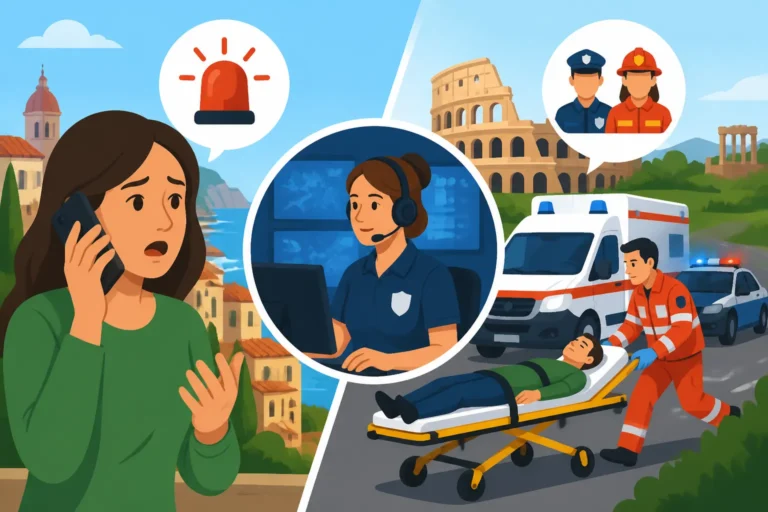
If the situation is critical—for example, if you have lost your insulin or heart medication and it is the middle of the night—you must go directly to the nearest hospital emergency room, known as the Pronto Soccorso. Emergency medical personnel in Italy will prioritize life-saving needs and can provide you with emergency doses and the necessary prescriptions to keep you safe.
Conclusion
Managing your health while relocating to a foreign country requires diligence, patience, and a deep respect for local regulations. Bringing prescription medications into Italy is entirely manageable, provided you understand that the responsibility falls entirely on you to present the correct documentation, respect the ninety-day supply limits, and strictly avoid attempting to use international mail for your refills.
The key to a successful transition is acknowledging that your home country’s medical system ends at the Italian border. By proactively preparing your doctor’s letters, keeping your medications in their original packaging, and understanding the severe restrictions on controlled substances like ADHD stimulants and strong opioids, you eliminate the risk of customs confiscations and legal trouble.
Once you arrive, focus on integrating into the excellent Italian healthcare system. Finding a local doctor to oversee your ongoing prescriptions will not only keep you legally compliant but will also connect you with a supportive network of medical professionals. Take charge of your medical logistics before your flight departs, and you will set the stage for a healthy, vibrant, and unforgettable experience in the magnificent country of Italy.
References
Primary Sources Official
- Ministero della Salute (Italian Ministry of Health): Official guidelines regulating the importation of pharmaceuticals for personal use, restrictions on controlled substances, and the prohibition of mailing prescription drugs by private individuals. https://www.salute.gov.it/
- Agenzia delle Dogane e dei Monopoli (Italian Customs Agency): Official border regulations detailing traveler allowances, required documentation for prescription medications, and protocols for declaring goods at the border. https://www.adm.gov.it/
Other Helpful Educational Sources
- US Embassy and Consulates in Italy: Comprehensive medical information for American citizens traveling to Italy, including specific warnings regarding the illegality of Adderall and the invalidity of foreign prescriptions in Italian pharmacies. https://it.usembassy.gov/
- Expatica Italy: Practical relocation guides detailing how to register with the Servizio Sanitario Nazionale (SSN), find an English-speaking doctor, and understand the Italian pharmacy system. https://www.expatica.com/it/
Disclaimer
The information provided in this article is for general educational and informational purposes only and does not constitute official medical, legal, or customs advice. Italian pharmaceutical laws, border regulations, and the legal status of specific controlled substances are subject to frequent change. Always consult directly with the Italian Embassy or Consulate in your home country and your prescribing physician before traveling internationally with any medication. It is your sole responsibility to ensure that your medical treatments comply with Italian law.