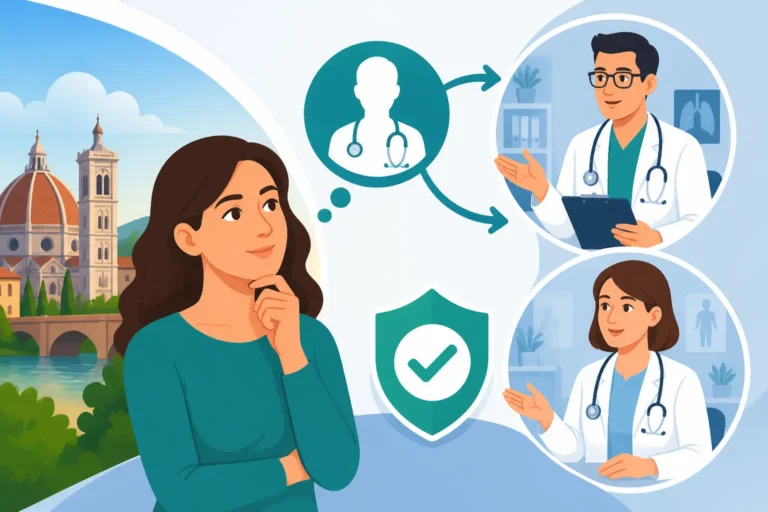
How to Change Your Family Doctor (Medico di Base) in Italy
Finding yourself stuck with a family doctor who lives across the city or who stares at you blankly when you try to explain your symptoms in broken Italian is a rite of passage for many foreigners. I once spent three months trekking to a clinic two towns over because I was too intimidated by the bureaucracy to ask for a change. This guide solves that administrative nightmare by walking you through every step of switching your Medico di Base.
Disclosure: This post may contain affiliate links. We may earn a commission at no extra cost to you if you make a purchase through these links. Read full disclosure.
Understanding the Role of the Medico di Base in Your Life
Before you go through the effort of switching, it is important to understand why the family doctor, or Medico di Base, is the sun around which your Italian healthcare galaxy orbits. In the Italian National Health Service (SSN), your family doctor is the gatekeeper. You cannot simply walk into a hospital for a non-emergency blood test or book a dermatologist because you noticed a weird mole. You need an "impegnativa"—a formal referral. If your current doctor is difficult to reach, doesn't answer their phone, or has a waiting room that resembles a crowded train station at rush hour, your access to the entire Healthcare in Italy: An Expats' Guide is effectively throttled.
Many expats find that their initial assignment of a doctor was somewhat random. When you first register, the clerk at the ASL (Azienda Sanitaria Locale) often just picks the person with the shortest queue or the closest office to your registered address. However, proximity on a map does not always account for public transport links or the doctor's actual bedside manner. If you find that your doctor is rarely available or that you have a significant communication barrier, it is your right to change. This is a standard procedure, and the administrative staff are used to it, even if they don't always act like it.
In some cases, you might even find that your doctor has reached their "massimale," which is the maximum number of patients allowed (usually 1,500). If you were their 1,500th patient, they might be too overwhelmed to give you the attention you need. Switching to a doctor with a smaller patient list can drastically improve your experience with the Italian system.
The Essential Prerequisites for Making the Switch
You cannot simply walk into a new doctor's office and ask them to take you on. The process is administrative, not clinical. To start, you must already be enrolled in the SSN. If you haven't done this yet, you'll need to look into Registering with an Italian Family Doctor (Medico di Base) as your very first step. If you are already in the system, you must have your physical or digital Tessera Sanitaria (Health Card) ready. This card contains your Codice Fiscale, which is the key to your medical records.
If you have recently moved to a new neighborhood, you should have your new residency paperwork in order. While it is technically possible to keep a doctor in a different "comune" for a short period, the system is designed for you to have a doctor where you live. If your residency is still in process, you might find the instructions on How to Register for the SSN Without a Permanent Address in Italy particularly useful, as the rules for "temporary" medical assistance are slightly different and often require more frequent renewals.
Lastly, ensure your Permesso di Soggiorno (for non-EU citizens) is valid. If it is currently being renewed, the post office receipt (the "cedolino") is usually accepted, but some clerks can be pedantic. Having a folder with your ID, your health card, and your proof of address will save you from being sent home to fetch a "missing" document—a classic Italian bureaucratic hurdle.
Step-by-Step Guide to Changing Your Doctor In-Person
For those who prefer a face-to-face interaction or for those whose digital skills are currently being tested by Italy's online portals, the in-person route at the ASL is the most traditional method. You will need to find the "Ufficio Scelta e Revoca" (Choice and Revocation Office) of your local health authority. This is often the same place where you first handled Registering With Your Local ASL in Italy: A Practical Guide.
- Find the right office: Search for the ASL or ATS office that covers your specific district. Note that these offices often have very specific, and sometimes bafflingly short, opening hours—for example, Tuesday and Thursday from 8:30 AM to 12:30 PM.
- Prepare your list: Do not show up and expect the clerk to recommend a "good" doctor. They are forbidden from doing so. Go to the ASL website beforehand and look for the "Elenco Medici di Medicina Generale." This list will show you which doctors have space. It is wise to have three or four names prepared in case your first choice just hit their patient limit five minutes before you arrived.
- The Ticket System: When you enter the ASL, look for a yellow or blue machine dispensing tickets. You are looking for the button that says "Scelta e Revoca." Take your ticket and prepare for a wait. This is a great time to catch up on a podcast or a book.
- The Interaction: When your number is called, tell the clerk, "Vorrei cambiare il mio medico di base." They will ask for your Tessera Sanitaria. You give them the name of your new chosen doctor. They will click a few buttons, print out a new paper document (the "Libretto Sanitario"), and that is it. Your old doctor is automatically notified (revoked), and your new one is active immediately.
Harnessing the Digital Route: Fascicolo Sanitario Elettronico
If you want to avoid the fluorescent lights and plastic chairs of the ASL office, the digital method is a godsend. Most Italian regions now use The Electronic Health Record in Italy (Fascicolo Sanitario Elettronico), known as the FSE. This portal allows you to manage your prescriptions, see your test results, and, most importantly, change your doctor from your sofa.
To access this, you absolutely need a SPID (Sistema Pubblico di Identità Digitale) or a CIE (Electronic Identity Card) with a card reader. If you haven't set this up yet, you are missing out on the only thing making Italian bureaucracy bearable. You can learn How to Use SPID to Book Health Appointments in Italy to get started. Once you are logged into your regional FSE portal (like Lombardia's "Fascicolo Sanitario" or Tuscany's "Open Toscana"), look for a section titled "Cambio Medico."
The digital portal usually shows you a map or a list of doctors in your area, clearly indicating who is "disponibile" (available) and who is "esaurito" (full). You simply click the doctor you want, confirm the choice, and download your new medical certificate. This document is what you will bring to your first appointment with the new doctor. While this system is efficient, it sometimes lags behind the actual real-time availability of doctors. If the portal says a doctor is full, but you know for a fact they are taking new patients (perhaps because they told you so), you might still have to go to the ASL in person to overrule the digital system.
| Method | Effort Level | Time Required | Best For |
|---|---|---|---|
| In-Person ASL | High | 2-4 Hours | Those without SPID or complex residency issues |
| Digital (FSE) | Low | 10 Minutes | Tech-savvy expats with a valid SPID |
| Pharmacy | Medium | 15 Minutes | Regions like Lombardy where pharmacists can help |
How to Find a "Good" Doctor Instead of a Random One
The biggest mistake expats make is picking a doctor based solely on their proximity to a metro stop. In Italy, the quality of your family doctor can vary wildly. Some are tech-savvy and allow you to request prescriptions via email or WhatsApp, while others still require you to drop off a paper slip in a wooden box outside their door.
To find a doctor who fits your needs, especially if you are looking for Finding English-Speaking Doctors and Clinics, you should use the "power of the piazza." Ask your neighbors or local shopkeepers. Post in expat Facebook groups for your specific city. Word of mouth is the most reliable way to find a doctor who is patient with non-native speakers or who has a specialty in something relevant to your health history.
Once you have a name, check their office hours. Some doctors only work mornings, others only afternoons. If you work a 9-to-5 job, you don't want a doctor who is only open from 9:00 AM to 12:00 PM. Also, check if they have a "Studio Associato." This means they work in a group practice. The benefit here is that if your doctor is on vacation, one of their partners can see you and access your records immediately, ensuring continuity of care.
Bridging the Gap with Private Options
While you are in the process of switching doctors, or if you find the public waiting lists for specialists too long even with a great family doctor, many expats choose to maintain private health insurance. For those moving to Italy or currently transitioning between residency statuses, SafetyWing offers a flexible solution that can cover you while you navigate the SSN's initial hurdles. It is particularly popular with digital nomads who might not have their permanent residency finalized yet.
For long-term residents who want to bypass the "impegnativa" system altogether for specialist visits, Cigna Global provides comprehensive coverage that allows you to book directly with private clinics. This is often the preferred route for expats who want to ensure they can see an English-speaking specialist within days rather than months. Even with a perfect Medico di Base, the public system's wait times for non-urgent MRIs or elective surgeries can be frustratingly long. Having a private policy as a backup means you can use your family doctor for routine issues and prescriptions, but pivot to private care for everything else.
What Happens After the Switch?
Once the administrative part is done, your new doctor won't magically receive your old physical files. In Italy, medical records are increasingly digital via the FSE, but historical data from your previous doctor might not carry over perfectly. It is a good idea to book an introductory appointment—a "visita conoscitiva"—with your new doctor.
Bring a summary of your medical history, any chronic prescriptions you take, and copies of recent blood tests. This is also the time to establish the "rules of engagement." Ask them:
- How do I book an appointment? (App, phone, or just show up?)
- How do I request a repeat prescription?
- Do they use email or a specific portal for communication?
- What is their policy for house calls ("visite domiciliari") if you are too sick to leave bed?
Establishing this relationship early makes it much less stressful when you actually get the flu or need a referral in a hurry. Remember, your Medico di Base is your primary link to the Italian state’s resources. Treating this relationship with the same care you would a professional partnership will make your life in Italy significantly smoother.
Healthcare in Italy Disclaimer
The information provided in this guide is for informational purposes only and does not constitute legal or medical advice. Healthcare regulations and digital portals in Italy are subject to frequent regional changes. Always verify current procedures with your local ASL or official government websites.