Participating in Organ Donation Programs in Italy
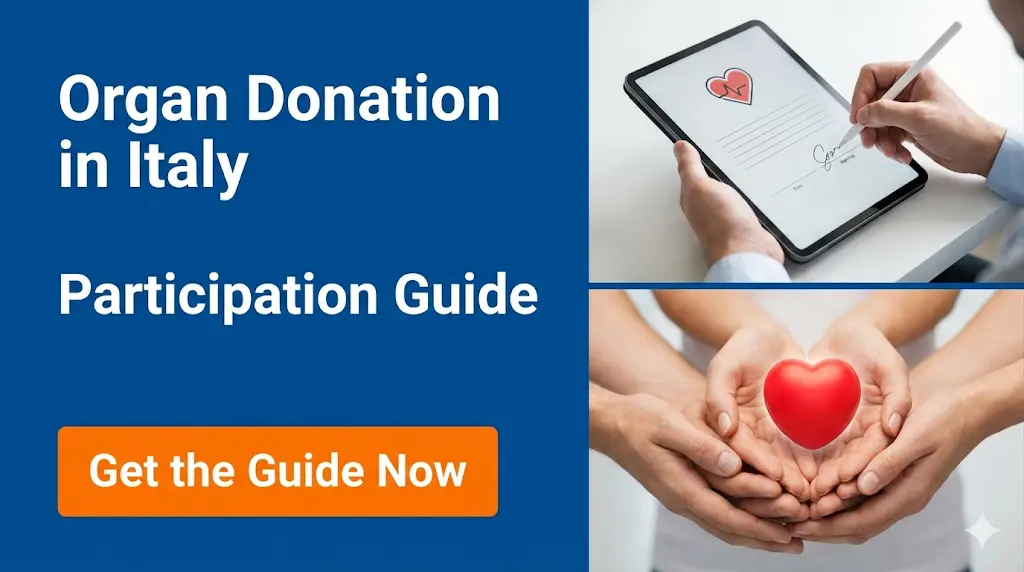
Deciding to become an organ donor is a profound personal choice. This comprehensive guide explains how Italy’s highly regulated organ donation system operates, details the legal rights of foreign residents, and outlines the five officially recognized methods to register your consent.
Disclosure: This post may contain affiliate links. We may earn a commission at no extra cost to you if you make a purchase through these links. Read full disclosure.
Introduction
In Italy, the organ donation and transplantation system is a highly structured, fiercely ethical, and technologically advanced medical network that successfully saves thousands of lives every single year. For foreigners residing in the country, understanding exactly how this system works, how to legally register your consent, and what specific rights your surviving family members hold is a crucial, yet frequently overlooked, aspect of long-term healthcare planning.
Many expatriates mistakenly assume that their organ donor status from their home country automatically transfers to their new Italian residency. Alternatively, some believe that as non-citizens, they are ineligible to participate in the Italian donor registry altogether. Both of these assumptions are incorrect. The Italian national healthcare system actively encourages all legal residents, regardless of their nationality, to make their end-of-life wishes legally known.
Making this decision in advance not only ensures that your personal ethics and wishes are respected, but it also lifts a monumental burden off your grieving family members during a time of sudden tragedy. This exhaustive guide is designed to completely demystify the organ donation process in Italy. We will explore the guiding philosophy of the Italian transplant network, break down the specific legal frameworks that protect donors, provide a step-by-step guide to the five different ways you can register your choice, and explain the rigorous medical standards applied in Italian intensive care units. By understanding these protocols, you can make a fully informed decision and leave a lasting legacy of life in your adopted home.
The Philosophy and Ethics of Italian Organ Donation
To truly understand how the organ donation system operates in Italy, one must first understand the cultural and ethical philosophies that underpin the Italian healthcare model. The entire national medical infrastructure is built upon the constitutional right to health and the deeply ingrained cultural value of social solidarity.
Unlike in some nations where healthcare access and quality can be heavily stratified by personal wealth or premium private insurance, the Italian organ transplant system operates on strict principles of absolute equality and objective clinical urgency. The network is entirely public and non-profit. Buying, selling, or offering any form of financial compensation for human organs is a severe criminal offense under Italian law. Organs are viewed as a priceless gift of life, and their allocation is managed with blind impartiality.
When an organ becomes available, wealth, social status, and nationality play absolutely no role in who receives it. The allocation algorithms are driven entirely by medical compatibility—such as blood type, tissue typing, and physiological size—and the severity of the potential recipient’s illness. This fiercely egalitarian approach ensures public trust in the system, guaranteeing that every donated organ goes to the patient who most desperately needs it to survive.
The Legal Framework Governing Consent
The legal landscape of organ donation in Italy has evolved significantly over the past few decades, transitioning to ensure that individual autonomy is respected above all else. The most important piece of legislation governing this process is Law 91 of 1999.
Under Italian legal frameworks, specifically Law 91 of 1999, the traditional preeminence of the family’s will over the deceased’s explicitly stated wishes was formally abolished. This is a critical point of law for expatriates to understand. In Italy, if you have officially registered your choice to become an organ donor, your family cannot legally override that decision after your passing. Conversely, if you have officially registered your explicit dissent—stating that you do not wish to be a donor—your family cannot override that refusal and offer your organs anyway. Your registered choice is final and legally binding.
It is also important to address the concept of “presumed consent.” Technically, Law 91 of 1999 introduced the concept of an opt-out system, where all citizens would be presumed donors unless they explicitly stated otherwise. However, the strict implementation of this specific presumed consent model—which requires a massive, flawless national notification system to ensure every single resident is aware of their right to opt-out—has been continuously delayed. Therefore, in practical, everyday application, Italy currently operates on a system of explicit consent or explicit dissent. The state actively asks residents to declare their will rather than presuming it.
The Role of the National Transplant Center
The entire Italian donation and transplantation network is centrally managed by a highly specialized government body. The National transplant center (CNT) is the technical-scientific body responsible for coordinating the National Transplant Network used by the Ministry of Health.
The CNT sits at the very top of a complex pyramid. When a potential organ donor is identified in a local hospital’s intensive care unit, the local coordination team immediately contacts their regional transplant center. The regional center then coordinates directly with the CNT in Rome. The CNT utilizes a massive, real-time national database of patients waiting for transplants to find the perfect physiological match.
The CNT is also responsible for setting the rigorous medical guidelines regarding donor suitability, ensuring that all transplanted organs meet the highest possible safety standards. They monitor the outcomes of every single transplant performed in the country, audit the performance of regional hospitals, and facilitate the international exchange of organs with other European nations if a perfect match cannot be found within Italy’s borders.
Can Expats and Foreign Residents Donate in Italy?
A common area of confusion is whether non-Italian citizens are legally permitted to join the national donor registry. The answer is a definitive yes.
The Italian healthcare system does not discriminate based on citizenship when it comes to the registry. Your eligibility to register as an organ donor is tied strictly to your legal residency status. If you are a legal resident of Italy, possess an official Italian tax code, and hold an Italian identity card or health card, you have the exact same rights and responsibilities regarding organ donation as a native-born Italian citizen.
If tragedy strikes while you are living in Italy, and you become a viable organ donor, the fact that you hold an American, British, or Australian passport is irrelevant. Your organs will be allocated through the CNT network to save lives in Italy or across the broader European transplant network.
The Five Ways to Register Your Decision
The Italian Ministry of Health has made declaring your end-of-life wishes as accessible as possible. In Italy, establishing your status requires explicit consent or explicit dissent, and there are currently five recognized ways to declare your will to donate organs, tissues, and cells while living.
Method One The Local Municipality Registry
The most common and seamless way to register your choice is by doing it during a routine bureaucratic errand. When you visit your local town hall to apply for or renew your Electronic Identity Card, the clerk processing your application is legally required to ask you about organ donation. If you are preparing for this visit, you may want to review our comprehensive guide on Navigating Italian Bureaucracy: Comune and Prefettura to ensure you bring the correct paperwork.
During the application process, the clerk will ask: “Vuole esprimere la propria volontà sulla donazione di organi e tessuti?” (Do you wish to express your will regarding the donation of organs and tissues?). You have three options:
- “Sì, acconsento” (Yes, I consent).
- “No, mi oppongo” (No, I oppose).
- “Non mi esprimo” (I do not wish to express a choice).
If you choose yes or no, your decision is instantly transmitted to the national database managed by the CNT. Your choice is not printed on the physical identity card itself for privacy reasons, but it is securely logged in the system.
Method Two The Local Health Authority
You can also register your decision by visiting your district’s Local Health Authority office. These are the same offices where you go to choose your primary care physician or request medical exemptions. You simply ask the clerk at the information desk for the specific form to declare your will regarding organ donation. You fill out the form, sign it in front of the public official, and they will enter your decision into the national health database. For more information on navigating these specific offices, consult our resource on Obtaining the Italian Health Card (Tessera Sanitaria).
Method Three The Italian Association for Organ Donation
For decades, the Italian Association for Organ Donation has been the leading non-profit organization advocating for transplant awareness in Italy. You can legally register your consent by becoming a member of this association.
In the modern digital age, this is incredibly convenient. If you possess a Public Digital Identity System credential, you can log into the association’s official digital portal and register your consent online in less than three minutes. Your digital signature is legally binding, and the association immediately synchronizes your consent with the Ministry of Health’s national database.
Method Four The Ministry of Health Blue Card
If you prefer not to interact with digital portals or government clerks, you can utilize the Blue Card. This is a simple, standardized card that you can download and print directly from the Italian Ministry of Health’s website. You fill in your personal details, explicitly check the box indicating your consent or dissent, date it, and sign it. You must keep this physical card in your wallet alongside your health card and identity card at all times.
Method Five The Holographic Declaration
The final legally recognized method is a handwritten declaration. You can take a blank piece of paper and write a clear, unambiguous statement declaring your wish to donate your organs after death. This document must include your full legal name, your date of birth, the current date, and your physical signature. Like the Blue Card, this handwritten note must be kept with your personal identification documents so that medical staff can find it in an emergency.
Summary of Registration Methods
To help you choose the most convenient route for your lifestyle, the following table summarizes the five official methods for declaring your organ donation wishes in Italy.
| Registration Method | Where / How to Complete | Digital Database Entry? | Best Suited For |
| Electronic Identity Card | At the local town hall during card renewal or initial issuance. | Yes, instant national transmission. | Expats securing their first local identity card. |
| Local Health Authority | At the local ASL office via a paper form. | Yes, entered by the health clerk. | Individuals already visiting the ASL for medical admin. |
| AIDO Association | Online via their official portal using a digital identity (SPID). | Yes, synchronized with the national registry. | Tech-savvy expats who want to register instantly from home. |
| Blue Card | Printed from the Ministry of Health website and kept in wallet. | No, relies on physical discovery. | Those who prefer carrying physical medical directives. |
| Holographic Will | Handwritten, dated, and signed note kept with personal ID. | No, relies on physical discovery. | Individuals making a sudden, immediate declaration. |
Note: You can change your mind at any time. If you register multiple times over your life, the Italian legal system always considers the most recent chronologically dated declaration as your final, binding choice.
What Happens if You Do Not Register Your Choice?
It is entirely possible to live in Italy for decades and never officially register your consent or dissent regarding organ donation. If you choose the “Non mi esprimo” (I do not wish to express a choice) option at the town hall, or if you simply ignore the digital portals, your name will not appear in the National Transplant Center’s database.
If you pass away in an intensive care unit and the medical staff determines you are a viable organ donor, they will query the national database. If no record is found, the heavy burden of decision-making falls entirely upon your legal next of kin.
The medical coordination team will approach your spouse, your registered domestic partner, or your adult children. The doctors will inform them that you are a candidate for donation and ask if they are aware of any wishes you expressed during your lifetime. Your family must then make the agonizing decision on your behalf. If the family members disagree with each other, or if they decide to refuse the donation, the process immediately stops.
This underscores exactly why registering your choice is so important. By formally declaring your will through one of the five legal methods, you remove this immense psychological weight from your grieving family, ensuring they do not have to make a life-altering medical decision during the worst moment of their lives.
The Principle of Strict Anonymity
A frequent question among potential donors and their families is whether they will ever know who received the life-saving organs. In some international jurisdictions, donor families and transplant recipients are permitted to meet if both parties consent. In Italy, the law strictly prohibits this.
According to Article 18 of Law 91/1999, all healthcare professionals and administrative staff involved in the organ collection and transplantation process are strictly required to ensure the absolute anonymity of both the donor and the recipient.
The identity of the donor is completely shielded from the recipient, and the recipient’s identity is completely shielded from the donor’s family. This rigid anonymity law was implemented to prevent any possibility of emotional coercion, psychological trauma, or financial extortion between the families. While a recipient may write an anonymous letter of profound gratitude to the donor’s family—which is vetted and passed along by the National Transplant Center—they will never know the name, exact age, or hometown of the person who saved their life.
Understanding Brain Death and the ICU Protocol
One of the most common fears preventing individuals from registering as organ donors is the anxiety that doctors might not work as hard to save their lives if they know they are a registered donor. In Italy, this fear is entirely unfounded due to some of the strictest medical observation laws in the world.
Organ donation typically only occurs when a patient suffers a catastrophic brain injury—such as a massive stroke or severe trauma—that results in brain death. Brain death is not a coma; it is the absolute, irreversible cessation of all brain activity. The patient is legally and biologically dead, even though a mechanical ventilator may be keeping their heart beating and their lungs inflating to preserve the organs. To understand the broader scope of how these critical situations are handled, you can review our guide on Emergency Medical Services in Italy: 112 and Hospitals.
In Italy, a single doctor cannot declare a patient brain dead. The law requires a specialized medical board consisting of a forensic doctor, a neurologist, and an anesthesiologist-resuscitator. This board must observe the patient continuously for a mandatory period of six hours, performing rigorous neurological and instrumental tests to confirm the total absence of brain function. Only after this intense six-hour observation period concludes, and death is definitively certified, does the hospital check the national registry to see if the patient is a registered organ donor. The doctors fighting to save your life in the emergency room have absolutely no connection to the transplant coordination team.
Living Organ Donation in Italy
While the vast majority of organ donations occur after death, Italy does allow for living organ donation under highly specific, fiercely regulated circumstances. Living donation is generally restricted to kidneys and partial liver donations.
Because living donation involves performing major surgery on a perfectly healthy individual, the ethical and medical vetting process is exhaustive. A living donor in Italy must undergo extensive physiological testing to ensure their remaining kidney or liver will sustain them flawlessly for the rest of their life.
Furthermore, the living donor must pass a rigorous psychological evaluation conducted by an independent third party to ensure they are fully aware of the risks and are not being subjected to familial guilt or financial coercion. Once the medical and psychological boards approve, a local judge must also formally authorize the procedure, providing an ultimate legal safeguard against the exploitation of vulnerable individuals.
Conclusion
Deciding to become an organ donor is a deeply personal choice that transcends borders, languages, and cultures. It is the ultimate act of human solidarity, offering the priceless gift of life to individuals suffering from terminal organ failure. For expatriates living in Italy, understanding how to integrate your end-of-life wishes into the local legal framework is a vital component of responsible healthcare planning.
The Italian organ transplant network is a beacon of medical excellence, operating on unshakeable principles of equality, stringent ethical oversight, and profound respect for individual autonomy. By utilizing the straightforward registration methods available—whether through your local town hall, a digital portal, or a simple handwritten note—you ensure that your voice is legally heard and respected. More importantly, you shield your loved ones from the burden of making an agonizing choice during a time of immense grief. Take the time to register your decision, discuss your wishes clearly with your family, and embrace the profound opportunity to leave a legacy of life in your adopted Italian home.
References
Primary sources (official)
- Centro Nazionale Trapianti (CNT) – Istituto Superiore di Sanità. Official government portal outlining the technical-scientific coordination of the National Transplant Network and the legal framework of Law 91/1999. https://www.iss.it/en/centro-nazionale-trapianti
- Ministero della Salute. Official guidelines from the Ministry of Health detailing the five recognized methods for declaring organ donation consent in Italy. https://www.salute.gov.it/
Other helpful sources
- AIDO (Associazione Italiana per la Donazione di Organi, Tessuti e Cellule). The premier non-profit association providing digital registration portals and educational resources regarding organ donation in Italy. https://aido.it/
- European Foundation for Organ Donation (EFOD) – Italy Profile. Provides comparative data, legal breakdowns of the explicit consent models, and statistical insights into the Italian transplant system. https://www.efod.eu/en/italy/
Disclaimer
The information provided in this article is intended for general educational and informational purposes only and does not constitute official medical, legal, or administrative advice. Healthcare laws, organ donation regulations, and the procedures for registering your consent with the Italian Ministry of Health and the National Transplant Center are subject to change. Always consult directly with a licensed Italian medical professional, your local Azienda Sanitaria Locale (ASL), or an official registry clerk at your local municipality to verify the most current procedures for documenting your end-of-life medical directives.