Do Italian Doctors Make House Calls?
Discover everything you need to know about getting a doctor to visit your home or hotel in Italy. This comprehensive guide explains public healthcare protocols, the Guardia Medica out-of-hours service, private English-speaking concierge medicine, associated costs, and insurance reimbursement.
Disclosure: This post may contain affiliate links. We may earn a commission at no extra cost to you if you make a purchase through these links. Read full disclosure.
Introduction
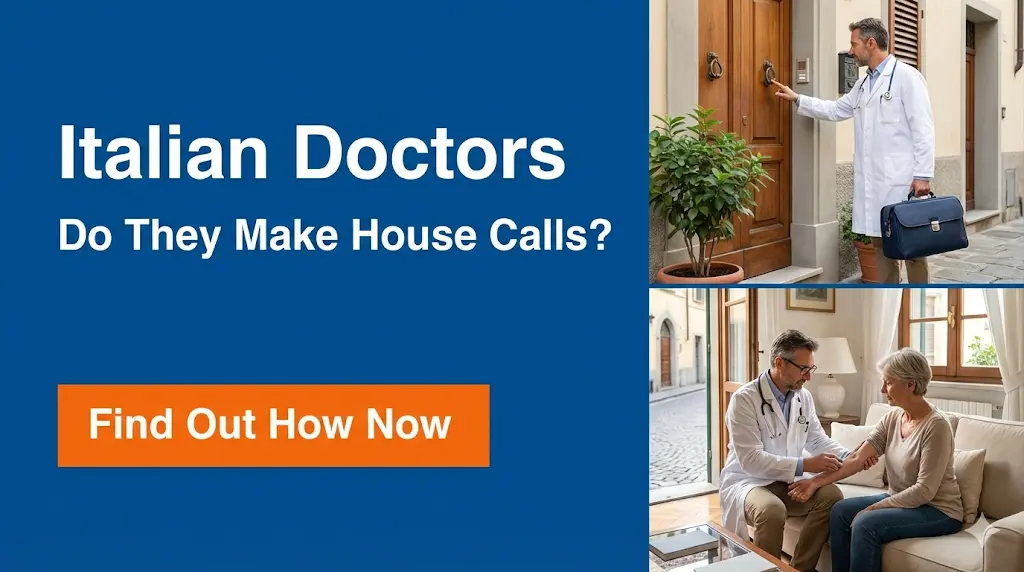
The short answer is yes, doctors in Italy absolutely make house calls. In fact, the concept of a doctor coming to a patient’s home—known in Italian as a visita a domicilio—is a deeply rooted tradition within the Italian medical system. However, the circumstances under which a doctor will agree to visit you, how much it will cost, and the language they will speak depend entirely on whether you are utilizing the public healthcare system or the private medical sector.
Italy boasts a world-renowned, universally accessible public healthcare framework called the Servizio Sanitario Nazionale (SSN). Within this system, house calls are strictly regulated and generally reserved for patients who are genuinely physically incapable of traveling to a clinic. Conversely, Italy’s private medical sector has embraced the demand for premium, highly convenient care. A robust network of private doctors and concierge medical services operates across the peninsula, offering on-demand house calls to tourists, expatriates, and locals who are willing to pay out of pocket for the comfort of being treated in their own bed.
For a newly arrived expatriate or an international visitor, navigating the differences between these two systems can be confusing. You must understand the specific rules governing your assigned public family doctor, learn how to utilize the state-funded out-of-hours medical service, and know where to find private, English-speaking professionals when public options are unavailable or inconvenient. This exhaustive guide will detail every aspect of securing a medical house call in Italy, providing you with the knowledge and resources necessary to prioritize your health and comfort without ever leaving your home.
The Public Healthcare System and Home Visits
If you are an expatriate who has officially obtained residency and registered with the public healthcare system, your primary point of medical contact is your Medico di Medicina Generale, commonly referred to as the Medico di Base (General Practitioner). To understand how to establish this vital medical relationship, you should consult our comprehensive overview on Registering with an Italian Family Doctor (Medico di Base).
The Rules Governing the Medico di Base
Under the regulations of the Italian National Health Service, your public general practitioner is required to make a house call, but only under very specific and strict clinical conditions. The primary rule is that a home visit is only mandated if the patient is deemed “non-transportable” (non trasportabile).
Non-transportable does not simply mean that you feel tired, have a moderate fever, or do not own a car. It means that moving you from your home to the doctor’s clinic would cause a severe deterioration in your medical condition or pose a significant risk to your health or the health of the public. Examples of non-transportability include severe mobility issues in the elderly, incapacitating orthopedic injuries, acute cardiovascular events awaiting transport, or highly contagious and debilitating infectious diseases.
If you believe your condition warrants a house call, it is at the sole professional discretion of the doctor to agree. You must call your doctor to explain your symptoms, and they will decide through triage over the phone whether a clinic visit is possible or a home visit is medically necessary.
Timing Your Request
The Italian public system has strict bureaucratic rules regarding when you can request a home visit from your public doctor:
- If you call and request a home visit before 10:00 AM, the doctor is legally obligated to complete the house call on that exact same day.
- If you call and request a home visit after 10:00 AM, the doctor is allowed to schedule the house call for the following day before 12:00 PM (noon).
Because public doctors manage rosters of up to 1,500 patients, their clinic hours are heavily impacted by home visits. Therefore, they are generally quite strict about enforcing the non-transportable rule. If they agree to visit, this public service is completely free of charge.
Out of Hours Public Care The Guardia Medica
Medical emergencies and severe illnesses rarely respect standard business hours. If you fall ill during the night, over the weekend, or during a public holiday when your Medico di Base is closed, you are not left without options. Italy provides a state-funded out-of-hours medical service known as the Guardia Medica, or officially as Continuità Assistenziale (Continuity of Care).
How the Guardia Medica Operates
The Guardia Medica is designed to handle urgent but non-life-threatening medical situations that cannot wait until normal clinics reopen. The service typically operates on the following schedule:
- Weeknights: From 8:00 PM to 8:00 AM the following morning.
- Weekends: From 10:00 AM on Saturday (or sometimes 8:00 PM Friday, depending on the region) straight through to 8:00 AM on Monday.
- Public Holidays: From 10:00 AM on the day prior to the holiday until 8:00 AM the first working day after the holiday.
Requesting a Guardia Medica House Call
You can find the phone number for the Guardia Medica in your specific municipality by searching online or checking the website of your regional health authority (ASL). When you call, a doctor will answer and perform a telephone triage.
Just like your general practitioner, the Guardia Medica doctor will assess whether your situation requires them to dispatch a physician to your home. They do make house calls regularly, particularly during the night, but they may also advise you to come to their local physical clinic if you are well enough to travel. The Guardia Medica doctor can prescribe essential medications, issue temporary sick leave notes for work, and recommend whether you need to proceed to the hospital.
The Guardia Medica Turistica
For expatriates and travelers visiting popular Italian vacation destinations during the summer, the government frequently establishes a Guardia Medica Turistica. These are specific medical outposts set up in coastal towns, mountain resorts, and islands to handle the massive influx of non-resident tourists. Doctors at these outposts do make house calls to hotels and holiday rental properties. While residents enrolled in the local SSN receive this care for free, tourists and non-residents will usually be asked to pay a small regional tariff (often between 15 and 30 euros) for a clinic visit, or slightly more for a house call.
Private Doctors and Concierge Medicine in Italy
While the public system offers an incredible safety net, it presents significant hurdles for many expatriates. The biggest challenge is the language barrier; finding a public doctor or a Guardia Medica physician who speaks fluent English is exceptionally rare. Furthermore, the strict “non-transportable” requirement means that if you simply want the convenience of staying in bed with a bad case of the flu, the public system will likely deny your request for a home visit.
This is where the private healthcare sector steps in. Over the last decade, Italy has seen a massive surge in private, on-demand medical concierge services specifically designed to cater to the international community, diplomats, corporate expatriates, and luxury travelers.
The Benefits of Private House Calls
Opting for a private house call offers unparalleled convenience and peace of mind. The primary benefits include:
- Language Guarantee: You can explicitly request an English-speaking doctor, entirely eliminating the dangerous friction of medical miscommunication.
- Speed and Convenience: You dictate the terms. You do not need to prove you are non-transportable. If you want a doctor to visit your hotel room because you have food poisoning or jet lag, they will come. Appointments can often be arranged within an hour or two.
- No Bureaucracy: You do not need to be registered with the Italian public health system, nor do you need an Italian tax code (Codice Fiscale) or a health card (Tessera Sanitaria).
- Comprehensive Care: Many private concierge services can dispatch specialists, arrange for at-home blood tests, or even deliver prescribed medications directly to your door after the visit.
Prominent Concierge Medical Platforms
If you decide to utilize the private sector, several highly reputable companies operate across major Italian cities. To see a broader list of digital options for connecting with medical professionals, you can explore our guide on Websites to Find Doctors Who Speak English in Italy.
Some of the most prominent services offering house calls include:
- MedInAction: Operating in cities like Rome, Milan, Florence, and the Amalfi Coast, this platform allows you to use an app or website to request a qualified, English-speaking doctor directly to your location. They also collaborate extensively with international health insurance companies.
- Medelit: This is a premium medical service offering an expansive network of highly qualified doctors, pediatricians, and specialists who perform house calls. They cover major metropolitan areas and offer comprehensive at-home diagnostics, including ultrasounds and blood draws.
- Doctors in Italy: While known for their physical English-speaking clinics, they also arrange rapid, on-demand house calls for international patients staying in major tourist hubs.
Pediatric House Calls for Expat Families
When a child falls ill, the stress level for an expat parent skyrockets. Fevers in infants and toddlers can spike rapidly, and dragging a sick, crying child across a busy Italian city to sit in a pediatrician’s waiting room is an ordeal most parents desperately wish to avoid.
In the public system, children are assigned a Pediatra di Libera Scelta (Public Pediatrician). Like general practitioners, public pediatricians are technically required to make house calls for non-transportable children, but in practice, they strongly prefer to see the child in their sterilized, fully equipped clinic.
Because of this, private pediatric house calls are incredibly popular among the expatriate community. Services like Medelit and other specialized private networks have dedicated English-speaking pediatricians on call. A private pediatric house call allows the child to be examined in the comfort and safety of their own home, reducing their anxiety and preventing exposure to other sick children in a public waiting room. The private pediatrician will take the time to thoroughly explain the diagnosis to the parents in English and can write private prescriptions for necessary antibiotics or fever reducers.
How Much Does a House Call Cost in Italy
Understanding the financial implications of your healthcare choices is vital. The cost of a medical house call in Italy ranges from completely free to several hundred euros, depending entirely on the pathway you choose.
- Public Medico di Base: Free of charge, but restricted to severe, non-transportable cases for registered SSN residents.
- Guardia Medica (Out of Hours): Free for registered residents. For tourists or those using a European Health Insurance Card (EHIC) out of region, a small regional tariff typically ranging from 25 to 50 euros applies.
- Private Concierge Doctor: This is an out-of-pocket expense. A standard private house call during regular daytime hours usually costs between 120 and 200 euros.
- Private House Call (Nights/Weekends): If you request a private English-speaking doctor late at night, on a Sunday, or during a major national holiday like Christmas or Ferragosto, emergency surcharges apply. These visits can range from 200 to 350 euros or more.
- Specialist House Call: If you require a specialist (e.g., a private cardiologist or neurologist) to visit your home, expect the fees to start at 250 euros and go upwards depending on the doctor’s prestige and the diagnostic equipment they must transport.
Cost Comparison Table
| Type of Medical Service | Availability | Estimated Cost | Language Guarantee |
| Public GP (Medico di Base) | Daytime (strict triage rules) | Free (requires SSN registration) | No (Almost exclusively Italian) |
| Out-of-Hours (Guardia Medica) | Nights, Weekends, Holidays | Free to €50 | No (Almost exclusively Italian) |
| Private Concierge House Call | 24/7 On-Demand | €120 – €250+ | Yes (English heavily catered to) |
| Private Pediatric House Call | 24/7 On-Demand | €150 – €300+ | Yes (English available) |
Navigating the Language Barrier
If you choose to navigate the public system and call your Medico di Base or the Guardia Medica, you must be prepared to speak Italian. The telephone triage is a critical moment where you must convince the doctor of the severity of your condition.
If you are not fluent in Italian, it is highly advisable to have an Italian-speaking friend, a colleague, or your hotel concierge make the phone call on your behalf. If you must make the call yourself, having a few essential phrases prepared can help communicate your distress:
- I need a doctor to come to my home: Ho bisogno di un medico a domicilio.
- I cannot move from the bed: Non posso muovermi dal letto.
- I am very sick and cannot travel: Sto molto male e non posso viaggiare.
- The fever is very high: La febbre è molto alta.
- I am an international tourist/resident: Sono un turista/residente internazionale.
- Do you speak English?: Parla inglese?
Health Insurance and Reclaiming Costs
If you opt for a private house call, the upfront cost can seem intimidating. However, if you possess a comprehensive international expatriate health insurance policy or premium travel medical insurance, these costs are frequently reimbursable.
When the private doctor completes their house call, you must pay them directly. While some accept credit cards via portable terminals, it is always wise to ask about accepted payment methods when booking the appointment.
Most importantly, you must legally request an official, itemized commercial invoice, known in Italian as a fattura. A simple credit card receipt is not sufficient for insurance companies. The fattura must clearly state the doctor’s name, their medical registration number, the date of the visit, the cost, and the medical codes for the services rendered. If you are an Italian resident, ensure your tax code (Codice Fiscale) is printed on the invoice so you can claim the 19% medical tax deduction on your annual tax return.
You will submit this fattura, along with the doctor’s English medical report detailing their diagnosis, to your insurance provider. The insurance company will then process the claim and reimburse the eligible amount directly to your bank account. For a broader overview of how to select and manage these policies, review our comprehensive Healthcare in Italy: An Expats’ Guide.
Telemedicine as an Alternative to House Calls
Before you pay hundreds of euros for a private doctor to navigate Italian traffic to reach your apartment, consider whether a physical examination is truly necessary. In many cases, patients simply need professional medical advice, reassurance, or a prescription refill for a lost medication.
Telemedicine has revolutionized healthcare access in Italy. Platforms like Pyllola, Doctorsa, and the digital branches of Doctors in Italy allow you to connect with an English-speaking, licensed Italian physician via a secure video call within minutes.
A telemedicine consultation typically costs between 30 and 50 euros, making it vastly more affordable than an in-person house call. The online doctor can assess visible symptoms (like rashes or pink eye), discuss your medical history, provide a diagnosis, and instantly email you an electronic private prescription (a digital Ricetta Bianca) that you can take to any local pharmacy.
What to Expect During a Medical House Call in Italy
If you have booked a private house call, the process is generally seamless and highly professional. Here is what you can expect when the doctor arrives at your door:
- Arrival and Identification: The doctor will arrive at your home or hotel room. They carry specialized medical bags containing diagnostic tools, basic medications, and sometimes portable diagnostic devices.
- Clinical Examination: The doctor will take your vital signs, listen to your heart and lungs, examine your throat, and discuss your symptoms in detail. Because you have hired a private English-speaking physician, this conversation will be relaxed and comprehensive.
- Diagnosis and Treatment: The doctor will provide a diagnosis. In some cases, they may administer an intramuscular injection (such as a strong anti-inflammatory or anti-nausea medication) for immediate relief.
- Prescriptions: If you require ongoing medication, the doctor will write a paper Ricetta Bianca. You or a family member will need to take this to an Italian pharmacy to purchase the medication out of pocket.
- Medical Report: The doctor will write a detailed medical report in English, outlining the diagnosis and the recommended treatment plan.
- Payment: You will settle the bill and receive your official fattura.
When Not to Wait for a House Call Medical Emergencies
It is absolutely crucial to understand the limitations of a house call. A visita a domicilio, whether public or private, is strictly for non-life-threatening urgent care.
If you or a family member are experiencing a severe medical crisis, waiting an hour or two for a concierge doctor to arrive is incredibly dangerous. You must bypass house call services entirely if you encounter any of the following symptoms:
- Suspected heart attack (severe chest pain, radiating arm pain).
- Signs of a stroke (facial drooping, slurred speech, sudden weakness).
- Severe, uncontrollable bleeding.
- Extreme difficulty breathing or sudden shortness of breath.
- Unconsciousness or severe head trauma.
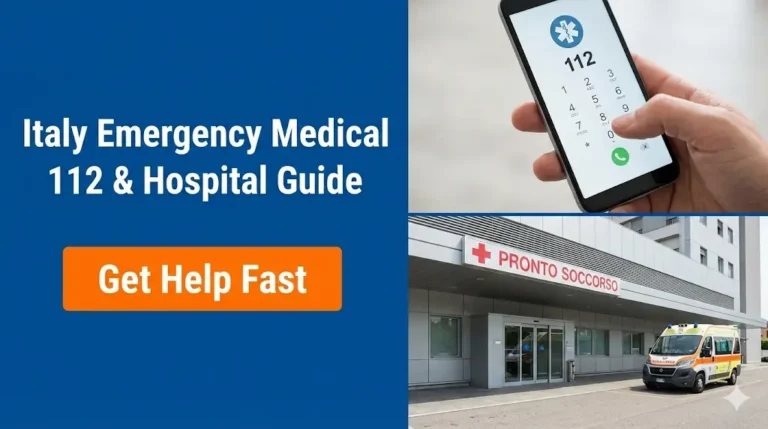
In these situations, you must immediately dial 112, the universal European emergency number, to request an ambulance. The dispatch operators can often connect you with an English translator. Alternatively, proceed immediately to the nearest public hospital emergency room (Pronto Soccorso). Emergency rooms in Italy are highly equipped and provide life-saving care free of charge, prioritizing patients based purely on medical urgency. To understand how these emergency systems function, read our detailed guide on Emergency Medical Services in Italy: 112 and Hospitals.
Conclusion
The prospect of falling ill in a foreign country is daunting, but the Italian healthcare landscape offers incredibly robust solutions to ensure you receive the care you need, exactly where you need it. Yes, Italian doctors do make house calls. The system is designed to accommodate everyone from the immobile local pensioner to the visiting expatriate professional.
If you are integrated into the public SSN, the Medico di Base and the Guardia Medica stand ready to provide free home visits for those who meet the strict criteria of non-transportability. For everyone else—including tourists, newly arrived expats, and those seeking the undeniable comfort of an English-speaking physician at their bedside—the private concierge medical sector offers rapid, professional, and highly convenient solutions.
By understanding how to navigate telephone triages, being prepared to utilize out-of-hours services, and keeping the contact information for private, on-demand medical platforms saved in your phone, you can completely eliminate the anxiety of healthcare abroad. Prioritize your well-being, invest in comprehensive health insurance, and rest assured that in Italy, excellent medical care is never more than a phone call away.
References
Primary sources (official)
- Ministero della Salute (Italian Ministry of Health): The official governmental portal providing the legislative framework for the Servizio Sanitario Nazionale, the obligations of the Medico di Base regarding home visits, and the operational guidelines for the Guardia Medica (Continuità Assistenziale). https://www.salute.gov.it/
- 112 – Numero Unico Europeo per le Emergenze: The official Italian portal for the single European emergency number, outlining protocols for dispatching emergency medical services and ambulances across the country. https://112.gov.it/
Other helpful sources
- MedInAction: A premier English-speaking concierge medical service providing 24/7 on-demand house calls, clinic appointments, and telemedicine across major Italian cities and tourist destinations. https://www.medinaction.com/
- Medelit: A comprehensive, high-tier private medical service specializing in home visits by doctors, pediatricians, and specialists, offering extensive at-home diagnostic capabilities for expatriates in Italy. https://www.medelit.com/it-en/
Disclaimer
The information provided in this article is intended for general educational and informational purposes only and does not constitute official medical, diagnostic, or legal advice. The operational hours, regional tariffs, and specific triage rules of the public Guardia Medica and the Medico di Base are subject to frequent changes based on the regulations of individual regional health authorities (ASL). Pricing for private concierge medical house calls is unregulated and varies significantly depending on the service provider, geographical location, and the time of the request. House calls are intended for non-life-threatening urgent care only. If you are experiencing a severe, life-threatening medical emergency, please dial the universal European emergency number 112 immediately to access emergency medical responders and ambulance services.