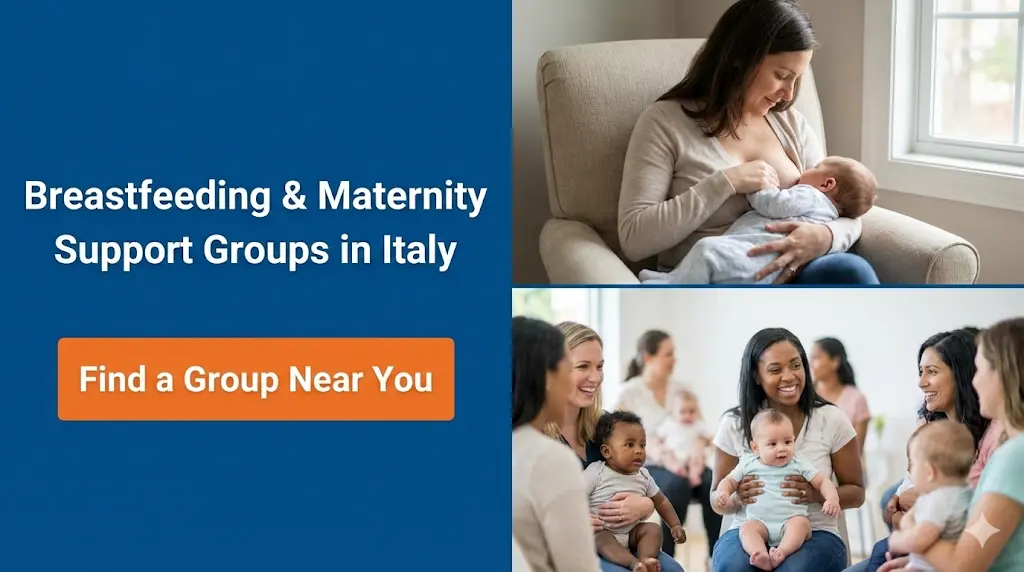
Breastfeeding and Maternity Support Groups in Italy
Navigating motherhood abroad can be challenging, but Italy offers robust resources for new parents. This guide explores breastfeeding culture, public healthcare support, local La Leche League chapters, and English-speaking expat maternity groups to help you thrive postpartum.
Disclosure: This post may contain affiliate links. We may earn a commission at no extra cost to you if you make a purchase through these links. Read full disclosure.
Introduction
Italy boasts a culture that is famously child-centric. Stroll through any piazza on a Sunday afternoon, and you will see generations of families fawning over infants in strollers. Bambini are celebrated everywhere, from high-end restaurants to local supermarkets. This cultural warmth translates into a generally supportive environment for new mothers. Yet, despite this overarching affection for babies, the structural support systems for expatriate mothers—specifically regarding breastfeeding guidance and postpartum emotional support—can sometimes feel hidden behind language barriers and bureaucratic red tape.
Historically, Italian mothers relied heavily on their immediate extended family for postpartum care. The grandmother, or nonna, was the ultimate source of newborn wisdom, cooking nourishing meals, and helping the new mother recover during the puerperio (the traditional forty-day postpartum rest period). Today, as families become more nuclear and geographically dispersed, and as Italy welcomes a growing number of international residents, the reliance on formal maternity support groups and professional lactation consultants has skyrocketed.
Whether you are seeking advice on achieving a pain-free latch, looking for a safe space to discuss the baby blues, or simply wanting to enjoy a cappuccino with other English-speaking mothers who are navigating the exact same sleepless nights, Italy offers a diverse array of resources. From the state-funded family clinics to private international networks, this comprehensive guide will detail everything you need to know about breastfeeding and maternity support groups across the Italian peninsula.
Cultural Attitudes Toward Breastfeeding in Italy
Before diving into the specific support groups available, it is helpful to understand the general cultural climate regarding infant feeding in your host country. Italy is highly supportive of breastfeeding, known locally as allattamento al seno. The Italian Ministry of Health, in alignment with the World Health Organization and UNICEF, actively promotes exclusive breastfeeding for the first six months of a child’s life, followed by continued breastfeeding alongside complementary foods for up to two years or beyond.
Public Breastfeeding Norms
For many expat mothers, the idea of nursing a baby in public can cause anxiety, especially if they come from countries where public breastfeeding is heavily stigmatized or debated. In Italy, you can generally breathe a sigh of relief. Breastfeeding in public is widely accepted, normalized, and protected as a natural aspect of caring for a child.
You will frequently see mothers nursing their babies on park benches, in cafes, on trains, and in waiting rooms without drawing negative attention. In fact, Pope Francis has famously and repeatedly encouraged mothers to breastfeed their babies inside the Sistine Chapel during baptismal ceremonies, stating that feeding a hungry child is the most natural thing in the world. While there is no specific national law that explicitly says “you have the right to breastfeed anywhere,” public decency laws are never applied to nursing mothers. If you choose to use a nursing cover, you are welcome to do so, but it is certainly not expected or culturally demanded.
The Phenomenon of Unsolicited Advice
While the culture is supportive, it is also highly communicative and community-oriented. Italians are generally not shy about offering their opinions, particularly when it comes to babies. As an expat mother, you should be prepared for friendly strangers, from the local baker to an elderly woman on the bus, to offer unsolicited advice about your baby. You might be told that your baby needs heavier socks, a hat to prevent a draft (colpo d’aria), or that your baby seems hungry. While this can initially feel intrusive to someone from a more reserved culture, it is almost always rooted in a genuine, culturally ingrained desire to care for the community’s children. Learning to smile, nod, and politely say “Grazie” while continuing to parent your own way is a rite of passage for expat moms in Italy.
Public Healthcare Resources The Consultorio Familiare
When you give birth in Italy, your interactions with the national healthcare system, the Servizio Sanitario Nazionale (SSN), do not end the moment you are discharged from the maternity ward. To understand the foundational aspects of giving birth within this system, you can refer to our overview on Pregnancy and Childbirth: Costs and Procedures in Italy.
The absolute cornerstone of free, public postpartum support in Italy is the Consultorio Familiare. These are community-based family health and counseling centers operated by your local health authority (Azienda Sanitaria Locale, or ASL).
Services Offered for New Mothers
The Consultorio is designed to be a safe, accessible hub for women’s health, maternity care, and pediatric support. They are staffed by a multidisciplinary team that typically includes midwives (ostetriche), gynecologists, psychologists, social workers, and pediatric nurses.
For a breastfeeding mother, the local Consultorio is an invaluable resource. You can visit these clinics for:
- Baby Weigh-Ins: You can bring your newborn in to check their weight gain, which is often the primary indicator of successful breastfeeding.
- Breastfeeding Consultations: The midwives on staff are trained to help you with latching issues, positioning, cracked nipples, and identifying signs of mastitis or engorgement.
- Postpartum Check-ups: The midwives can check your physical recovery, including the healing of stitches from a vaginal tear or a cesarean section.
- New Parent Courses: Many centers offer free postpartum courses where local mothers gather weekly to discuss infant massage, weaning (svezzamento), and infant sleep. To see how these centers support you before the baby arrives, you can read our guide on Women’s Health: Prenatal Classes and Support.
Navigating the Language Barrier
The primary drawback of the Consultorio Familiare for newly arrived expats is the language barrier. Because these are state-run, local community clinics, the staff will communicate almost exclusively in Italian. If you do not speak Italian, attending a group meeting or explaining a complex lactation issue can be highly frustrating. If you plan to utilize the free public services, it is highly recommended to bring a bilingual friend, a doula, or your partner to help translate during your first few visits until you learn the essential medical vocabulary.
La Leche League Italy A Vital Resource
If you are looking for evidence-based breastfeeding support and the solidarity of other nursing mothers, La Leche League (LLL) is a global organization that maintains a massive and highly active presence in Italy. Known locally as La Leche League Italia, this non-profit organization operates on a peer-to-peer support model.
Local Meetings and Phone Support
LLL Italia hosts regular, free support group meetings in cities and towns across the entire country. These meetings are led by accredited LLL Leaders—mothers who have breastfed their own children and have undergone rigorous training in lactation management and counseling.
During these meetings, mothers sit in a circle, share their struggles, celebrate their milestones, and offer practical, lived-experience advice on everything from surviving cluster feeding and growth spurts to pumping at work and gentle weaning. In addition to in-person meetings, LLL Italia operates a national helpline. You can call or text a leader at almost any time of day to receive immediate advice on acute issues like a plugged duct or a sudden drop in milk supply.
English Speaking LLL Support
Because LLL is an international organization, it is highly sensitive to the needs of expatriate mothers. In major international hubs such as Rome, Milan, and Florence, you can often find specific LLL meetings conducted entirely in English. Even if you live in a smaller Italian town without a dedicated English meeting, the LLL Italia website provides a directory of leaders, noting which ones speak foreign languages. You can easily find an English-speaking leader to communicate with via phone or WhatsApp, ensuring you get accurate, comforting advice without the stress of a language barrier.
Hiring a Private Lactation Consultant in Italy
While peer support is wonderful for general advice and emotional solidarity, some breastfeeding challenges require clinical, highly specialized medical intervention. If you are dealing with severe, chronic pain, a baby with a suspected tongue-tie or lip-tie (frenulo corto), premature birth complications, or a failure to gain weight, you should seek the help of an IBCLC.
The Role of an IBCLC
An IBCLC (International Board Certified Lactation Consultant) represents the highest standard of professional lactation care globally. In Italy, these professionals are often referred to as Consulenti Professionali in Allattamento Materno. Many IBCLCs in Italy are also qualified midwives or pediatric doctors who have pursued this extensive additional certification.
An IBCLC will conduct a comprehensive, clinical assessment of both the mother and the baby. They will observe a full feeding, weigh the baby before and after a feed to measure exact milk transfer, examine the baby’s oral anatomy, and create a customized, written care plan to resolve the specific issue.
Finding and Affording Private Care
Because IBCLCs operate in the private healthcare sector, their services are an out-of-pocket expense. A private, in-home consultation typically costs between €80 and €150, depending on your location and the length of the visit. Follow-up visits are usually offered at a reduced rate.
The tremendous advantage of hiring a private IBCLC in Italy is the high likelihood of finding an English-speaking professional. Organizations like AICPAM (Associazione Italiana Consulenti Professionali in Allattamento Materno) maintain directories of certified consultants across Italy, making it easy to find a specialist in your region who can communicate complex medical information in your native language. Furthermore, if you possess a premium international health insurance policy, the cost of a private lactation consultant is sometimes fully or partially reimbursable, though you must check your specific policy terms regarding maternity care.
Expat Maternity Support Groups by City
Beyond the mechanics of feeding your baby, the emotional and social aspects of early motherhood are critical. Finding a community of other expat women who understand exactly what it feels like to navigate Italian bureaucracy with a newborn strapped to your chest is a lifesaver. Several major Italian cities feature dedicated, highly organized support networks specifically for international mothers.
Support Networks in Rome
Rome is home to a vast diplomatic and expatriate community, and consequently, it boasts some of the strongest international maternity networks in the country. Organizations like “Bellies Abroad” provide a massive array of services in English, bridging the gap between expats and the Italian medical system. They offer access to English-speaking midwives, lactation consultants, pediatricians, and doulas. Furthermore, local grassroots groups, often organized via Facebook (such as “Rome Moms” or “Expats in Rome”), organize weekly park meetups, coffee mornings, and clothing swaps, providing an instant social calendar for isolated new mothers.
Support Networks in Milan
Milan, Italy’s fast-paced financial and fashion capital, attracts thousands of international professionals every year. The “Milan Moms” community is incredibly active, organizing regular playgroups, bilingual storytimes, and maternal wellness workshops. Because the lifestyle in Milan is often more corporate and demanding, these groups frequently focus heavily on work-life balance, navigating Italian maternity leave laws, and finding English-speaking nannies or bilingual daycares.
Support Networks in Florence
Florence, with its massive population of international students, artists, and expats, offers a tight-knit and highly supportive community. “Florence Moms” and various international women’s associations host regular meetups. Because Florence is smaller and more walkable than Rome or Milan, these groups tend to be highly localized and intimate, often meeting in local piazzas or family-friendly cafes in the Oltrarno district.
For a deeper understanding of how these social networks tie into your child’s long-term medical care, you can explore our resource on Postnatal Care and Pediatrician Follow-Up in Italy.
Online Communities and Digital Maternity Support
If you live in a rural area of Italy, or in a smaller city where an organized English-speaking mom group does not exist, digital communities will become your primary lifeline.
Facebook is arguably the most powerful tool for expat mothers in Italy. There are numerous national groups, such as “Foreign Mothers in Italy” or “Expat Mums in Italy.” These groups operate as 24/7 crowdsourced encyclopedias of maternal knowledge. If you are awake at 3:00 AM wondering how to decipher the instructions on an Italian box of infant paracetamol, or if you need recommendations for an English-speaking pediatric dentist in your region, posting in one of these groups will yield dozens of helpful, empathetic responses within minutes.
Additionally, many of these digital groups spin off into highly active WhatsApp chats based on the specific birth year of the children, allowing mothers to connect with peers whose babies are going through the exact same developmental leaps and sleep regressions at the exact same time.
Navigating Pumping and Formula Feeding
While the focus of many support groups is direct breastfeeding, a comprehensive maternity network must also support mothers who are exclusively pumping, combination feeding, or using infant formula. Understanding how to source these supplies in Italy is crucial for your budget and sanity.
Renting a Breast Pump
If you need a hospital-grade breast pump (tiralatte elettrico), you do not necessarily need to spend hundreds of euros to buy one. In Italy, it is an incredibly common practice to rent a professional-grade breast pump directly from your local pharmacy (farmacia). You simply walk into the pharmacy, pay a monthly rental fee (usually between €30 and €50) plus a refundable deposit, and purchase your own sterile personal accessory kit (the flanges and tubing). This is highly recommended for mothers establishing supply in the early weeks or those dealing with premature infants.
Buying Infant Formula
If you are using infant formula (latte artificiale or latte in polvere), you must be aware of the pricing dynamics in Italy. Purchasing formula at a local pharmacy is generally the most expensive option. Pharmacies carry premium brands and specialized hypoallergenic formulas, but the markup is significant. For standard, daily formula feeding, you will save a tremendous amount of money by purchasing your formula at a large supermarket (ipermercato) or a dedicated baby supply megastore like Prénatal or Bimbo Store, where prices are highly competitive and bulk purchasing is available.
Postpartum Mental Health and Emotional Support
Maternity support is not just about the physical health of the baby; it is fundamentally about the mental and emotional health of the mother. Up to 80% of new mothers experience the “baby blues,” a brief period of mood swings and tearfulness caused by a massive hormonal crash. However, if these feelings persist for weeks, escalate into severe anxiety, or manifest as profound despair, you may be experiencing Postpartum Depression (PPD) or Postpartum Anxiety (PPA).
In Italy, the stigma surrounding maternal mental health is actively being dismantled, but discussing it openly can still feel taboo in some traditional circles. Do not suffer in silence. If you are struggling, your Medico di Base (General Practitioner) or the staff at the Consultorio Familiare can refer you to a public psychologist (psicologo).
However, because therapy relies so heavily on precise communication, expatriates suffering from PPD almost universally require an English-speaking therapist. The expat maternity groups mentioned earlier are excellent resources for finding verified, private English-speaking psychotherapists who specialize in maternal mental health and the unique compounding trauma of cultural isolation. Additionally, the Italian government periodically issues the “Bonus Psicologo,” a financial subsidy to help residents pay for private therapy sessions. To understand the broader landscape of psychological care in the country, you should read our dedicated guide on Mental Health Support and Services in Italy.
Comparing Maternity and Breastfeeding Support Options
To help you clarify which avenue of support is best suited for your specific needs, budget, and language proficiency, please review the comparative table below.
| Type of Support Provider | Estimated Cost | Language Availability | Best Suited For |
| Consultorio Familiare (ASL) | Free | Almost exclusively Italian | Routine baby weigh-ins, basic lactation checks, local community integration. |
| La Leche League Italia | Free (donations accepted) | Italian, with specific English meetings and bilingual leaders available | Ongoing peer support, emotional solidarity, answering common breastfeeding questions. |
| Private IBCLC Consultant | €80 – €150 per consultation | English highly available in major cities | Complex medical lactation issues, severe pain, tongue-tie assessments, personalized care plans. |
| Expat Maternity Groups | Free to low-cost (membership fees) | English | Socializing, combating expat isolation, sharing practical local tips and baby gear. |
| Private Psychotherapist | €70 – €120 per session | English highly available via digital platforms | Treating Postpartum Depression, severe anxiety, and birth trauma. |
Essential Italian Vocabulary for Breastfeeding Moms
When navigating a pharmacy, a public clinic, or an Italian baby store, knowing the correct terminology will dramatically reduce your stress. Here is a quick glossary of essential Italian maternity and feeding terms to memorize or save on your phone:
- Breastfeeding: Allattamento al seno
- To breastfeed: Allattare
- Breast milk: Latte materno
- Formula: Latte artificiale or Latte in polvere
- Breast pump: Tiralatte (Manual = Manuale, Electric = Elettrico)
- Midwife: Ostetrica
- Pediatrician: Pediatra
- Latching: Attacco
- Engorgement: Ingorgo mammario
- Mastitis: Mastite
- Nipple shield: Paracapezzoli
- Pacifier: Ciuccio
- Bottle: Biberon
- Diapers: Pannolini
Building Your Village Strategies for Success
The most important advice for any expatriate expecting a baby in Italy is to be proactive. Do not wait until you are sleep-deprived and overwhelmed with a three-day-old infant to start looking for support.
Begin building your village during your second trimester. Attend an English-speaking prenatal class if one is available in your city. Locate your neighborhood Consultorio Familiare and walk inside to familiarize yourself with the layout and the staff. Join the Facebook groups and WhatsApp chats for local international moms and introduce yourself. Save the phone number of a certified, English-speaking IBCLC in your phone contacts, just in case you need them urgently on a Sunday morning.
By laying this groundwork before the baby arrives, you ensure that when the inevitable challenges of the fourth trimester arise, you have a robust, accessible network ready to catch you.
Conclusion
Motherhood is an extraordinary journey, and undertaking it as an expatriate in Italy adds a rich, complex, and beautiful chapter to your family’s story. The Italian culture’s inherent love for children ensures that you and your baby will be met with warmth and enthusiasm wherever you go. While the administrative pathways and the language barrier of the public healthcare system can pose initial challenges, the resources available to you are vast and deeply compassionate.
Whether you rely on the free, community-driven care of the local Consultorio, the empathetic peer support of La Leche League, the specialized medical intervention of a private lactation consultant, or the invaluable friendship of fellow expat mothers, you do not have to navigate this season alone. Embrace the support networks scattered across the peninsula, ask for help when you need it, and take profound pride in the fact that you are successfully raising a child and building a beautiful life in a foreign land.
References
Primary sources official
- Ministero della Salute (Italian Ministry of Health): The central governmental portal detailing the national guidelines promoting breastfeeding, the operational structure of the Consultorio Familiare, and maternal health policies. https://www.salute.gov.it/
- Istituto Superiore di Sanità (ISS): The Italian National Institute of Health, offering public health campaigns, epidemiological data, and resources regarding infant nutrition and maternal well-being. https://www.iss.it/
Other helpful sources
- La Leche League Italia: The official Italian branch of the international breastfeeding support organization, providing a directory of local leaders, meeting schedules, and extensive articles translated into Italian. https://www.lllitalia.org/
- AICPAM (Associazione Italiana Consulenti Professionali in Allattamento Materno): The Italian professional association for IBCLCs, offering a searchable national database to help parents locate certified private lactation consultants. https://www.aicpam.org/
Disclaimer
The information provided in this article is intended for general educational and informational purposes only and does not constitute official medical, pediatric, or psychological advice. Healthcare regulations, the availability of English-speaking staff at public clinics, and the costs of private lactation consultants or therapists in Italy are subject to change. Always consult directly with a licensed Italian medical professional (Pediatra, Ostetrica, or IBCLC) for personalized medical advice, infant feeding diagnoses, and treatment plans. In the event of a severe medical emergency concerning you or your child, please dial the universal European emergency number 112 or proceed immediately to the nearest public hospital emergency room (Pronto Soccorso).