Regular Health Check-Ups and Screenings in Italy
Securing your long-term health in Italy requires understanding the local approach to preventative medicine. This comprehensive guide covers national cancer screening programs, the role of your general practitioner, routine blood tests, and how to access free public health check-ups.
Disclosure: This post may contain affiliate links. We may earn a commission at no extra cost to you if you make a purchase through these links. Read full disclosure.
Introduction
In many countries, preventative healthcare is centered around the concept of the “annual physical”—a comprehensive, head-to-toe examination performed once a year by a primary care physician. If you are relocating from the United States or the United Kingdom, you might expect to schedule a long appointment where your doctor listens to your heart, checks your reflexes, looks in your ears, performs a breast or prostate exam, and draws blood all in one visit.
In Italy, the approach to preventative care operates on a entirely different model. The Italian Servizio Sanitario Nazionale (SSN) does not typically utilize the all-in-one annual physical. Instead, preventative healthcare is highly compartmentalized, driven by national screening programs, specific specialist referrals, and a strong cultural reliance on routine blood work.
Navigating this system initially requires a shift in expectations and a proactive mindset. You must learn how to interact with your local health authority, understand the letters that arrive in your mailbox inviting you to free screenings, and know when to leverage the private healthcare sector for faster, more comprehensive “check-up” packages.
This extensive guide is designed to completely demystify the landscape of regular health check-ups and screenings in Italy. We will explore exactly how the national cancer screening programs function, how to utilize your family doctor for preventative care, the unique cardiovascular screenings required for gym memberships, and the financial differences between public and private preventative medicine. By mastering these protocols, you can ensure that your health is meticulously monitored while you enjoy your new life abroad. To build a solid foundation before seeking these screenings, you should first read our comprehensive Healthcare in Italy: An Expats’ Guide to understand your basic rights.
Understanding the Italian Preventative Healthcare Philosophy
The Italian Ministry of Health operates under a legal framework known as the LEA, or Livelli Essenziali di Assistenza (Essential Levels of Care). The LEA dictates the core medical services that the public healthcare system is legally obligated to provide to all citizens and registered residents uniformly across the country.
A massive pillar of the LEA is preventative medicine. The state recognizes that catching diseases early—particularly cancers and cardiovascular conditions—is significantly more humane for the patient and drastically more cost-effective for the state than treating advanced-stage illnesses. Consequently, the SSN allocates substantial resources to actively screening the population.
However, because the SSN is a public system managing the health of nearly sixty million people, it relies on statistical efficacy. Screenings are strictly categorized by age, gender, and risk factors. If you fall outside the high-risk demographic for a specific disease, the public system will not automatically offer you a free screening for it unless you display tangible symptoms. This demographic-targeted approach is highly effective on a macro level, but it means that expatriates must understand exactly what they are entitled to and when.
The Role of Your General Practitioner
Your journey into preventative care in Italy begins with your Medico di Medicina Generale, commonly referred to as your general practitioner or family doctor.
If you call your Italian doctor and ask to schedule an “annual physical,” you might be met with confusion. Italian doctors typically see patients when they are actively experiencing symptoms, or when they need to monitor an ongoing chronic condition. However, your family doctor remains your ultimate advocate and the gatekeeper for all preventative care. For detailed steps on how to secure your physician, consult our guide on Registering with an Italian Family Doctor.
Requesting Preventative Examinations
While they may not perform a full-body physical in their office, your general practitioner is the person you must visit to request preventative diagnostic tests. If you are a healthy adult and you wish to have your baseline health checked, you should book an appointment and request an “esame del sangue di routine” (routine blood test).
The doctor will evaluate your age, weight, family history, and lifestyle factors. Based on this brief consultation, they will issue a formal referral for a comprehensive blood panel and a urinalysis. Your doctor can also write referrals for preventative specialist visits, such as a routine consultation with a cardiologist or an endocrinologist, if your family history warrants early monitoring.
The Referral Process
Once your doctor writes the referral—historically known as the red prescription and now processed digitally as an electronic prescription—you are responsible for booking the tests yourself through the regional centralized booking system. Your general practitioner will not draw the blood in their office; you must go to a public hospital laboratory, a specialized blood-drawing center, or an affiliated private clinic to have the samples taken.
National Cancer Screening Programs
The crown jewel of Italian preventative healthcare is its organized national cancer screening programs (Programmi di Screening Nazionali). These programs target the three most common cancers that can be effectively treated if detected early: breast cancer, cervical cancer, and colorectal cancer.
These programs are entirely free of charge for eligible residents registered with the SSN. You do not need a referral from your general practitioner to participate. Instead, the system is proactive; the local health authority (Azienda Sanitaria Locale, or ASL) actively manages a registry of all residents and will contact you directly when it is your turn to be screened.
Breast Cancer Screening
Breast cancer is the most frequently diagnosed cancer among women in Italy. To combat this, the SSN offers a highly organized mammography screening program.
- Target Demographic: Women between the ages of 50 and 69. Some Italian regions have expanded this demographic, inviting women starting at age 45 and continuing up to age 74.
- Frequency: The screening is offered every two years.
- The Process: You will receive a physical letter in the mail from your regional ASL. The letter contains a pre-scheduled appointment date, time, and the location of the hospital or clinic where the mammogram will take place. If the time is inconvenient, the letter provides a phone number and a website link to reschedule.
- Results: If the mammogram is clear, you will receive a letter in the mail a few weeks later confirming the negative result. If the radiologists identify any suspicious anomalies, the ASL will call you directly to schedule immediate follow-up ultrasounds or biopsies, all of which remain completely free of charge.
Cervical Cancer Screening
Italy has been a pioneer in reducing the incidence of cervical cancer through widespread, systematic screening and the implementation of the HPV vaccine for adolescents.
- Target Demographic: Women between the ages of 25 and 64.
- Frequency and Testing Method: The protocol depends on the age of the patient. For women aged 25 to 30, the standard screening is a Pap smear (Pap test) offered every three years. For women aged 30 to 64, the primary screening tool is the HPV DNA test, which looks for the high-risk strains of the human papillomavirus that cause cervical cancer. Because the HPV test is highly sensitive, it is offered every five years.
- The Process: Similar to the mammogram program, eligible women receive an invitation letter from the ASL with a scheduled appointment at a local public health clinic (often a Consultorio Familiare). The test is performed by a specialized midwife or a gynecologist.
Colorectal Cancer Screening
Colorectal cancer affects both men and women and is highly treatable if precancerous polyps are identified early.
- Target Demographic: Men and women between the ages of 50 and 69.
- Frequency: The screening is offered every two years.
- The Process: The ASL will send an invitation letter with instructions on how to collect a specialized fecal occult blood test kit. In most regions, you take this letter to your local pharmacy, and the pharmacist will hand you the collection tube. You perform the simple test at home and return the sample to the designated pharmacy or laboratory drop-off point.
- Results: If the test detects microscopic traces of blood in the stool, the ASL will contact you immediately to schedule a preventative colonoscopy. The follow-up colonoscopy and any necessary polyp removals are completely free of charge under the screening program exemption.
Routine Blood Tests for Adults
Because Italian doctors do not perform comprehensive in-office physicals, the routine blood test is the primary tool used for baseline preventative health monitoring. Expatriates are highly encouraged to request these panels annually or biannually from their general practitioner.
A standard preventative adult blood panel in Italy typically includes:
- Emocromo Completo: A complete blood count (CBC) to check for anemia, infection, and overall immune system health.
- Glicemia: Fasting blood sugar levels to screen for pre-diabetes and type 2 diabetes.
- Profilo Lipidico: A comprehensive cholesterol panel checking Total Cholesterol, HDL, LDL, and Triglycerides to assess cardiovascular risk.
- Funzionalità Epatica: Liver function tests, including AST, ALT, and Gamma GT, which are particularly important given the prevalence of wine in the Italian diet.
- Funzionalità Renale: Kidney function tests, primarily Creatinine and Uric Acid.
- Esame delle Urine: A complete urinalysis to check for kidney issues, urinary tract infections, and metabolic anomalies.
Depending on your age and gender, your doctor may also add thyroid panels (TSH) or vitamin deficiency tests (like Vitamin D and B12). Once you receive the results from the laboratory, you must book a follow-up appointment with your general practitioner to review the numbers and discuss any necessary lifestyle changes or medications.
The Sports Medical Certificate Unique Cardiovascular Screening
Italy employs a highly unique and incredibly effective method for ensuring that the general population receives regular cardiovascular screenings: the sports medical certificate.
In many countries, joining a gym, taking a yoga class, or participating in an amateur soccer league requires simply signing a liability waiver. In Italy, the law strictly prohibits gyms, swimming pools, and sports clubs from accepting members without a valid “Certificato Medico per Attività Sportiva Non Agonistica” (Medical Certificate for Non-Competitive Sports Activity).
To obtain this mandatory certificate, you must visit a sports medicine doctor or your general practitioner. During this visit, the doctor will review your medical history, measure your blood pressure, and perform an electrocardiogram (ECG) to monitor your heart’s electrical activity. Only if the ECG shows no signs of dangerous arrhythmias or underlying heart conditions will the doctor issue the certificate, which is valid for exactly one year.
While expats often view this requirement as a frustrating bureaucratic hurdle just to use a treadmill, it serves as a massive public health initiative. This mandatory annual ECG catches thousands of undiagnosed heart conditions, congenital defects, and hypertension cases in seemingly healthy adults and children every single year.
Pediatric Preventative Care and Milestones
If you are relocating to Italy with children, their preventative healthcare is managed exclusively by a specialized public pediatrician (Pediatra di Libera Scelta) until they reach the age of fourteen.
The Italian pediatric system is incredibly thorough. Preventative care for infants and children is structured around a series of mandatory wellness checks known as “Bilanci di Salute.” These scheduled visits occur at highly specific intervals—frequently during the first year of life, and then annually or biannually as the child grows.
During a Bilancio di Salute, the pediatrician will:
- Measure the child’s height, weight, and head circumference to track growth along national percentile curves.
- Perform comprehensive neurological, motor, and cognitive developmental assessments.
- Conduct preventative vision and hearing screenings.
- Evaluate spinal alignment to catch early signs of scoliosis during the pre-teen years.
- Administer or schedule the mandatory childhood vaccinations required by the state.
These pediatric wellness checks are completely free of charge. The pediatrician also acts as the gatekeeper for any necessary pediatric specialists, ensuring that children receive prompt, targeted care for any developmental anomalies.
Table Preventative Screening Schedule in Italy
To help you organize your health calendar, refer to the following table summarizing the standard preventative screenings offered through the Italian public healthcare system.
| Screening Type | Target Demographic | Frequency | SSN Cost |
| Blood Pressure Check | All adults | Annually (via GP or Pharmacy) | Free or minimal fee |
| Routine Blood Panel | Adults over 30 | Annually / Biannually (requires GP referral) | Ticket Sanitario co-pay |
| Cervical Cancer (Pap Smear) | Women aged 25 to 30 | Every 3 years (ASL invitation) | Free |
| Cervical Cancer (HPV Test) | Women aged 30 to 64 | Every 5 years (ASL invitation) | Free |
| Breast Cancer (Mammogram) | Women aged 50 to 69 | Every 2 years (ASL invitation) | Free |
| Colorectal Cancer Test | Men & Women aged 50 to 69 | Every 2 years (ASL invitation) | Free |
| Resting ECG | Anyone joining a sports club | Annually | Out-of-pocket (Private fee) |
| Pediatric Wellness Checks | Children from birth to 14 | Scheduled milestones | Free |
Specialized Preventative Care for Men and Women
Beyond the national cancer programs, preventative care requires individuals to advocate for their own specialized screenings through their general practitioner.
Men Health Screenings
Prostate cancer is a significant concern for aging men. Unlike breast and cervical cancer, Italy does not currently have a proactive, population-wide postal invitation program for prostate cancer. Therefore, men over the age of fifty must ask their general practitioner to prescribe a PSA (Prostate-Specific Antigen) blood test. If the PSA levels are elevated, or if the patient reports urinary symptoms, the general practitioner will issue a referral for a specialist urological examination.
Bone Density Screenings
Osteoporosis is a major health issue for postmenopausal women and elderly men. Preventative bone density scans, known in Italy as the MOC (Mineralometria Ossea Computerizzata), are widely available. Women who have reached menopause, or individuals with a family history of osteoporosis, should request a referral for a MOC from their doctor. The public system subsidizes this diagnostic test, allowing patients to monitor their bone mass and begin preventative calcium or pharmacological therapies before fractures occur.
Public vs Private Sector for Health Check Ups
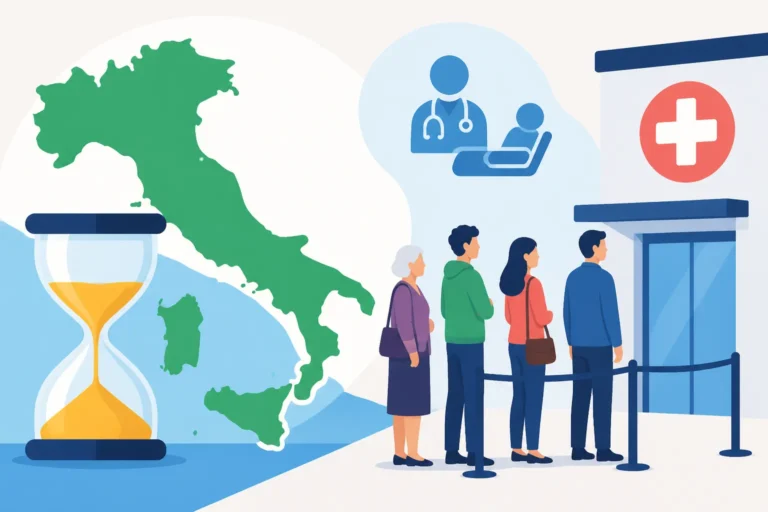
While the Italian public system provides excellent, free cancer screenings and highly subsidized blood tests, it operates at its own pace. If you are forty years old and wish to have a preventative mammogram, or if you want a full cardiovascular workup without displaying specific symptoms, the public system will either not cover it or will place you on a waiting list that could stretch for months.
To circumvent the rigidity and the waiting lists of the public system, many expatriates and affluent Italians turn to the private healthcare sector for their preventative needs. For a deeper analysis on how to balance these two systems financially, you can read our breakdown on the Cost of Healthcare in Italy: What Expats Need to Know.
The Private Wellness Check Up
Private hospitals and independent diagnostic clinics across Italy offer comprehensive preventative packages, commonly advertised as a “Check-up Completo” or “Check-up Uomo/Donna.”
These private packages emulate the comprehensive physicals found in North America. You can book an appointment and, within a single morning at a private clinic, receive:
- An extensive blood and urine analysis.
- A cardiovascular evaluation including an ECG and an echocardiogram.
- Preventative ultrasounds of the abdomen, thyroid, and breasts or prostate.
- A consultation with an internal medicine specialist to review all the results immediately.
Because you are bypassing the public system, you do not need a referral from your general practitioner to book these private packages. However, you must pay entirely out-of-pocket or utilize an international private health insurance policy. A comprehensive private check-up package can cost anywhere from €200 to €600, depending on the clinic’s prestige and the sheer number of diagnostic tests included. The primary benefits of the private route are speed, unparalleled convenience, and the high likelihood of encountering English-speaking medical professionals.
How to Book Public Screenings The CUP System
If your general practitioner has written you a referral for a routine blood test, a preventative ultrasound, or a specialist consultation, you must book the appointment through the public infrastructure.
In Italy, all public specialist appointments and diagnostic tests are managed by a centralized regional booking office known as the Centro Unico di Prenotazione (CUP). You cannot call the hospital’s radiology department directly to book an ultrasound; you must go through the CUP.
Every Italian region has its own specific CUP phone number and digital web portal. You can book your preventative appointments by calling the toll-free regional number, logging into the regional healthcare app using your digital identity (SPID), or visiting the physical CUP counters located inside local hospitals. Additionally, many local pharmacies offer a “FarmaCUP” service, where the pharmacist can log into the regional database and book the public appointment on your behalf.
The Electronic Health Record Fascicolo Sanitario Elettronico
Managing your preventative health history in a foreign country is infinitely easier thanks to Italy’s rapid digitization of the medical sector. Every legal resident registered with the SSN is automatically provided with a Fascicolo Sanitario Elettronico (FSE), which translates to the Electronic Health Record.
The FSE is a secure, regional online portal that compiles your entire medical history in Italy. Once you activate your account using your SPID or your Electronic Identity Card (CIE), you can access the portal from your computer or smartphone.
The Electronic Health Record is an incredible tool for preventative care. Whenever you get a routine blood test at a public laboratory, undergo a mammogram, or visit the emergency room, the medical reports and laboratory results are automatically uploaded to your FSE. You no longer need to physically return to the hospital to pick up a paper envelope with your blood test results; you can download the PDF directly from the portal. Furthermore, your general practitioner can access this portal to review your preventative screening history, ensuring that your care is coordinated and that no vital tests are missed.
Costs and the Ticket Sanitario
The financial structure of preventative care in Italy is designed to ensure that cost is never a barrier to early detection. As previously detailed, the ASL-mandated national screening programs for breast, cervical, and colorectal cancers are completely free of charge. You will not pay a single euro for the test, the laboratory analysis, or any subsequent procedures required if the test is positive.
For other preventative measures requested through your general practitioner, such as routine blood panels or preventative specialist visits, you will be required to pay the standard public co-payment, known as the “Ticket Sanitario.”
The Italian government caps the cost of the ticket to ensure affordability. A standard routine blood panel will typically cost between €15 and €36, depending on the specific markers requested by your doctor. A preventative specialist consultation is generally capped around €25 to €30.
Furthermore, Italy provides extensive ticket exemptions (Esenzioni) for vulnerable demographics. Seniors over the age of 65 and young children from low-income households are entirely exempt from paying the ticket for diagnostic tests. Individuals diagnosed with specific chronic illnesses, such as diabetes or hypertension, receive specific exemption codes that make all preventative monitoring tests related to their condition completely free.
Conclusion
Adapting to the Italian system of regular health check-ups and screenings is a vital step in your expatriate journey. While the absence of a singular, all-encompassing annual physical may initially feel unfamiliar, the Italian preventative healthcare model is deeply systematic, technologically advanced, and remarkably egalitarian. The SSN’s commitment to proactive, population-wide cancer screenings guarantees that residents are monitored for major diseases entirely free of charge, saving countless lives each year.
By establishing a strong relationship with your local general practitioner, paying close attention to the invitation letters sent by your regional health authority, and utilizing the highly efficient Electronic Health Record portal, you can take complete control of your medical monitoring. Whether you choose to rely on the affordable excellence of the public system or opt for the rapid convenience of private check-up packages, Italy offers all the necessary tools to keep you thriving. Embrace the proactive Italian approach to preventative medicine, and you can enjoy your Mediterranean adventure with the ultimate luxury: profound peace of mind regarding your health.
References
Primary sources (official)
- Ministero della Salute (Ministry of Health): The official Italian government portal outlining the Livelli Essenziali di Assistenza (LEA), national screening programs, and ticket exemption rights. https://www.salute.gov.it/
- Osservatorio Nazionale Screening: The official national observatory providing statistical data and specific age demographics for the public breast, cervical, and colorectal cancer screening programs. https://www.osservatorionazionalescreening.it/
Other helpful sources
- AIRC (Fondazione AIRC per la Ricerca sul Cancro): The leading Italian cancer research foundation, providing comprehensive, patient-friendly guides on how cancer screenings work and why they are vital. https://www.airc.it/
- Doctors in Italy: An excellent English-language resource for expats detailing the differences between public preventative care and booking private, comprehensive wellness check-ups in Italy. https://www.doctorsinitaly.com/
Disclaimer
The information provided in this article is for educational and informational purposes only and does not constitute official medical, legal, or financial advice. Healthcare regulations, national screening age brackets, ticket sanitario co-payment caps, and medical exemption codes are subject to frequent legislative updates by national and regional Italian authorities. Always consult directly with your assigned Medico di Medicina Generale (General Practitioner) or a licensed medical professional to receive personalized advice regarding your specific preventative healthcare needs and screening schedules.