How Long Are Public Waiting Times in Italy’s SSN?
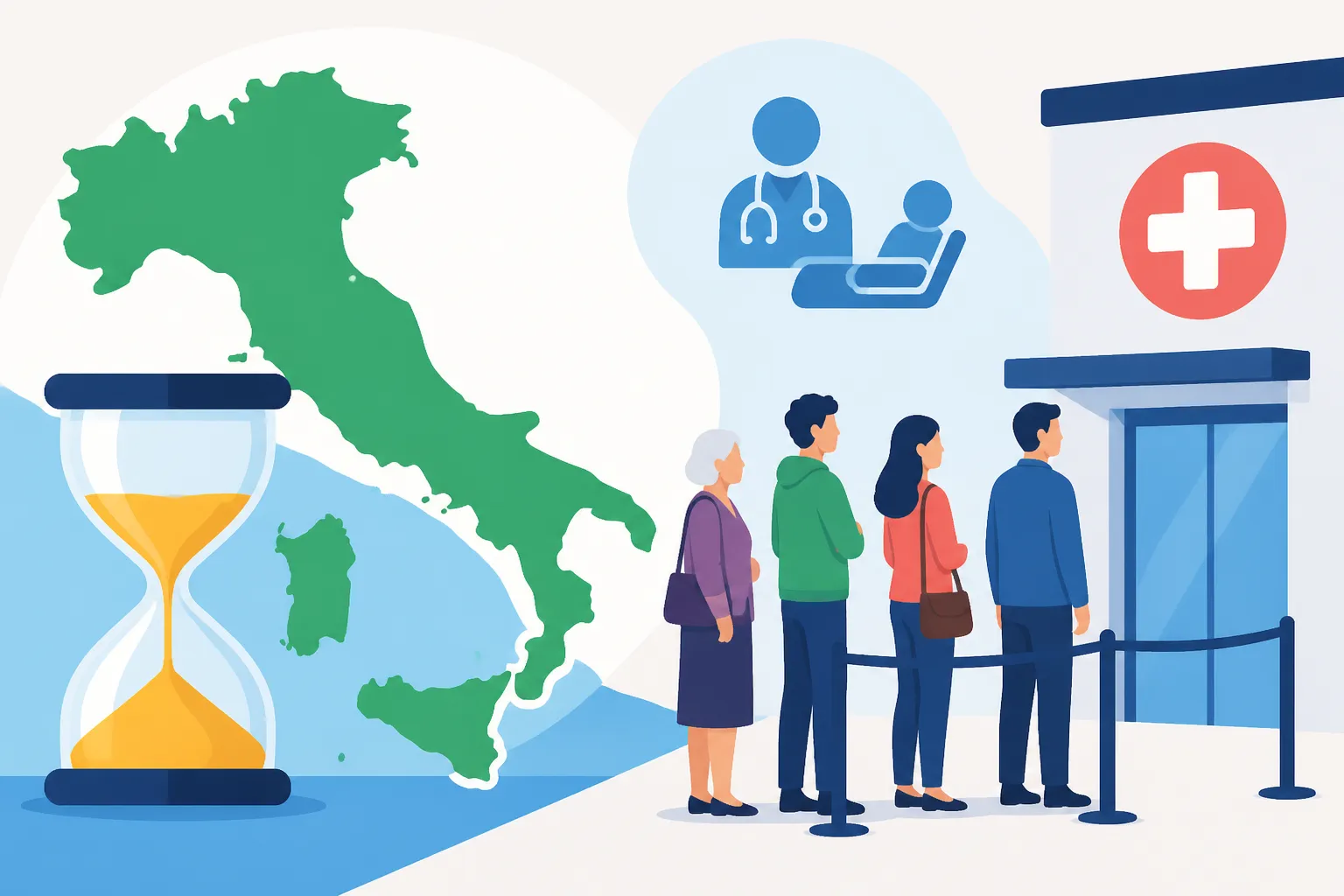
Trying to book a specialist appointment in Italy often feels like a test of patience designed by the Roman gods themselves. I remember sitting in a crowded waiting room in Milan, clutching a referral for a simple cardiology check-up, only to be told the first available slot was eleven months away in a town three hours north. This guide explains the reality of public waiting times in the SSN, how to decode the priority system, and what you can do when the calendar just doesn't align with your health needs.
Disclosure: This post may contain affiliate links. We may earn a commission at no extra cost to you if you make a purchase through these links. Read full disclosure.
The Structural Reality of the Servizio Sanitario Nazionale
The Italian national health system, known as the SSN (Servizio Sanitario Nazionale), is a point of pride for many Italians, providing universal coverage regardless of income. However, for an expat just starting their journey with Healthcare in Italy: An Expats' Guide, the first encounter with a waiting list can be a significant cultural shock. The system is decentralized, meaning that while the central government sets general standards, the actual management and delivery of care are handled by individual regions. This leads to a patchwork of efficiency where your experience in Lombardy might be worlds away from your experience in Calabria.
The wait times are largely driven by a high demand for specialized services and a system that is often stretched thin. When you visit your family doctor and receive a referral, or "impegnativa," you aren't just getting a piece of paper; you are entering a complex queue. Understanding How to Register for Italian Healthcare (SSN) as a Foreigner is only the first step. Once you are in the system, you have to learn the language of waitlists. The time you will wait depends heavily on the "priority code" your doctor assigns to your referral. Without a code, you are at the mercy of the standard backlog, which for non-urgent procedures like a routine dermatology check or a non-critical MRI, can stretch from several months to over a year.
Decoding the Priority Codes on Your Impegnativa
When your doctor hands you that pink or white slip of paper, look closely at the boxes in the top right corner. These letters—U, B, D, and P—are the most important characters in your medical life in Italy. They dictate exactly how long the local health authority (ASL) has to find you an appointment. If your doctor doesn't mark one of these, the system defaults to the longest possible timeframe. Knowing how Specialist Referrals in Italy: How the Impegnativa Works is vital because you can advocate for yourself if you feel your condition is more pressing than the code suggests.
The "U" stands for "Urgente" (Urgent). This is reserved for life-threatening or highly critical situations where you need to be seen within 72 hours. If you have a "U" code, you don't usually go through the standard booking channels; you often present yourself at the hospital or a specific booking window immediately. "B" stands for "Breve" (Short-term), which mandates an appointment within 10 days. This is used for conditions that are not immediate emergencies but could worsen rapidly without intervention. "D" is "Differibile" (Deferred), which theoretically guarantees a slot within 30 days for visits and 60 days for diagnostic tests. Finally, "P" stands for "Programmata" (Planned), which is for routine screenings or follow-ups where the wait can be up to 120 days.
| Priority Code | Type of Urgency | Maximum Wait Time (Visits) | Maximum Wait Time (Tests) |
|---|---|---|---|
| U (Urgente) | Urgent | 72 Hours | 72 Hours |
| B (Breve) | Short-term | 10 Days | 10 Days |
| D (Differibile) | Deferred | 30 Days | 60 Days |
| P (Programmata) | Planned | 120 Days | 120 Days |
Navigating the CUP System and Booking Logistics
Once you have your referral, you must book it through the CUP (Centro Unico di Prenotazione). This is the centralized booking office for each region. You can usually book in three ways: by phone, online via a regional portal, or in person at a pharmacy. I personally recommend the pharmacy route. Walking into a local "farmacia" with your referral is often much faster than trying to navigate a glitchy website or waiting on hold for forty minutes with a call center operator who may or may not speak English. Booking Medical Appointments in Italy Through the CUP System is a skill every expat must master early on.
The pharmacist will scan your "tessera sanitaria" (health card) and tell you the available dates. Be prepared for a reality check: the CUP system looks at all public hospitals and "convenzionati" (private clinics that work with the state) in your entire province. If you live in the center of Rome, the system might offer you an appointment in a suburb forty kilometers away if that is the only place meeting your priority window. You have the right to refuse, but if you do, the "guaranteed" timeframe of your priority code is often forfeited. This is one of those times where having Getting Health Insurance in Italy: Public and Private Options becomes a massive relief, as private providers like Cigna Global allow you to choose your location and see a doctor within days rather than months.
Regional Variations: The North-South Divide
It is an uncomfortable truth that where you live in Italy dictates how quickly you get healthy. The northern regions, such as Trentino-Alto Adige, Lombardy, and Emilia-Romagna, generally boast shorter waiting lists and more modern facilities. In these areas, the "D" and "P" codes are often respected. However, if you are living in the south, perhaps in Sicily or Campania, the system is notoriously overburdened. It is not uncommon for public wait times for "non-urgent" surgeries to span years in some southern provinces. This is why many locals and savvy expats look into Finding Doctors and Hospitals in Italy across regional lines if they have the mobility to travel for care.
These discrepancies aren't just about money; they are about administrative efficiency and population density. In a major hub like Milan, there are dozens of "convenzionati" clinics that absorb the overflow from public hospitals. In a rural part of Puglia, you might only have one regional hospital serving ten towns. If you find yourself stuck in a long queue in a region with poor metrics, you might consider using an international provider. For instance, Cigna Global offers plans that bypass these regional bottlenecks entirely. Even for digital nomads or those on shorter stays, having a plan through SafetyWing can provide a safety net if you need to seek private care because the local SSN wait is simply too long for comfort.
The Intramoenia Loophole: A Very Italian Solution
If the CUP tells you the wait is six months, but you see the same doctor’s name on a private clinic’s door with a "next Tuesday" availability, you have discovered "Intramoenia." This is a legal practice where public hospital doctors are allowed to use hospital facilities to see private patients outside of their regular hours. You pay a significantly higher fee—often between 100 and 250 Euros—but you use the same public equipment and see the same specialist without the wait. Cost of Healthcare in Italy: What Expats Need to Know explains these price differences in detail, but for many, the extra cost is a small price to pay for peace of mind.
Intramoenia is the middle ground between the fully public SSN and the fully private sector. You are still within the hospital system, which means your records are easily accessible if you eventually need surgery or long-term public care. However, because these are private visits, they are not covered by the "ticket" (the small co-payment for public services). This is where your private insurance comes in. Most premium expat policies will reimburse Intramoenia visits, making it the most efficient way to navigate the Italian system. When the public system fails to meet its time guarantees, this is the first lever most Italians pull.
Legal Rights and the "Class Action" for Wait Times
Many expats don't realize that they have legal rights when it comes to waiting times. According to Italian law (Legislative Decree 124/1998), if the public system cannot provide a service within the maximum timeframes dictated by your priority code, you have the right to request the service privately (via Intramoenia) while only paying the cost of the public "ticket." To do this, you must submit a formal written request to the Director General of your local ASL. It is a bureaucratic process, often requiring a "raccomandata" (registered letter), but it is a powerful tool.
The reality, however, is that most people don't have the time or the energy to fight the bureaucracy while they are feeling unwell. This is why Understanding the Italian Health Ticket (Co-Payment) System is important, but knowing when to step outside the system is even more vital. If the administrative hurdle of filing a formal complaint feels like too much, this is exactly the scenario where having a secondary insurance policy like SafetyWing is invaluable. It allows you to skip the legal battle and just go to a private doctor immediately. In the long run, your health is worth more than the hours spent arguing with a regional health director over a 60-day deadline.
Strategies to Reduce Your Wait Time
There are several "hacks" I've learned over the years to shave weeks or even months off an appointment wait. First, call the CUP at different times of the day. Cancellations happen constantly, and if you happen to call right after one, you can snag a spot that wasn't there an hour ago. Second, be willing to travel. If you are in Florence, tell the operator you are willing to go to Prato, Pistoia, or even Arezzo. Expanding your radius significantly increases your chances of finding a slot. Third, check the "farmacia" booking system frequently. Some pharmacies have access to slightly different real-time data than the telephone operators.
Another strategy is to utilize Italian Pharmacies: Prescription, Over-the-Counter, and Supplies for minor issues. Sometimes, a highly trained pharmacist can provide advice or "over-the-counter" solutions that save you a trip to a specialist altogether. For more serious concerns, if you have a policy with Cigna Global, use their dedicated concierge or app to find an English-speaking private specialist. They often have direct billing arrangements with top-tier private clinics, allowing you to bypass the CUP system entirely. This is particularly useful for things like Mental Health Support in Italy: Resources for Expats, where public waiting lists can be notoriously long and English-speaking providers are rare in the public sector.
When to Use the Emergency Room Instead
If the wait times are truly prohibitive and your condition is deteriorating, the "Pronto Soccorso" (Emergency Room) is your last resort. However, be warned: Italy uses a triage system (Red, Orange, Blue, Green, White) and if you show up with a non-urgent issue (White or Green code), you will wait for ten hours or more behind everyone else. Furthermore, you will likely be charged a "ticket" fee for an inappropriate use of the ER. For situations that are urgent but not life-threatening, you should instead look for the After-Hours Care in Italy: Guardia Medica Explained, which provides primary care when your family doctor is closed.
The public system is brilliant for major traumas, chronic illnesses, and complex surgeries, where the care is world-class and almost free. But for the "in-between" diagnostic phase, the waiting times are a genuine hurdle. By understanding the priority codes, utilizing the Intramoenia system, and maintaining a private insurance policy like Cigna Global or SafetyWing, you can ensure that you get the care you need without the Italian "pazienza" becoming a risk to your health. Navigating the Differences between Public and Private Healthcare in Italy is essentially a balancing act—using the public system for what it does well and the private system to fill the gaps left by those long, dusty waitlists.
Important Disclaimer
The information provided in this guide is for educational and informational purposes only and does not constitute professional medical or legal advice. While we strive to keep the details regarding Italy's SSN and waiting times accurate and up-to-date, healthcare regulations and regional policies in Italy change frequently. Always consult with a qualified healthcare professional or a legal expert specializing in Italian administrative law for your specific situation. We are not responsible for any actions taken based on the content of this article.