How to Get a Dental Cleaning in Italy and What It Costs
Finding a reliable dentist in a new country can feel like an archaeological dig where your own mouth is the site of interest. I remember wandering through Florence during my first year, clutching my jaw and realizing I had no idea if a routine cleaning was a luxury or a standard right. This guide explains how to navigate Italian dental offices, book an appointment, and budget for the costs.
Disclosure: This post may contain affiliate links. We may earn a commission at no extra cost to you if you make a purchase through these links. Read full disclosure.
The Reality of Dental Care in the Italian Healthcare Landscape
When you first arrive and begin researching Healthcare in Italy: An Expats' Guide, you might be under the impression that the famous Servizio Sanitario Nazionale (SSN) covers everything from head to toe. Unfortunately, dental care is the one major exception to Italy's universal healthcare rule. While most medical visits are subsidized, the Italian public system views adult dental care as largely elective, focusing its limited resources on children under 14 and emergency cases for vulnerable populations.
As a result, the vast majority of Italians and expats alike use private dental clinics. I quickly learned that while I could see a GP for free, my teeth were my own financial responsibility. This creates a highly competitive private market, which is actually good news for you. Because dentists are competing for patients, the quality of care is exceptionally high, and the technology in most "studi dentistici" is state-of-the-art.
If you are a digital nomad or on a temporary stay, brands like SafetyWing can provide a safety net for unexpected issues, but for a standard "pulizia," you will likely be paying out of pocket. Understanding the Differences between Public and Private Healthcare in Italy is essential here; for your teeth, private is not just a choice, it is often the only practical path for a routine cleaning.
Booking Your Appointment and What to Ask For
In Italy, a professional dental cleaning is most commonly referred to as "ablazione del tartaro" or simply "pulizia dei denti." When you call a clinic, don't be surprised if they ask if it is your first time. Most private dentists in Italy insist on a "prima visita" (first visit) which is a general check-up before the hygienist gets to work. I found this frustrating at first—I just wanted the cleaning—but it’s standard practice to ensure there aren't underlying issues like cavities or gum disease that a cleaning might aggravate.
Finding the right provider often starts with a search for Where to Find English-Speaking Doctors and Clinics. In major hubs like Milan, Rome, or Florence, finding an English-speaking dentist is relatively easy. However, in smaller towns, you might need to brush up on your Italian dental vocabulary. You should ask: "Quanto costa una pulizia dei denti?" (How much does a cleaning cost?) and "È inclusa la visita di controllo?" (Is the check-up included?).
If you have a more comprehensive expat policy like those offered by Cigna Global, you should verify if they have a direct billing agreement with the clinic. Most Italian dentists operate on a "pay-and-claim" basis, meaning you pay the bill upfront and send the receipt to your insurer later. Always confirm this before you sit in the chair to avoid any awkward moments at the front desk.
Average Costs of Dental Cleaning in Italy
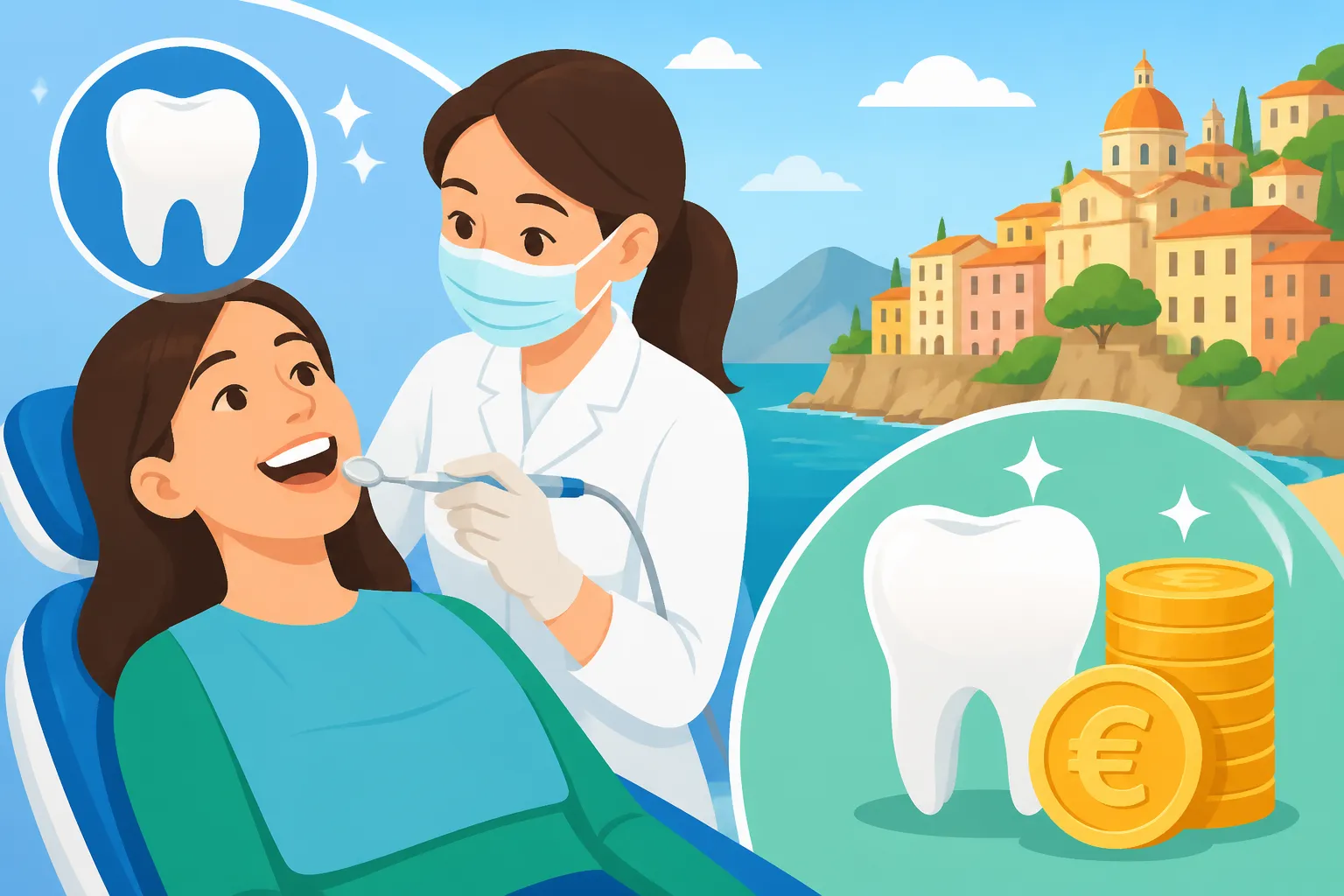
The cost of keeping your smile bright in Italy varies significantly depending on your location. Like most things in Italy, there is a "North-South" price divide. In Milan or Bolzano, you are looking at the higher end of the spectrum, while in Naples or Palermo, prices can be surprisingly affordable. On average, a standard cleaning with a dental hygienist will cost between €70 and €120.
| Service Type | Location Type | Estimated Cost Range |
|---|---|---|
| Standard Cleaning (Pulizia) | Small Town / South | €60 – €80 |
| Standard Cleaning (Pulizia) | Major City (Milan/Rome) | €90 – €150 |
| First Visit + Cleaning | National Average | €100 – €180 |
| Deep Scaling (Perio) | National Average | €150 – €300 |
| Panoramic X-Ray (Ortopanoramica) | Private Clinic | €30 – €60 |
Keep in mind that these prices usually include the "IVA" (VAT), but you should always ask for a formal "fattura" (invoice). This document is vital because medical and dental expenses can often be deducted from your taxes if you are an Italian resident. When you are Filing an Italian Tax Return: Step-by-Step Guide, these receipts can save you a significant amount of money, as 19% of healthcare costs exceeding a small threshold are generally deductible.
Specialized Treatments and Potential Hidden Costs
During a standard "pulizia," the hygienist will typically use ultrasonic tools to remove tartar and then polish the teeth. Some clinics now offer "Airflow" technology, which uses a pressurized stream of water and powder to remove stains. This is often an add-on cost of about €20 to €30. If the dentist discovers that you need more than a simple cleaning, such as a filling or a root canal, they will provide a "preventivo" (an estimate).
I always suggest getting a written preventivo before agreeing to any major work. It is a standard part of Dental Care in Italy: Costs and Insurance Coverage and ensures there are no surprises. If you find yourself in a situation where you need immediate help for a toothache rather than a cleaning, you should look into Emergency Dentist Visits in Italy: What to Do. Private emergency dentists are available, but their rates for weekend or night visits will be significantly higher than a scheduled Tuesday morning cleaning.
For those with long-term residency, it is worth checking if your employer offers a "Fondo Estensivo" or supplementary health work-benefit. These funds often cover one or two cleanings a year at "centri convenzionati" (partner centers). If you are self-employed or your company doesn't provide this, a private plan from Cigna Global can be a lifesaver for more complex dental surgeries or orthodontics, which can run into the thousands of Euros.
The Importance of the Codice Fiscale and the Fattura
One quirk of the Italian system that catches many newcomers off guard is the requirement for your "Codice Fiscale" for almost every transaction. Even for a simple dental cleaning, the receptionist will ask for your tax code to generate the invoice. If you are still waiting for your physical card, having your Italian Tax Code (Codice Fiscale) Status verified and the number written down or saved on your phone is essential.
Without a Codice Fiscale, the dentist may still treat you, but you won't be able to get a proper invoice that is valid for tax deductions or insurance reimbursements. I made the mistake of not having mine during my first month, and it turned a simple reimbursement process into a bureaucratic nightmare. Ensure the name on the invoice matches your legal ID exactly, as insurance companies can be incredibly pedantic about middle names or spelling errors.
Furthermore, some dentists might offer a "discount" if you pay in cash without a receipt. I strongly advise against this. Not only is it illegal, but you lose your right to any legal recourse if the work is shoddy, and you cannot claim the expense on your taxes or through your provider like SafetyWing. A professional "studio dentistico" will always provide a digital or paper invoice.
Choosing Between an Individual Dentist and a Dental Chain
In recent years, Italy has seen a rise in large dental chains like Vitaldent or DentalPro. These are often located in shopping centers or large commercial hubs. The debate between choosing a traditional "dentista di famiglia" (family dentist) and these chains is a common topic in expat circles.
Individual private practices often offer a more personalized, long-term relationship. You see the same doctor every time, which is helpful if you have dental anxiety. On the other hand, the large chains often have more transparent pricing posted right on their websites and may have longer opening hours, including Saturdays. They also tend to have English-speaking staff more frequently because they cater to a broader, more international demographic.
If you are looking for the Cost of Healthcare in Italy: What Expats Need to Know, you will find that these chains are often slightly cheaper for routine cleanings because they operate on high volume. However, always check reviews. Some chains have been criticized for upselling unnecessary treatments. A "cheap" cleaning can quickly become expensive if they insist you need five fillings you didn't know you had.
Maximizing Your Dental Health While Living in Italy
Beyond the professional cleaning, your daily habits in Italy will play a role in your dental health. The Italian diet is wonderful, but the constant flow of espresso and the occasional carbohydrate-heavy meal can take a toll on your enamel. You will find that Finding and Using Pharmacies in Italy is very easy, and pharmacists (farmacisti) are highly trained and can recommend specific therapeutic toothpastes or mouthwashes if you have sensitive gums after a cleaning.
If you are used to getting fluoride treatments during your cleanings back home, you may need to specifically request this in Italy, as it isn't always part of the standard adult protocol. Most hygienists focus heavily on "igiene orale" education, often spending ten minutes at the end of the session showing you exactly how to floss according to the latest Italian dental standards. It’s a level of care that, while paid for, often feels more thorough than the rushed appointments many of us experienced in our home countries.
By staying proactive and scheduling your "pulizia" every six months, you can avoid the high costs of major dental surgery. Whether you rely on a high-end plan from Cigna Global or simply budget €100 twice a year, maintaining your dental health is one of the easier administrative hurdles to clear in Italy—provided you know the terminology and the tax benefits of that all-important "fattura."
Disclaimer
This guide is intended for informational purposes only and does not constitute professional medical, legal, or financial advice. Dental costs and regulations in Italy are subject to change, and regional variations may apply. Always consult with a qualified dental professional and your insurance provider to confirm specific coverage and pricing before undergoing any treatment.