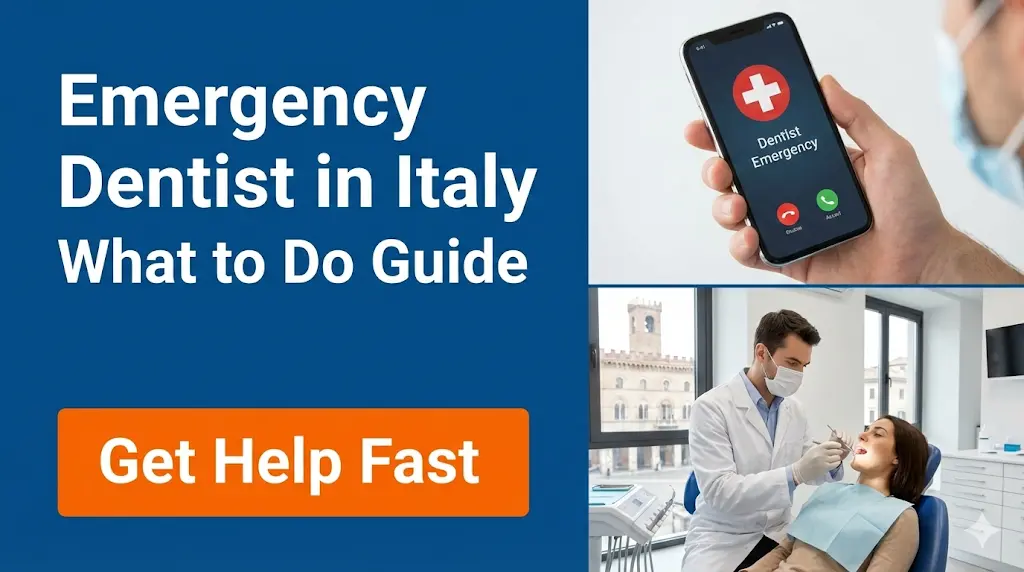
Emergency Dentist Visits in Italy: What to Do
Need an emergency dentist in Italy? This comprehensive guide explains what to do when dental pain strikes abroad. Learn how to find English-speaking emergency dentists, navigate public versus private clinics, understand treatment costs, and handle after-hours dental crises effectively.
Disclosure: This post may contain affiliate links. We may earn a commission at no extra cost to you if you make a purchase through these links. Read full disclosure.
Introduction to Emergency Dentist Visits in Italy
To effectively manage a dental emergency in Italy, you must first understand how the country structures its oral healthcare system. Italy is famous for its robust, universally accessible public healthcare network, known as the Servizio Sanitario Nazionale. This system provides incredible, low-cost coverage for general medical emergencies, surgeries, and chronic disease management. However, when it comes to dentistry, the system operates under a completely different set of rules.
In Italy, the vast majority of dental care is entirely privatized. While the public healthcare system does offer some rudimentary dental services, these are generally reserved for highly specific vulnerable populations, such as young children, individuals with severe recognized disabilities, or those facing life-threatening medical emergencies that happen to involve the jaw or mouth. For the average expatriate, digital nomad, or tourist, public dental care is not a viable option for a standard toothache or a lost filling. You will be relying almost exclusively on the private sector.
This distinction is actually highly beneficial when you are in a rush. Because Italian dentistry operates in a competitive private market, clinics are highly motivated to offer excellent customer service, maintain state-of-the-art diagnostic equipment, and accommodate urgent walk-in patients to secure business. You will not have to wait months on a public waiting list to have your painful tooth addressed. This extensive guide will walk you through exactly what to do when a dental crisis strikes in Italy. We will explore how to identify whether you need a hospital or a private clinic, how to locate English-speaking professionals, the costs you can expect to incur, and how to navigate the local pharmacies for immediate pain relief while you wait for your appointment.
Identifying a True Dental Emergency
Before you rush out the door, it is helpful to categorize the severity of your situation. Understanding the difference between an inconvenience that can wait until Monday morning and a true medical emergency will dictate your next steps and determine whether you should seek out a hospital emergency room or a standard dental clinic.
A true dental emergency involves severe tissue damage, uncontrollable bleeding, or an infection that poses a systemic risk to your overall health. If you have been involved in a physical accident—such as a bicycle crash, a car accident, or a severe fall—that has resulted in a fractured jaw, massive lacerations to your face and gums, or multiple teeth being completely knocked out of their sockets, you are facing a severe medical crisis. Similarly, if you develop a massive dental abscess accompanied by a high fever, chills, and facial swelling that creeps up toward your eye or down into your neck, this is a sign that an infection is spreading rapidly. These situations require immediate, hospital-level intervention.
On the other hand, urgent dental needs are painful but not immediately life-threatening. These include a severe, throbbing toothache that keeps you awake, a chipped or cracked tooth that is sensitive to hot and cold, a lost crown or veneer, or a broken denture. While these situations are incredibly uncomfortable and require prompt attention, they do not warrant a trip to a general hospital emergency room. Instead, you should seek out an urgent appointment at a private dental clinic.
Public Hospitals Versus Private Dental Clinics
Knowing where to go is the most critical step in managing your crisis. As mentioned, your destination depends entirely on the severity of your symptoms.
If you are experiencing a life-threatening dental emergency involving severe facial trauma or a massive, fever-inducing infection, you must proceed directly to the nearest public hospital emergency room, known in Italy as the Pronto Soccorso. When you arrive, you will undergo a triage process. The triage nurses will assign you a color code based on the urgency of your condition. Severe facial trauma will earn you a high-priority code, and you will be seen rapidly by a maxillofacial surgeon on duty. Public hospitals are equipped to stop severe bleeding, administer intravenous antibiotics, and stabilize jaw fractures. For a deeper understanding of how the hospital triage system operates, you can review our guide on Emergency Medical Services in Italy: 112 and Hospitals.
However, if you go to the Pronto Soccorso for a standard toothache or a lost filling, you will be assigned a white code indicating a non-urgent condition. Because the emergency room prioritizes heart attacks, strokes, and major accidents, you could find yourself sitting in the waiting room for eight to twelve hours, only to be given a basic painkiller and told to call a private dentist in the morning.
For 95 percent of dental issues, the private dental clinic, known as a Studio Dentistico or Clinica Odontoiatrica, is the correct destination. Private clinics are widespread across every Italian city and town. They possess the specific tools, specialized dental chairs, and localized expertise required to perform root canals, extract impacted teeth, and mold temporary crowns on the spot. If you are worried about the standards of these private facilities, rest assured that they are excellent; you can learn more by reading about the Quality of Dental Work: Is It Safe for Expats?.
The Role of Italian Pharmacies in Pain Management
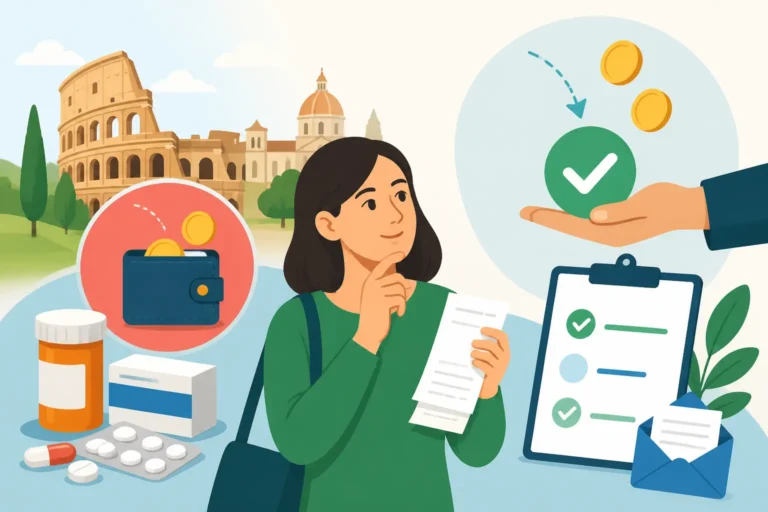
If your dental emergency strikes late at night or you cannot secure a dentist appointment for several hours, your immediate priority will be pain management. In Italy, your first line of defense is the local pharmacy, or Farmacia.
Italian pharmacists are highly educated clinical professionals who are legally empowered to offer medical advice and dispense a wide range of medications. Look for the illuminated green cross that marks a pharmacy on the street. If it is late at night or a Sunday, every municipality operates a rotating duty schedule called the Farmacia di Turno, ensuring that at least one pharmacy in the area is open 24 hours a day.
When you speak to the pharmacist, explain that you have a severe toothache. While they cannot prescribe antibiotics without a doctor’s order, they can provide powerful non-steroidal anti-inflammatory drugs that are incredibly effective for dental pain. Common over-the-counter and behind-the-counter pain relievers in Italy include ibuprofen-based medications like Brufen, or ketoprofen-based powders like Oki, which is dissolved in water and is a staple in Italian medicine cabinets for acute pain.
Furthermore, if you have lost a filling or a crown, the pharmacy sells temporary dental cement kits. These small kits contain a pliable, putty-like substance that you can mold into the cavity or use to stick a crown back onto the tooth temporarily. This will protect the exposed nerve from air and temperature sensitivity, providing immense relief until you can get to the dentist’s chair.
Finding an Emergency Dentist During Business Hours
If your dental crisis occurs between Monday and Friday during normal business hours, finding a dentist is a relatively straightforward process. The challenge for expatriates is usually finding one who speaks English and can see them immediately.
Your first step should be to leverage your immediate network. If you are staying in a hotel, speak to the concierge immediately. High-end hotels keep lists of reputable, English-speaking medical professionals on call specifically for their guests, and the concierge can often leverage their relationships to squeeze you into a fully booked schedule. If you are an expatriate living in an apartment, turn to local expat Facebook groups or community forums. Searching these groups for terms like “emergency dentist” will yield dozens of personal recommendations from fellow foreigners who have faced the exact same issue.
If you need to search independently, use Google Maps or local search engines. Use the Italian search terms “dentista urgente,” “pronto soccorso dentistico,” or “urgenze odontoiatriche” combined with the name of your city. Call the clinics directly rather than relying on email or online booking forms. When the receptionist answers, state clearly that you have a dental emergency. Private clinics in Italy understand the lucrative nature of emergency care and will almost always find a way to fit a patient in severe pain into their daily schedule.
After Hours and Weekend Dental Care
Dental emergencies are notoriously inconvenient and frequently seem to occur on a Saturday night or during a major national holiday. Finding care outside of normal business hours requires a slightly different approach.
In major Italian metropolitan areas like Rome, Milan, Florence, and Naples, the private dental sector has recognized the need for round-the-clock care. You will find specialized clinics that market themselves explicitly as a Pronto Soccorso Dentistico Privato. These are private, 24-hour dental emergency rooms. They operate exactly like a normal clinic but maintain a staff of dentists on call through the night, on weekends, and during holidays. Be aware that visiting one of these 24-hour private clinics will come with a premium surcharge for the after-hours convenience, but when you are in agonizing pain at three in the morning, the cost is usually worth the relief.
If you are in a smaller town or rural area where a 24-hour private dental clinic does not exist, and your pain is unmanageable, you can contact the Guardia Medica. The Guardia Medica is the state-run, out-of-hours medical service. While the doctor on duty is a general practitioner and not a dentist, they have the legal authority to write a prescription for strong painkillers and broad-spectrum antibiotics. Starting a course of antibiotics can rapidly reduce the swelling and pain of an abscess, holding you over safely until the local dental clinics open on Monday morning.
What to Expect During Your Emergency Appointment
Arriving at an Italian private dental clinic for an emergency appointment is generally a highly professional and comforting experience. The clinics are immaculately clean, incredibly modern, and heavily regulated by strict national hygiene laws.
When you arrive, you will be asked to fill out a brief medical history form and provide your identification. If you are a resident, you should provide your Codice Fiscale (tax code). You will then be escorted to the treatment room. The dentist will perform a focused examination of the problem area. In almost all emergency cases, they will take a localized digital X-ray to see what is happening beneath the gum line and assess the roots of the teeth.
It is important to manage your expectations regarding the outcome of an emergency visit. The primary goal of an emergency appointment is to eliminate your pain, stop any bleeding, and stabilize the tooth. For example, if you require a complex root canal, the emergency dentist will likely drill into the tooth to relieve the pressure, remove the infected nerve tissue, and place a temporary medicated filling. They will not perform the entire, multi-hour permanent root canal reconstruction on the spot. You will be scheduled for a follow-up appointment to complete the definitive restoration, or you will be given your X-rays and medical notes so that you can have the final work completed by your regular dentist when you return to your home country.
Estimated Costs for Emergency Dental Procedures
One of the biggest sources of anxiety during a medical emergency abroad is the fear of financial ruin. Because private dentistry in Italy operates in a free market, prices can fluctuate based on the region, the luxury level of the clinic, and whether you are visiting during standard hours or utilizing a 24-hour premium service. Generally, dental costs in northern cities like Milan or Venice will be higher than in southern regions like Puglia or Sicily.
Despite these variations, the cost of private dental care in Italy is often significantly lower than the out-of-pocket costs in the United States or the United Kingdom. Italian law requires strict financial transparency, meaning the dentist should inform you of the cost before beginning any invasive procedure. To help you understand how these out-of-pocket expenses fit into your broader financial planning abroad, you can review our detailed analysis on the Cost of Healthcare in Italy: What Expats Need to Know.
Below is a table outlining the estimated average costs for common emergency dental procedures in Italy during standard business hours.
| Emergency Dental Procedure | Estimated Cost Range (EUR) | Description of Service |
| Emergency Consultation | €50 – €120 | Initial examination, diagnosis, and prescription writing. |
| Digital Intraoral X-Ray | €20 – €50 | Localized radiograph of the specific painful tooth. |
| Simple Tooth Extraction | €80 – €150 | Removal of an unrestorable or severely infected tooth. |
| Surgical Extraction | €150 – €300 | Complex removal, such as an impacted wisdom tooth. |
| Emergency Root Canal Opening | €100 – €250 | Opening the tooth to drain infection and relieve pressure. |
| Re-cementing a Crown | €50 – €100 | Cleaning and re-attaching an intact, dislodged crown. |
| Temporary Filling | €60 – €120 | Placing a temporary material to cover an exposed cavity. |
| After-Hours Surcharge | €50 – €150 | Additional fee applied by 24/7 clinics for night/weekend visits. |
Insurance Reimbursement and Payment Methods
Navigating the financial aftermath of your emergency visit requires understanding Italian billing practices and your personal insurance coverage.
If you are an expatriate registered with the Italian public healthcare system, it is crucial to remember that your Tessera Sanitaria (health card) will not cover these private dental costs. Similarly, if you are a European tourist carrying the European Health Insurance Card (EHIC), it is completely useless in a private Italian dental clinic. You must be prepared to pay for the services out-of-pocket at the conclusion of your appointment. Almost all Italian dental clinics accept major credit cards (Visa and Mastercard), though American Express is sometimes rejected by smaller independent practices.
If you hold a comprehensive travel insurance policy or a private international expatriate health insurance plan, emergency dental care is frequently covered up to a specific limit. To successfully claim reimbursement from your insurance provider, you must ensure you leave the clinic with the correct documentation.
You must ask the clinic for a formal, itemized commercial invoice, known in Italian as a Fattura. A simple credit card receipt is not sufficient for insurance claims. The Fattura will detail the exact medical codes for the procedures performed. Furthermore, due to a unique Italian tax law, if your medical bill exceeds €77.47, the clinic must affix a €2.00 physical or digital revenue stamp, known as a Marca da Bollo, to the invoice to make it legally valid for tax and reimbursement purposes. Ensure your invoice has this stamp before you leave the office.
Useful Italian Vocabulary for Dental Emergencies
While finding an English-speaking dentist is ideal, you may find yourself needing to communicate with a receptionist, a pharmacist, or a taxi driver in Italian to get the help you need. Learning a few specific phrases can dramatically reduce the friction of the experience and help you convey the urgency of your situation.
Here are the essential Italian terms and phrases to memorize or save on your phone:
- Dentist: Dentista
- Emergency: Emergenza or Urgenza
- I have a toothache: Ho mal di denti
- It hurts a lot: Fa molto male
- I lost a filling: Ho perso un’otturazione
- I broke a tooth: Mi si è rotto un dente
- My crown fell off: Mi è caduta una capsula
- I have an abscess/swelling: Ho un ascesso or Sono gonfio
- I am bleeding: Sto sanguinando
- Painkiller: Antidolorifico
- Antibiotic: Antibiotico
- Do you speak English?: Parla inglese?
Preventive Measures for Expats and Travelers
The absolute best way to handle a dental emergency abroad is to prevent it from happening in the first place. If you are preparing to relocate to Italy or embark on a long-term holiday, a proactive approach to your oral health is mandatory.
Schedule a comprehensive check-up and a professional cleaning with your home dentist a few weeks before your departure. Explicitly ask them to look for any weak fillings, hairline fractures, or signs of emerging decay that could flare up during a long flight or a change in diet. Have any necessary restorative work completed while you are still in your familiar environment and covered by your domestic insurance.
Additionally, consider packing a small dental first aid kit in your luggage. These compact kits can be purchased online or at most major pharmacies before you travel. A good kit should include temporary dental cement, dental wax, sterile gauze pads to bite down on to stop bleeding, a small mirror, tweezers, and a travel-sized bottle of ibuprofen. Having these tools on hand in your hotel room or apartment provides an incredible sense of security and allows you to independently manage minor pain or a lost filling while you search for a local Italian professional.
Conclusion
Facing a dental emergency while living or traveling in Italy is undoubtedly a stressful interruption to your daily life. However, the situation is highly manageable thanks to the country’s exceptional network of private dental professionals and robust pharmacy infrastructure. By understanding the critical distinction between life-threatening trauma that requires a public hospital and localized pain that necessitates a private clinic, you can direct your energy toward the fastest route to relief.
Remember to rely on the expertise of local pharmacists for immediate pain management, leverage concierge services and expat networks to locate English-speaking dentists, and always secure a formal Fattura for your insurance claims. With a little preparation and the knowledge provided in this guide, you can navigate the Italian dental landscape with confidence. Before long, your pain will be a distant memory, your smile will be restored, and you will be back to enjoying the unmatched beauty, culture, and culinary masterpieces that make Italy so spectacular.
References
Primary Sources Official
- Ministero della Salute: The official portal of the Italian Ministry of Health, providing overarching guidelines on the structure of the national healthcare system, emergency room triage protocols, and the regulation of private medical facilities. https://www.salute.gov.it/
- ANDI (Associazione Nazionale Dentisti Italiani): The largest national association of Italian dentists, offering resources on professional standards, patient rights, and a directory that can aid in locating registered dental practitioners. https://www.andi.it/
Other Helpful Sources
- Federfarma: The National Federation of Pharmacy Owners, which provides insights into the role of Italian pharmacies, the dispensing of emergency pain relief, and information on locating 24-hour duty pharmacies (Farmacie di Turno). https://www.federfarma.it/
- Expatica Italy: A comprehensive resource hub for expatriates offering detailed, practical guides on navigating the Italian healthcare system, finding specialists, and understanding medical billing and insurance. https://www.expatica.com/it/healthcare/
Disclaimer
The information provided in this article is intended for general educational and informational purposes only and does not constitute official medical, dental, or legal advice. Dental treatment protocols, clinic operating hours, and average procedural costs in Italy are subject to change based on the specific facility, region, and individual patient needs. Always consult directly with a licensed, registered dental professional (Odontoiatra) or medical doctor to receive an accurate diagnosis and appropriate treatment. In the event of a severe, life-threatening medical emergency involving massive facial trauma, uncontrolled bleeding, or difficulty breathing, please proceed immediately to the nearest public hospital emergency room (Pronto Soccorso) or dial 112 for emergency medical services.