Getting Health Insurance in Italy: Public and Private Options
Discover everything expats need to know about navigating health insurance in Italy. This comprehensive guide breaks down the public Servizio Sanitario Nazionale, compares private insurance benefits, details enrollment costs, and helps you choose the perfect healthcare coverage for your relocation.
Disclosure: This post may contain affiliate links. We may earn a commission at no extra cost to you if you make a purchase through these links. Read full disclosure.
Introduction to Getting Health Insurance in Italy
Whether you are a digital nomad settling into a bustling northern metropolis, a retiree seeking tranquility in a southern village, or a professional relocating with your family, grasping the nuances of the Italian medical landscape is essential. Italy is internationally recognized for having one of the highest-rated healthcare systems in the world, largely due to its robust public infrastructure. However, as an expatriate, determining your eligibility for public care, calculating the associated costs, and evaluating whether you need private coverage can be complex.
The country offers two primary avenues for medical coverage: the public system, known as the Servizio Sanitario Nazionale (SSN), and the private health insurance sector. The public system is heavily subsidized by the state, providing comprehensive, low-cost care to citizens and legal residents alike. Conversely, private health insurance offers accelerated access to specialists, premium comfort in private hospitals, and a higher likelihood of interacting with English-speaking medical professionals.
Navigating these options requires a careful assessment of your visa status, employment situation, and personal health needs. This extensive guide is designed to demystify the process of getting health insurance in Italy. We will thoroughly explore how the SSN operates, detail the exact steps required to obtain your Italian health card, break down the recent cost updates for voluntary registration, and compare the distinct advantages of investing in a private health insurance policy. By equipping yourself with this knowledge, you can confidently secure the coverage you need and enjoy your new Italian life with total peace of mind.

Understanding the Italian Healthcare System
To make an informed decision about your health insurance, it is crucial to first understand the structural foundation of healthcare in Italy.
The national health service, the Servizio Sanitario Nazionale (SSN), was established in 1978 with the core philosophy that health is a fundamental right. It operates on principles of universal coverage and solidarity, ensuring that no individual is denied essential medical care due to financial constraints. The system is funded primarily through national and regional corporate taxes and value-added tax revenues.
However, the administration of the SSN is highly decentralized. While the central government’s Ministry of Health outlines national health policies and establishes the “essential levels of assistance” (the core benefits package every resident is entitled to), the actual delivery and management of care are delegated to Italy’s 19 regions and two autonomous provinces.
This regional decentralization leads to a well-known phenomenon in Italy: the disparity in healthcare quality and infrastructure between the North and the South. Public hospitals and clinics in northern and central regions, such as Lombardy, Emilia-Romagna, and Tuscany, generally boast state-of-the-art facilities, modern medical equipment, and shorter waiting times. In contrast, public healthcare infrastructure in some southern regions may be under-resourced, leading to longer queues for non-urgent treatments and a heavier reliance by locals on the private sector to bridge the gap. Understanding this regional variation is a key component when Living in Italy: Finding Your Ideal City or Region.
Public Health Insurance The SSN
For the vast majority of Italian citizens and legally registered expatriates, the SSN serves as the primary source of medical coverage. When you are integrated into the public system, you are assigned a primary care physician—known as a medico di base or medico di medicina generale—who acts as your first point of contact for all non-emergency medical concerns.
What the SSN Covers
The public health system in Italy is highly comprehensive. Once you are registered and hold a valid health card, you have access to a wide array of services.
The SSN generally covers:
- Visits to your registered family doctor (GP) or pediatrician at no out-of-pocket cost.
- Emergency room (Pronto Soccorso) visits and urgent ambulance transportation for genuine emergencies.
- Inpatient care, including surgeries and overnight hospital stays.
- Comprehensive maternity care, from prenatal screenings through childbirth and post-natal support.
- Subsidized prescription medications, specifically those classified as essential or life-saving (Class A drugs).
The Ticket Sanitario System
While the overarching structure of the SSN is often described as “free,” it actually operates on a co-payment system known as the ticket sanitario. The ticket is a small, standardized fee that patients must pay for certain diagnostic tests, specialist consultations, and non-essential prescription drugs.
For example, if your general practitioner refers you to a dermatologist or orders an MRI, you will be required to pay a ticket for that specific service. The costs are heavily subsidized and legally capped to ensure affordability. A first-time specialist visit typically costs around €20 to €25 nationwide, while follow-up visits might cost roughly €18. Diagnostic imaging tests are usually capped between €36 and €46 depending on your region.
Furthermore, Italy provides comprehensive exemptions from the ticket system for vulnerable demographics. Individuals with low incomes, children under six years old from low-income households, seniors over 65 (meeting specific income criteria), pregnant women, and patients suffering from recognized chronic or rare diseases are fully exempt from these co-payments.
What the SSN Does Not Cover
It is equally important to understand the limitations of public coverage. The SSN does not typically cover:
- Routine dental care, such as cleanings or orthodontics, except in severe emergency situations.
- Corrective eyewear, contact lenses, or elective vision procedures.
- Cosmetic surgeries that are not deemed medically necessary.
- Long-term psychotherapy or alternative medicine practices like acupuncture and homeopathy.
- Upgrades to private, single-occupancy hospital rooms.
Eligibility for Public Healthcare
The rules dictating who can join the SSN, and whether that enrollment is free or requires payment, are based on your residency and employment status rather than your nationality. The system classifies registration into two main categories: Mandatory Registration and Voluntary Registration.
Mandatory Registration (Iscrizione Obbligatoria)
Mandatory registration entitles you to access the SSN free of charge—meaning you do not pay a direct annual enrollment fee to the health authority, as your contribution is covered through standard income and payroll taxes.
You are eligible for free, mandatory SSN registration if you meet any of the following criteria:
- You are a foreign citizen legally residing in Italy holding a work permit for standard employment (lavoro subordinato) or self-employment (lavoro autonomo).
- You are an EU citizen working in Italy.
- You are officially registered as unemployed with the Italian government employment agency and are actively seeking work while holding a valid residence permit.
- You are a dependent family member of an individual who qualifies for mandatory registration (via family reunification).
- You hold a residence permit for asylum, humanitarian reasons, or are a recognized refugee.
If you are employed by an Italian company, your healthcare contribution is automatically deducted from your gross salary—typically around 7.5%, split between you and your employer.
Voluntary Registration (Iscrizione Volontaria)
If you reside in Italy legally but do not generate income that is taxed by the Italian state through a standard employment contract, you will likely fall into the voluntary registration category. This applies to many popular expat demographics, including international students, au pairs, religious personnel, and retirees holding an Elective Residence Visa.
Voluntary registration grants you the exact same rights and level of care as mandatory registration. However, it requires the payment of an annual, lump-sum contribution directly to the regional health authority.
Costs of Voluntary SSN Registration
For many years, the cost of voluntary registration was relatively low. However, in late 2023, the Italian government introduced significant changes to these fees, which officially took effect for the 2024 calendar year and continue to apply in 2025 and 2026. Understanding these new financial thresholds is vital when calculating the Cost of Living in Italy 2026: Budgeting for Expats.
The annual contributions are strictly tied to the calendar year (valid from January 1st to December 31st) and cannot be prorated, meaning you pay the full amount whether you register in January or November.
The updated cost structure for voluntary SSN registration is as follows:
- Students: Foreign nationals holding a valid student residence permit must pay a flat rate of €700 per year, provided they do not have dependent family members.
- Au Pairs: Individuals residing in Italy specifically as au pairs pay a flat rate of €1,200 per year.
- Elective Residence Visa Holders and Retirees: For expats living in Italy on independent means or foreign pensions, the minimum annual contribution is now set at €2,000. This base fee applies to individuals with a total global gross income of up to €31,925.
- Higher Income Brackets: If your global income exceeds €31,925, your SSN fee is calculated as the base €2,000 plus an additional 4% on the income bracket between €31,925 and €51,646. The maximum possible contribution is capped at approximately €2,788.87 per year.
Payments for voluntary registration are processed using a standardized tax form known as the Modello F24, utilizing specific regional and institutional tax codes.
How to Register for the SSN
Registering for the public healthcare system is a multi-step administrative process that must be completed locally after you arrive in Italy.
Step 1: Secure Your Codice Fiscale The Codice Fiscale is your unique alphanumeric Italian tax identification number. It is an absolute prerequisite for nearly every bureaucratic task in Italy, from opening a bank account to signing a lease. You can obtain this from the Italian Revenue Agency (Agenzia delle Entrate) or through an Italian consulate before your departure.
Step 2: Apply for Your Residence Permit If you are a non-EU citizen, you must apply for your Permesso di Soggiorno (residence permit) within eight days of arriving in the country. You do not need to wait for the physical plastic card to be issued to register for healthcare; the official postal receipt proving you have submitted your application is sufficient for the health authorities. If you are an EU citizen, you must register your presence at the local town hall (Anagrafe).
Step 3: Visit the Local Health Authority (ASL) Locate the nearest office of your Azienda Sanitaria Locale (ASL), specifically the Scelta e Revoca (Choice and Revocation) desk. You will need to present:
- Your valid passport or national ID card.
- Your Codice Fiscale certificate.
- Your Permesso di Soggiorno or the official application receipt.
- A certificate of residence or a self-declaration of your current domicile.
- If applying for mandatory registration, proof of your employment contract.
- If applying voluntarily, the payment receipt (Form F24) proving you have paid the annual fee.
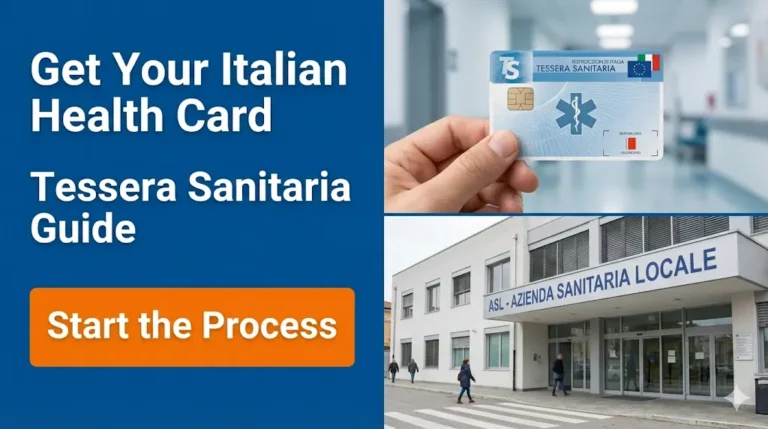
Step 4: Select Your Doctor and Receive Your Card During your ASL appointment, you will review a roster of general practitioners accepting patients in your postal code and select your primary care physician. Upon successful processing, the clerk will issue a temporary paper certificate. Within a few weeks, your official plastic Tessera Sanitaria (National Health Card) will be mailed to your registered address. You must present this card at pharmacies to receive subsidized medications and at all medical appointments.
Properly managing these administrative hurdles is a crucial part of Navigating Italian Bureaucracy: Comune and Prefettura.
Private Health Insurance Options
While the public system is exceptional for trauma, emergencies, and chronic disease management, many expatriates choose to supplement their healthcare strategy by purchasing private health insurance. The private healthcare sector in Italy operates alongside the SSN and features world-class specialists, modern clinics, and highly reputable university hospitals.
Why Expats Choose Private Insurance
The primary motivation for investing in private health insurance is speed and convenience. In the public system, non-urgent specialist appointments or elective diagnostic scans (such as an MRI for joint pain) can entail waiting lists stretching from several weeks to many months. With private insurance, you can often secure a specialist appointment or diagnostic test within a matter of days.
Additionally, private facilities offer an enhanced level of comfort. While public hospitals maintain high medical standards, they often utilize shared wards. Private clinics guarantee single-occupancy rooms with premium amenities. Furthermore, private healthcare significantly mitigates the language barrier; international clinics and private hospitals in major urban centers frequently staff English-speaking physicians and administrative personnel, which can be profoundly comforting during a health crisis.
Types of Private Insurance
When exploring private options, expats generally choose between two categories of coverage:
- Local Italian Private Health Insurance: These policies are purchased from domestic providers and are designed to complement the SSN. They typically cover private hospital stays, reimburse the cost of specialist visits, and may include dental and vision care. Premiums depend heavily on age, pre-existing conditions, and the level of coverage, generally ranging from €800 to €3,600 annually.
- International Expat Health Insurance: Provided by global companies like Cigna, Allianz, Bupa, and AXA, these comprehensive plans are highly popular among remote workers and frequent travelers. They offer portability, ensuring you are covered not only in Italy but also when traveling across Europe or returning to your home country. These plans often include value-added services such as medical evacuation, repatriation, and 24/7 tele-health consultations in English.
International plans are also frequently utilized by non-EU citizens to fulfill the mandatory insurance requirements during the initial visa application phase, particularly for the Elective Residence Visa, before they arrive in Italy and register for the SSN.
Comparing Public vs Private Healthcare in Italy
To help you synthesize these options, the following table highlights the primary differences between utilizing the SSN and relying on private healthcare.
| Feature / Service | Public Healthcare (SSN) | Private Healthcare |
| Funding Mechanism | Tax-funded and voluntary annual contributions. | Out-of-pocket payments or private insurance premiums. |
| Emergency Care | Free and universally accessible to all, including tourists. | Directed to public ERs; private clinics rarely handle major trauma. |
| Waiting Times | Can be lengthy (weeks to months) for non-urgent specialist care and scans. | Highly accelerated; appointments usually available within days. |
| Choice of Doctor | Must use assigned GP; limited choice for hospital specialists. | Complete freedom to choose any private specialist or clinic. |
| Language Barrier | High likelihood of needing Italian language skills, especially in rural areas. | Excellent access to English-speaking medical staff in international clinics. |
| Hospital Comfort | Standard shared rooms and functional, basic amenities. | Private rooms, superior catering, and hotel-like environments. |
| Cost at Point of Use | Free or minimal ticket sanitario co-pays (€15 – €46). | High costs without insurance (e.g., €100-€250 for a specialist visit). |
Using the European Health Insurance Card (EHIC)
If you are an expatriate relocating from another European Union member state, your transition is significantly smoother. EU citizens can use their European Health Insurance Card (EHIC)—known in Italy as the Tessera Europea di Assicurazione Malattia (TEAM)—to access necessary, state-provided healthcare during temporary stays.
This means that if you are visiting Italy or waiting for your permanent residency to be finalized, you can receive medical treatment under the same conditions and at the same cost as Italian citizens. However, the EHIC is not an alternative to travel insurance or comprehensive health insurance; it does not cover private sector treatments, elective procedures, or medical repatriation. Once you establish official permanent residency in Italy, you must fully integrate into the Italian SSN system and transfer your healthcare rights.
The Hybrid Approach: Combining Public and Private
For the majority of expatriates living long-term in Italy, the optimal strategy involves a hybrid approach. By securing your foundation with the public SSN, you protect yourself against catastrophic medical emergencies, chronic disease management, and the high costs of complex surgeries. The peace of mind that comes from knowing you will never face a ruinous hospital bill for emergency trauma care is invaluable.
Simultaneously, purchasing a mid-tier private health insurance policy provides the flexibility to bypass the SSN’s primary weakness: waiting times. When you encounter a non-urgent but uncomfortable health issue—such as needing an expedited MRI for a sports injury or desiring a fast consultation with an English-speaking gynecologist—your private insurance allows you to swiftly navigate the private sector without incurring heavy out-of-pocket expenses. This dual-layer strategy ensures that you receive the highest standard of holistic care tailored to the realities of the Italian medical landscape.
Conclusion
Securing reliable health insurance is an indispensable pillar of a successful relocation to Italy. The Italian healthcare system presents a fascinating duality: a deeply rooted, highly capable public infrastructure that guarantees care as a human right, operating alongside a sophisticated private sector that prioritizes speed and personalization.
By understanding the pathways to enrollment in the Servizio Sanitario Nazionale, anticipating the mandatory and voluntary costs associated with your specific visa type, and critically evaluating the benefits of supplemental private insurance, you can tailor a healthcare strategy that perfectly aligns with your lifestyle and budget. With your medical safety net firmly in place and your Tessera Sanitaria securely in your wallet, you are free to fully immerse yourself in the rich, unparalleled experience of living in Italy.
References
Primary sources (official)
- Ministero della Salute (Ministry of Health): The central government authority overseeing the SSN, defining essential health benefits, and regulating public healthcare standards. https://www.salute.gov.it/
- Agenzia delle Entrate (Revenue Agency): Official portal providing guidelines on the Codice Fiscale, health insurance cards for foreigners, and tax codes used for voluntary SSN payments. https://www.agenziaentrate.gov.it/
Other helpful sources
- Feather Insurance: Comprehensive guides on how the Italian public healthcare system works, SSN voluntary contribution fees for 2024/2026, and private health insurance comparisons. https://feather-insurance.com/en-it/
- Properstar Italy: Detailed relocation advice on registering for public healthcare, understanding regional SSN differences, and evaluating the costs of private versus public care. https://www.properstar.in/
Disclaimer
The information provided in this article is for educational and informational purposes only and does not constitute official legal, medical, or financial advice. Healthcare laws, registration fees (including voluntary SSN contributions), and immigration requirements in Italy are subject to frequent legislative updates. Always consult directly with the official Italian Ministry of Health, your local ASL office, or a certified immigration consultant to verify your specific eligibility, mandatory costs, and insurance requirements before finalizing your relocation or making healthcare decisions.