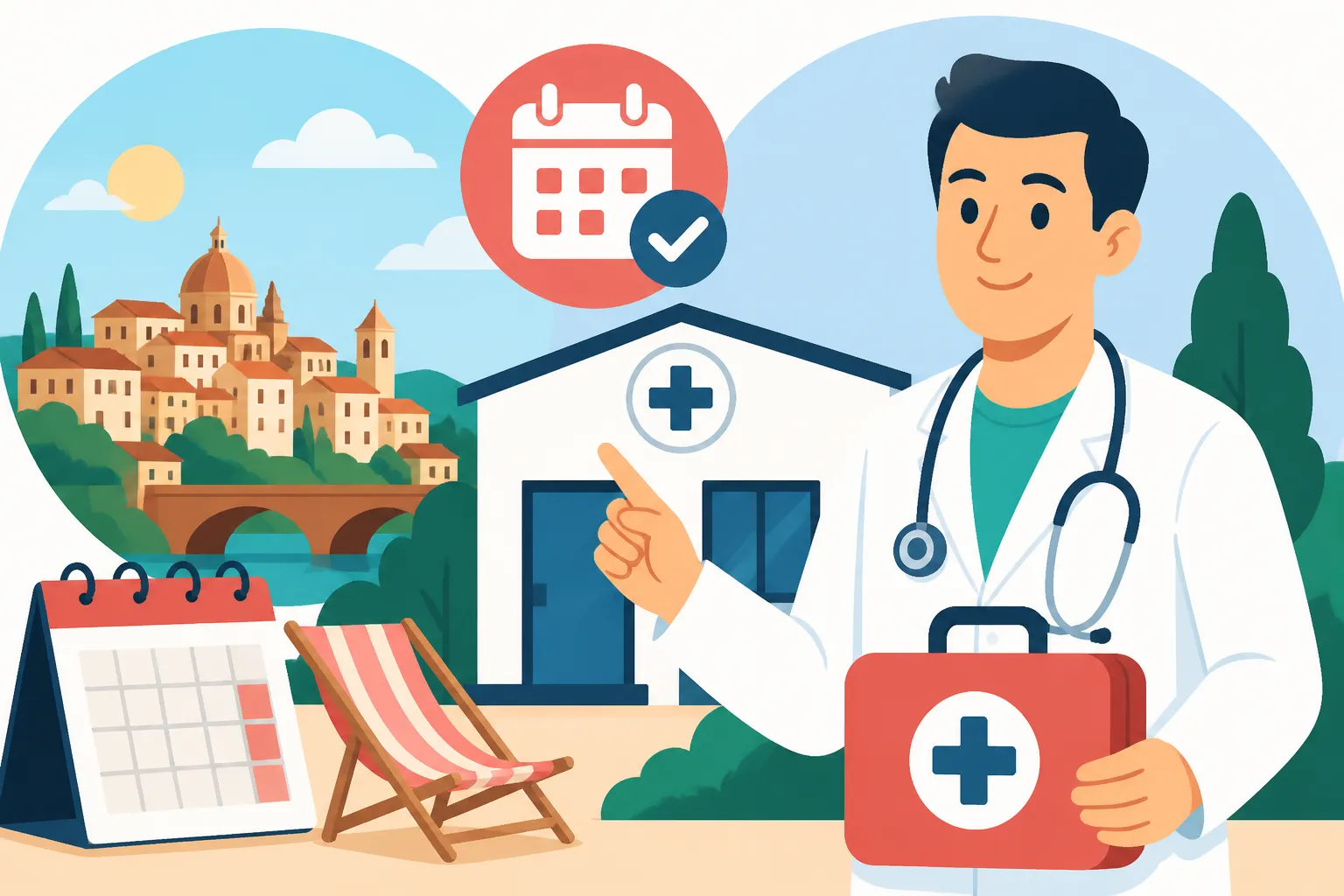
How to Access the Guardia Medica on Weekends in Italy
Falling ill on a Friday evening in Italy can feel like a minor catastrophe when you realize your family doctor has checked out for the weekend. I vividly remember my first winter in Florence, staring at a thermometer reading 39 degrees Celsius on a Saturday morning, only to find my pediatrician's office shuttered until Monday. This guide explains how to navigate the Guardia Medica service so you can get medical attention without the stress of an emergency room visit.
Disclosure: This post may contain affiliate links. We may earn a commission at no extra cost to you if you make a purchase through these links. Read full disclosure.
Understanding the Guardia Medica Service in Italy
The service officially known as the Guardia Medica is now formally called the Servizio di Continuità Assistenziale. This translates to "continuity of care," and that name tells you exactly what its purpose is. It is designed to bridge the gap between your regular family doctor’s office hours and the emergency services provided by hospitals. In the Italian mindset, the hospital emergency room, or Pronto Soccorso, is strictly for life-threatening situations or severe trauma. If you show up there with a sore throat or a moderate fever on a Sunday, you will likely wait eight hours and potentially pay a significant "white code" fee for misusing the service.
The Guardia Medica is the solution for those "urgent but not life-threatening" issues. This includes things like sudden flu symptoms, painful ear infections, minor allergic reactions, or the need for a prescription refill that simply cannot wait until Monday morning. When I first arrived, I didn't realize that How to Choose a Medico di Base (Family Doctor) in Italy was only half the battle; knowing who to call when that doctor is offline is the other half. The service is staffed by qualified physicians who can provide phone consultations, see you in a dedicated clinic, or even come to your home if your condition makes it impossible for you to travel.
It is important to remember that the Guardia Medica is a public service provided by the Servizio Sanitario Nazionale (SSN). However, the experience can vary significantly depending on which region of Italy you are in. In Lombardy, the system might feel highly digitized and efficient, whereas, in more rural parts of the south, you might find yourself calling a local number that rings directly into a small clinic. Regardless of the location, the doctors are there to ensure you aren't left without medical guidance during the most inconvenient hours of the week.
When and Where to Access the Guardia Medica
Timing is everything when it comes to the Guardia Medica. Their shift begins exactly when your family doctor’s shift ends. Generally, this means they are active from 8:00 PM to 8:00 AM every weeknight. On weekends, the coverage is continuous: it typically starts at 10:00 AM on Saturday (though some regions start at 8:00 AM) and runs straight through until 8:00 AM on Monday morning. They also cover public holidays, such as Ferragosto or Christmas, starting from the evening before the holiday itself.
Finding the specific number for your local Guardia Medica can be one of those classic Italian bureaucratic hurdles. There isn't one single national number for this service like there is for Emergency Medical Services in Italy: 112 and Hospitals. Instead, the numbers are managed by the local health authority, known as the ASL (Azienda Sanitaria Locale). The most reliable way to find your number is to search for "Guardia Medica" followed by the name of your city or province on the official ASL website. If you are struggling with the Italian websites, many expats use services like SafetyWing or Cigna Global to have a secondary layer of support or private English-speaking tele-health options, but for local, in-person care, the ASL number is your primary tool.
Once you have the number, you have two main ways to access care. You can call for a consultation, or you can go to the "Ambulatorio," which is the physical clinic where the doctor on duty is stationed. If you are a resident and have been Registering With Your Local ASL in Italy: A Practical Guide, the phone consultation and clinic visit are generally free. If you are a visitor or haven't finalized your residency, there is usually a small fee, often around 15 to 20 Euros for a clinic visit and 30 to 35 Euros for a home visit.
| Service Feature | Guardia Medica (Out-of-Hours) | Pronto Soccorso (Emergency Room) |
|---|---|---|
| Severity Level | Non-emergency, urgent needs | Life-threatening, severe trauma |
| Typical Hours | Nights (8 PM-8 AM), Weekends, Holidays | 24/7, 365 days a year |
| Access Method | Phone call or walk-in clinic | Walk-in or Ambulance (112) |
| Prescriptions | Can issue "Ricetta Rossa" for urgent meds | Only provides discharge instructions |
| Cost for Residents | Generally free | Free for high-priority; fee for low-priority |
| Wait Times | Usually 30 minutes to 2 hours | Can be 4 to 12 hours for low-priority |
The Consultation Process and Language Barriers
When you call the Guardia Medica, the doctor who answers will perform a "triage" over the phone. You will need to provide your name, age, address, and a clear description of your symptoms. This is where things can get tricky if your Italian is still a work in progress. In my early years, I kept a "cheat sheet" on my fridge with my The Italian Health Card (Tessera Sanitaria): Uses and How to Get One details and a few key phrases like "Ho la febbre alta" (I have a high fever) or "Mi fa male l'orecchio" (My ear hurts).
If the doctor decides you need to be seen, they will either tell you to come to the clinic or, if your condition is severe enough to keep you bedridden, they will schedule a home visit. Be prepared: "home visit" doesn't mean "immediate arrival." You might be waiting several hours if they have a long list of patients across a wide geographic area. If you are a traveler using SafetyWing, you might find their 24/7 support helpful for coordinating these logistics, but for the actual medical intervention, the local doctor is the authority.
During the visit, whether in the clinic or at home, the doctor can perform a basic physical exam. They can also issue a "Ricetta," which is the official medical prescription. In Italy, Italian Pharmacies: Prescription, Over-the-Counter, and Supplies are very strict about what they will dispense without a doctor's note. The Guardia Medica can provide the necessary paperwork so you can get antibiotics or other essential medications from a "Farmacia di Turno" (a pharmacy on duty for the weekend). They can also provide a "Certificato di Malattia" (sick note) for your employer, but usually only for the days until your regular doctor returns to work.
Administrative Realities and Expat Tips
One of the most important things to have ready before you call is your documentation. Even in an urgent situation, the Italian system runs on paperwork. You will need your Codice Fiscale and, if you have it, your Tessera Sanitaria. If you are an EU citizen, your European Health Insurance Card (EHIC) is essential. For non-EU expats who are still in the process of Finding Doctors and Hospitals in Italy, having a copy of your private insurance policy from a provider like Cigna Global can be useful, although the public Guardia Medica may still require an upfront cash payment if you aren't yet in the SSN system.
A "pro-tip" I learned the hard way: always check the location of the nearest "Farmacia di Turno" before you even need one. When the Guardia Medica doctor hands you a prescription at 11:00 PM on a Sunday, you don't want to be driving around aimlessly looking for an open pharmacy. Most pharmacies have a small illuminated sign outside that lists which local branches are open after hours. This is vital because How to Get a Prescription Renewed in Italy over the weekend is only useful if you have a place to actually fulfill that prescription.
Finally, keep your expectations realistic. The Guardia Medica doctors are often working long shifts with limited resources. They are not there to provide a second opinion on a chronic condition or to perform complex diagnostic tests like X-rays or MRIs. Their goal is to stabilize you and provide enough care to get you through to Monday morning. If you feel that your situation is deteriorating rapidly, do not hesitate to pivot. If the Guardia Medica doesn't answer or if the wait is too long for a worsening condition, calling 112 or heading to the Pronto Soccorso is the correct move. Knowing How to Find an English-Speaking Doctor in Italy for follow-up care on Monday is also a wise part of your recovery plan, as the Guardia Medica will not handle long-term follow-up.
Living in Italy means embracing a different pace of life, and the healthcare system is no exception. The Guardia Medica is a fantastic safety net, provided you know the rules of the game. Keep your documents organized, know your local ASL number, and don't be afraid to use a translation app to get your point across. With a bit of preparation, a weekend illness doesn't have to be a bureaucratic nightmare. It’s all part of the "I've-been-there" experience that eventually turns a confused newcomer into a seasoned Italian resident.
Disclaimer
The information provided in this guide is for informational purposes only and does not constitute professional medical advice, diagnosis, or treatment. Always seek the advice of a qualified healthcare provider in Italy regarding any medical condition. Healthcare regulations and contact numbers in Italy can change frequently; please verify local services with your specific ASL (Azienda Sanitaria Locale) or regional health authority.