Dental Care in Italy: Why It’s Mostly Private and What It Costs
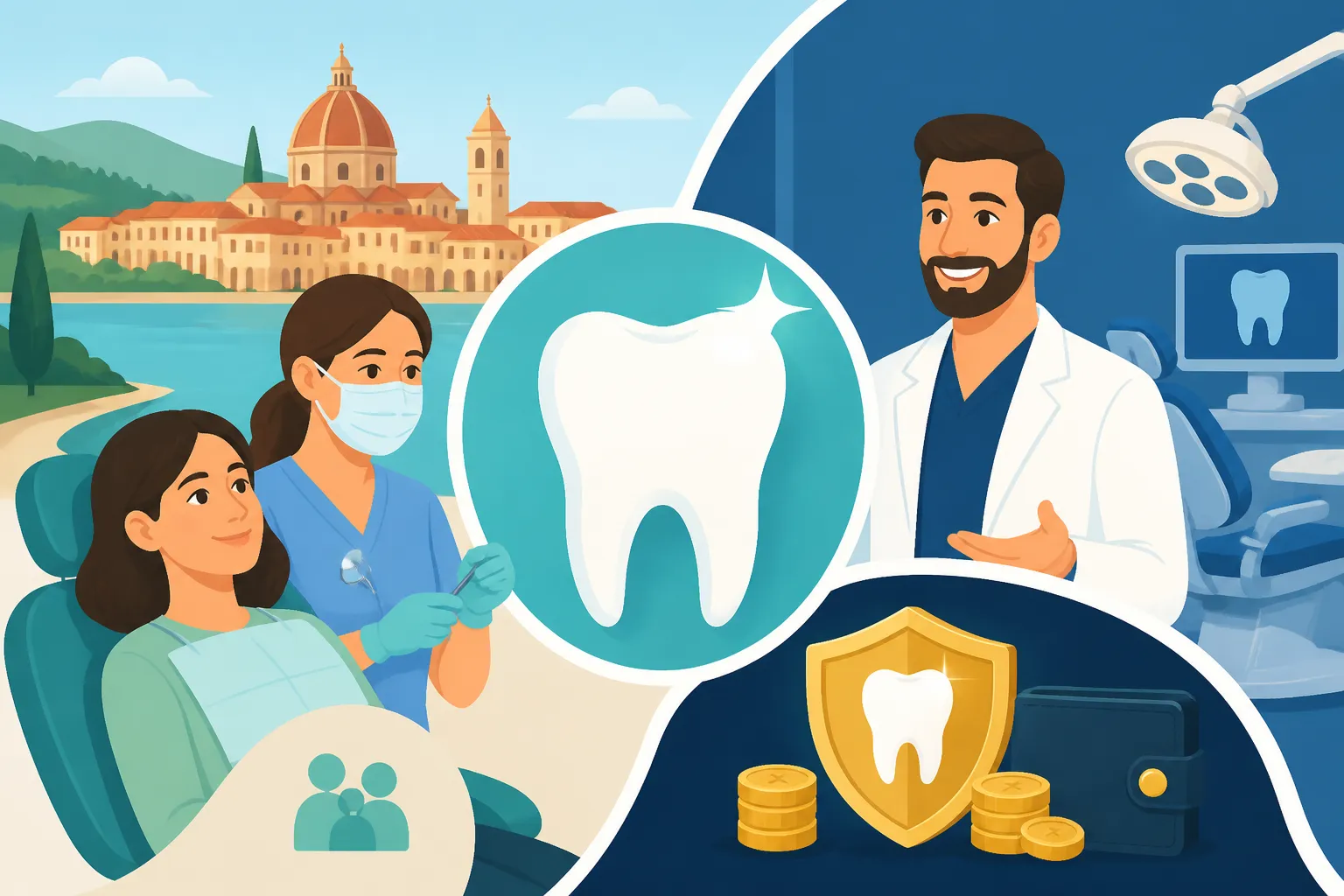
Waking up with a throbbing toothache is stressful enough, but realizing your local health card might not cover the fix is a specific kind of panic I’ve faced myself. I remember sitting at my kitchen table in Florence, clutching a cold espresso and wondering why my expensive residency process didn't seem to include a simple filling. This guide clears up the confusion surrounding dental care in Italy so you aren't left guessing while in pain.
Disclosure: This post may contain affiliate links. We may earn a commission at no extra cost to you if you make a purchase through these links. Read full disclosure.
Why the Italian National Health System SSN Rarely Covers Dental Care
When you first move here and start Registering With Your Local ASL in Italy: A Practical Guide, there is a common assumption that the Servizio Sanitario Nazionale (SSN) is a "catch-all" for every medical woe. While the SSN is legendary for its coverage of life-saving surgeries and chronic illnesses, dental care is often treated as the unloved stepchild of the system. In Italy, dentistry is categorized under "ambulatory specialist care," but with very strict limitations on what the state will actually pay for.
The reality is that for the vast majority of adults, the public system only covers emergency extractions or very basic diagnostic screenings. If you are looking for a cleaning, a filling, or heaven forbid, an implant, you will almost certainly be pointed toward the private sector. I learned this the hard way when I tried to book a routine checkup at my local clinic, only to be told the wait list for a non-emergency was fourteen months long. This is why the Italian landscape is dotted with thousands of private "Studi Dentistici."
The Public System Focus on Essential Care
The SSN operates under a principle called LEA (Livelli Essenziali di Assistenza), which dictates the minimum level of care the state must provide. Unfortunately, the LEA for dental health is extremely narrow. Generally, the public system only steps in for children under the age of 14 for specific preventative measures or for adults who fall into "vulnerable" categories. For the average working expat or retiree, the SSN is a safety net only for the most dire circumstances, such as acute infections or trauma.
Even when you can access public dental care, you are still required to pay a "ticket," which is a co-payment. While this ticket is cheaper than a private fee, the bureaucracy involved in securing the appointment often outweighs the savings. You would first need to see your GP to get a red prescription (ricetta), then navigate the CUP booking system, only to find that the public dentist might be in a different town entirely. Most of us eventually decide that paying a private professional is worth the saved sanity.
Vulnerable Groups and Priority Access
There are exceptions to the "private only" rule. If you are considered socially or economically vulnerable—often defined by a low ISEE (Equivalent Economic Situation Indicator) score—you may be eligible for more comprehensive dental care through the public system. People with specific disabilities or those suffering from chronic conditions that impact oral health also get priority.
Furthermore, children are generally better protected. Most regions offer free or low-cost preventative screenings and basic orthodontics for minors, though even here, the quality and speed of service can vary wildly. If you are moving with a family, it is worth checking the specific regional regulations, as Regional Healthcare Differences in Italy: North vs South can significantly impact what is available for your kids without dipping into your savings.
Regional Differences in Coverage
Italy’s healthcare is managed at the regional level, which means a "Tessera Sanitaria" in Lombardy might afford you slightly different dental perks than one in Sicily. Some wealthier northern regions have experimented with expanding dental coverage to include more preventative care for seniors or low-income residents. However, these programs are often subject to budget cuts and can change from year to year.
In the south, where public resources are often more stretched, the reliance on private dentists is nearly 100% for anything beyond an emergency extraction. This regional disparity is one of the most frustrating aspects of Healthcare in Italy: An Expats' Guide. You might hear a friend in Trentino talk about a subsidized cleaning, while your dentist in Naples laughs at the very suggestion. Always verify the current regional "Livelli Essenziali" before assuming you’re covered.
What to Expect: Average Costs for Dental Procedures in Italy
Because the market is so heavily privatized, competition among dentists is fierce. This is actually a win for us expats because it keeps the quality high, though the prices can still feel steep if you are coming from a country with fully socialized dental care. Prices are not fixed by the government, so they vary based on the dentist’s reputation, the technology in the office, and, most importantly, the city you are in.
Generally, you will find that a "Studio Dentistico" in the center of Milan or Rome will charge significantly more than a clinic in a smaller town in Abruzzo or Puglia. However, Italian dental fees are often lower than those in the United States or the UK, making Italy a destination for "dental tourism" for certain neighbors. It is vital to ask for a "preventivo"—a detailed quote—before agreeing to any work. Most Italian dentists are happy to provide this after an initial consultation.
General Maintenance: Cleanings and Fillings
A professional cleaning, known as "detartrasi" or "pulizia dei denti," is the most common reason to visit a dentist. In a mid-sized city, you can expect to pay between €70 and €120. This usually takes about 45 minutes and is performed by a dental hygienist. If the dentist finds a cavity during the checkup, a standard resin filling (otturazione) will typically run you between €100 and €200, depending on the complexity and the number of surfaces involved.
I found that many Italian dentists take great pride in their aesthetic work. Even a simple filling is often done with high-end composites that match your tooth color perfectly. They don't just "plug the hole"; they reconstruct the tooth’s anatomy. This attention to detail is part of the "Bella Figura" culture, even in healthcare, but it is reflected in the price. For more on managing these out-of-pocket costs, see our guide on Cost of Healthcare in Italy: What Expats Need to Know.
Complex Procedures: Root Canals and Crowns
When you move into the territory of root canals (devitalizzazione) and crowns (corona), the prices start to climb into the hundreds or thousands. A root canal on a molar—which has more canals and takes more time—can cost anywhere from €250 to €500. This doesn't include the cost of the final filling or the crown that usually needs to go on top to protect the weakened tooth.
A high-quality ceramic or zirconia crown will generally cost between €600 and €1,000 per tooth. If you are comparing this to your home country, you might find it’s a bargain or a shock. It is also worth noting that "dental chains" or large franchise clinics have popped up across Italy. They often offer lower prices and "buy one get one" style deals on implants, but many veteran expats prefer the personalized care of a family-run "Studio."
Orthodontics and Cosmetic Dentistry
If you or your children need braces (apparecchio), prepare for a long-term financial commitment. Standard metal braces for a child usually start at around €3,000 for a two-year treatment plan, including all adjustments. Invisalign and other clear aligners are very popular in Italian cities but come with a premium price tag, often reaching €4,000 to €6,000.
Cosmetic dentistry, such as professional whitening (sbiancamento) or veneers (faccette), is entirely out-of-pocket and never covered by any public scheme. A professional laser whitening session can cost around €300. Veneers are the most expensive, often starting at €800 per tooth. Because these are "luxury" services, it pays to shop around and check reviews, perhaps even looking in areas Where to Find English-Speaking Doctors and Clinics are established, as they are used to international standards.
| Procedure | Low End (Small Town) | High End (Milan/Rome) |
|---|---|---|
| Professional Cleaning | €70 | €130 |
| Simple Filling | €90 | €180 |
| Root Canal (Molar) | €250 | €550 |
| Ceramic Crown | €500 | €1,100 |
| Dental Implant (Single) | €1,200 | €2,500 |
| Orthodontic Braces | €2,500 | €5,500 |
How to Find a Trusted Dentist in Italy
Finding a dentist in a new country feels like a leap of faith. You aren't just looking for someone with a drill; you're looking for someone who understands your concerns, doesn't overcharge, and ideally speaks enough English to explain why you need a bone graft. In my first year, I went to three different dentists before finding "the one" who didn't look at my American fillings like they were ancient artifacts.
The dental profession in Italy is highly regulated. Every legitimate dentist must be registered with the Albo dei Medici e degli Odontoiatri. You can actually verify a dentist’s credentials on the FNOMCeO website if you’re feeling extra cautious. Most clinics are small, private practices located in residential buildings—don't be surprised if you have to ring a doorbell and head up to the second floor of a beautiful 19th-century palazzo to find your dentist.
Word of Mouth vs. Online Reviews
In Italy, "passaparola" (word of mouth) is the gold standard. Before you hit Google, ask your coworkers, your neighbors, or even the barista at your local bar. Italians are generally very open about their dental experiences and will quickly tell you who is "bravo" and who is "caro" (expensive). If a name keeps coming up in your local expat Facebook group, it’s usually for a good reason.
Online reviews on platforms like MioDottore or Google Maps are becoming more common and are quite reliable for checking the cleanliness of the office and the punctuality of the staff. However, take extremely negative reviews with a grain of salt—sometimes they are just disputes over the bill. Look for patterns: if everyone says the dentist is gentle and explains things well, that’s a great sign for a nervous expat.
Language Barriers and English-Speaking Clinics
If your Italian is still at the "vorrei un caffè" level, discussing a complex periodontal surgery is going to be daunting. In major cities like Rome, Milan, and Florence, there are many dentists who have studied abroad or who specifically cater to the international community. Finding a dentist who speaks English can be a lifesaver, not just for the procedure itself, but for the paperwork and insurance claims.
Don't be afraid to ask "Parla inglese?" when you call to make an appointment. Even if the lead dentist doesn't speak English, often the younger associates or the hygienists do. If communication is a major anxiety for you, seeking out clinics that advertise to expats is a valid strategy, though be aware they may charge a small "convenience premium" for their English-speaking staff.
Understanding the First Visit Prima Visita
In Italy, the "prima visita" is often more than just a quick look-around. Many dentists will take a panoramic X-ray (ortopanoramica) right there in the office during your first consultation. This is incredibly convenient compared to some countries where you have to go to a separate imaging center. Be prepared to pay for this initial visit, usually between €50 and €100, though some clinics will waive the fee if you agree to follow through with the proposed treatment plan.
During this visit, the dentist will provide you with a "piano di cura" (treatment plan). This is a formal document listing every procedure they recommend, the cost for each, and the estimated timeline. It is perfectly acceptable to take this document home and think about it. You are under no obligation to start treatment immediately. This transparency is a hallmark of good Italian dental practice.
Managing the Bill: Insurance and Payment Options
Since you’ll likely be footing the bill yourself, understanding how to soften the blow is crucial. Many Italians pay for their dental work in installments, and almost every clinic will have a "bancomat" machine for card payments. However, if you are planning on significant work like implants or multiple crowns, you should look into how to integrate this with your broader financial planning.
One thing that surprises many newcomers is the tax benefit. In Italy, you can deduct 19% of your medical and dental expenses from your personal income tax (IRPEF), provided the expenses exceed a small threshold of about €129. Make sure you keep every "fattura" (invoice) and that it clearly states your "Codice Fiscale." These invoices are essential when it comes time for your annual tax declaration.
The Role of Private Health Insurance
Given the high cost of private dentistry, many expats opt for a robust private policy. Companies like Cigna Global offer plans that specifically include dental modules. This can be a game-changer if you know you have "difficult" teeth or are planning on starting a family. Cigna Global policies often allow you to see the private dentist of your choice and then claim back a significant portion of the cost, usually up to a yearly cap.
When looking for Public vs Private Health Insurance in Italy, check if the dental coverage includes "grandi interventi" (major surgeries) or just routine maintenance. Some lower-tier local Italian private insurances (like UniSalute or RBM) have a network of "convenzionati" dentists. If you go to a dentist in their network, the insurance pays the clinic directly, and you only pay a small co-pay. This can save you from having to front thousands of euros.
Short-term Coverage for Nomads and Visitors
If you are just passing through or are in your first few months of residency without a permanent plan, you might rely on travel-medical insurance. SafetyWing is a popular choice for digital nomads in Italy because it covers unexpected dental emergencies. If you suddenly develop an abscess or break a tooth while enjoying a crusty piece of pane di Altamura, SafetyWing can help cover the cost of the emergency palliative treatment needed to get you out of pain.
However, it’s important to remember that policies like SafetyWing are for emergencies, not for getting a new set of veneers or a routine cleaning. If you are planning to live in Italy long-term, transitioning to a more permanent solution like Cigna Global is advisable to cover the routine care that keeps those emergencies from happening in the first place. You don't want to wait until you need Emergency Medical Services in Italy: 112 and Hospitals to think about your teeth.
Financing Plans and Convenzione Discounts
Large dental centers (centri odontoiatrici) often have agreements with financing companies, allowing you to pay for your braces or implants over 12, 24, or even 36 months, sometimes with zero interest (tasso zero). This is a very common way for Italian families to afford expensive treatments. You will need a valid "permesso di soggiorno" and proof of income to qualify for these loans.
Additionally, check if your employer or any professional association you belong to has a "convenzione." Many large companies in Italy offer their employees memberships to health funds (Fondi Integrativi) like Metasalute or Fasi. These funds can drastically reduce the cost of dental care, sometimes providing one or two free cleanings a year and 50% off other procedures. It is one of the best hidden perks of working in Italy.
Emergency Dental Situations and After-Hours Care
Tooth pain doesn't follow a 9-to-5 schedule. It usually hits on a Saturday night right before a long "Ponte" holiday when everything is closed. Knowing where to go when your regular "Studio" is shuttered is vital. While you can go to the general emergency room, they are often ill-equipped to do much more than give you a prescription for antibiotics or painkillers.
For actual dental work during off-hours, you need to look for the "Guardia Medica Odontoiatrica." This is a public emergency dental service provided by the SSN, but it is only available in certain large cities and during specific hours (usually nights and holidays). The service is basic, but it will stop the bleeding or the acute pain until Monday morning.
Accessing the Guardia Medica Odontoiatrica
To find the nearest emergency dental station, you can call the Emergency Medical Numbers in Italy (112, 118, 1500) or check the website of your local ASL under "Continuità Assistenziale." Be prepared for a wait. Because these services are few and far between, the waiting rooms are often crowded with people in significant distress.
In cities like Milan, the Ospedale Maggiore Policlinico has a renowned emergency dental department. In Rome, the George Eastman Hospital is the go-to for dental emergencies. These public institutions are your best bet for trauma, such as a tooth being knocked out. For more details on this process, read our dedicated post on Emergency Dentist Visits in Italy: What to Do.
Navigating the Pronto Soccorso for Trauma
If you have a facial injury that involves more than just a chipped tooth—such as a suspected broken jaw or a deep cut—you should go straight to the "Pronto Soccorso" (Emergency Room) of a general hospital. They will use a triage system (Red, Orange, Blue, Green, White) to determine how fast you are seen. A broken tooth without other symptoms is usually a "White" or "Green" code, meaning you might be waiting for several hours.
The hospital might not have a dentist on staff at 3:00 AM, but they can provide imaging (CT scans) and Maxillofacial surgeons if the injury is severe. For simple toothaches, they will likely give you a "Sick Note" or How to Get a Sick Note in Italy (Certificato di Malattia) for your employer and tell you to see a private dentist as soon as they open.
24-Hour Private Clinics
In recent years, some private dental chains have started offering 24/7 emergency lines or extended weekend hours. While these are more expensive than the public Guardia Medica, they are much faster and more comfortable. If you have a high-quality insurance plan like Cigna Global, these emergency visits are often covered, making the extra cost a non-issue. Always keep the phone number of a 24-hour clinic saved in your phone; it’s better to have it and not need it than the other way around.
Cultural Nuances and Pro-Tips for Expats
Italian dental culture might be slightly different from what you are used to. For one, there is a very high emphasis on aesthetics. Italians take great pride in a bright, straight smile, and you will notice that even elderly people often have very well-maintained teeth. This is part of the broader cultural concept of "Bella Figura"—presenting your best self to the world.
However, the "preventative" culture of six-month checkups is not as deeply ingrained here as it is in the US or Northern Europe. Many Italians only go to the dentist when something feels wrong. As an expat, you might need to be the one to proactively schedule your "detartrasi" every six months. Your dentist will be happy to see you, but they might not send you a postcard reminder like you’re used to.
The Importance of Preventative Checkups
Regular cleanings are the best way to avoid the eye-watering costs of implants later on. Since you are likely paying out-of-pocket, it’s easy to skip a year to save €100. Don't. The cost of a root canal and crown in Italy could pay for ten years of cleanings. Most Italian dentists use the latest ultrasound technology for cleanings, which is very effective and relatively painless.
Another tip: ask your dentist about "fluoroprofilassi" if you have sensitive teeth. Italian water is generally safe to drink, but fluoride levels vary by region. If you are used to fluoridated water and move to an area where it’s lacking, you might notice an increase in sensitivity or cavities. Your dentist can provide professional fluoride treatments that are quite affordable.
Tax Deductions and Paperwork
I cannot stress this enough: keep your invoices. In Italy, the "fattura" is a sacred document. When you go to a private dentist, they are required to send the data of your payment to the "Sistema Tessera Sanitaria" for your pre-filled tax return. However, glitches happen. Having the physical or digital PDF of your invoice ensures you can claim that 19% deduction during the "Dichiarazione dei Redditi."
If you are using international insurance like SafetyWing or Cigna Global, you will need an itemized invoice, often translated or at least with standard medical codes. Most modern Italian dental offices are used to this and can provide an English version or a detailed breakdown upon request. Just make sure to ask for the "Fattura per assicurazione" at the front desk before you leave.
Pharmacy Support for Dental Pain
If you are stuck in pain and waiting for an appointment, your local "Farmacia" is your first line of defense. Unlike some countries where you can buy strong painkillers in a supermarket, in Italy, almost everything effective requires a consultation with the pharmacist. They can recommend over-the-counter anti-inflammatories like Oki (ketoprofen) or Tachipirina (paracetamol).
For anything stronger, or for antibiotics, you will need a prescription from a doctor. If you can't reach a dentist, your regular "Medico di Base" can write a prescription for dental-related infections. Learn more about how this works in our guide to Italian Pharmacies: Prescription, Over-the-Counter, and Supplies. Having a good relationship with your neighborhood pharmacist is one of the best ways to navigate minor health hurdles in Italy.
Disclaimer
The information provided in this article is for informational purposes only and does not constitute professional medical, legal, or financial advice. Healthcare regulations and costs in Italy are subject to change and can vary significantly by region. Always consult with a qualified healthcare professional or a certified tax advisor regarding your specific situation. For updated information on the SSN, please refer to the official Ministry of Health website.