Choosing a Pediatrician in Italy (Pediatra di Libera Scelta)
I remember standing in my kitchen in Florence, clutching a screaming eight-month-old with a sudden, angry-looking rash, and realizing I had absolutely no idea who to call. My own GP didn't see infants, and the local pharmacy just gave me a sympathetic shrug and told me to find a pediatra. This guide is designed to save you from that exact moment of frozen panic, walking you through how to choose, register with, and actually use a Pediatra di Libera Scelta in Italy.
Disclosure: This post may contain affiliate links. We may earn a commission at no extra cost to you if you make a purchase through these links. Read full disclosure.
Understanding the Role of the Pediatra di Libera Scelta
In Italy, the pediatric system is a foundational pillar of the Servizio Sanitario Nazionale (SSN), the national healthcare system. Unlike some countries where children might see a general practitioner for minor issues, Italy provides specialized primary care for children through the Pediatra di Libera Scelta, which literally translates to "Pediatrician of Free Choice." This doctor acts as your child’s primary point of contact for everything from routine growth checks to acute illnesses until they reach the age of 14, or in some specific cases of chronic illness, up to 16.
Who is the Free Choice Pediatrician
The Pediatra di Libera Scelta is a specialist in pediatrics who has a contract with the local health authority, known as the ASL (Azienda Sanitaria Locale) or ATS (Azienda Tutela della Salute). They are not just a doctor you visit when the baby is sick; they are the managers of your child's entire health journey. They track developmental milestones, administer (or refer for) vaccinations, and, perhaps most importantly, they are the "gatekeepers" to the rest of the medical system.
If your child needs to see a cardiologist, a dermatologist, or a psychologist, it is your pediatrician who must write the impegnativa, the red or electronic referral slip. Without this, you cannot access public specialist services at the subsidized "ticket" rate. During my first year, I tried to skip this step and go straight to a specialist, only to be told that without the pediatrician's referral, the cost would be five times higher. It is a system built on hierarchy, and the pediatrician is at the top of your child's care pyramid.
Mandatory vs Optional Enrollment
Enrollment with a pediatrician is mandatory for all children residing in Italy who are registered with the SSN. From birth until age six, having a dedicated pediatrician is a legal requirement. Between the ages of six and fourteen, parents technically have the choice to move their child to a standard Medico di Base (General Practitioner), but almost no expat or local parent does this. The specialized knowledge of a pediatrician is far superior for managing the complexities of puberty and childhood development.
If you are an expat just arriving and your residency is still being processed, you might worry that you are stuck in a healthcare limbo. However, Italy is surprisingly protective of children's health rights. Even if you don’t have your full residency yet, you can often obtain a temporary health card for your child, allowing you to access a pediatrician immediately. This is where Healthcare in Italy: An Expats' Guide becomes an essential resource for understanding your initial rights as a newcomer.
The Consultorio vs Private Options
While the Pediatra di Libera Scelta is your main contact, Italy also offers the Consultorio Familiare. These are public clinics focused on family health, often staffed with gynecologists, midwives, and psychologists. They are fantastic for the early days of parenthood, offering breastfeeding support and postnatal care that a busy pediatrician might not have time for. I often used the Consultorio for quick weight checks and lactation advice during those blurry first weeks of motherhood.
However, many expats also choose to supplement public care with private specialists. If you prefer a doctor who speaks perfect English or want to avoid the potential waiting lists for certain tests, having international health insurance can be a lifesaver. Providers like Cigna Global offer plans that allow you to see private pediatricians who might have more flexible hours or offer more "hand-holding" than the often-overburdened public doctors. Using Cigna Global can bridge the gap when you need a second opinion from a specific specialist who doesn't work within the SSN framework.
How to Register Your Child for Public Pediatric Care
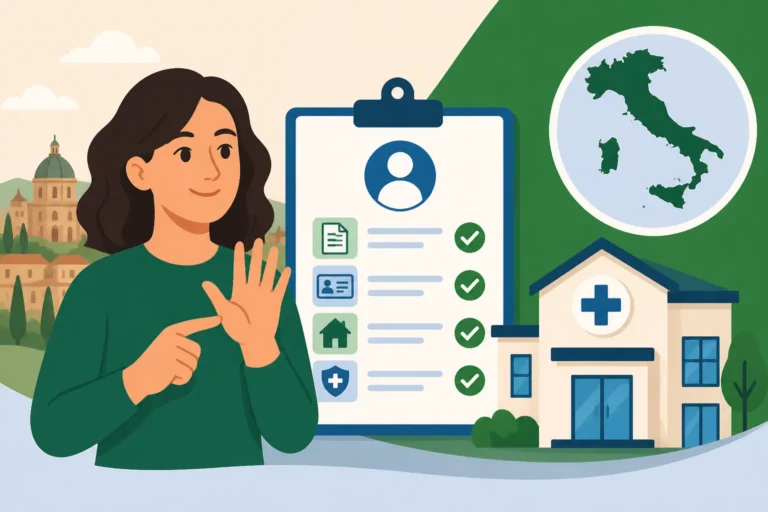
The administrative process of registering a child for a pediatrician is often the first real "welcome to Italian bureaucracy" moment for expat parents. It requires a specific set of documents and a visit to the local health office, usually referred to as the Scelta e Revoca (Choice and Revocation) office. While it might seem daunting, it is a straightforward process once you have your ducks in a row.
Essential Documents for the ASL/ATS
Before you head to the ASL office, you must ensure you have the correct paperwork. The most critical document is the child's Codice Fiscale (tax code). You cannot register for any health services without this. If you have a newborn, the hospital usually gives you the paperwork to obtain this, but as an expat arriving with older children, you’ll need to visit the Agenzia delle Entrate first.
You will also need your own residency permit (Permesso di Soggiorno) or the receipt showing you have applied for it, your identity card, and proof of residence (Certificato di Residenza or a self-declaration). If you are an EU citizen, the requirements are slightly different, focusing more on your right to reside through work or self-sufficiency. For a deeper dive into these requirements, see How to Register for Italian Healthcare (SSN) as a Foreigner.
The Step-by-Step Enrollment Process
Once you have your documents, you need to find your local ASL office. Many regions, like Lombardy or Tuscany, now allow you to do this online through a regional health portal, provided you have a SPID (digital identity). However, for your very first registration, many offices still prefer an in-person visit. You will be given a list of pediatricians in your area who have "open spots" (posti disponibili).
This is the tricky part: the best pediatricians often have full lists. You might find a doctor everyone raves about, only to be told they cannot take more patients. In this case, you can try to contact the doctor directly and ask if they will sign a "derogation" to accept your child, usually if you already have another child in their care. If you are starting fresh with your first child, refer to Registering Your Newborn and Health Care for Babies to understand the timeline of when these registrations must occur.
Navigating the Scelta e Revoca Office
The Scelta e Revoca office is where the magic happens. Be prepared for a wait. I highly recommend arriving 15 minutes before the office opens. When it is your turn, the clerk will show you a binder or a computer screen with the names of available doctors. Do not expect the clerk to give you advice on who is "good." They are administrative staff, not medical advisors.
If you are feeling overwhelmed by the public process or are still waiting for your residency to clear, you might consider a short-term solution. SafetyWing is often used by digital nomads or those in the "waiting period" of residency to ensure their children have some form of medical coverage for emergencies or private visits until the SSN registration is finalized. Having SafetyWing can provide peace of mind while you navigate the sometimes-slow wheels of Italian local government.
Criteria for Choosing the Right Pediatrician
Choosing a name from a list of strangers is a gamble. Since this doctor will be your primary resource for years, you want to make an informed choice. In Italy, the "best" doctor isn't always the one with the most diplomas; it's often the one who is most accessible and whose communication style matches yours.
Proximity and Availability
In Italy, convenience is king. You want a pediatrician whose ambulatorio (clinic) is close to your home or your child’s school. Remember, you will be visiting this office for every fever, every required school certificate, and every routine check-up. If the doctor is across the city, a simple 15-minute appointment turns into a three-hour ordeal.
Check their hours carefully. Italian pediatricians are required to be open five days a week, but their hours vary wildly. Some might be open 9:00 AM to 12:00 PM on Mondays and 3:00 PM to 6:00 PM on Tuesdays. This "split shift" can be frustrating if you work full-time. Some offices are part of a pediatria di gruppo, where several doctors share an office and covering hours, which often means better availability and someone to see your child if your specific doctor is on vacation.
Language Barriers and English-Speaking Doctors
For many expats, finding a doctor who speaks English is the top priority. While many younger Italian doctors speak excellent English, it is not a guarantee. If your Italian is still basic, describing a complex set of symptoms or understanding dosage instructions for a nebulizer can be incredibly stressful.
You can use Websites to Find Doctors Who Speak English in Italy to cross-reference the names provided by the ASL. If you cannot find an English speaker on the public list, this is another reason why parents look into private insurance. A policy with Cigna Global usually gives you access to a network of private pediatricians who are often specifically chosen for their ability to communicate with international patients.
Navigating Word-of-Mouth and Local Reputation
The most reliable way to find a good pediatrician in Italy is the "Mamma Network." Join local Facebook groups for expats or ask the parents at the local park. Italians are very vocal about their doctors. You’ll quickly learn who is "too quick to prescribe antibiotics" and who is "a bit too traditional."
Ask specifically about their phone policy. Most Italian pediatricians have a dedicated "telephone hour" (often 8:00 AM to 9:00 AM) where you can call for advice or to book a same-day appointment for an acute illness. A doctor who is responsive via WhatsApp or email is a rare and precious find in the Italian system. Finding a doctor through Finding Doctors and Hospitals in Italy can also provide some regional context on what to expect.
Public vs Private Pediatric Care in Italy
One of the biggest questions for new residents is whether the free public system is enough. The short answer is yes, the quality of medical training in Italy is world-class. However, the experience of care can differ significantly between the public and private sectors.
| Feature | Public (SSN) Pediatrician | Private Pediatrician |
|---|---|---|
| Cost | Free (covered by taxes) | €80 – €150 per visit |
| Referrals | Required for all specialists | Not required (but check insurance) |
| Waiting Times | Can be long for non-urgent tests | Usually within 24-48 hours |
| Home Visits | Rare, usually only for severe cases | Available (for a higher fee) |
| Continuity | Same doctor for years | Same doctor if you stay with them |
| Facilities | Varies; can be basic | Often modern and more "child-friendly" |
When to Use the SSN Pediatrician
For routine growth checks (bilanci di salute), mandatory vaccinations, and standard childhood illnesses like ear infections or the flu, the SSN pediatrician is perfectly adequate. They are deeply integrated into the local system and know exactly which forms you need for school or sports. They are also the only ones who can prescribe medication that is subsidized by the state. If a private doctor prescribes an expensive antibiotic, you will pay the full price at the pharmacy. If your SSN doctor prescribes it, you might pay only a few euros.
The public pediatrician is also your link to local specialists. If your child has a chronic condition, the SSN offers excellent multidisciplinary care, though it requires more patience with the booking system. For more on how these costs work, read Cost of Healthcare in Italy: What Expats Need to Know.
Benefits of Private Pediatricians and Insurance
The primary reason expats go private is speed and communication. If your child needs an ultrasound or a specialist consultation, the public system might give you an appointment in three months. A private clinic will see you tomorrow. This is where having a plan with SafetyWing for emergencies or Cigna Global for comprehensive care becomes a strategic advantage.
Private pediatricians often spend more time with you, explaining the "why" behind a diagnosis, which can be a relief when you are navigating a foreign medical culture. They are also more likely to offer house calls, which is a blessing when you have a sick child and no way to easily get to a clinic. For those considering private delivery or postnatal care, Cost of Childbirth in a Public vs Private Hospital offers a good comparison of what to expect financially.
Managing Expectations in the Public System
It is important to remember that the Italian public system is built on necessity, not luxury. The waiting room might be crowded, the doctor might be brisk, and you will likely have to handle a fair amount of paperwork yourself. However, the medical care is evidence-based and generally very high quality.
If you find yourself frustrated by the "ticket" system or the booking process, remember that you are in a system that ensures no child is denied care based on their parents' ability to pay. To better understand the differences in philosophies, check Differences between Public and Private Healthcare in Italy.
Practical Tips for Doctor Visits and Appointments
Once you've chosen a pediatrician, the real work begins: learning how to actually interact with them. The "etiquette" of an Italian doctor’s office might be different than what you are used to back home.
Booking Appointments and the CUP System
For routine visits, you will call the pediatrician’s office directly. For specialist tests referred by the pediatrician, you will likely use the CUP (Centro Unico di Prenotazione). This is a centralized booking system that manages all appointments for public hospitals and clinics. You can book via phone, at certain pharmacies, or increasingly, through online portals.
Always keep your impegnativa (referral) handy when calling. The operator will ask for the code on the top right. Be aware that the CUP system will offer you the first available appointment in the entire province, which might be in a town an hour away. You have the right to ask for a location closer to you, even if it means a longer wait. For a step-by-step guide on this, see Booking Medical Appointments in Italy Through the CUP System.
Home Visits and Emergency After-Hours Care
One of the biggest culture shocks for me was that Italian pediatricians are not "on call" 24/7. Their responsibility ends when their clinic closes for the day. If your child gets sick at 8:00 PM on a Tuesday or on a Sunday afternoon, you do not call your pediatrician.
Instead, you use the Guardia Medica Pediatrica (After-hours Pediatric Service) or the general Guardia Medica. This is a service where doctors provide primary care when the standard offices are closed. In major cities, there are specific pediatric clinics open on weekends just for this purpose. If it is a true emergency, you head straight to the Pronto Soccorso (Emergency Room), preferably one at a dedicated children's hospital like Meyer in Florence or Bambino Gesù in Rome. For the numbers you need to know, keep Emergency Medical Numbers in Italy (112, 118, 1500) saved in your phone.
Understanding the Italian Health Card (Tessera Sanitaria)
The Tessera Sanitaria is your child’s most important piece of plastic. It contains their fiscal code and serves as proof of their right to healthcare. You will need to present it at every doctor’s visit and every time you buy prescription medication at the pharmacy. If you lose it, you have to go back to the ASL to request a duplicate, which is a process you want to avoid.
In some regions, the card also serves as a "smart card" that stores your child’s medical history in an electronic health record (Fascicolo Sanitario Elettronico). This allows different doctors to see previous prescriptions and test results, which is incredibly helpful in a country where medical records aren't always shared seamlessly between offices. Learn more about its many uses in The Italian Health Card (Tessera Sanitaria): Uses and How to Get One.
Vaccinations and Preventive Care
Italy has a very structured approach to preventive care, particularly regarding vaccinations. This is not just a health recommendation but a requirement for participation in the public school system.
Mandatory Vaccinations for School
Since 2017, Italy has mandated ten vaccinations for children to be enrolled in nurseries and schools (from ages 0 to 16). These include polio, diphtheria, tetanus, hepatitis B, pertussis, Haemophilus influenzae type b, measles, mumps, rubella, and chickenpox.
Your pediatrician will provide you with a vaccination schedule and refer you to the local centro vaccinale (vaccination center). You must keep the certificato vaccinale (vaccination certificate) safe, as you will need to provide a copy every time you enroll your child in a new school or summer camp. For more details on the schedule, see Mandatory Vaccinations for Living in Italy.
Regular Health Check-Ups and Screenings
The "Bilanci di Salute" are scheduled check-ups where the pediatrician monitors growth, motor skills, and sensory development. These usually happen at specific intervals: newborn, 1 month, 3 months, 6 months, 9 months, 12 months, and then annually or biannually.
These visits are free and are the best time to ask all your "non-emergency" questions. Use this time to discuss nutrition, sleep, and behavioral concerns. Italian pediatricians are generally very supportive of the Mediterranean diet and may give you a very specific "weaning schedule" (svezzamento) that involves a lot of olive oil and Parmigiano Reggiano—a delightful quirk of raising a child in Italy. To stay on top of your own health too, check Wellness and Preventive Care: Stay Healthy in Italy.
Navigating Pharmacies and Medications
When your pediatrician prescribes medication, they will often send an electronic prescription directly to the system. You just go to any pharmacy with your child’s Tessera Sanitaria. The pharmacist will look up the prescription and provide the medicine.
In Italy, pharmacists are highly trained and can often provide advice for minor ailments if you can't reach your pediatrician. However, they cannot give you "prescription-only" meds without that doctor's order. To understand how to handle these situations, especially late at night, see Finding and Using Pharmacies in Italy. If you are traveling or moving, you should also be aware of the rules for Bringing Prescription Medications into Italy.
Disclaimer
This guide is intended for informational purposes only and does not constitute legal or medical advice. Healthcare regulations in Italy are subject to frequent changes at both the national and regional levels. Always verify current procedures with your local ASL or a qualified legal professional. The mention of specific insurance providers like Cigna Global and SafetyWing is for contextual information and does not imply an endorsement of their specific policy terms over others. Always read the fine print of any insurance policy before purchasing.