Registering Your Newborn and Health Care for Babies
Navigating the birth of a child in a foreign country can be an overwhelming experience. This comprehensive guide explains how to properly register a newborn in Italy, secure their official tax code, enroll in the public healthcare system, and find a dedicated pediatrician.
Disclosure: This post may contain affiliate links. We may earn a commission at no extra cost to you if you make a purchase through these links. Read full disclosure.
Introduction to Registering Your Newborn and Health Care for Babies
Italy operates a highly decentralized but universally accessible public healthcare network known as the Servizio Sanitario Nazionale (SSN). For expatriates, understanding how to integrate a new family member into this system is a paramount priority. Unlike in some countries where a hospital automatically processes all necessary civic and medical registrations on your behalf before you are discharged, the Italian system requires proactive participation from the parents.
The immediate days following your baby’s birth will involve interacting with multiple distinct public offices. You must officially declare the birth to the civil registry, obtain a unique tax identification number for the baby, register them with the local health authority, and select a state-funded pediatrician. Furthermore, Italy maintains stringent public health laws regarding childhood immunizations, making preventative healthcare an administrative necessity for enrolling your child in daycare or preschool later on.
While the paperwork can seem daunting—especially when sleep-deprived and navigating a foreign language—the procedures are highly standardized. Once you understand the chronological order of these tasks, the process becomes entirely manageable. This extensive guide provides a step-by-step roadmap for expatriate parents in Italy. We will detail the strict legal deadlines for birth registration, explain the nuances of the Italian pediatric system, outline the mandatory vaccination schedules, and help you ensure that your newborn receives the world-class medical care they deserve from their very first days of life.
Declaring the Birth of Your Baby
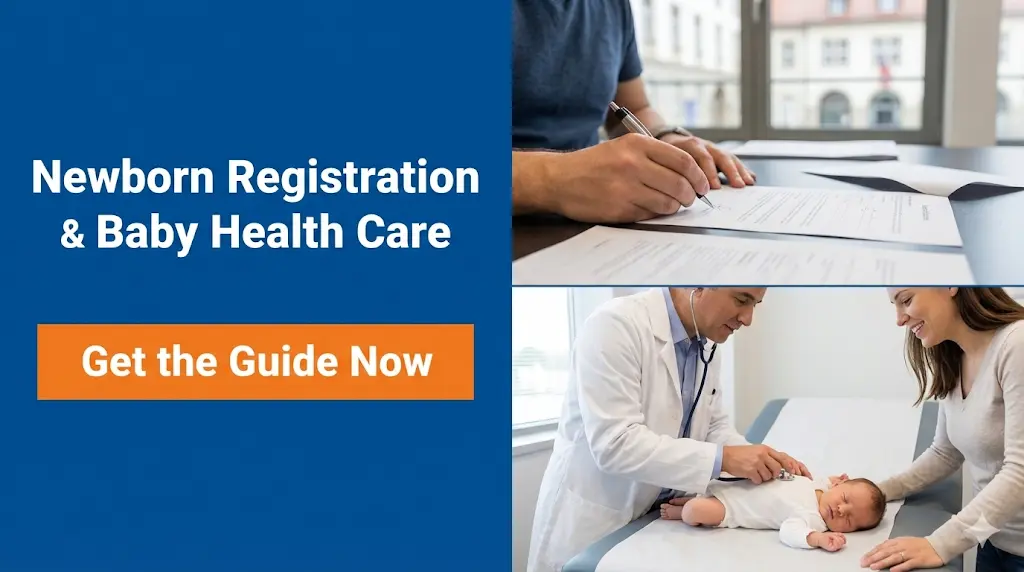
The absolute first administrative task you must complete is the formal declaration of birth, known in Italian as the Dichiarazione di Nascita or Denuncia di Nascita. This legal procedure officially establishes your child’s identity and existence within the Italian State. It is important to note that Italian law imposes strict, non-negotiable deadlines for this process.
You have two primary options for where and when to make this declaration:
The most convenient option is to register the birth directly at the hospital where your baby was born. You must do this within three days of the birth. Most public hospitals and private clinics have a dedicated administrative office, the Direzione Sanitaria, specifically for this purpose. The hospital administration will then electronically transmit the birth declaration to the civil registry of the municipality where the birth took place, or to your municipality of residence if you request it.
If you miss the three-day window at the hospital, or if you prefer to handle it yourself, your second option is to register the birth at the local town hall. You must visit the civil registry office, the Ufficio di Stato Civile, of the municipality (Comune) where the baby was born or where the mother officially resides. This must be completed within ten days of the birth. If you fail to register the birth within ten days, the registrar can still accept a late declaration, but they are legally obligated to report the delay to the local public prosecutor to investigate the reasons for the tardiness.
When making the declaration, you must bring the official certificate of birth assistance (Attestazione di Nascita) issued by the midwife or doctor who attended the delivery, along with the valid passports or Italian identity cards of the parents.
Your marital status significantly impacts this process. If the parents are legally married to each other, only one parent needs to be present to make the declaration. However, if the parents are unmarried, both parents must physically go to the registry office together to formally and legally recognize the child and establish joint maternity and paternity.
Securing a Tax Code for Your Newborn
Once the birth is officially recorded in the civil registry, the next crucial step is obtaining a Codice Fiscale (Tax Code) for your baby. In Italy, the Codice Fiscale is the master key to unlocking almost all public and private services. Without this alphanumeric code, your baby cannot be enrolled in the healthcare system, you cannot open a savings account for them, and you cannot apply for state family benefits.
In the vast majority of modern Italian municipalities, the process is streamlined. When the town hall registers the birth, their computer system automatically interfaces with the Italian Revenue Agency (Agenzia delle Entrate) to generate the baby’s Codice Fiscale. The municipality will usually provide you with a paper printout containing the code immediately.
If your municipality does not have this automated link, or if you encounter bureaucratic delays, you will need to manually request the code. To do this, one parent must visit the local office of the Agenzia delle Entrate. You will need to fill out the specific application form (Form AA4/8), present your own identification, and provide the newly issued birth certificate of your child.
Whether the code is generated automatically by the town hall or manually at the tax office, a physical plastic card containing the Codice Fiscale will subsequently be mailed to your registered home address. However, you do not need to wait for the physical card to arrive in the mail to proceed with the next steps; the paper printout with the alphanumeric sequence is completely sufficient for healthcare registration.
Enrolling Your Baby in the Public Healthcare System
With the birth certificate and the Codice Fiscale in hand, you are ready to enroll your child in the Servizio Sanitario Nazionale (SSN). Registration is mandatory and guarantees your child access to free medical care, hospital visits, and routine pediatric check-ups.
To register your baby, you must visit your local health authority office, known as the Azienda Sanitaria Locale (ASL). In many regions, you must book an appointment in advance through local regional health portals or digital queuing systems.
When you go to the ASL office, you will generally need to present the following documents:
- A valid identity document (passport) for the parent completing the registration.
- The parent’s valid Permesso di Soggiorno (Residence Permit) or the official postal receipt proving an application or renewal is in progress.
- The baby’s official birth certificate or a self-certification form (Autocertificazione) declaring the birth.
- The baby’s Codice Fiscale.
Once the ASL clerk processes the paperwork, your child will be officially active in the regional health database. The ASL will issue a temporary paper receipt confirming the registration. Shortly after, the Ministry of Finance will mail your child’s first official Italian Health Card, the Tessera Sanitaria, to your home address. This initial card for newborns is typically valid for one year. Prior to its expiration, you must renew it, after which a new card valid for six years will be issued. If you need a broader understanding of how this card functions for the whole family, you can refer to our guide on Obtaining the Italian Health Card (Tessera Sanitaria).
Choosing a Free Choice Pediatrician
The most important action you will take at the ASL office during your baby’s healthcare enrollment is selecting their doctor. The Italian public healthcare system assigns every child a dedicated doctor known as a Pediatra di Libera Scelta (Free Choice Pediatrician).
This pediatrician will serve as your child’s primary care physician from birth until they turn fourteen years old. (In cases of chronic illness or documented disability, the pediatric assignment can sometimes be extended up to the age of sixteen).
At the ASL office, the clerk will show you a list of pediatricians operating within your specific residential district. You are free to choose any doctor from this list, provided they have not reached their maximum patient limit. By law, a public pediatrician can have a maximum of 800 patients to ensure they have adequate time to provide quality care to each child.
It is highly advisable to do some preliminary research before your ASL visit. You can often find lists of local pediatricians on your regional health authority’s website. Look for a doctor whose clinic is geographically close to your home and has office hours that align with your family’s schedule. As an expat, you may specifically want to ask the ASL clerk if they know which pediatricians on the list speak English.
Your public pediatrician is responsible for all routine health evaluations, diagnosing and treating acute illnesses, prescribing medications, and writing official referrals for specialized care, such as pediatric dermatology or cardiology. If you are ever unhappy with the care your child is receiving, you have the right to return to the ASL office at any time and switch to a different pediatrician, provided the new doctor has space on their roster.
Mandatory and Recommended Vaccinations
Italy takes childhood immunizations incredibly seriously. Following a troubling drop in national vaccination rates, the Italian government passed the Lorenzin Law (Law 119/2017), which dramatically expanded the list of mandatory vaccines for children residing in the country. Understanding these mandates is crucial, as compliance is legally required to enroll your child in public or private educational services.
Currently, there are ten mandatory vaccinations for children aged zero to sixteen years old. If parents refuse to administer these mandatory vaccines without a valid, documented medical exemption, the child will be legally barred from attending nursery school (Asilo Nido) and preschool (Scuola dell’Infanzia) for children aged zero to six. For school-aged children (six to sixteen), unvaccinated students cannot be barred from attending compulsory education, but the parents will face significant financial fines ranging from 100 to 500 euros.
The ten mandatory vaccinations are grouped into combination shots to minimize the number of injections.
- The Hexavalent Vaccine: Protects against Polio, Diphtheria, Tetanus, Hepatitis B, Pertussis (Whooping Cough), and Haemophilus influenzae type b.
- The Quadrivalent Vaccine (MMRV): Protects against Measles, Mumps, Rubella, and Varicella (Chickenpox).
In addition to the mandatory vaccines, the Italian Ministry of Health strongly recommends several other vaccines, which are offered entirely free of charge to newborns. These include vaccines against Meningococcal B, Meningococcal C, Pneumococcal disease, and Rotavirus.
Italian Childhood Vaccination Schedule Overview
The following table provides a general overview of the vaccination timeline during a baby’s first year of life in Italy. Your pediatrician and the local vaccination center will provide you with an exact calendar tailored to your child.
| Baby’s Age | Mandatory Vaccinations | Recommended (Free) Vaccinations |
| 3 Months | Hexavalent (Dose 1) | Pneumococcal, Rotavirus, Meningococcal B |
| 4 Months | Rotavirus (Dose 2), Meningococcal B (Dose 2) | |
| 5 Months | Hexavalent (Dose 2) | Pneumococcal (Dose 2) |
| 6 Months | Meningococcal B (Dose 3) | |
| 11 Months | Hexavalent (Dose 3) | Pneumococcal (Dose 3) |
| 13-15 Months | MMRV (Dose 1) | Meningococcal C, Meningococcal B (Dose 4) |
Vaccinations are not administered by your pediatrician in their private office. Instead, the ASL will send you a formal letter in the mail assigning you an appointment date and time at your district’s dedicated public vaccination center (Centro Vaccinale).
Routine Pediatric Health Checks
Preventative care is the cornerstone of Italian pediatrics. Your Pediatra di Libera Scelta will schedule a series of routine health evaluations known as Bilanci di Salute. These check-ups are completely free of charge and are designed to monitor your baby’s physical, cognitive, and neurological development.
During the first year of life, you will typically visit the pediatrician when the baby is 1 month, 3 months, 6 months, 9 months, and 12 months old. During these visits, the doctor will weigh and measure your baby to track their progress on international growth percentile charts. They will perform a red reflex eye test to check for congenital vision issues, listen to the heart and lungs, and evaluate motor skills and social milestones.
Additionally, standard Italian pediatric protocol heavily emphasizes the early detection of developmental dysplasia of the hip. Sometime between the second and third month of life, your pediatrician will write a referral for your baby to undergo an Ecografia delle Anche (an ultrasound of the hips). This quick, painless procedure is routinely performed at a local hospital or diagnostic center to ensure the hip joints are forming correctly.
If your baby falls ill with a fever, a cough, or an ear infection, you will call your pediatrician to schedule a “sick visit” during their regular clinic hours. If your child becomes ill during the night, over the weekend, or on a public holiday when the pediatrician’s office is closed, you must utilize the regional Guardia Medica (Out-of-Hours Medical Service) or, in the case of a severe emergency, head directly to the Pronto Soccorso Pediatrico (Pediatric Emergency Room) at your local hospital.
Private Healthcare and Pharmacy Options
While the public SSN provides excellent, comprehensive care for newborns, a significant number of expatriate parents choose to supplement this care by utilizing the private healthcare sector.
The primary reasons expats turn to private pediatricians are language accessibility and convenience. Finding an English-speaking public pediatrician is a matter of luck depending on your district’s ASL roster. In contrast, you can easily research and hire a private pediatrician who trained in the US or UK and speaks flawless English. Private pediatricians generally offer longer consultation times, greater flexibility in scheduling urgent same-day appointments, and in some cases, the willingness to perform traditional house calls.
If you choose to use a private pediatrician, you must pay out-of-pocket for every consultation, though you can still maintain your public pediatrician for free vaccines and public specialist referrals. For a detailed exploration of managing private medical expenses and ensuring your family is covered, you can read our guide on Cost of Healthcare in Italy: What Expats Need to Know.
When your baby needs medication, understanding the Italian pharmacy system is vital. Italian pharmacies (Farmacie) are highly regulated. Over-the-counter medications for infants, such as paracetamol (Tachipirina) for fevers or specialized saline solutions for nasal congestion, are kept behind the counter. You must ask the pharmacist directly for these items. If your pediatrician prescribes an antibiotic or a steroid, they will issue a formal prescription (Ricetta) which you must present to the pharmacist. To familiarize yourself with the nuances of these interactions, be sure to review our overview on Finding and Using Pharmacies in Italy.
Immigration Citizenship and Passports
A common misconception among newly arrived expatriates is the belief that a baby born on Italian soil automatically acquires Italian citizenship. Italy operates under the legal principle of Jus Sanguinis (right of blood), rather than Jus Soli (right of the soil).
If neither parent holds Italian citizenship, the baby does not become Italian simply by virtue of being born in an Italian hospital. The newborn automatically inherits the citizenship of their parents.
Therefore, soon after the birth is registered at the Italian town hall, you must contact your home country’s embassy or consulate in Italy to formally report the birth abroad and apply for your baby’s first passport. Once your baby has their foreign passport, you must immediately update your Italian immigration status. The baby must be officially added to the parents’ Permesso di Soggiorno as a dependent minor. You will need to submit an application packet to the local Questura (Police Headquarters) to ensure your child is legally documented to reside in Italy. For broader context on managing dependent visas, you can refer to Family Reunification Italy: Bringing Your Spouse and Kids.
Financial Support for Expat Parents
Raising a child involves significant financial planning, and the Italian state offers robust financial subsidies to help families offset these costs. These benefits are not restricted solely to Italian citizens; expatriates living and working legally in Italy are also entitled to apply for state support.
The most significant financial benefit is the Assegno Unico e Universale per i Figli a Carico (Single and Universal Allowance for Dependent Children). This is a monthly cash payment provided by the national social security institute (INPS) to families for every dependent child from the seventh month of pregnancy until the child turns twenty-one.
To qualify as a foreigner, you generally must hold an EU long-term residence permit, a work permit valid for more than six months, or a research permit, and you must be a resident in Italy paying local taxes.
The amount of the monthly allowance is determined by the family’s financial situation, which is calculated using the ISEE (Equivalent Economic Situation Indicator) metric. Even if an expat family chooses not to submit an ISEE declaration, they are still legally entitled to receive the minimum baseline monthly payment for their newborn. You can apply for this benefit directly through the INPS digital portal or seek assistance from a local tax assistance center (CAF) to ensure the paperwork is filed correctly.
Conclusion
Registering your newborn and establishing their healthcare framework in Italy is a multi-step journey that requires patience, organization, and a basic understanding of local bureaucracy. However, the reward for navigating this administrative maze is profound: gaining access to a world-class pediatric healthcare system that prioritizes the deep well-being and developmental success of your child.
By adhering strictly to the legal deadlines for the birth declaration, securing the essential Codice Fiscale, and carefully selecting a dedicated public pediatrician, you create an ironclad safety net for your new baby. Embracing the mandatory vaccination schedules and routine health checks ensures that your child thrives in their new Mediterranean environment. While the process may seem foreign at first, the unmatched warmth and dedicated care provided by Italian medical professionals will quickly reassure you that Italy is a truly spectacular place to grow your family.
References
Primary sources official
- Ministero della Salute: The official Italian Ministry of Health portal detailing national pediatric health guidelines, the Lorenzin Law (Law 119/2017), and mandatory vaccination schedules for children. https://www.salute.gov.it/
- Agenzia delle Entrate: Official information regarding the automated generation of the Codice Fiscale for newborns and the issuance of the physical Tessera Sanitaria. https://www.agenziaentrate.gov.it/portale/newborns-health-insurance-card
Other helpful sources
- ECDC Vaccine Scheduler (Italy): Provides a clear, English-language breakdown of the precise ages and doses required for the Italian childhood immunization schedule. https://vaccine-schedule.ecdc.europa.eu/
Disclaimer
The information provided in this article is intended for general educational and informational purposes only and does not constitute official medical, legal, or immigration advice. Healthcare protocols, vaccination schedules, residency requirements, and financial subsidy laws in Italy are subject to frequent legislative updates. Always consult directly with a licensed Italian pediatrician, your local Azienda Sanitaria Locale (ASL), or a qualified immigration lawyer to verify current procedures and receive personalized advice tailored to your family’s specific medical and legal needs.