Alternative Therapies (Osteopathy, Chiropractic) in Italy
Discover how to access alternative therapies like osteopathy and chiropractic care in Italy. This comprehensive guide covers the legal regulations, average costs, private health insurance coverage, and practical tips for finding qualified, English-speaking holistic health practitioners abroad.
Disclosure: This post may contain affiliate links. We may earn a commission at no extra cost to you if you make a purchase through these links. Read full disclosure.
Introduction to Alternative Therapies in Italy
Italy is globally renowned for its exceptional public medical infrastructure, which consistently ranks among the top healthcare systems in the world for overall life expectancy and patient outcomes. While the traditional medical establishment in Italy is highly scientific and clinical, there has been a massive, undeniable cultural shift toward integrative and holistic medicine over the last two decades. Today, alternative therapies, specifically osteopathy and chiropractic care, are flourishing across the Italian peninsula.
Unlike standard physical therapy, which is deeply integrated into the state-sponsored medical system and frequently prescribed by orthopedic surgeons following an injury, osteopathy and chiropractic care have historically occupied a unique, independent space in the Italian healthcare market. For years, these disciplines operated in a legal gray area, utilized by millions of Italians but lacking formal recognition from the state. However, recent landmark legislation has dramatically transformed the landscape, officially elevating these practices to recognized healthcare professions.
This exhaustive guide is designed to completely demystify alternative therapies in Italy for the expatriate community. We will explore the cultural acceptance of holistic healing, delve into the specific legal frameworks that now govern osteopaths and chiropractors, and outline the key differences between the two disciplines. Furthermore, we will provide a detailed breakdown of expected costs, explain how private insurance interacts with these therapies, and offer highly actionable advice on finding trusted, English-speaking practitioners. By understanding how to access and utilize these services, you can ensure that your physical health is fully supported throughout your magnificent Italian journey.
The Cultural Shift Toward Holistic Health in Italy
To effectively navigate alternative therapies in Italy, it is helpful to understand the cultural context surrounding them. Historically, the Italian medical approach was heavily centralized around the family doctor and the hospital system. If you had back pain, you were prescribed anti-inflammatory medications or referred to a standard physiotherapist. Alternative medicine was often viewed with skepticism by the older, more traditional generations of medical professionals.
However, the modern Italian wellness landscape is vastly different. The cultural emphasis on longevity, preventative care, and the Mediterranean lifestyle naturally aligns with the core philosophies of holistic healing. Italians are increasingly seeking out treatments that address the root causes of their discomfort rather than merely masking the symptoms with pharmaceuticals.
This cultural shift is highly visible in major metropolitan hubs such as Milan, Rome, Turin, and Florence, where wellness clinics offering a blend of conventional medicine, nutritional counseling, and manual therapies are incredibly popular. Furthermore, the integration of these therapies into Italian sports culture has been a massive catalyst for public acceptance. Italy’s elite athletic organizations, including Serie A football clubs and national Olympic teams, employ full-time osteopaths and chiropractors to optimize player performance and accelerate injury recovery. This high-profile endorsement has trickled down to the general public, cementing these therapies as legitimate, highly effective forms of healthcare.
Understanding Osteopathy in the Italian Context
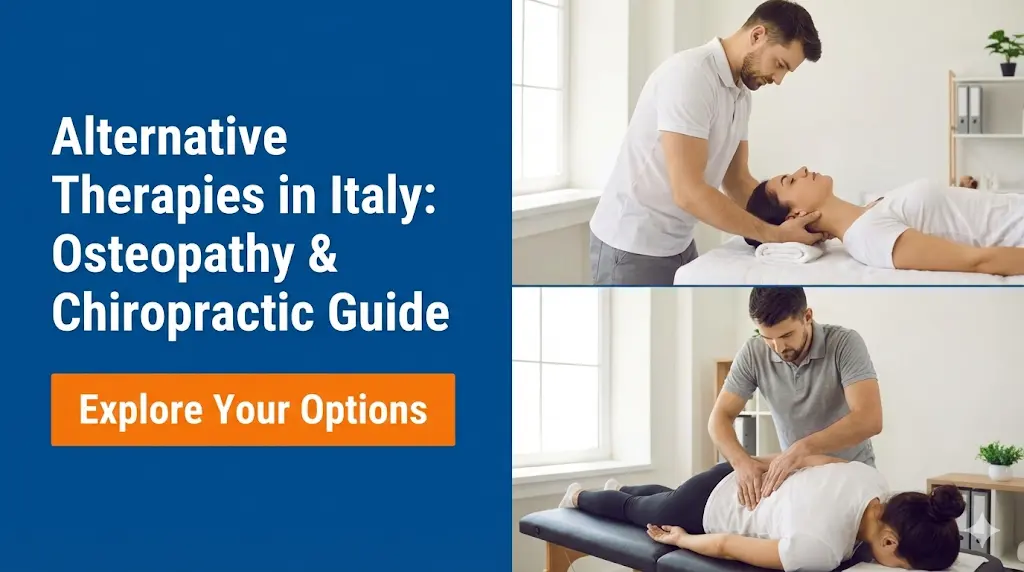
Osteopathy is one of the most widely utilized alternative therapies in Italy. Based on the principle that the well-being of an individual depends on their bones, muscles, ligaments, and connective tissue functioning smoothly together, osteopathy takes a whole-body approach to healing.
The Scope of Italian Osteopathy
Italian osteopaths utilize a wide array of hands-on techniques, including soft tissue stretching, deep tactile pressure, and mobilization or manipulation of joints. The goal is to remove physical blockages, enhance blood and nerve supply to tissues, and help the body’s own healing mechanisms.
In Italy, osteopathic treatment is typically divided into three main categories:
- Structural Osteopathy: Focuses on the musculoskeletal system, addressing back pain, neck tension, sciatica, and joint issues. This is the most common reason expats seek out treatment.
- Cranial Osteopathy: Involves very subtle, gentle manipulation of the cranial bones and the spine to influence the central nervous system. It is frequently used to treat chronic migraines, TMJ disorders, and high stress.
- Visceral Osteopathy: A specialized approach that focuses on the internal organs (viscera) and their connective tissues. Practitioners use gentle manual pressure to improve the mobility and function of organs, often treating digestive issues like irritable bowel syndrome or acid reflux.
The Phenomenon of Pediatric Osteopathy
One uniquely Italian trend that often surprises expatriates is the massive popularity of pediatric osteopathy. In Italy, it is incredibly common for parents to take their newborns and infants to an osteopath within the first few weeks of life. Pediatric osteopaths use exceptionally gentle cranial techniques to address physical traumas sustained during childbirth. They are frequently consulted to treat infant colic, severe acid reflux, sleep disturbances, and latching difficulties during breastfeeding. The practice is so mainstream that many modern Italian maternity wards now partner with osteopaths to offer immediate postnatal evaluations.
The Role of Chiropractic Care in Italy
While osteopathy takes a broad, full-body approach to soft tissue and joint mobilization, chiropractic care is intensely focused on the diagnosis, treatment, and prevention of mechanical disorders of the musculoskeletal system, with a highly specific emphasis on the spine and the nervous system.
The Chiropractic Philosophy
The fundamental premise of chiropractic care is that proper alignment of the body’s musculoskeletal structure, particularly the spinal column, enables the body to heal itself without surgery or medication. Chiropractors in Italy focus heavily on correcting spinal subluxations—misalignments of the vertebrae that interfere with nerve function. By applying precise, controlled force to specific joints (often resulting in a characteristic “popping” sound), chiropractors aim to restore mobility, alleviate severe pain, and improve the optimal function of the central nervous system.
The Expat Influence on Chiropractic Care
The history of chiropractic care in Italy has a distinct international flavor. For many decades, Italy did not have its own dedicated university programs for chiropractic degrees. Consequently, the vast majority of practicing chiropractors in Italy were either foreigners who had relocated to the country or Italians who had moved to the United States, the United Kingdom, or Australia to complete their rigorous Doctor of Chiropractic (DC) degrees before returning home.
This historical nuance is a massive advantage for English-speaking expatriates. Because so many chiropractors in Italy received their education in English-speaking countries, finding a practitioner who is entirely fluent in English and familiar with Anglo-American medical standards is significantly easier in the chiropractic field than in almost any other medical discipline in Italy.
Key Differences Between Osteopathy and Chiropractic
While both disciplines fall under the umbrella of manual therapy and treat similar conditions, their philosophies, diagnostic methods, and treatment techniques differ. Understanding these distinctions will help you choose the right therapy for your specific needs.
| Feature | Osteopathy | Chiropractic Care |
| Primary Focus | The entire body (muscles, joints, connective tissues, and organs). | The spine, nervous system, and joint alignment. |
| Core Philosophy | The body’s systems are interconnected; blood flow and soft tissue mobility are key to healing. | The nervous system controls the body; spinal alignment allows the nervous system to function optimally. |
| Treatment Techniques | Soft tissue massage, gentle stretching, visceral manipulation, and joint mobilization. | High-velocity, low-amplitude spinal adjustments, joint manipulation, and posture correction. |
| Session Length | Typically longer (45 to 60 minutes) involving extensive soft tissue work. | Often shorter (15 to 30 minutes) focused on specific, targeted spinal adjustments. |
| Common Uses | Chronic muscle tension, digestive issues, pediatric colic, holistic pain management. | Acute back pain, herniated discs, severe neck pain, sciatica, and whiplash. |
Navigating the Legal Landscape and Professional Registries
For expatriates accustomed to highly regulated medical environments, knowing whether an alternative therapy is legally recognized and safe is a paramount concern. The legal status of these professions in Italy has undergone a massive, positive evolution in recent years.
The Legalization of the Professions
For decades, osteopaths and chiropractors operated without a defined state profile. However, this changed significantly with the passage of Law 3/2018, commonly referred to as the Lorenzin Law. This monumental piece of legislation officially established both osteopathy and chiropractic as recognized healthcare professions within the Italian Republic.
Following this law, the Italian government and the Ministry of Health have been working to establish formal university degree requirements (Laurea) for these disciplines, bringing them under the strict educational umbrella of the state. This legal recognition means that practitioners are held to rigorous standards of hygiene, continuous medical education, and professional ethics, ensuring a highly safe environment for patients.
How to Verify Practitioner Credentials
Because the transition into full state university regulation is still actively unfolding, it is vital that you verify the credentials of any practitioner you choose to visit. To ensure you are receiving care from a highly educated, legitimate professional, you should consult the major national associations.
For osteopathy, look for practitioners who are registered with the Registro degli Osteopati d’Italia (ROI). The ROI is the largest and most prestigious national association. To be admitted to the ROI, an osteopath must have completed a rigorous, multi-year educational program that meets European standards.
For chiropractic care, the gold standard is the Associazione Italiana Chiropratici (AIC). Founded in 1974, the AIC only admits members who have graduated from internationally accredited chiropractic colleges (typically programs lasting five to seven years). By choosing a practitioner affiliated with the ROI or the AIC, you guarantee that your health is in the hands of a thoroughly vetted professional.
Public Healthcare versus Private Practice
When managing your healthcare abroad, understanding how services integrate with the national system is crucial. To get a broad overview of your public health rights, you should review our comprehensive guide on Healthcare in Italy: An Expats’ Guide.
The Servizio Sanitario Nazionale Limitations
Despite their recent legal recognition as healthcare professions, osteopathy and chiropractic care are not currently included in the Essential Levels of Care (LEA) provided by the Italian public healthcare system, the Servizio Sanitario Nazionale (SSN).
This means that you generally cannot visit your public family doctor, get a prescription for osteopathy, and receive the treatment for free or for a standard co-payment at a public hospital. In the public system, if you have severe back pain, your doctor will refer you to a public orthopedist or a public physiotherapist (fisioterapista).
The Private Market Experience
Because these therapies are excluded from the public system, osteopathy and chiropractic care in Italy exist almost entirely within the private healthcare sector.
Operating in the private sector offers distinct advantages for expatriates. Firstly, there are virtually no waiting lists. If you wake up with a severe crick in your neck or an acute sciatica flare-up, you can usually secure an appointment with a private chiropractor or osteopath within twenty-four to forty-eight hours. Secondly, private clinics are heavily incentivized to provide exceptional customer service, luxurious clinic environments, and longer, more personalized consultation times than you might experience in a crowded public physiotherapy ward.
Costs Insurance and Tax Deductions
Because you will be accessing these therapies privately, understanding the financial implications and how to manage the costs is an essential part of your expat budgeting strategy.
Average Session Costs
The cost of alternative therapies in Italy varies based on the geographical region, the specific expertise of the practitioner, and the length of the session. Generally, northern cities like Milan and Bologna are more expensive than southern regions.
- Initial Consultation: Your first visit, which includes a comprehensive medical history review and physical examination, will typically cost between €80 and €150.
- Follow-up Sessions: Standard treatment sessions generally range from €60 to €100 per visit.
Private Health Insurance Coverage
If you are relying on an international health insurance policy, your coverage for alternative therapies will depend entirely on your specific provider and the tier of your plan. Many premium expat insurance policies include specific wellness modules or outpatient benefits that offer an annual allowance for recognized complementary medicine, including osteopathy and chiropractic care.
To claim reimbursement, you must typically pay the practitioner out-of-pocket, request a formal medical invoice (fattura), and submit the claim through your insurance portal. Some insurers may require a referral letter from a general practitioner stating that the manual therapy is medically necessary before they will authorize the reimbursement. If you are currently evaluating your insurance options, exploring our guide on Choosing Private Health Insurance Plans in Italy can help you identify policies with robust holistic coverage.
Italian Tax Deductions for Medical Expenses
If you are an official tax resident of Italy and file an annual Italian tax return (Dichiarazione dei Redditi), you may be eligible to deduct 19% of your medical expenses, provided they exceed a small baseline threshold.
Because osteopathy and chiropractic are now recognized health professions, treatments provided by registered professionals are eligible for this valuable tax deduction. However, Italian tax law is incredibly strict regarding the payment method. To claim the 19% deduction, you must pay for your session using a “traceable” payment method, such as a credit card, debit card (Bancomat), or bank transfer. If you pay the practitioner in cash, you legally forfeit the right to deduct the expense on your taxes. Furthermore, you must ensure the practitioner issues a formal electronic invoice (fattura) that clearly displays your Italian tax code (Codice Fiscale).
What to Expect During Your First Appointment
Visiting an alternative therapy clinic in Italy for the first time is a highly professional and comprehensive experience. Whether you choose an osteopath or a chiropractor, the initial consultation follows a rigorous clinical structure.
The Anamnesis (Medical History)
The appointment will begin with a detailed conversation known as the anamnesis. The practitioner will ask extensive questions about your current symptoms, the exact nature and location of your pain, your previous medical history, past surgeries, and your daily lifestyle habits. They will want to know if your job requires you to sit at a desk for eight hours a day or if you engage in heavy physical labor.
The Physical Examination
Following the conversation, you will undergo a physical assessment. You will typically be asked to undress down to your underwear, so it is advisable to wear comfortable, modest undergarments or athletic shorts. The practitioner will observe your standing posture, the alignment of your spine, and your gait. They will perform a series of orthopedic and neurological tests, asking you to bend, twist, and resist pressure to isolate the source of the dysfunction. If you have recent X-rays or MRI scans of your spine or joints, you should absolutely bring them to this first appointment, as chiropractors in particular rely heavily on diagnostic imaging.
The Treatment and Follow Up
Once a diagnosis is reached, the practitioner will explain their findings and propose a treatment plan. In many cases, the first manual treatment will be performed during this initial visit. The practitioner will use their hands to manipulate joints, stretch soft tissues, or adjust the spine. Following the treatment, they may provide you with specific ergonomic advice, prescribe stretching exercises to perform at home, and schedule a series of follow-up appointments to monitor your progress.
Finding Qualified English Speaking Practitioners
When dealing with physical pain and complex medical histories, clear and precise communication is non-negotiable. Trying to explain the difference between a dull, throbbing ache and a sharp, shooting pain in a language you have not fully mastered can be deeply frustrating and potentially lead to inaccurate treatment.
Finding an English-speaking practitioner in Italy is the best way to ensure your comfort and safety. To locate vetted professionals, you can utilize several strategies:
- Professional Registries: Visit the websites of the ROI (osteopathy) or the AIC (chiropractic). Many of these databases allow you to filter practitioners by city, and some indicate languages spoken.
- Expat Community Forums: Social media groups dedicated to expats in your specific Italian city are goldmines for medical recommendations. Fellow expats are always eager to share the names of trusted, bilingual manual therapists they have personally used.
- International Clinics: Major cities host comprehensive international medical centers designed specifically for the foreign community. These clinics often house multidisciplinary teams, including English-speaking osteopaths and chiropractors, under one roof. For a broader directory of these facilities, consult Where to Find English-Speaking Doctors and Clinics.
Integrating Alternative Therapies with Conventional Medicine
One of the most encouraging aspects of the modern Italian healthcare system is the growing collaboration between conventional medical doctors and holistic practitioners. You do not have to choose one system over the other; the most effective approach to health is often integrative.
If you are suffering from chronic pain, it is highly advisable to inform your public family doctor about your decision to pursue alternative therapies. Your general practitioner can rule out any severe underlying pathologies (such as fractures, infections, or inflammatory diseases) through standard blood tests and diagnostic imaging before you begin manual manipulation.
Furthermore, many progressive Italian doctors now actively recommend a cycle of osteopathy or chiropractic care as a first-line, non-invasive defense against mechanical back pain before resorting to heavy painkillers or surgical consultations. By maintaining open communication with your primary care physician, you create a cohesive, comprehensive healthcare team dedicated to your long-term wellness. If you need assistance establishing this primary relationship, reading about Registering with an Italian Family Doctor (Medico di Base) is your essential first step.
Conclusion
Embracing the Italian lifestyle involves more than just adapting to new culinary routines and navigating ancient city streets; it requires a proactive approach to maintaining your physical vitality in a new environment. Alternative therapies such as osteopathy and chiropractic care offer powerful, holistic solutions for managing pain, reducing the physical stress of relocation, and optimizing your overall well-being.
The Italian medical landscape has evolved beautifully to accommodate these disciplines, establishing rigorous legal frameworks and professional registries that guarantee a high standard of safety and expertise. By understanding the distinct philosophies of each practice, knowing how to leverage private insurance and tax deductions, and prioritizing clear communication by seeking out English-speaking professionals, you can seamlessly integrate alternative medicine into your expatriate life. Do not let chronic pain or physical discomfort hinder your experience abroad. Empower yourself with these holistic resources, and ensure that you have the health, mobility, and energy to fully enjoy every magnificent aspect of your life in Italy.
References
Primary sources (official)
- Ministero della Salute: The official Italian Ministry of Health portal detailing the legislative recognition of healthcare professions, including the frameworks established by Law 3/2018 (Lorenzin Law). https://www.salute.gov.it/
- Agenzia delle Entrate: Official tax guidelines providing instructions on how to claim the 19% medical expense deduction for recognized health professions and the requirement for traceable payments. https://www.agenziaentrate.gov.it/
Other helpful sources
- Registro degli Osteopati d’Italia (ROI): The primary national registry and professional association for osteopaths in Italy, offering resources on educational standards and a practitioner search directory. https://www.registro-osteopati-italia.com/
- Associazione Italiana Chiropratici (AIC): The leading national association representing qualified Doctors of Chiropractic in Italy, providing patient resources and verification of internationally accredited degrees. https://www.chiropratica.it/
Disclaimer
The information provided in this article is intended for general educational and informational purposes only and does not constitute official medical, legal, or financial advice. Healthcare legislation, professional licensing requirements, and tax deduction laws in Italy are subject to frequent changes. Always consult directly with a licensed Italian medical doctor (Medico di Base) before beginning any new physical therapy or alternative medicine regimen to ensure it is safe and appropriate for your specific health conditions. For inquiries regarding tax deductions, consult a certified Italian accountant (Commercialista).