Using the EHIC Card in Italy for EU Citizens
Traveling or relocating to Italy as an EU citizen provides the comfort of mutual healthcare agreements. This guide explains how to effectively use your European Health Insurance Card for medical emergencies, prescriptions, and necessary treatments across the Italian peninsula.
Disclosure: This post may contain affiliate links. We may earn a commission at no extra cost to you if you make a purchase through these links. Read full disclosure.
Introduction to Using the EHIC Card in Italy for EU Citizens
Italy operates a highly efficient, regionally managed public healthcare system known as the Servizio Sanitario Nazionale. If you are an EU citizen traveling to Italy for a holiday, a short-term study program, or the initial stages of a permanent relocation, your European Health Insurance Card grants you access to this robust network. However, simply carrying the card in your wallet is only half the battle.
Knowing exactly where it is accepted, understanding the difference between public and private medical facilities, and being aware of the Italian co-payment system are crucial elements of your healthcare toolkit. In this comprehensive guide, we will explore the precise mechanics of using your European Health Insurance Card in Italy, ensuring that you are fully prepared for any medical situation that may arise during your Mediterranean adventure.

Understanding the European Health Insurance Card
The European Health Insurance Card, frequently abbreviated as the EHIC, is a free card that gives you access to medically necessary, state-provided healthcare during a temporary stay in any of the twenty-seven EU countries, plus Iceland, Liechtenstein, Norway, and Switzerland. It is issued by your national health insurance provider in your home country.
The fundamental principle behind the EHIC is mutual cooperation. It ensures that if you fall ill or suffer an injury while temporarily visiting another member state, you will receive healthcare under the exact same conditions and at the exact same cost as people insured in that specific country. In Italy, this means you are treated precisely as an Italian citizen enrolled in the public healthcare system would be treated for that specific medical issue.
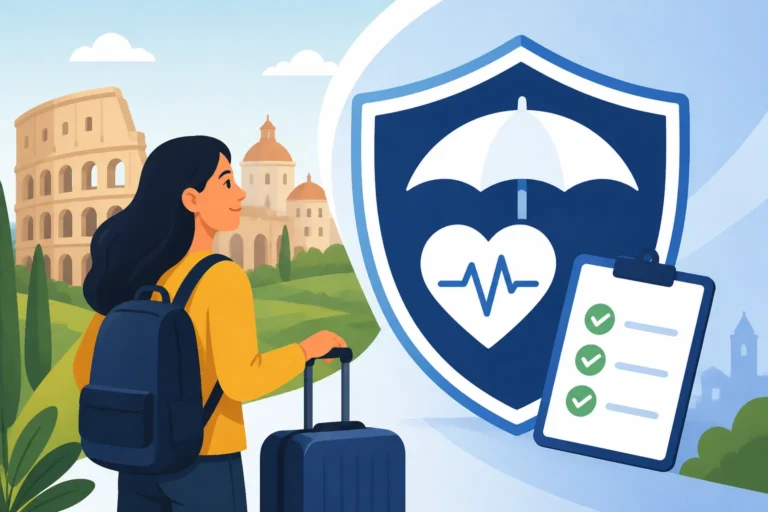
It is paramount to understand what the EHIC is not. The EHIC is absolutely not a substitute for comprehensive travel insurance. It does not cover private healthcare costs, nor does it cover auxiliary travel expenses such as flight cancellations, lost baggage, or the costs of mountain rescue operations in the Italian Alps. Furthermore, the EHIC will not cover your costs if you are traveling to Italy explicitly for the purpose of obtaining medical treatment. Its design is strictly to cover unplanned, medically necessary care so that you can continue your stay without being forced to return home prematurely for treatment.
How the Italian Public Healthcare System Works
To use your EHIC effectively, you must understand the basic structure of the Italian healthcare system. Italy provides universal healthcare through the Servizio Sanitario Nazionale. The system is funded by national and regional taxes, making primary care, emergency services, and hospital admissions heavily subsidized or entirely free at the point of use.
While the central government in Rome sets the overarching national health standards, the actual delivery of healthcare is managed at the regional level by local health authorities known as the Azienda Sanitaria Locale. Because of this regional management, you may notice slight administrative differences or varying co-payment amounts depending on whether you are in Lombardy, Tuscany, or Sicily.
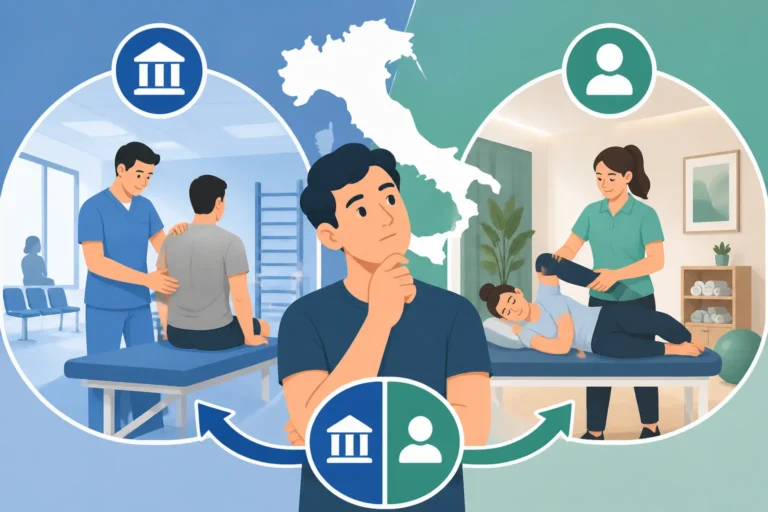
The Italian system is broadly divided into public facilities and private facilities. Public hospitals and clinics are directly integrated into the Servizio Sanitario Nazionale. Private clinics operate independently for profit. Your EHIC is only valid in public hospitals, public clinics, and specific private facilities that have a formalized agreement with the national health system, known as “strutture convenzionate.” If you walk into a purely private clinic, your EHIC will be rejected, and you will be responsible for the full market rate of the consultation and any subsequent treatments. To better understand these distinctions, you may want to review the Differences between Public and Private Healthcare in Italy.
What the EHIC Covers in Italy
When you present your valid EHIC at an appropriate Italian medical facility, it covers a wide array of medically necessary treatments. The definition of “medically necessary” is determined by the attending Italian healthcare provider, based on your medical condition and the expected length of your stay in Italy.
Emergency Medical Care
The most critical function of the EHIC is providing access to emergency medical care. If you are involved in a traffic accident, suffer a heart attack, break a bone, or experience a severe allergic reaction, your EHIC ensures you receive immediate, state-of-the-art care in an Italian public hospital without facing astronomical medical bills.
Routine and Unplanned Illnesses
The card also covers non-life-threatening but urgent illnesses that arise during your trip. If you develop a severe case of bronchitis, a painful ear infection, or a severe gastrointestinal virus, the EHIC covers your consultation with a public doctor and the necessary diagnostic tests to treat the illness.
Pre Existing Conditions and Maternity Care
A highly beneficial aspect of the EHIC is its coverage of pre-existing medical conditions. If you have asthma, diabetes, or a heart condition and require medical attention for these issues while in Italy, the EHIC covers the necessary treatment. Furthermore, routine maternity care is covered. If you unexpectedly go into labor while on holiday in Italy, the public hospital will provide full maternity and delivery services under the EHIC scheme.
What the EHIC Does Not Cover
Understanding the limitations of your European Health Insurance Card is just as important as knowing its benefits. Relying solely on the EHIC without supplemental travel insurance can leave you financially vulnerable in specific scenarios.
Private Medical Services
As emphasized, the EHIC is not valid in the private healthcare sector outside the strutture convenzionate. If you choose to visit an English-speaking private doctor in Rome or Milan for the sake of convenience or shorter wait times, you must pay out of pocket.
Medical Repatriation
If you suffer a severe injury or illness that requires you to be flown back to your home country via a specialized medical flight or air ambulance, the EHIC will not cover a single cent of this cost. Medical repatriation can cost tens of thousands of euros. Only a comprehensive private travel insurance policy will cover this catastrophic expense.
Planned Medical Tourism
If your primary motivation for traveling to Italy is to undergo a specific surgery, consult with an Italian specialist for a long-term condition, or give birth, the EHIC cannot be used. Planned medical treatments abroad require a completely different administrative process and specific authorization forms from your home country’s health provider.
Step by Step Guide to Using Your Card in an Italian Hospital
Navigating an Italian hospital can be a daunting experience, particularly when dealing with a medical crisis and a potential language barrier. If you find yourself in need of urgent care, you will be heading to the Pronto Soccorso, which translates to the Emergency Room. For a deeper dive into this specific topic, you can read about Emergency Medical Services in Italy: 112 and Hospitals.
The Triage Process
When you arrive at the Pronto Soccorso, you will not be seen on a first-come, first-served basis. Italy utilizes a strict triage system to prioritize patients based on the severity of their medical condition. Upon arrival, a triage nurse will assess your vitals and symptoms and assign you a color code:
- Red Code: Absolute emergency, immediate life-threatening danger. You will be seen instantly by the medical team.
- Orange or Yellow Code: Urgent condition with a risk of deterioration. You will be seen quickly, usually within an hour.
- Green Code: Minor urgency. Your condition is stable but requires medical attention. You may wait several hours.
- White Code: Non-urgent condition. This indicates that your issue is not a true emergency and should ideally be handled by a general practitioner. If you are assigned a white code, you could wait for eight hours or more, and you may be charged a specific co-payment for utilizing emergency resources for a non-emergency issue.
Presenting Your Documentation
At the triage desk or the hospital registration counter, you must immediately present your physical European Health Insurance Card and your passport or national identity card. The administrative staff will register your details in the hospital’s computer system. It is vital to present the card upfront; if you wait until after your treatment, you may be mistakenly billed as a private, uninsured patient.
Accessing a General Practitioner and Out of Hours Care
If you are experiencing a medical issue that requires a doctor’s attention but is not severe enough for the Pronto Soccorso, your pathway to care depends on your specific location and the time of day.
The Guardia Medica
For tourists and non-resident EU citizens, the most reliable public resource for non-emergency care is the Guardia Medica, also known as Continuità Assistenziale. This is an out-of-hours state medical service that operates during the night, on weekends, and on public holidays when standard clinics are closed. The doctors at the Guardia Medica can assess your symptoms, provide basic treatments, and issue official prescriptions.
During the peak summer months, many popular coastal and mountain tourist destinations set up a specific Guardia Medica Turistica. These clinics are explicitly designed to handle the influx of summer visitors and operate during standard daytime hours. When visiting a Guardia Medica, you simply present your EHIC and your ID. The consultation is generally free of charge for EHIC holders, though some regions may impose a small administrative fee.
Visiting a Medico di Base
If you are visiting Italy for an extended period, you might attempt to see a Medico di Base, which is the Italian equivalent of a General Practitioner. However, public general practitioners in Italy maintain a strict roster of registered resident patients. They are not generally obligated to see tourists or temporary visitors on a walk-in basis. While some doctors may agree to see you as an “occasional patient” (paziente occasionale) if you present your EHIC, they have the right to charge a set fee for the visit, which you can later attempt to claim back from your home country’s health insurance provider.
Navigating Italian Pharmacies and Prescriptions
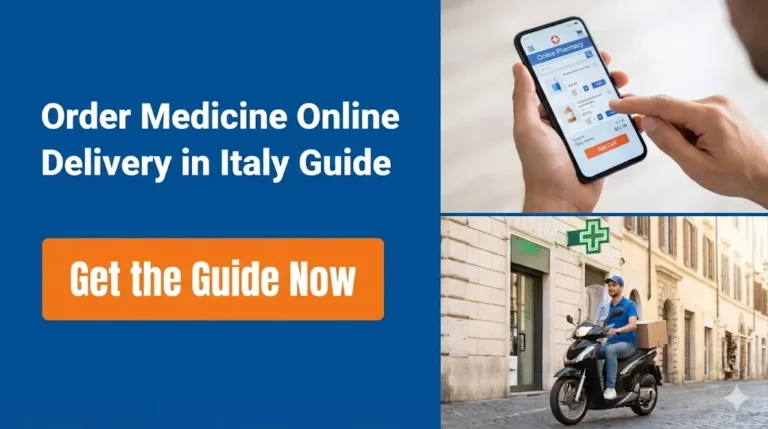
Italian pharmacies, identifiable by a large, illuminated green cross, are a central pillar of the healthcare system. Pharmacists in Italy are highly trained clinical professionals who can offer medical advice for minor ailments. For an extensive look at how these establishments operate, you can explore Finding and Using Pharmacies in Italy.
If an Italian public doctor or the Guardia Medica determines that you need medication, they will issue a prescription, known as a ricetta. In the public system, this prescription allows you to access medications at heavily subsidized state prices.
To use your EHIC at the pharmacy, you must hand the pharmacist both the official prescription and your European Health Insurance Card. The pharmacist will process the prescription through the state system. Depending on the classification of the medication, you may receive it completely free of charge, or you may be required to pay a small co-payment known as the “ticket.” It is important to note that over-the-counter medications, such as standard painkillers or cold medicines, are not subsidized by the state and must be paid for out of pocket at the full retail price, regardless of whether you have an EHIC.
Understanding the Ticket System for Co Payments
A common misconception among travelers is that the EHIC guarantees entirely free healthcare. As stated earlier, the card entitles you to healthcare under the exact same conditions as an Italian citizen. In Italy, citizens are required to contribute to the cost of certain medical services through a co-payment system known as the “ticket.”
Because you are treated as a local, you are subject to these same co-payments. The ticket applies to various services, including:
- Specialist medical consultations.
- Diagnostic imaging, such as X-rays, MRI scans, and ultrasounds.
- Laboratory blood tests.
- Certain classes of prescription medications.
- Non-urgent visits to the emergency room (the White Code mentioned earlier).
The cost of the ticket varies by region but is generally quite affordable, often ranging from 15 to 40 euros depending on the complexity of the service or the diagnostic test. You cannot claim a refund for the ticket from the Italian government, as it is a mandatory patient contribution. However, you should keep all your receipts, as you may be able to claim the cost back from your home country’s national health system or your private travel insurance policy upon your return.
Comparing EHIC Coverage and Private Travel Insurance
To fully grasp the necessity of traveling with both an EHIC and private travel insurance, it is helpful to compare what each provides. The following table outlines typical coverage scenarios.
| Scenario | European Health Insurance Card (EHIC) | Private Travel Medical Insurance |
| Emergency Room Visit (Public Hospital) | Covered | Covered |
| Emergency Surgery (Public Hospital) | Covered | Covered |
| Consultation at a Private Clinic | Not Covered | Usually Covered (Subject to policy limits) |
| Prescription Medication (Public Ricetta) | Subsidized (Ticket co-pay may apply) | Often reimburses the out-of-pocket co-pay |
| Medical Repatriation Flight | Not Covered | Covered |
| Mountain Rescue / Helicopter Evacuation | Rarely Covered (Subject to regional laws) | Covered |
| Lost Luggage containing Medication | Not Covered | Covered |
Managing Chronic Illnesses and Pre Existing Conditions
One of the most powerful features of the EHIC is that it facilitates safe travel for individuals living with chronic health conditions. If you require ongoing, vital medical treatment—such as kidney dialysis, oxygen therapy, or specific chemotherapy maintenance—you can receive these treatments in Italy under the EHIC scheme.
However, you cannot simply arrive in Italy and expect these complex, resource-intensive treatments to be available immediately on demand. You must arrange your care well in advance of your trip. You or your medical provider must contact a public Italian hospital or an accredited specialized clinic in your destination city several weeks or months before your arrival to book the specific equipment and medical staff. When you arrive for your pre-booked sessions, you will present your EHIC, and the treatments will be provided under the standard state conditions.
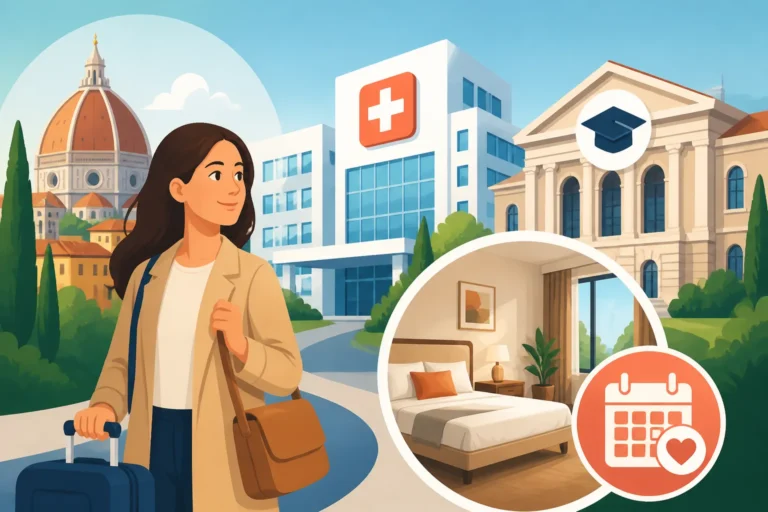
Transitioning from Tourist to Resident
The European Health Insurance Card is explicitly designed for temporary stays. Generally, a temporary stay is considered to be a holiday, a business trip, or a short period of study, typically lasting up to ninety days.
If you decide to relocate to Italy permanently, or if you take up formal employment within the country, your status changes. Once you establish official residency in an Italian municipality or begin paying Italian social security contributions through employment, you are no longer considered a temporary visitor. At this point, you must formally register with the Servizio Sanitario Nazionale as a resident.
Upon registering as a resident, you will be issued an Italian health card, known as the Tessera Sanitaria. This card will replace your home country’s EHIC for your day-to-day healthcare needs within Italy. Your home country will then likely issue you a new EHIC specifically for your travels outside of Italy, based on your new Italian residency status.
Common Challenges and How to Overcome Them
While the EHIC system is a marvel of European integration, it is not immune to bureaucratic hiccups. Being aware of common challenges can help you navigate them smoothly.
Lost or Stolen Cards
If you lose your EHIC or it is stolen while you are in Italy, do not panic. You must immediately contact your national health insurance provider in your home country. They can issue a Provisional Replacement Certificate. This document is a temporary, paper-based equivalent of the EHIC that can be faxed or emailed directly to you or the Italian hospital treating you. It provides the exact same coverage as the physical plastic card.
Hospitals Refusing the EHIC
It is extremely rare for an Italian public hospital to refuse a valid EHIC. However, a common point of friction occurs when tourists accidentally visit a private clinic assuming it is a public hospital. Always verify that the facility is part of the Servizio Sanitario Nazionale or is an officially accredited “struttura convenzionata.” Furthermore, if a receptionist at a public facility is unfamiliar with the card (which is unlikely but possible in very remote rural areas), politely but firmly insist that it is an official European Union document granting access to public care, and ask to speak to the hospital’s administrative director if necessary.
Language Barriers in Medical Settings
The most significant challenge for many expats and tourists is the language barrier. While many doctors in large Italian cities speak some English, nursing staff, administrative clerks, and emergency responders may only speak Italian. In a medical emergency, communication is critical. It is highly advisable to travel with a translation application on your smartphone or a small phrasebook dedicated to medical terms. If you are admitted to a hospital, you have the right to ask if an English-speaking doctor is available or if the hospital has access to a cultural mediator or translation service, which many large regional hospitals now employ.
Conclusion
The European Health Insurance Card is an indispensable tool for any EU citizen traveling to or temporarily residing in Italy. It represents a profound commitment to mutual care and public health across European borders, ensuring that a sudden illness or unexpected injury does not result in devastating financial consequences. By understanding how the Italian Servizio Sanitario Nazionale operates, recognizing the difference between public and private care, and being prepared for the standard ticket co-payments, you can navigate the Italian medical landscape with confidence.
However, true peace of mind comes from comprehensive preparation. The EHIC is a powerful safety net, but it is not a catch-all solution. Pairing your card with robust private travel insurance ensures that you are protected against the extreme costs of medical repatriation and private sector care. With your documents in order and a clear understanding of the protocols outlined in this guide, you can fully immerse yourself in the beauty, culture, and magnificent lifestyle of Italy, knowing that your health and well-being are securely protected.
References
Primary sources official
- European Commission: Official portal detailing the rules, rights, and application processes for the European Health Insurance Card across all member states. https://ec.europa.eu/social/main.jsp?catId=559
- Ministero della Salute: The Italian Ministry of Health’s official website providing guidelines on the Servizio Sanitario Nazionale, emergency care access, and the rights of foreign EU citizens in Italy. https://www.salute.gov.it/
Other helpful sources
- Expatica Italy: A comprehensive resource hub for expatriates offering detailed guides on navigating the Italian healthcare system, finding doctors, and understanding medical bureaucracy. https://www.expatica.com/it/healthcare/
- The Local Italy: An English-language news and resource network providing practical advice, updates on Italian healthcare policies, and guides to living and traveling in Italy. https://www.thelocal.it/
Disclaimer
The information provided in this article is intended for general educational and informational purposes only and does not constitute official medical, legal, or financial advice. Healthcare regulations, the cost of regional ticket co-payments, and the operational procedures of the Italian public healthcare system are subject to frequent changes based on regional legislation. Always consult directly with the official health authorities or your national health insurance provider to confirm your coverage and rights before traveling. In the event of a severe, life-threatening medical emergency, please dial the universal European emergency number 112 immediately or proceed to the nearest public hospital emergency room.