Regional Healthcare Differences in Italy: North vs South
Navigating the Italian healthcare system often feels like trying to read a map where the roads change depending on which region you are currently standing in. I remember the sheer confusion of moving from the streamlined efficiency of Milan to a sun-drenched town in Puglia and realizing that the administrative "rules" I had fought so hard to learn simply didn’t apply anymore. This guide solves the mystery of the North-South healthcare divide, ensuring you know exactly what to expect regardless of your Italian zip code.
Disclosure: This post may contain affiliate links. We may earn a commission at no extra cost to you if you make a purchase through these links. Read full disclosure.
Understanding the Decentralized Nature of the SSN
To understand why a hospital in Bolzano feels lightyears away from one in Reggio Calabria, you have to understand "Regionalismo." While the Servizio Sanitario Nazionale (SSN) is a national entity, the 2001 constitutional reform handed the keys of the kingdom over to the individual regions. This means that while the central government sets the "Livelli Essenziali di Assistenza" (Essential Levels of Care), it is the regions that decide how to spend the money, manage the hospitals, and organize the digital booking systems.
This decentralization is the root cause of the specific frustrations foreigners face. When you are How to Register for Italian Healthcare (SSN) as a Foreigner, the paperwork you submit in Lombardy might be rejected in Sicily because the regional circulars interpret national law differently. It is not just about the quality of the doctors—who are generally excellent nationwide—but about the administrative infrastructure and funding that supports them.
The Impact of Regional Autonomy on Patient Experience
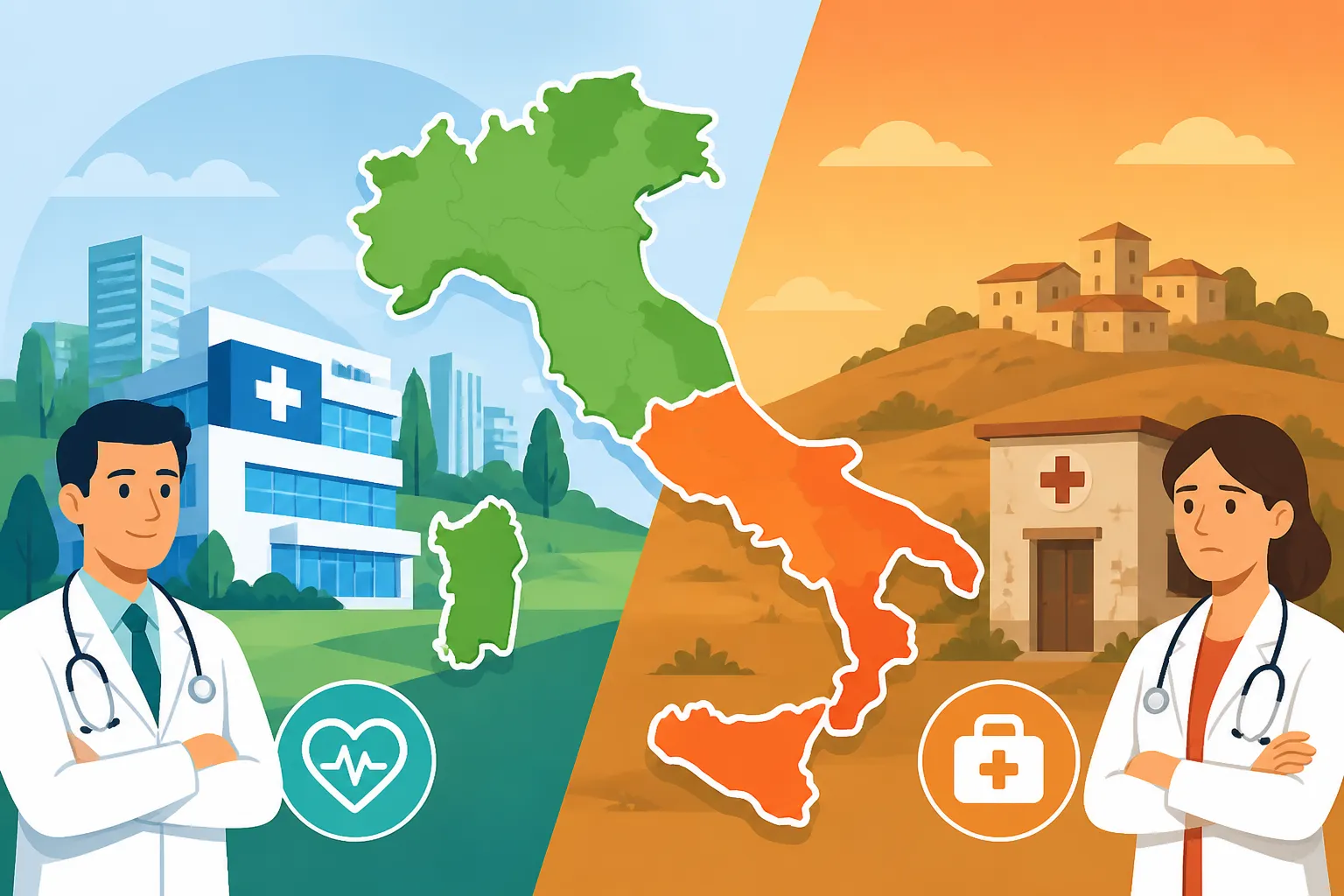
Regional autonomy means that every region has its own health department and its own budget. In the North, regions like Emilia-Romagna or Piedmont often have surplus budgets or "in-balance" accounts, which translates to newer medical equipment, more administrative staff, and better-maintained facilities. When you walk into a Northern clinic, you are more likely to find digitized check-in kiosks and integrated online portals.
In contrast, many Southern regions have historically struggled with "disavanzo" (budget deficits). This often leads to "piani di rientro," which are essentially austerity measures for healthcare. For an expat, this might manifest as longer waits for a simple blood test or a lack of English-speaking administrative staff. I’ve spent hours in waiting rooms in the South where the "system" was a paper notebook and a very stressed nurse, a far cry from the sleek apps I used in the North.
Funding Disparities and the LEA Grid
The Italian Ministry of Health uses a tool called the "Griglia LEA" to monitor whether regions are actually providing the essential services they are supposed to. Year after year, the results show a clear geographic trend. Northern and Central regions consistently score high, meeting or exceeding national standards for preventive care, hospital services, and outpatient wait times.
Southern regions often struggle to hit these benchmarks. This doesn’t mean the care is "bad" in a clinical sense, but it does mean the system is under more strain. As someone living there, you might find that while the Emergency Medical Services in Italy: 112 and Hospitals are reliable everywhere, the elective surgeries or specialized screenings are much harder to access in the South without significant delays.
Healthcare Excellence in Northern Italy
If you are living in Milan, Turin, or Bologna, you are arguably living near some of the best healthcare facilities in Europe. The North has successfully fostered a hybrid system where public and private care often coexist in the same buildings. This is the region where the "CUP" (Centro Unico di Prenotazione) booking system actually tends to work via a smartphone app, and where your Obtaining the Italian Health Card (Tessera Sanitaria) feels like a gateway to a modern service.
The efficiency here is driven by competition and higher regional tax revenue. Northern residents generally pay more into the system via regional taxes, and in return, they expect a level of service that rivals private clinics in other countries. For an expat, this makes the transition much easier, as the bureaucratic friction is significantly lower than in the Mezzogiorno.
Lombardy and Veneto as Efficiency Powerhouses
Lombardy, in particular, is famous for its "eccellenze"—specialized centers for oncology, cardiology, and neurology. Hospitals like San Raffaele in Milan are world-renowned. In these regions, the wait times for specialist visits are generally the lowest in the country. If you need a dermatologist or an MRI, the system usually finds you a slot within a reasonable timeframe, provided you are willing to travel within the province.
Veneto also stands out for its community-based care. Their model focuses heavily on keeping people out of major hospitals by providing robust local clinics. For an expat, this means that Finding and Using Pharmacies in Italy or visiting a local "Consultorio" is often a pleasant, organized experience. The digital integration is so advanced in these areas that your prescriptions are often sent directly to your health card, requiring zero paper.
Wait Times and Specialist Access in the North
Despite the efficiency, the North is not perfect. Because the quality is so high, many people from the South travel North for treatment—a phenomenon known as "migrazione sanitaria." This influx can sometimes clog the system, leading to surprising wait times even in Milan. However, the North manages this by having a very high density of private clinics.
Many expats in Northern Italy choose to supplement their SSN coverage with international plans. If you are looking for Getting Health Insurance in Italy: Public and Private Options, you will find that Northern doctors are very accustomed to working with providers like Cigna Global. Having Cigna Global allows you to bypass the public wait times entirely and head straight to the top-tier private wings of famous hospitals, where the environment feels more like a five-star hotel than a medical facility.
Navigating the Challenges of Southern Healthcare
The South of Italy offers an incredible quality of life, but you must be realistic about the healthcare hurdles. The infrastructure in regions like Calabria, Sicily, and parts of Campania is often older. You might find that the Finding Doctors and Hospitals in Italy process is less about searching a digital database and more about "word of mouth" and building personal relationships with your neighbors and local pharmacist.
I’ve found that in the South, the "human" element often replaces the "system" element. While a digital portal might fail, a local doctor who knows your family will go to the ends of the earth to help you. However, for a newcomer who hasn't yet built that social capital, the initial experience can be overwhelming and frustratingly slow.
The Phenomenon of Health Migration
One of the most striking differences you will notice is how many people from the South travel to the North for major surgeries or specialized cancer treatments. This "migrazione sanitaria" is a vote of no confidence by the locals in their own regional administration. For an expat, this is a vital piece of information. If you are dealing with a routine flu or a minor injury, the local Southern hospital is perfectly fine.
However, for complex, chronic, or life-threatening issues, the disparity becomes a serious consideration. This is why many expats living in the South insist on having robust private insurance. Options like SafetyWing can be a lifesaver for digital nomads or those on shorter stays in the South, providing a safety net that allows for evacuation or treatment in a higher-standard facility if the local infrastructure isn't equipped for your specific needs. SafetyWing is particularly useful because it understands the transient nature of modern expat life in these coastal regions.
Building Relationships with Local Pharmacists
In the South, your pharmacist is often more accessible and sometimes more knowledgeable about the local "shortcuts" than your family doctor. When you are Finding and Using Pharmacies in Italy, you’ll find that in smaller Southern towns, the pharmacist acts as a triage officer. They can tell you which specialist in the next town over is actually good, or which hospital has a functioning X-ray machine this week.
Because of the systemic delays, Southerners have become experts at navigating the "unofficial" channels. This isn't necessarily about corruption, but about "arrangiarsi"—the art of making do. As an expat, learning to talk to your pharmacist and being "simpatica" will get you much further than waving a printout of the national healthcare charter.
Comparative Overview of Regional Healthcare
| Feature | Northern Italy (e.g., Lombardy, Emilia-Romagna) | Southern Italy (e.g., Sicily, Calabria) |
|---|---|---|
| Digital Integration | High: Most services available via apps and online portals. | Low: Heavily reliant on paper and in-person visits. |
| Wait Times | Moderate: Generally meets national targets for specialists. | High: Can be significantly longer for non-urgent care. |
| Facility Quality | Modern: High investment in new equipment and aesthetics. | Mixed: Excellent doctors but often aging infrastructure. |
| English Proficiency | Higher: Especially in urban centers and private wings. | Lower: Usually requires basic Italian or a translator. |
| Private Options | Plentiful: High density of private clinics and hospitals. | Limited: Available in big cities but scarce in rural areas. |
| Bureaucracy | Standardized: Procedures are generally predictable. | Variable: Heavily dependent on the specific clerk you meet. |
Practical Implications for Expats and Residents
When deciding where to hang your hat in Italy, healthcare should be high on your list of "pros and cons." If you have a chronic condition that requires regular specialist visits or high-tech monitoring, the North is objectively a safer and less stressful bet. However, if you are healthy and looking for the "Dolce Vita," the South is manageable as long as you have a backup plan.
You should also be aware that your Cost of Healthcare in Italy: What Expats Need to Know might vary. While the "ticket" (co-payment) for procedures is somewhat standardized, the availability of "free" or subsidized care through the SSN can be restricted by regional quotas. For instance, some regions might run out of funding for certain types of physical therapy by October, meaning you’d have to pay the full private price until the new year.
Choosing Where to Live Based on Medical Needs
For retirees or those with families, the "North-South divide" isn't just a talking point—it’s a lifestyle factor. In the North, you can reasonably expect to manage your health through the public system with occasional private top-ups. In the South, I strongly advise expats to treat the public system as an emergency-only resource and rely on private care for everything else.
This is where having a plan with Cigna Global becomes essential. Cigna Global provides that "gold-standard" access that allows you to live in a beautiful, remote Sicilian village without worrying that you are three hours away from a quality cardiologist. They offer international portability, which is great if you decide the Southern bureaucracy is too much and you want to move back North after a year.
Registering for the SSN Across Regional Borders
One of the biggest headaches I’ve faced is moving between regions. When you move from Rome (Lazio) to Florence (Tuscany), you have to "unregister" from your old ASL (Azienda Sanitaria Locale) and "register" with the new one. This is not an automatic process. You will need to bring your residency documents, your old health card, and plenty of patience.
The Cost of Healthcare in Italy: What Expats Need to Know during this transition period can be tricky. Technically, you are covered for emergencies nationwide, but for a simple prescription refill, your new region might not recognize your old doctor's orders until the paperwork clears. Always keep a one-month supply of essential medications during a move.
Tips for Managing Your Healthcare Journey
Regardless of where you live, you must become your own advocate. The Italian system rewards those who are persistent and organized. Keep a physical folder of all your medical records—every blood test, every X-ray, every specialist's note. In Italy, "the computer says no" is a common phrase, and having a paper trail is your best defense.
Make sure you understand the role of your Registering with an Italian Family Doctor (Medico di Base). This person is the gatekeeper. In the North, they might email you referrals; in the South, you will likely need to visit their office and wait your turn. Your relationship with this doctor is the single most important factor in your healthcare success.
Leveraging the Fascicolo Sanitario Elettronico
Most regions now offer the "Fascicolo Sanitario Elettronico" (Electronic Health Record). In theory, this should allow any doctor in Italy to see your history. In reality, a doctor in Naples might not be able to access a file created in Milan. However, it is still worth setting up. You will need a SPID (Sistema Pubblico di Identità Digitale) to access it.
Using this tool can save you from carrying heaps of paper to every appointment. It also allows you to see your lab results as soon as they are ready, often days before your doctor sees them. In the North, this system is quite robust; in the South, it is gaining ground, but you should still bring your paper copies just in case.
Why Private Insurance is the Expat "Secret Weapon"
I cannot stress enough how much a private policy changes your life in Italy. When you use Public vs Private Health Insurance in Italy, you aren't just paying for a shorter wait; you are paying for peace of mind. SafetyWing is a fantastic, cost-effective option for younger expats and nomads who want coverage for accidents and unexpected illnesses without the heavy price tag of a full permanent policy.
For long-term residents, especially those in the South or with complex health histories, Cigna Global is the hero of the story. They provide the kind of comprehensive, English-language support that the regional Italian offices simply cannot. When the local bureaucracy tells you there are no appointments left for six months, Cigna Global is the tool that lets you say "fine" and book an appointment for tomorrow morning at a private facility of your choice. It turns a potential medical crisis into a simple afternoon chore.
Final Thoughts for the Italian Expat
Living in Italy is a dream, but the regional healthcare differences are a reality you must respect. Don't let the horror stories scare you—Italy’s doctors are among the most dedicated and skilled in the world. The challenge is almost always the "system," not the medicine. By choosing your region wisely, maintaining your paperwork, and backing yourself up with a solid private policy, you can enjoy all the pasta and sunshine Italy has to offer with total confidence in your health.
If you find yourself overwhelmed, remember that every expat has been there. We have all stood in the wrong line at the ASL, and we have all been confused by a regional decree. Take a breath, find a good Italian Pharmacies: Prescription, Over-the-Counter, and Supplies nearby, and start building those local connections. Italy is a country of people, not just protocols, and once you learn to navigate both, you'll find it's a wonderful place to call home.
Disclaimer
This guide is for informational purposes only and does not constitute professional medical or legal advice. Healthcare regulations and regional policies in Italy can change frequently. Always consult with the official Ministry of Health or your local ASL for the most current information regarding your specific residency and health status. Information regarding insurance providers like Cigna Global and SafetyWing is based on general market knowledge and should be verified directly with the providers to ensure it meets your individual needs.