GP Referral Process for Specialized Care in Italy
Navigating the Italian healthcare system requires understanding the pivotal role of your general practitioner. This comprehensive guide explains the GP referral process for specialized care in Italy, covering electronic prescriptions, priority codes, booking methods, and tips for expatriates managing specialist visits.
Disclosure: This post may contain affiliate links. We may earn a commission at no extra cost to you if you make a purchase through these links. Read full disclosure.
Introduction
In the Italian healthcare framework, specialized care, diagnostic imaging, and blood tests are heavily subsidized by the state to ensure universal access for all citizens and legal residents. To prevent the system from becoming overwhelmed by unnecessary appointments and self-diagnoses, the SSN requires patients to follow a specific, structured pathway. The central figure in this pathway is the Medico di Medicina Generale (General Practitioner), commonly referred to by Italians as the Medico di Base or family doctor.
Without a formal, electronically generated referral from your Medico di Base, accessing state-subsidized specialized care in a public hospital or an affiliated public clinic is administratively impossible. The referral serves as both a medical justification for the specialist visit and an administrative voucher that allows the state to track and fund your care. While this process may initially seem overly bureaucratic or slow to expatriates accustomed to direct-access models, it is designed to prioritize patients based on genuine medical urgency and to efficiently allocate limited public health resources. This exhaustive guide will demystify the entire GP referral process, from interpreting the codes on your prescription to navigating the regional booking systems, ensuring you receive the specialized care you need while living in Italy.
The Role of the General Practitioner in Italy
To initiate the referral process, you must first be enrolled in the SSN and assigned to a primary care physician. If you have recently relocated and have not yet completed this crucial administrative step, you will need to prioritize Registering with an Italian Family Doctor (Medico di Base) before you can seek non-emergency specialized care.
Your Medico di Base is your primary health advocate. When you experience a health issue that goes beyond a common cold or a minor ailment, you must schedule a consultation with them. During this visit, it is essential to communicate your symptoms clearly and thoroughly. Italian general practitioners are highly trained diagnosticians whose primary goal is to evaluate your condition and determine the most appropriate clinical pathway.
If your GP decides that your condition requires the expertise of a specialist—for example, an endocrinologist for a thyroid issue or an orthopedic surgeon for joint pain—they will generate the necessary referral. It is important to note that you cannot simply demand a referral for a specific specialist or an MRI; the GP must agree that the consultation or diagnostic test is medically justified. This collaborative, evidence-based approach protects patients from unnecessary radiation from imaging and protects the public system from frivolous spending.
Transitioning from the Ricetta Rossa to the Ricetta Elettronica
Historically, a medical referral in Italy was written on a specific type of standardized red-bordered paper, famously known as the Ricetta Rossa (Red Recipe/Prescription). Today, as part of Italy’s massive digitalization of the public administration and healthcare sector, the physical red paper has been almost entirely phased out.
It has been replaced by the Ricetta Elettronica (Electronic Prescription), sometimes referred to as the Ricetta Dematerializzata. When your GP issues a referral, they input your data, the required specialist visit, and your diagnostic query directly into a secure regional healthcare database.
Instead of a red slip, the doctor will print out a standard white piece of paper known as the Promemoria (Reminder). This sheet contains a crucial alphanumeric barcode and a specific sequence of numbers known as the NRE (Numero di Ricetta Elettronica). This NRE, combined with your Codice Fiscale (Italian Tax Code), is the digital key you will use to book your appointment. In many forward-thinking regions like Lombardy or Emilia-Romagna, you might not even receive a piece of paper; the NRE can be sent directly to your smartphone via SMS, email, or your region’s dedicated health application.
Deciphering the Information on Your Referral
Understanding what is written on your promemoria is vital for managing your expectations regarding wait times and costs. An Italian electronic referral contains several standardized fields:
- Dati dell’Assistito: Your personal information, including your name, date of birth, and Codice Fiscale.
- Esenzioni: This box indicates if you hold any exemption codes. If you have a recognized chronic illness, a low income, or are pregnant, specific codes will be printed here, exempting you from paying the standard co-pay for the visit.
- Prestazione Richiesta: The exact name of the specialist visit or diagnostic test requested (e.g., Prima Visita Cardiologica or Ecografia Addome Completo).
- Quesito Diagnostico: The clinical reason or suspected diagnosis prompting the referral.
- Classe di Priorità: The priority code. This is arguably the most important element on the referral, as it dictates how quickly the healthcare system is legally mandated to provide you with an appointment.
Priority Codes and Mandated Wait Times
To manage waiting lists fairly, the Italian Ministry of Health uses a national triage system for referrals. When your GP generates the Ricetta Elettronica, they must assign a specific urgency class based on the severity of your symptoms and the potential risk to your health.
Understanding these priority codes helps you navigate the booking process. The following table outlines the four primary priority codes, their meaning, and the legally mandated maximum wait times associated with them.
| Priority Code | Urgency Level | Description and Clinical Context | Maximum Mandated Wait Time |
| U (Urgente) | Urgent | For potentially life-threatening conditions or rapid deterioration requiring immediate assessment. | Within 72 hours. |
| B (Breve) | Short | For conditions requiring swift diagnosis to prevent serious progression, but not an immediate emergency. | Within 10 days. |
| D (Differibile) | Deferrable | For suspected conditions that are painful or limiting, but where a delay does not pose an immediate risk. | 30 days for visits; 60 days for diagnostic tests. |
| P (Programmata) | Planned | For routine check-ups, follow-ups, and monitoring of known, stable chronic conditions. | Within 120 days. |
Note: While these wait times are legally mandated by the National Plan for Managing Waiting Lists, the reality is that wait times can vary drastically depending on your region, the specific specialty, and the current strain on local hospital resources.
How to Book Your Specialist Appointment
Once you have your electronic referral and your NRE, you must book the appointment. You do not call the specialist directly. Instead, you must use the regional booking system known as the CUP (Centro Unico di Prenotazione). The CUP is a centralized database that manages the schedules of all public hospitals and affiliated public clinics within your province or region.
There are several methods available to interface with the CUP and secure your appointment.
Telephone Booking
Every region has a dedicated, toll-free CUP telephone number. You can call this number, speak to an operator, and provide your NRE and Codice Fiscale. The operator will search the database and offer you the earliest available dates at various public facilities in your area. This method can be challenging if you are not fluent in Italian, as CUP operators rarely speak English.
Booking at the Pharmacy
For many expatriates, the local pharmacy is the easiest and most stress-free way to book a specialist visit. Most Italian pharmacies are connected directly to the CUP network. You can walk into your neighborhood Farmacia, hand the pharmacist your promemoria and your plastic health card (Tessera Sanitaria), and they will perform the search for you. The pharmacist will read out the available dates, book the appointment, and print an official confirmation slip for you, usually free of charge or for a nominal fee of one or two euros.
Online Portals and Applications
Italy has made massive strides in digital healthcare. Most regions have their own online health portal, known as the Fascicolo Sanitario Elettronico (Electronic Health Record). By logging in with your SPID (Public Digital Identity System) or CIE (Electronic Identity Card), you can access the online CUP. You simply type in your NRE, and the system will present a list of available hospitals, dates, and times, allowing you to book the appointment directly from your computer or smartphone.
In-Person at the ASL or Hospital
You can also book by physically visiting the CUP desk located inside your local Azienda Sanitaria Locale (ASL) office or any major public hospital. You will take a ticket, wait for your number to be called, and book the appointment with the clerk at the desk.
Understanding the Ticket System and Costs
The Italian public healthcare system is not entirely free at the point of use for specialized care; rather, it is heavily subsidized through a co-payment system known as the Ticket.
When you book a specialist visit or a diagnostic scan through the SSN using your GP’s referral, you are required to pay this Ticket before the appointment takes place. The cost of the Ticket is regulated at the regional level and varies depending on the complexity of the examination. For a standard specialist visit (e.g., a consultation with an orthopedist or a dermatologist), the Ticket generally ranges between 15 and 40 euros. For complex diagnostic imaging, such as an MRI or a CT scan, the Ticket may be slightly higher, usually capping around 60 to 70 euros. To contextualize these expenses within your overall budget, it is helpful to review the Cost of Healthcare in Italy: What Expats Need to Know.
You typically pay the Ticket at the hospital’s automatic payment machines (Punto Giallo) or the cashier’s desk (Cassa) on the day of your appointment. In many regions, you can also pay it online through the digital health portal or at the pharmacy when you book.
Managing the Language Barrier During the Process
One of the most significant anxieties for expatriates navigating the GP referral process is the language barrier. While you might be fortunate enough to have a Medico di Base who speaks some English, you cannot guarantee that the CUP telephone operator, the hospital reception staff, or the ultimate specialist will be bilingual.
When interacting with the public system, it is highly advisable to prepare in advance. If you are booking by phone, having a bilingual friend assist you can prevent misunderstandings regarding dates and hospital locations. When attending the actual specialist appointment, complex medical terminology will be used. If your Italian is not at an advanced level, bringing a trusted friend to translate, or even hiring a professional, is a wise investment to ensure you fully understand your diagnosis and treatment plan. For more strategies on overcoming this hurdle, read our guide on Using Medical Translation and Interpretation Services.
Public vs Private Specialized Care The Alternative Pathway
The primary disadvantage of the SSN referral process is the waiting list. If you are assigned a ‘P’ (Programmata) or ‘D’ (Differibile) priority code, you may find that the earliest available appointment for a public dermatologist or cardiologist is several months away.
For expatriates who require faster access or who specifically want an English-speaking doctor, the private healthcare sector offers an alternative. You do not need a GP referral to see a private specialist in Italy. You can simply research a private clinic, call them directly, and book an appointment for the following week. However, you will bear the full cost of the private visit out of pocket, which typically ranges from 100 to 250 euros, unless you have supplemental private health insurance.
The Intramoenia System Bridging the Gap
Italy also offers a unique hybrid solution known as Libera Professione Intramuraria, commonly referred to as Intramoenia. Under this system, top-tier specialists employed by the public hospital are legally permitted to see patients privately outside of their regular working hours, utilizing the public hospital’s facilities.
If you have a GP referral but the public waiting list is too long, you can opt to book the appointment as an Intramoenia patient. You will pay a private fee (often slightly lower than a pure private clinic), but you bypass the waiting list, you get to choose the specific specialist who will treat you, and the revenue supports the public hospital. You still call the CUP or the specific hospital to book this, simply specifying that you want an Intramoenia appointment.
Your Legal Rights Regarding Excessive Wait Times
The Italian government recognizes that excessive waiting lists for specialized care undermine the right to health. A specific legislative decree (Decreto Legislativo 124/1998) outlines patient protections if the public system fails to meet the mandated wait times associated with your priority code.
If you are assigned a ‘B’ (Breve) code, which mandates a visit within 10 days, but the CUP informs you that the earliest appointment is in 45 days, you have a legal recourse. You can formally request to receive the required medical visit through the Intramoenia (private within public) system, but you will only be required to pay the standard public Ticket price, rather than the full private fee. The regional health authority must absorb the cost difference. While enforcing this right requires navigating additional hospital bureaucracy and submitting specific forms to the hospital’s Medical Direction (Direzione Sanitaria), it is a powerful tool for patients who require timely intervention.
Managing Referrals for Chronic Conditions
If you suffer from a chronic illness, such as diabetes, asthma, or a cardiovascular condition, you will require frequent, recurring specialist visits. To streamline this process and reduce the administrative burden on both you and your GP, the Italian system utilizes a Piano Terapeutico (Therapeutic Plan).
Once you have had your initial specialist visit, the specialist will draft this plan. It outlines your diagnosis, the required ongoing medications, and the necessary schedule for follow-up visits. With a registered Piano Terapeutico, you often receive a specific exemption code (Esenzione per Patologia) that waives the Ticket fee for all visits and tests related directly to your chronic condition. Furthermore, your GP can issue ongoing referrals much more easily based on the specialist’s formalized plan, ensuring your continuity of care remains uninterrupted.
Step-by-Step Summary of the Referral Process
To ensure you navigate the system successfully, here is a chronological summary of the GP referral process in Italy:
- Assess Your Need: Identify a medical issue requiring specialized attention that goes beyond basic primary care.
- Consult Your GP: Schedule an appointment with your Medico di Base and clearly communicate your symptoms.
- Receive the NRE: Obtain the electronic referral (Promemoria) featuring the NRE barcode and verify the assigned priority code.
- Book via CUP: Use the online portal, a local pharmacy, or the telephone to interface with the regional booking center and secure an appointment date.
- Pay the Ticket: Pay the required regional co-pay online, at the pharmacy, or at the hospital’s automatic machines prior to the visit.
- Attend the Appointment: Bring your health card, the printed referral, the payment receipt, and any previous relevant medical records to the specialist.
Conclusion
The GP referral process for specialized care in Italy is a structured system designed to prioritize medical necessity and provide high-quality, subsidized care to the entire population. While the transition from direct-access private models to this gatekeeper public model can involve a learning curve for expatriates, understanding the mechanics of the Ricetta Elettronica, the priority codes, and the CUP booking system empowers you to manage your health effectively.
By building a strong communicative relationship with your Medico di Base, leveraging the convenience of booking through local pharmacies, and knowing your rights regarding wait times and the Intramoenia alternative, you can navigate the SSN with confidence. The Italian healthcare system is globally respected for its clinical excellence; mastering its administrative pathways ensures you have full access to that world-class care.
References
Primary sources (official)
- Ministero della Salute: The official portal for the Italian Ministry of Health, detailing the National Plan for Managing Waiting Lists (PNGLA) and priority coding regulations. https://www.salute.gov.it/
- Fascicolo Sanitario Elettronico (FSE): The national gateway portal explaining the implementation and use of the Electronic Health Record and digital prescriptions across Italian regions. https://www.fascicolosanitario.gov.it/
Other helpful sources
- Cittadinanzattiva: A leading Italian civic participation non-profit organization that provides extensive resources on patient rights, wait time legislation (D.Lgs 124/1998), and navigating hospital bureaucracy. https://www.cittadinanzattiva.it/
Disclaimer
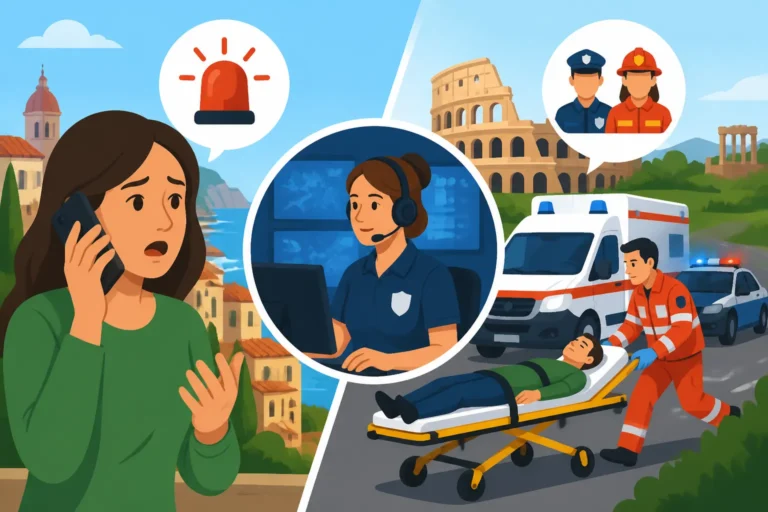
The information provided in this article is intended for general educational and informational purposes only and does not constitute official medical, diagnostic, or administrative advice. Healthcare regulations, legally mandated waiting times, and Ticket costs in Italy are subject to change based on frequent national legislative updates and vary significantly by regional health authority. Always consult directly with your licensed Medico di Base or local Azienda Sanitaria Locale (ASL) for personalized medical guidance and current administrative procedures. In the event of a severe, life-threatening medical emergency, do not wait for a GP referral; please dial the universal European emergency number 112 immediately.