How to Choose a Medico di Base (Family Doctor) in Italy
The bureaucratic carousel in Italy often feels like a rite of passage that nobody actually asked for, especially when you are just trying to find a doctor while nursing a fever. I remember standing in a fluorescent-lit hallway in Milan, clutching a folder of documents, only to be told I was in the wrong building entirely. This guide settles that confusion, walking you through the exact steps to secure your Medico di Base without the typical administrative headache.
Disclosure: This post may contain affiliate links. We may earn a commission at no extra cost to you if you make a purchase through these links. Read full disclosure.
Understanding the Role of the Medico di Base
The Medico di Base, often referred to as your family doctor or primary care physician, is the absolute foundation of the Italian healthcare experience. You cannot simply walk into a hospital for a routine blood test or a specialist consultation without going through this specific individual first. In the Italian Servizio Sanitario Nazionale (SSN), the family doctor acts as the gatekeeper. They provide the necessary paperwork, known as an impegnativa, which allows you to access subsidized tests and specialist visits. Without this "red prescription" (though many are now electronic), you will find yourself paying full market price for every medical need.
Beyond just writing prescriptions, the Medico di Base is responsible for your long-term health monitoring. They maintain your medical history, manage chronic conditions, and provide basic vaccinations. Unlike some other countries where you might see whichever doctor is available at a large clinic, in Italy, you are assigned to a specific individual. This creates a more personal relationship over time, but it also means that choosing the right person from the start is vital for your comfort and clarity as an expat. For a broader look at the system, you should read our Healthcare in Italy: An Expats' Guide to understand how this role fits into the larger medical landscape.
The distinction between a public family doctor and a private physician is also worth noting. While the Medico di Base is free at the point of service for those registered with the SSN, many expats also choose to maintain Public vs Private Health Insurance in Italy to bypass the potential waiting times associated with the public system. However, even if you have premium private coverage, having a registered family doctor is still essential for administrative tasks, such as obtaining a sick note for your employer (certificato di malattia), which only a doctor recognized by the national system can officially provide.
The Administrative Prelude: Prerequisites for Registration
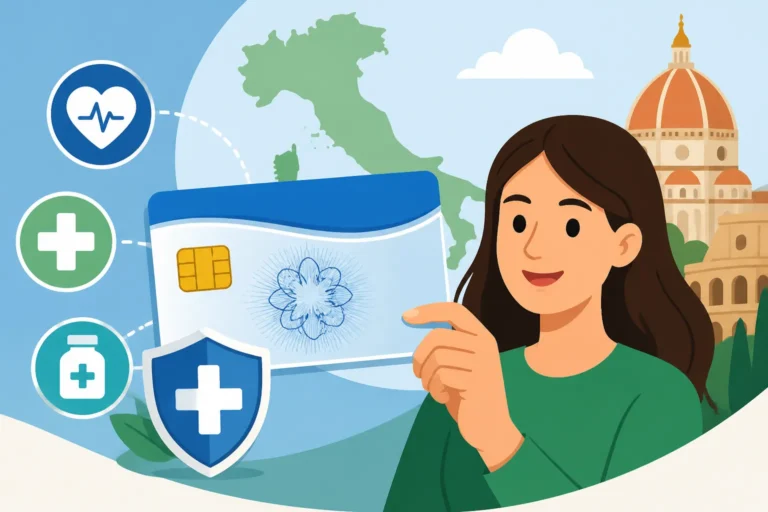
Before you can even look at a list of available doctors, you must have your "paperwork house" in order. Italy is a land of prerequisites, and the Medico di Base is no exception. First and foremost, you need a Codice Fiscale. This is your Italian tax code, and it is the key that unlocks almost every door in the country. You cannot register for health services, open a bank account, or sign a rental contract without it. If you haven't secured yours yet, you will need to prioritize Obtaining the Italian Health Card (Tessera Sanitaria) as these two processes are deeply intertwined.
The second major hurdle is your residency status. For non-EU citizens, this means having a valid Permesso di Soggiorno (residency permit) or at least the receipt (the "cedolino") proving that you have applied for it. EU citizens have it slightly easier but still need to prove they are living in Italy legally, often through an employment contract or proof of sufficient funds. The system requires you to be registered at the Anagrafe (civil registry) of your local Comune. Without this official residency, the ASL (Azienda Sanitaria Locale) may only allow you to register for a temporary health card, which usually needs to be renewed every six months to a year.
Finally, you must be formally enrolled in the SSN. This involves paying a fee if you are an elective resident or a student, or it might be free if you are an employee paying social security contributions. Once you have your proof of payment and your residency documents, you will visit the ASL office to receive your Tessera Sanitaria. It is during this very visit that you will be asked to name your chosen Medico di Base. If you haven't researched a name beforehand, the clerk will often just pick the one with the shortest queue or the closest office, which isn't always the best strategy for an expat. For a deeper dive into these requirements, see How to Register for Italian Healthcare (SSN) as a Foreigner.
How to Research and Find the Right Doctor
Finding a doctor who resonates with your needs—and ideally speaks your language—requires a bit of detective work before you show up at the ASL. Every region in Italy manages its own health portal, such as Fascicolo Sanitario in Lombardia or Lazio Escape in Rome. These portals usually have a "Cerca Medico" (Search Doctor) function. Here, you can filter by neighborhood, gender, and sometimes even the languages they speak. However, these lists are often out of date, so a listed "English speaker" might actually only remember a few phrases from high school.
Word of mouth remains the most reliable tool in the expat arsenal. Join local Facebook groups or neighborhood forums and ask for recommendations specifically for a Medico di Base. Italians also use websites like MioDottore, where you can read reviews and see pictures of the clinic. When you find a name that looks promising, check their "massimale." This is the maximum number of patients a doctor is allowed to have (usually 1,500). if a doctor is "massimalista," their name will not appear as an option when you go to register because their list is full. You can find more tips on this in our guide on Finding Doctors and Hospitals in Italy.
If your Italian is still a work in progress, your primary goal should be Finding and Using Pharmacies in Italy to ask for local advice, or more effectively, looking for doctors who have trained abroad. Many younger Italian doctors have spent time in the UK or the US and are much more comfortable conducting a full appointment in English. If you live in a major hub like Rome or Milan, you might even find clinics specifically catering to the international community, though these are often private. In those cases, you might use your International Health Insurance Options for Italy to cover the costs if the doctor does not accept the standard SSN registration.
The Step-by-Step Selection Process
Once you have your shortlist, you have two main ways to finalize your choice. The traditional way is the in-person visit to the "Ufficio Scelta e Revoca" at your local ASL office. I strongly suggest arriving at least thirty minutes before they open. You will take a number, wait your turn, and present your documents (ID, Permesso di Soggiorno, Codice Fiscale, and proof of residency). The clerk will show you a screen or a book of available doctors. If you have your chosen doctor's name ready, give it to them immediately. They will check if the doctor has space and, if so, print out a temporary paper version of your health card with the doctor's name and clinic address on it.
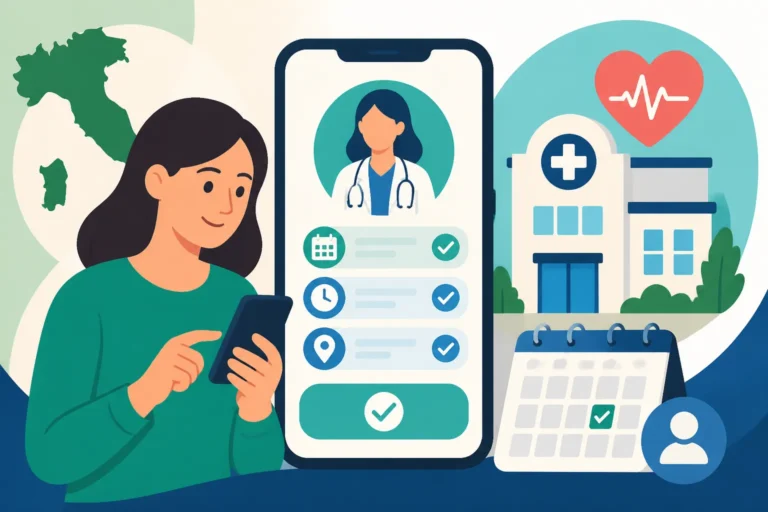
The modern alternative is to use the online portal. This usually requires a SPID (Sistema Pubblico di Identità Digitale) or a CIE (Carta d’Identità Elettronica). Logging in allows you to see a map of doctors near your registered address. The benefit of the online system is that you can see exactly who has openings in real-time. If you find that you don't click with your doctor after the first visit, the online portal also makes it incredibly easy to "change" your doctor with a few clicks, rather than waiting in line at the ASL again. For technical help with this, refer to How to Use SPID to Book Health Appointments in Italy.
| Aspect | Public Medico di Base (SSN) | Private General Practitioner |
|---|---|---|
| Cost | Free (Covered by taxes/SSN fee) | 50 EUR – 150 EUR per visit |
| Referrals | Provides "impegnativa" for subsidized care | Cannot provide SSN-subsidized referrals |
| Waiting Times | Can be long for appointments | Usually same-day or next-day |
| Language | Primarily Italian | Higher likelihood of English/other languages |
| Prescriptions | Can issue "dematerializzata" (electronic) | Issues white paper prescriptions (full price) |
Practical Considerations and Daily Realities
After you’ve successfully registered, your first visit to the "Studio Medico" can be a bit of a culture shock. Unlike the large, centralized clinics common in North America, many Italian doctors operate out of small offices that look like converted apartments. They have specific "orario di ricevimento" (reception hours) which can vary wildly. A doctor might be open Monday morning, Tuesday afternoon, and Wednesday evening. Most operate on a "su appuntamento" (by appointment) basis, but some still maintain "accesso libero" (walk-in) hours where you simply show up and wait your turn.
Communication is another area where realism is needed. Even if you found a doctor who speaks some English, the administrative staff or the nurse might not. It is incredibly helpful to have a list of your symptoms and medical history written down in Italian before you go. If you are dealing with a complex issue, you might want to look into Using Medical Translation and Interpretation Services to ensure nothing is lost in translation. Also, keep in mind that the doctor’s office is not the place for emergencies. If you have an urgent issue after hours or on a weekend, you should instead look for the Emergency Medical Numbers in Italy (112, 118, 1500) or visit a Guardia Medica Explained.
Understanding how to get a prescription filled is the final piece of the puzzle. Once your doctor enters your needs into the system, you will often receive a "promemoria" (a paper reminder) or a text message with a code (NRE). You take this to any pharmacy along with your Tessera Sanitaria. If your doctor has prescribed a generic medication, it is often free or requires a very small co-pay (ticket). For brand-name drugs, you might pay a bit more. You can learn more about this process in our guide on Italian Pharmacies: Prescription, Over-the-Counter, and Supplies.
Comparing Coverage Options for New Arrivals
For many expats, the gap between arriving in Italy and finally getting that Tessera Sanitaria in hand can be months. During this "limbo" period, you are technically not covered by the SSN unless it is a life-threatening emergency. This is where companies like SafetyWing become invaluable. They offer flexible, month-to-month travel medical insurance that satisfies the "proof of insurance" requirement for many visa types while ensuring you aren't paying thousands out of pocket for a simple flu visit or a minor injury while you wait for your residency to be processed.
If you are planning a long-term life in Italy and want a higher standard of care than the public system sometimes offers, Cigna Global is a heavy hitter in the expat world. Their plans allow you to bypass the Medico di Base system entirely for specialist visits, meaning you can book directly with a top dermatologist or cardiologist without waiting for an impegnativa. While the SSN is fantastic for major surgeries and chronic care, having a private policy from Cigna Global or a flexible plan from SafetyWing provides a safety net that many find essential for peace of mind.
Furthermore, some expats choose to "double-dip." They register for the SSN to have a Medico di Base for legal paperwork and routine prescriptions but use their Cigna Global policy for specialists and private hospitals where the facilities might feel more modern and the staff more likely to be multilingual. This hybrid approach is common among those who want the best of both worlds. Whether you choose to rely solely on the public system or supplement it, understanding Getting Health Insurance in Italy: Public and Private Options will help you make a decision that fits your budget and health needs.
How to Change Your Family Doctor
It is quite common to realize after a few months that your chosen doctor isn't the right fit. Maybe their office hours are too restrictive, or the communication barrier is just too high. In Italy, you are not stuck with your first choice. You can change your Medico di Base at any time, provided the new doctor has space on their list. This process is called "Revoca e Nuova Scelta."
You can do this at the ASL office by filling out a simple form, or more conveniently, through your regional online health portal. You don't need to give a reason for the change, and your medical records (if they have been digitized in the Fascicolo Sanitario Elettronico) will automatically be accessible to the new doctor. If you prefer a more specialized approach for your children, you should also look into Choosing a Pediatrician in Italy (Pediatra di Libera Scelta), as children under 14 have their own selection process separate from the general Medico di Base. For a step-by-step on the switching process, check How to Change Your Family Doctor (Medico di Base) in Italy.
Disclaimer
The information provided in this guide is for educational and informational purposes only and does not constitute professional medical or legal advice. While every effort has been made to ensure the accuracy of the information regarding the Italian healthcare system as of 2026, regulations and administrative procedures in Italy are subject to frequent changes at both national and regional levels. Always verify requirements with your local Azienda Sanitaria Locale (ASL) or a qualified legal professional before making health-related or residency-related decisions.