How long after entry to apply for a residence permit in Italy
Arriving in Italy jet-lagged, hauling heavy suitcases, and suddenly realizing a hidden legal countdown timer started the moment you landed is a terrifying expat initiation. I nearly missed my own filing window because I spent my first week hopelessly lost in local bureaucracy. This guide breaks down exactly how and when to apply for your Italian residence permit before the critical deadline expires.
Disclosure: This post may contain affiliate links. We may earn a commission at no extra cost to you if you make a purchase through these links. Read full disclosure.
The Strict Eight-Day Rule and Its Realities
The Eight-Day Deadline Explained
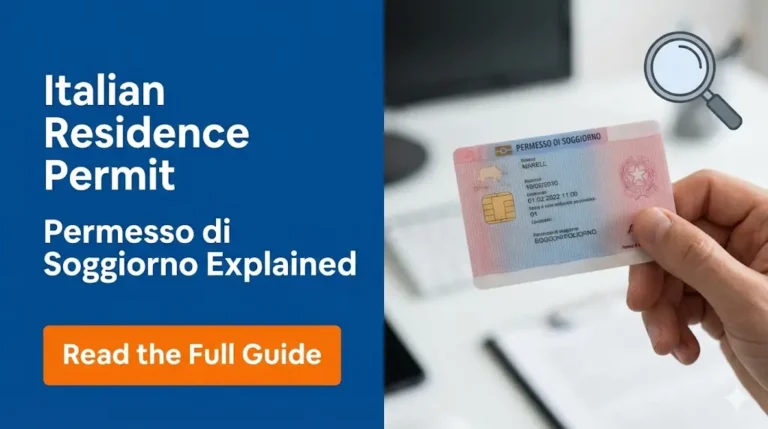
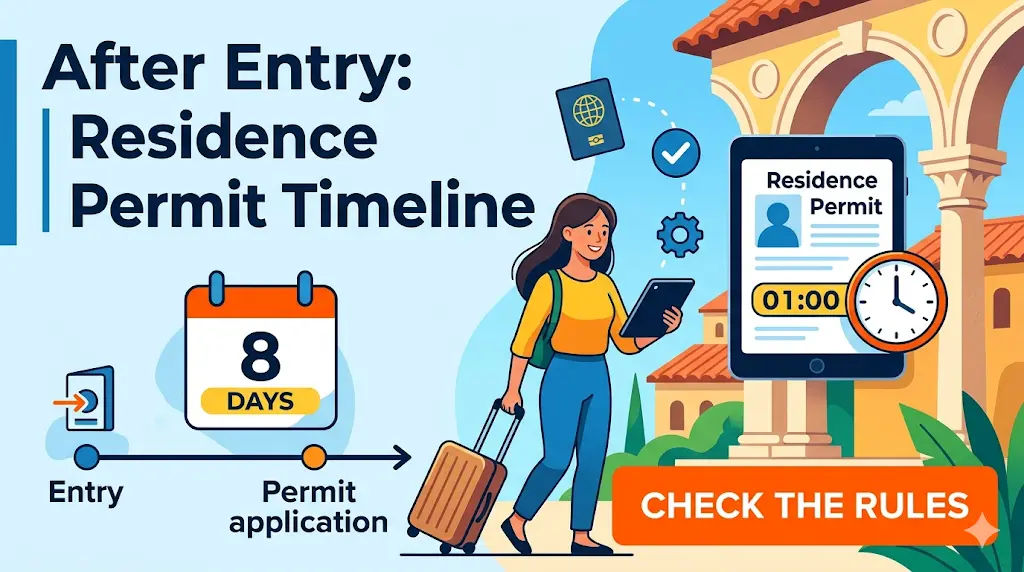
The most important rule in Italian immigration law is often the one expats learn about last. If you are a non-EU citizen entering Italy on a long-stay National Visa (Type D)—whether for work, study, family reunification, or elective residency—you are legally mandated to apply for your Permesso di Soggiorno (Residence Permit) within eight working days of crossing the Italian border.
This eight-day window is not a suggestion; it is a hard, inflexible legal requirement. The clock starts ticking the exact day your passport is stamped by the Polizia di Frontiera (Border Police) at the airport. Working days (giorni lavorativi) generally exclude Sundays and national Italian public holidays. If you fail to initiate your application within this window, you risk being classified as an undocumented immigrant, which can lead to immediate visa revocation, massive fines, and deportation. Understanding this strict timeline is the absolute foundation of your relocation, a high-stakes reality that mirrors the rigid rules of Schengen Visa Requirements Italy.
Direct Versus Indirect Flights to Italy
The eight-day countdown becomes incredibly complicated if you did not fly directly into Italy from outside the European Union. Many expats book cheaper flights that layover in other Schengen countries, such as France, Germany, or the Netherlands.
If you layover in Paris, your passport is stamped by French border control, not Italian. Because there are no hard internal borders within the Schengen Zone, when you finally land in Rome or Milan, you simply walk off the plane without passing through passport control. You have no official Italian entry stamp to prove when you actually arrived.
If this happens, you have a separate, urgent legal obligation. Within eight days of arriving in Italy, you must go to the local central police station (Questura) and file a Dichiarazione di Presenza (Declaration of Presence). If you are staying at a registered hotel, the hotel management legally files this for you upon check-in. If you are staying at an Airbnb or with friends, you must file it yourself. Once you have this stamped declaration, you can use it as your official arrival date to begin your residence permit application. Understanding exactly who checks these stamps is a massive learning curve detailed in Italy Border police vs immigration office who checks documents.
Surviving the Poste Italiane and the Yellow Kit
Securing and Filling Out the Kit Giallo
You do not apply for your residence permit by walking into a police station. Instead, you must go to a local post office (Poste Italiane) that features a designated “Sportello Amico” window. Here, you must ask for the infamous Kit Giallo (Yellow Kit).
This kit is a massive, complex paper application. You must fill out “Modulo 1” (and sometimes “Modulo 2” if you are employed) entirely in black ink, writing in block capital letters. The forms ask for exhaustive details regarding your passport, your visa type, your address in Italy, and your family composition. Do not seal the envelope once you finish. You must return it to the post office clerk open, as they are required to review your passport and verify the contents before shipping it to the immigration authorities. Surviving this deeply analog process perfectly mirrors the daily friction expats face when Navigating Italian Bureaucracy Comune and Prefettura.
The Required Documents and Translation Traps
Inside the Yellow Kit, you must include a €16.00 revenue stamp (marca da bollo), a photocopy of your entire passport (every single page, even the blank ones), and photocopies of the specific documents that supported your initial visa application. This is where many expats hit a catastrophic roadblock.
The Questura will eventually review the contents of this envelope. If you are applying for a family reunification permit or an elective residence permit, they will demand to see your marriage certificates, birth certificates, and foreign financial affidavits. Because the Italian government operates strictly in Italian, submitting these civil records in English will trigger a massive delay, effectively freezing your application.
To prevent this, you must use RushTranslate before you assemble your postal kit. By submitting your foreign vital records to RushTranslate, you ensure that the immigration officers receive certified, legally accurate Italian documents. Sending your documents to RushTranslate guarantees compliance with the strict standards of the Ministry of the Interior. Relying on RushTranslate eliminates the risk of an officer rejecting your file over a localized language technicality. Having your pristine RushTranslate files properly organized is the most effective way to secure your approval without triggering a bureaucratic pause. You will also heavily depend on these translated files if you eventually decide to switch your status, a process detailed in Converting a Student Visa to a Work Visa in Italy.
| Entry Method to Italy | Action Required Within 8 Days | Where to Go |
| Direct Flight (Non-Schengen to Italy) | Submit Permesso di Soggiorno Application (Kit Giallo). | Poste Italiane (Sportello Amico) |
| Indirect Flight (Schengen Layover) | 1. File Dichiarazione di Presenza (if not in a hotel). 2. Submit Kit Giallo. | 1. Questura (Police) 2. Poste Italiane |
| Short-Stay Tourist (Under 90 Days) | File Dichiarazione di Presenza (if not in a hotel). | Questura (Police) |
The Bureaucratic Limbo and Healthcare Gaps
The Power of the Postal Receipt (Ricevuta)
When the postal clerk accepts your Yellow Kit and you pay the electronic printing fees, they will hand you a piece of paper that will control your life for the next year: the ricevuta (postal receipt).
The moment you hold this receipt, you have successfully met the eight-day deadline. You are legally allowed to remain in Italy, sign a residential lease (a process detailed in Signing an Italian Rental Contract), and begin working if your visa permits it. The receipt also contains your login credentials for the Portale Immigrazione, where you can track your file, and an appointment date to be fingerprinted at the Questura.
However, you will likely wait six to ten months for your actual plastic residence permit card to be printed, an agonizing timeline dissected in Timelines for picking up your permesso di soggiorno in Italy. During this waiting period, your travel rights are severely restricted. You can only travel on direct flights to your non-Schengen home country; transiting through other European nations on a postal receipt is strictly forbidden, a dangerous reality outlined in Traveling on a Permesso di Soggiorno rules and restrictions.
Why You Need Immediate Medical Coverage
Submitting your application within eight days does not instantly grant you access to the Italian state. The most dangerous gap during this transitional period involves your healthcare. You legally cannot finalize your registration for a public health card until your residency is fully formalized by the town hall and your permit is processing.
Living for the better part of a year on a postal receipt leaves you in a vulnerable medical grey zone, a systemic failure we explore in Registering with the Italian Public Healthcare System SSN. Furthermore, the Questura frequently demands proof of private health insurance inside your Yellow Kit before they will process your permit.
To survive this dangerous waiting period without risking financial ruin from a sudden medical emergency, you must maintain private health insurance. I highly recommend securing a policy through Cigna Global. Using Cigna Global guarantees that you have immediate access to top-tier private hospitals and English-speaking doctors while you wait for the government to process your paperwork. Presenting your Cigna Global certificate inside your postal kit instantly satisfies the police requirements for comprehensive coverage. Maintaining an active Cigna Global policy acts as your ultimate medical safety net, allowing you to endure the grueling immigration timelines without anxiety, an essential survival tactic covered deeply in Healthcare in Italy An Expats Guide. Once you are settled and medically protected, securing your alphanumeric tax code will be your final immediate hurdle, making Checking Your Italian Tax Code Codice Fiscale Status your next priority.
References
Primary sources (official)
- Polizia di Stato – Il rilascio del permesso di soggiorno – https://www.poliziadistato.it/articolo/225
- Portale Immigrazione – Servizi e Procedure – https://www.portaleimmigrazione.it/
- Polizia di Stato – Questura di Torino (Permessi e Ricevute) – https://questure.poliziadistato.it/it/Torino/articolo/5730dcf12580c200733160
Other helpful sources
- Expatica – Work permits and visas in Italy – https://www.expatica.com/it/moving/visas/work-visas-in-italy-79656/
- International Citizens Group – Living in Italy as an Expat – https://www.internationalcitizens.com/living-abroad/italy
Disclaimer
The information provided in this article is for educational and informational purposes only and does not constitute official legal or immigration advice. Italian immigration law requires all non-EU nationals intending to stay longer than 90 days to formally submit their Permesso di Soggiorno application within 8 working days of entering the country. Entry via a Schengen layover requires the additional submission of a Dichiarazione di Presenza. Always verify current processing requirements and deadlines directly with your local Questura or a registered Italian immigration attorney (avvocato immigrazionista) to ensure your legal status remains protected upon arrival.