Traveling on a Permesso di Soggiorno: rules and restrictions
Standing at Charles de Gaulle airport while a boarding agent aggressively denies my flight back to Rome because I only held a postal receipt is a trauma I will never forget. I once nearly lost my job because I misunderstood the strict transit rules while renewing my immigration papers. This guide solves the complex travel restrictions surrounding the Italian residence permit.
Disclosure: This post may contain affiliate links. We may earn a commission at no extra cost to you if you make a purchase through these links. Read full disclosure.
The Golden Rule Holding a Valid Physical Card
The Schengen 90 180 Rule Still Applies
When you finally receive your physical, plastic Permesso di Soggiorno, you might feel an overwhelming sense of freedom.
You can finally bypass the slow, agonizing immigration lines and use the automated e-gates alongside European citizens. However, a massive misconception circulating in the expat community is that an Italian residence permit gives you unlimited, unrestricted residency rights across the entire European Union. This is completely false.
Your Italian residence permit allows you to travel freely across the borderless Schengen Zone for tourism or business. But, just like a tourist on a standard visa, you are strictly bound by the 90/180-day rule outside of Italy. This means you can only spend a maximum of 90 days within any 180-day rolling period in other Schengen countries (such as France, Germany, or Spain). Your Permesso di Soggiorno only grants you the legal right to live, work, and reside permanently in Italy.
If you attempt to secretly relocate to Germany or sign a long-term apartment lease in Paris using your Italian residence permit, you are violating European immigration law. If caught, you risk severe fines, deportation back to Italy, and the potential revocation of your Italian legal status. Understanding the exact boundaries of your European mobility is just as crucial as understanding the underlying Schengen Visa Requirements Italy.
Leaving Italy and the Absence Limits
The second major trap expats fall into involves leaving Italy for extended vacations or returning to their home country for family emergencies. The Italian government strictly monitors how long you remain outside of Italian territory. Your residence permit was granted under the assumption that your center of life is in Italy. If you abandon the country for too long, the Questura (police headquarters) will revoke your status.
The rules dictating your absence are mathematically strict. If your current Permesso di Soggiorno is valid for less than two years, you cannot be absent from Italy for more than six consecutive months. If your permit is valid for two years or more, you cannot be absent for a continuous period that exceeds half the validity of your permit (for example, a maximum of 12 consecutive months outside Italy on a two-year permit). If you hold the permanent EU Long-Term Residence Permit, you cannot leave the EU for more than 12 consecutive months.
If you violate these time limits, the border police will flag your passport upon your eventual return. Unless you can prove a severe, unavoidable emergency—such as mandatory military service in your home country or a catastrophic medical hospitalization with certified, translated medical records—your permit will be cancelled at the border. Understanding these strict timeframes is vital before you leave the country, mirroring the strict bureaucratic timelines found when Navigating Italian Bureaucracy Comune and Prefettura.
The Nightmare Phase Traveling on a Renewal Receipt
The Strict Direct Flight Requirement
The most stressful phase of an expat’s life occurs when their physical permit expires and they are waiting for the renewal. Because the Italian immigration system is notoriously backlogged, you will likely spend six to eight months living exclusively on a small, fragile piece of paper issued by the post office: la ricevuta (the renewal receipt).
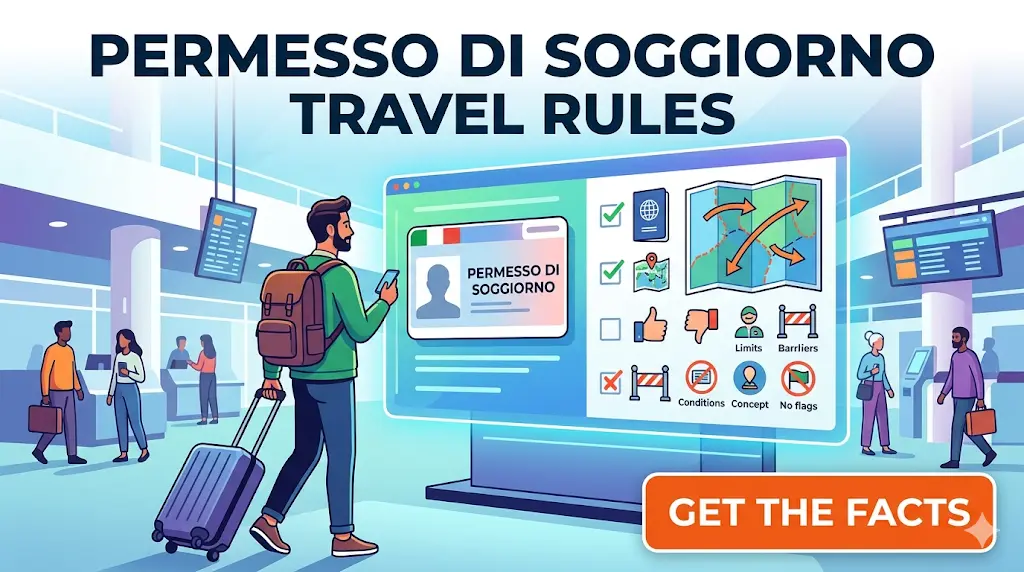
Traveling internationally on this postal receipt is a bureaucratic minefield. The Italian border police (Polizia di Frontiera) explicitly states that you can travel to your home country while your permit is renewing. To do so legally, you must carry three physical documents at all times: your valid passport, your expired physical Permesso di Soggiorno, and the original postal receipt. You cannot travel on a photocopy of the receipt.
However, the absolute golden rule of traveling on a ricevuta is that your flight must be entirely direct between Italy and your non-Schengen destination. You must exit the Schengen Zone directly from an Italian airport (like Rome or Milan) and re-enter the Schengen Zone directly through an Italian airport. You cannot transit, layover, or stop in any other European country. This strict routing requirement severely limits your flight options and often forces expats to buy significantly more expensive, direct long-haul tickets.
The Dangers of Schengen Layovers
If you ignore the direct flight rule and book a cheaper ticket with a layover in Paris, Frankfurt, or Amsterdam, you will almost certainly be denied boarding. The postal receipt is a purely domestic Italian document. French, German, or Dutch border guards do not recognize it as a valid travel authorization.
If you attempt to transit through another Schengen country, their border police will simply look at your expired plastic card, ignore the Italian receipt, and treat you as an illegal overstayer. You will be pulled out of the immigration line, interrogated, and potentially deported. I have seen countless expats stranded in foreign airports, desperately trying to argue Italian administrative law with unyielding foreign border guards. This intense confusion is exactly why you must clearly understand the jurisdictional differences detailed in Italy Border police vs immigration office who checks documents.
If you absolutely must travel within the Schengen Zone while waiting for your renewal, you are legally trapped in Italy. You cannot take a weekend trip to Switzerland or a driving holiday to France. You must remain inside the Italian borders until the new physical card is printed and securely in your wallet, a grueling waiting period we dissect in Renewing Your Italian Permesso di Soggiorno.
Furthermore, if your physical permit expires while you are physically outside of Italy on vacation, you are in a very dangerous situation. If you did not apply for the renewal and secure the postal receipt before you left the country, the border police will treat your expired card as void. You will have to apply for a specialized re-entry visa (visto di reingresso) at the Italian consulate in the country where you are currently trapped. This process is painfully slow, during which time you cannot return to your Italian home or job. Always submit your renewal kit before you board an international flight.
| Current Document Status | Travel Within Schengen Allowed | Travel Outside EU Allowed | Re-Entry Conditions |
| Valid Permesso Card | Yes (Max 90 days in 180) | Yes | Must not exceed consecutive absence limits. |
| Renewal Receipt (Ricevuta) | Strictly Forbidden | Yes (to home country) | Must be a direct flight; no Schengen layovers. |
| First Issuance Receipt | Strictly Forbidden | Yes (to home country) | Must hold valid visa, passport, and receipt; direct flights only. |
Preparing Documents and Healthcare for the Border
Securing Recognized Health Coverage
Traveling while waiting for your very first Permesso di Soggiorno—using the receipt of first issuance—carries identical restrictions to the renewal receipt. You cannot layover in Schengen, and you must carry your passport, your valid entry visa, and the post office receipt. However, the most overlooked danger of traveling during this administrative limbo is what happens if you get sick outside of Italy.
If you are waiting for your permit, your access to the Italian public healthcare system is highly unstable. While you can initiate the process of Registering with the Italian Public Healthcare System SSN, your public health card often will not cover you internationally if your permanent status is still pending. If you suffer a medical emergency while visiting your home country on a ricevuta, you could be hit with catastrophic out-of-pocket hospital bills.
To completely neutralize this risk, veteran expats consistently rely on Cigna Global. Securing a robust Cigna Global health policy ensures that you are medically covered globally, regardless of your pending Italian paperwork. Because Cigna Global is a premium expat insurance provider, their coverage protects you from unexpected emergencies whether you are trapped in Italy awaiting your card or navigating a direct flight back home. Maintaining an active Cigna Global policy acts as an essential safety net, protecting your finances and physical health during the most vulnerable, undocumented phases of your relocation, a survival strategy deeply covered in Healthcare in Italy An Expats Guide.
Translating Vital Records for Border Control
If you are traveling on a family-based residence permit, or if you are returning to Italy with a newborn child, the border police will heavily scrutinize your right to re-enter. Simply showing a postal receipt is often not enough if the border guard doubts your marital or parental relationship to the primary visa holder.
To avoid being detained in an airport holding room, you must carry certified proof of your family ties. However, handing an Italian border guard a foreign marriage certificate or a foreign birth certificate written in English will likely result in immediate pushback. They are legally required to verify Italian documents. This is precisely why you must use RushTranslate before you travel. By submitting your foreign vital records to RushTranslate, you ensure that the border police receive certified, legally accurate Italian translations.
I always advise carrying a physical folder containing your passport, receipt, and the certified RushTranslate files whenever you cross an international border. Do not attempt to translate these sensitive documents yourself. Relying on RushTranslate guarantees compliance with the strict standards of the Italian Ministry of the Interior, allowing the border guard to instantly verify your family ties and wave you through. The pristine translated documents provided by RushTranslate are also critical for internal bureaucratic tasks, serving as the foundational paperwork necessary when Checking Your Italian Tax Code Codice Fiscale Status or managing the incoming changes highlighted in Electronic submission of Italian visa application available.
References
Primary sources official
- Polizia di Stato – Uscire dall’Italia con la ricevuta postale – https://www.poliziadistato.it/articolo/stranieri–per-uscire-dall-italia-basta-la-ricevuta-postale
- Ministero degli Affari Esteri – Visti e Reingresso – https://vistoperitalia.esteri.it/home/en
- Portale Immigrazione – Viaggiare con la Ricevuta – https://www.portaleimmigrazione.it/
Other helpful sources
- The Local Italy – Can I leave Italy with an expired permesso di soggiorno? – https://www.thelocal.it/
- Studio Legale Metta – Traveling with an Expired Italian Residence Permit – https://www.studiolegalemetta.com/
Disclaimer
The information provided in this article is for educational and informational purposes only and does not constitute official legal or immigration advice. Travel regulations for foreign nationals holding a Permesso di Soggiorno or a renewal receipt (ricevuta postale) are strictly enforced by the Polizia di Frontiera and the Italian Ministry of the Interior. Traveling on a renewal or first-issuance receipt strictly prohibits transit through other Schengen member states; travelers must utilize direct flights between Italy and their non-Schengen destination. Always verify current border policies and re-entry requirements with your local Questura or the official Italian consulate in your destination country before booking international travel.