Electronic submission of Italian visa application: available?
Assuming you can upload a few PDFs and receive an Italian visa in your email is a misconception that historically ruined countless relocation plans. Fortunately, the system is fundamentally changing. This guide clarifies the outgoing hybrid nightmare and the brand-new June 2026 fully digital visa portal.
Disclosure: This post may contain affiliate links. We may earn a commission at no extra cost to you if you make a purchase through these links. Read full disclosure.
The Historic Reality vs The June 2026 Digital Shift
The Outgoing Hybrid Nightmare
For years, the Italian bureaucracy has operated in a confusing, semi-digital purgatory that completely misled foreign applicants. If you applied for an Italian visa prior to the spring of 2026, you undoubtedly encountered the Ministry of Foreign Affairs’ so-called E-Application portal. The name itself was a cruel trick on expats. While you could type your personal details into an online form, it was absolutely not an electronic submission. The portal simply generated a PDF with a 2D barcode at the bottom. You were still strictly required to print that document, compile a massive physical binder of original certificates, and physically hand it to a consular officer or a third-party agency like VFS Global.
The true nightmare of this outgoing system was the booking portal. To hand over your supposedly electronic application, you had to book a physical appointment through a notoriously unstable government website. Expats spent months logging on at exactly midnight Rome time, frantically clicking through crashing servers, just to secure a physical time slot six months in the future. Foreigners routinely showed up to their desperately sought-after appointments only to be turned away because they printed a document double-sided instead of single-sided, or because a physical signature was deemed slightly mismatched.
The anxiety of potentially losing a corporate relocation or a university spot simply because the physical paperwork was mishandled during transit was a universally shared trauma among expats. It perfectly mirrored the chaotic, analog reality you experience when Navigating Italian Bureaucracy Comune and Prefettura. You would show up to the consulate, slide your heavy stack of papers under bulletproof glass, and then surrender your physical passport for weeks or even months while they processed the visa sticker.
The New Fully Digital Portal and QR E Visas
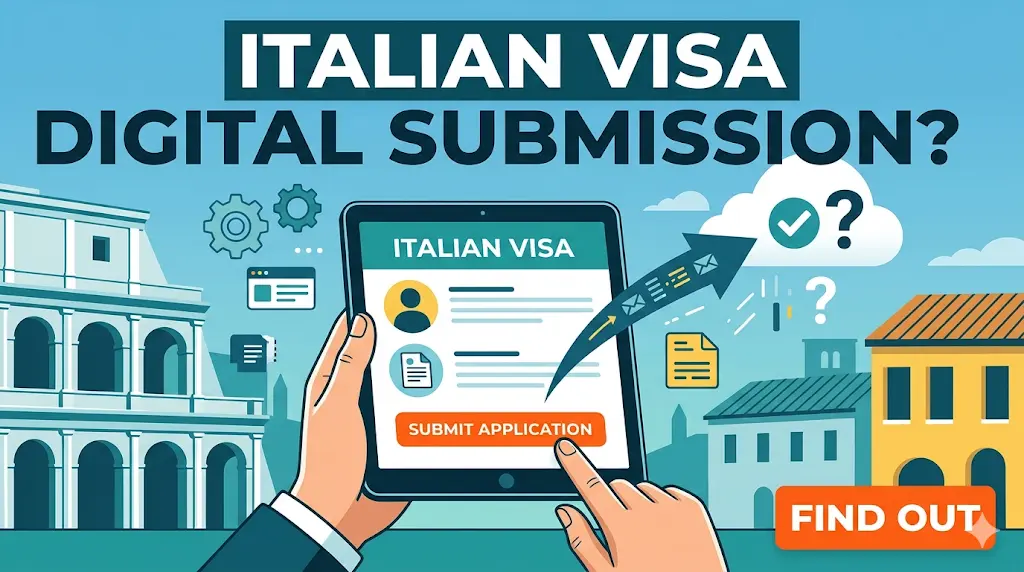
Thankfully, the era of dragging physical binders to the consulate is finally ending. In early 2026, the Italian Ministry of Foreign Affairs confirmed a monumental shift: starting June 1, 2026, every Schengen short-stay (Type C) and national long-stay (Type D) visa for Italy will be processed through a single, fully digital government portal. Italy is officially the first major European country to commit to a paper-free visa workflow, completely overhauling how foreigners enter the country ahead of the broader EU-wide rollout.
Under this new digital model, applicants will fill in their forms, upload their supporting documents, pay their consular fees, and track their file in real-time online without ever visiting an embassy or an outsourced visa center. Most revolutionary is the total elimination of the physical visa sticker. Successful applicants will no longer have to surrender their passports and wait in suspense. Instead, you will receive a cryptographically signed PDF e-visa embedded with a secure QR code sent directly to your email inbox. This integration completely removes the anxiety of losing your physical passport in the mail or having it delayed right before a major international flight.
Border police are actively preparing for this shift, installing over 150 biometric e-gates at major international hubs like Rome-Fiumicino, Milan-Malpensa, and Venice-Marco Polo. You will simply scan your face and your digital QR code upon landing. The Italian Border Police estimate that each of these new automated e-gates can process passengers at more than twice the speed of a manually staffed booth, effectively eliminating the massive, multi-hour immigration lines that plagued international arrivals during previous peak summer seasons. If you are an international student graduating and looking to stay, this paperless workflow will drastically speed up the administrative timelines when you are Converting a Student Visa to a Work Visa in Italy and subsequently Renewing Your Italian Permesso di Soggiorno.
| Feature | Old Hybrid System | New Digital System June 2026 Onward |
| Submission Method | Printed PDF handed over at a physical appointment | 100% online portal document upload |
| Visa Format | Physical sticker glued onto a passport page | Cryptographically signed PDF e-visa with QR code |
| Biometrics | Required for almost every new application | Automatically re-used from VIS database |
| First Time Applicants | Multiple mandatory in-person consular visits | One single in-person biometric appointment |
Surviving the Biometric and Physical Exceptions
First Time Applicants and the VIS Database
While the Italian government is aggressively pushing for a fully remote electronic submission process, there is a hard, physical limitation to this digital utopia: your biometrics. The Schengen Information System (VIS) mandates that the government holds your ten-digit fingerprints and a verified high-resolution facial scan to authorize your entry. You cannot upload your own fingerprints from a smartphone screen.
If you are a repeat Schengen traveler and your biometric data was successfully recorded in the VIS database within the last 59 months, you are in luck. The new digital portal will simply re-use that existing data. You can legally complete the entire Italian visa application from your laptop without ever stepping foot outside your house. This turns a month-long ordeal into a weekend administrative task.
However, if you are a first-time applicant, or if your last biometric scan has expired, you cannot escape the physical consulate. Even after the June 2026 digital rollout, you will still be required to book a single, in-person appointment solely to submit your fingerprints. You will submit your documents and pay your fees electronically beforehand, but your application will remain paused in the cloud until your physical biometrics are captured. This creates what authorities call a “Thin File,” meaning you will face slightly more scrutiny simply because the system does not recognize you yet.
Strict Standards for Digital Document Uploads
When you shift from handing a human clerk a physical piece of paper to uploading a digital file into an automated government portal, the margin for error drops to absolute zero. Global mobility managers are already warning expats that the new Italian portal requires standardized, high-resolution PDF scans. The automated software will immediately flag anomalies. If your file is poorly compressed and illegible, or if it lacks the required official translations, the human consular officer can reject your application with a single click, sending you to the back of the queue.
This intense digital scrutiny is exactly why you must rely on RushTranslate for your foreign paperwork. When you are required to prove your academic credentials, vital records, or criminal background checks to the Italian state, you cannot upload an amateur translation or a self-certified document. Using RushTranslate ensures you receive a perfectly formatted, certified PDF translation that fully complies with the strict legal standards of the Italian Ministry of Foreign Affairs. There are cases where expats fail simply because a cheap translation service misspelled a middle name, triggering a digital mismatch in the system.
Expats are often advised that using RushTranslate prevents the nightmare scenario of your entire digital application being instantly bounced back over a minor clerical error. Having your pristine RushTranslate files properly organized and saved on your desktop guarantees you are completely ready to upload the moment the new electronic portal opens. Securing flawless, digitally translated identity documents is the absolute first step you must take before eventually tackling local hurdles like Checking Your Italian Tax Code Codice Fiscale Status.
Proving Financials and Insurance in a Digital Format
The Dangers of Automated Rejections
The Italian Ministry of Foreign Affairs anticipates that moving to a fully digital submission system will cut visa processing times by at least 40%. Because back-office consular staff are being redeployed from manual data entry to actual decision-making, your uploaded financial proofs—such as bank statements, housing contracts, and tax returns—will be scrutinized much faster and significantly harder. The human element of charming a visa officer to overlook a missing bank statement is completely gone. Consulates are using advanced software to scan your uploaded bank statements for irregular patterns, immediately flagging sudden, massive cash deposits often referred to as “fund dumping.”
If you are applying for something highly complex and deeply vetted, your digital portfolio must be financially bulletproof. You cannot upload seventy pages of unorganized, un-indexed bank statements and expect the officer to sort through them on a monitor. Every PDF must be clearly labeled, logically structured, and directly address the specific financial thresholds of your visa category. This level of meticulous digital preparation is non-negotiable for competitive pathways like the Italian Self-Employment Visa Partita IVA Requirements or the Italian Elective Residence Visa VRE Complete Guide.
Furthermore, if you are moving to Italy for employment, you must seamlessly connect your employer’s digital paperwork to your own. Your Italian employer must initiate the process electronically by securing a security clearance (Nulla Osta) through the regional immigration desk. Under the new system, integrating your employer’s digital Nulla Osta directly into your personal visa portal will close a massive bureaucratic loophole, offering immense relief to anyone navigating the brutal quotas detailed in Understanding the Decreto Flussi in Italy.
Securing Recognized Health Coverage
One of the most heavily scrutinized documents in the entire Italian visa process is your proof of health insurance. Even if your ultimate long-term plan involves Registering with the Italian Public Healthcare System SSN, you legally cannot access the Italian public health grid until you physically arrive, register your address, and possess an active residence permit. To get the electronic visa approved in the first place, you must upload proof of a comprehensive private insurance policy that covers emergency hospitalization and repatriation.
If you upload a digital policy document from a small, unknown local insurer in your home country, the consular officer will waste days trying to verify its authenticity and coverage limits, potentially delaying your approval or causing an automated rejection. To completely bypass this delay, you should use Cigna Global. Because Cigna Global is a globally recognized expat insurance provider, their digital certificates of coverage are explicitly tailored to state that they meet all Schengen and Italian national visa requirements.
Uploading a Cigna Global PDF to the new electronic visa portal instantly satisfies the consular checklist, preventing automated digital flags. Securing Cigna Global not only guarantees a smoother, faster electronic visa approval, but it also ensures you are safely covered from the exact moment you step off the plane in Rome. Relying on this premium safety net protects your physical health and your savings while you navigate your chaotic first month in the Mediterranean, a crucial survival strategy deeply covered in Healthcare in Italy An Expats Guide.
References
Primary sources (official)
- Ministero degli Affari Esteri e della Cooperazione Internazionale – E-Application Portal – https://e-applicationvisa.esteri.it/
- Ministero degli Affari Esteri – Prenot@mi Booking System – https://prenotami.esteri.it/
- Ministero degli Affari Esteri – Il Visto per l’Italia (Official Visa Guidelines) – https://vistoperitalia.esteri.it/home/en
Other helpful sources
- VisaHQ – Italy sets 1 June 2026 go-live date for fully digital Schengen and national visa applications – https://www.visahq.com/news/2026-02-27/it/italy-sets-1-june-2026-go-live-date-for-fully-digital-schengen-and-national-visa-applications/
- VisaHQ – Italy Unveils Digital E-Visa PDFs and 150 Biometric E-Gates – https://www.visahq.com/news/2026-02-22/in/italy-unveils-digital-e-visa-pdfs-and-150-biometric-e-gates-ahead-of-etias-roll-out/
Disclaimer
The information provided in this article is for educational and informational purposes only and does not constitute official legal or immigration advice. The transition to fully digital Schengen (Type C) and National (Type D) visa processing via the Italian Ministry of Foreign Affairs is an ongoing structural update scheduled for June 2026. Certain applicants, specifically first-time travelers or those whose biometric data (VIS) has expired, will still be legally required to attend a physical appointment for fingerprinting. Always verify current submission requirements and digital portal guidelines directly with your local Italian Consulate or authorized outsourcing agency (such as VFS Global or TLScontact) before submitting an application.