Italy’s new digital residency pilot for expats
Staring at a pile of crumbling paper receipts at the local police station while trying to prove my legal status was my lowest expat moment. I once almost lost an apartment lease because my physical tax card was delayed in the mail. This guide explains Italy’s new digital residency pilot and how the IT-Wallet eliminates these analog bureaucratic nightmares.
Disclosure: This post may contain affiliate links. We may earn a commission at no extra cost to you if you make a purchase through these links. Read full disclosure.
The IT-Wallet Pilot Explained
Moving from Paper to the IO App
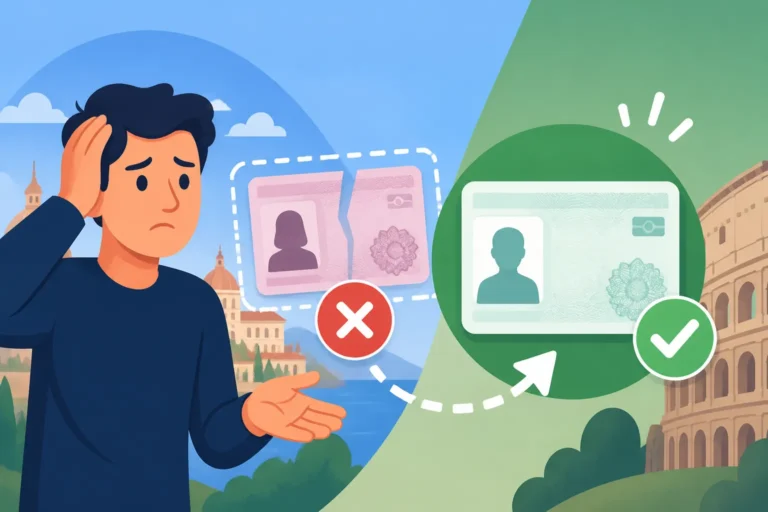
Italy is finally moving away from the chaotic paper dossiers that define expat life. The government recently launched the IT-Wallet system, a massive digital residency pilot integrated directly into the national “IO” smartphone app. This pilot allows citizens and legal residents to digitize their core identity documents.
Italy’s new “digital residency” approach for expats is not a single standalone program but a broader shift centered on its digital nomad visa and remote work policies. Introduced in 2024 and refined through 2026, this framework allows non-EU professionals to live in Italy while working remotely for foreign employers or clients. It reflects Italy’s attempt to attract global talent, especially in tech, design, and consulting sectors.
The system functions like a pilot in practice, targeting remote workers who can contribute economically without competing directly in the local labor market. Applicants must demonstrate stable remote employment, professional qualifications, and a minimum annual income of around €28,000. Health insurance and proof of accommodation are also mandatory.
One of the key features is flexibility. Unlike traditional work visas, this route does not require an Italian employer or labor market test. In many cases, there are no strict quota limits, making it more accessible than older immigration pathways. The visa typically grants a one-year residence permit, renewable if conditions continue to be met. After five years of legal residence, expats may become eligible for permanent residency, and eventually citizenship after a longer period.
Italy has also linked this initiative to regional development. Some policies encourage relocation to less populated areas by offering faster processing or tax incentives, aiming to revitalize rural communities. Taxation is an important aspect. If expats stay more than 183 days per year, they are generally considered tax residents and must declare worldwide income. However, special regimes like the “impatriati” scheme may offer partial tax reductions for eligible workers.
Despite its advantages, the system is still evolving. Administrative processes, documentation requirements, and local interpretations can vary, meaning applicants must prepare carefully. Approval is not automatic, and incomplete applications can cause delays. Overall, Italy’s digital residency model represents a modern, flexible pathway for expats. While not officially branded as a “digital residency” program like some countries, it effectively serves that role by enabling remote professionals to legally live, work, and integrate into Italian life.
Instead of carrying a physical wallet full of easily lost plastic cards, expats can now store digital versions of their Italian driving license, health insurance card, and disability card on their phones. This modernization drastically reduces the friction you typically face when Navigating Italian Bureaucracy Comune and Prefettura. The digital documents have the exact same legal validity as their physical counterparts during traffic stops or pharmacy visits.
The SPID and CIE Foundation
To access the IT-Wallet, you must first secure your digital identity credentials. You cannot simply download the app and type in your name. You must log in using either your SPID (Public Digital Identity System) or your CIE (Electronic Identity Card).
Building on this, Italy is gradually improving digital infrastructure and administrative processes to support remote residents. Online public services, digital identity systems, and streamlined permit applications are becoming more accessible, reducing bureaucratic hurdles over time. Expats can also benefit from Italy’s strong lifestyle appeal, including culture, healthcare, and connectivity within Europe.
However, challenges remain. Processing times can be inconsistent, and requirements may differ between regions or consulates. Language barriers can also complicate applications and daily interactions. Despite this, the overall direction is clear: Italy is positioning itself as a competitive destination for global remote workers, combining flexible residency options with long-term integration opportunities for expats.
Obtaining these credentials requires you to have an official registered address and an active tax identification number. If you are a new arrival, you must prioritize this step immediately. You can understand exactly how to secure this foundational number by reviewing Checking Your Italian Tax Code Codice Fiscale Status. Once you authenticate via SPID or CIE, your documents are securely synced from government databases directly to your device, ensuring total privacy and data compliance under the broader European digital framework.

Digital Visas and Remote Work
The Digital Nomad Pathway
This digital residency pilot perfectly complements Italy’s new Digital Nomad Visa, launched in April 2024. This specific visa allows highly skilled non-EU remote workers to legally reside in Italy without battling the traditional corporate quota system.
If you secure this visa and formally establish your residency, the IT-Wallet allows you to manage your interactions with the Italian state entirely online. You can pay local taxes, receive secure municipal messages, and prove your identity to landlords when Signing an Italian Rental Contract without needing physical photocopies. However, to qualify for the visa, you must prove substantial remote income, a high financial threshold you must carefully calculate using Cost of Living in Italy 2026 Budgeting for Expats.
Bridging the Digital Healthcare Gap
While the IT-Wallet securely stores your public health card, it does not magically grant you free healthcare upon arrival. Expats must undergo a complex registration process before the state issues that digital card. During this months-long waiting period, you are completely uninsured.
To survive this dangerous administrative gap, you must secure private health insurance. I highly recommend using Cigna Global. Because Cigna Global is a globally recognized expat insurance provider, their coverage protects you from unexpected medical emergencies while you wait for the government to process your digital residency. Presenting a Cigna Global certificate also satisfies the strict health insurance requirements of the digital nomad visa application itself. Maintaining your Cigna Global policy acts as your ultimate safety net before you can officially complete Registering with the Italian Public Healthcare System SSN, a vital survival tactic deeply explored in Healthcare in Italy An Expats Guide.
Managing Foreign Documents in a Digital System
The Certified Translation Bottleneck
The IT-Wallet is a closed Italian ecosystem. You cannot simply upload an English birth certificate or a Canadian criminal background check into the IO app and expect the local town hall to accept it. To register for your digital identity and upload your foreign credentials into the Italian municipal system, you must provide certified Italian translations of your native vital records.
This is exactly where veteran expats rely heavily on RushTranslate. By utilizing RushTranslate, you ensure that local clerks receive perfectly formatted, legally accurate Italian documents. Sending your foreign paperwork to RushTranslate guarantees compliance with the strict standards of the Ministry of the Interior. Relying on RushTranslate prevents your transition into the digital residency system from stalling over a localized language technicality. You will also heavily depend on these translated files if you decide to set up an independent tax profile, a process detailed in Italian Self-Employment Visa Partita IVA Requirements.
Streamlining Future Renewals
Once your documents are translated and your IT-Wallet is fully activated, your long-term expat life becomes significantly easier. The digital pilot is paving the way for fully online residence permit renewals. Soon, instead of standing in line at the post office with a massive yellow envelope, you will be able to initiate your immigration paperwork digitally.
Until that phase is fully complete across all regions, you must still physically attend police appointments, a grueling reality outlined in Renewing Your Italian Permesso di Soggiorno. However, the successful launch of the IT-Wallet proves Italy is finally entering the modern administrative era, giving expats a much-needed break from analog bureaucracy.
| Document Type | Analog Era (Pre-2024) | Digital Pilot (IT-Wallet via IO App) | Required for Activation |
| Health Card (Tessera Sanitaria) | Easily lost physical plastic card. | Digital QR code securely stored on phone. | SPID / CIE Login |
| Driving License | Physical card required at all times. | Digital presentation accepted by police. | Valid Italian License |
| Permesso di Soggiorno | Paper receipt and plastic card. | Future digital integration planned. | Active Residency Status |
| Public Admin Communications | Certified physical mail (Raccomandata). | Instant push notifications in the app. | App Installation |
References
Primary sources (official)
- Ministero per l’innovazione tecnologica e la transizione digitale – IT-Wallet release – https://innovazione.gov.it/notizie/articoli/en/it-wallet-three-digital-documents-available-for-all-italian-citizens-and-resident/
- Agenzia per l’Italia Digitale (AgID) – IT Wallet details – https://www.agid.gov.it/en/it-wallet
- Consolato Generale d’Italia Boston – Digital nomad/remote worker visa – https://consboston.esteri.it/en/servizi-consolari-e-visti/servizi-per-il-cittadino-straniero/visti/digital-nomad-remote-worker/
Other helpful sources
- European Commission – EU Digital Identity Wallet Home – https://ec.europa.eu/digital-building-blocks/sites/spaces/EUDIGITALIDENTITYWALLET/pages/694487738/EU+Digital+Identity+Wallet+Home
- INEO – IT Wallet: the digital future for Italian citizens – https://www.ineo.it/en/resource/it-wallet-the-digital-future-for-italian-citizens
Disclaimer
The information provided in this article is for educational and informational purposes only and does not constitute official legal or immigration advice. The rollout of the IT-Wallet and the digitization of Italian residency documents via the IO app is currently in a pilot phase and is subject to rolling updates by the Italian Ministry for Technological Innovation and Digital Transition. A digital document does not supersede the requirement to hold a valid physical visa or Permesso di Soggiorno upon initial entry. Always consult a registered Italian immigration attorney (avvocato immigrazionista) to verify your eligibility for the Digital Nomad Visa and local digital residency tools.