Smoking Cessation Programs for Expats in Italy
Quitting smoking is hard anywhere. In Italy it can feel harder. A cigarette often comes with the morning espresso, the aperitivo crowd lights up on every terrace, and you may not know where public help even starts. This guide explains how Italy’s smoking cessation programs work, who can use them, what non-residents can access, and how to build a realistic quit plan as a foreigner.
Disclosure: This post may contain affiliate links. We may earn a commission at no extra cost to you if you make a purchase through these links. Read full disclosure.
Why Quitting Smoking in Italy Feels Different for Expats
I smoked through my first two Italian winters. I wasn’t proud of it. Part of it was stress: the Questura queues, a landlord who answered messages once a week, and the constant low-level exhaustion of running my life in a second language. Part of it was simply that everyone around me seemed to smoke. If you’re reading this with a pack in your bag and a vague sense of guilt, you’re not weak. You’re living somewhere that makes the habit unusually easy to keep.
The Social Pull of Smoking Culture
Smoking indoors in bars, restaurants and offices has been banned in Italy for a long time. Outdoors is another story. Café terraces, university courtyards, the bit of pavement outside every office building and the edges of every piazza are full of smokers. Some cities, notably Milan, have extended restrictions into many outdoor public spaces, but enforcement and local rules vary a lot from one comune to the next.
The real trap for expats is social. When you’re new, the smoking break is often where you make friends. A colleague says “Vieni a fumare?” and five minutes later you’ve learned more office gossip than in a month of meetings. The ritual of Aperitivo in Italy: The Pre-Dinner Ritual Explained makes it worse, because a spritz and a cigarette are culturally paired in many towns. Quitting can feel like stepping out of the social circle you worked so hard to join.
Plan for this. Before your quit date, decide what you’ll do with your hands and your time during those breaks. Some people still step outside with a coffee or a sugar-free gum. Others tell colleagues directly. In my experience, Italians are generally supportive once you say “Sto cercando di smettere” (I’m trying to quit). Many of them have tried too.
Stress, Bureaucracy, and Relapse Triggers
Relocation stress is a well-known relapse trigger. Picture Sarah, a teacher from Manchester who moved to Bologna. She quit successfully before the move, then picked up a cigarette outside the Anagrafe after her third failed attempt to register residency. Six weeks later she was back to a pack a day.
Her story is common. Expat life adds triggers many people never face at home:
- Long waits at public offices
- Loneliness in the first months
- Language fatigue
- The feeling that “normal rules” are on pause while you settle in
If you know that, you can plan around it. Book your bureaucratic appointments with a backup coping strategy ready, whether that’s a walk, nicotine gum or a call home. Don’t treat a relapse during a stressful week as proof that you can’t quit.
Language as a Barrier to Getting Help
Most public cessation services in Italy run in Italian. Many staff speak some English, especially in big cities, but group sessions and printed materials are almost always in Italian. If your Italian is basic, it is worth preparing a few phrases about your smoking history before you call a service. Useful details include:
- How many cigarettes you smoke a day
- How long you’ve smoked
- Whether you’ve tried to quit before
The Medical Italian Practice: Rehearsing Symptoms Before You Need To approach works well here. A short rehearsal can make a ten-minute phone call far less intimidating.
How Public Smoking Cessation Programs Work in Italy
Italy’s public system calls these services Centri Antifumo, sometimes listed as centri per il trattamento del tabagismo. They are run locally through the regional health authorities, the ASL. They often sit inside addiction services (SerD), respiratory departments of public hospitals, or occasionally university clinics. If you’re new to the overall structure, Healthcare in Italy: An Expats’ Guide gives the bigger picture.
What a Centro Antifumo Actually Offers
The typical program combines medical assessment with behavioural support. Here is what a first contact usually looks like:
- You phone or email the centre and ask for a first appointment, often called a primo colloquio.
- At the first visit, a doctor or nurse records your smoking history. They may measure exhaled carbon monoxide and ask about your health, medications and motivation.
- You receive a treatment plan. This might be individual counselling, a group course, medication guidance, or a combination.
- Follow-up sessions are spread over several weeks. Further check-ins come after your quit date to catch early relapse.
Group courses are common and genuinely useful once you get past the awkwardness. Picture eight strangers in a hospital meeting room on a Tuesday evening, comparing cravings. It sounds bleak, but people often describe these groups as the thing that finally worked, because quitting stops being a private struggle.
Referrals, Costs, and the Health Ticket
Access rules depend on the region and the individual centre. Many services inside SerD can be accessed directly, without a referral from your family doctor. Hospital-based clinics may ask for a prescription, an impegnativa, from your GP. If you have registered with a doctor through Registering with an Italian Family Doctor (Medico di Base), ask them first. They usually know which local centre has the shortest wait and whether a referral is needed.
Cost varies. Some programs are free. Others charge the standard co-payment for specialist visits, known as the ticket. Exemptions apply in some cases. The mechanics are explained in Understanding the Italian Health Ticket (Co-Payment) System. Always ask when you book: “C’è un ticket da pagare?”
Finding Your Nearest Centre
The Istituto Superiore di Sanità, Italy’s national public health institute, runs two resources you should know about:
- The Telefono Verde contro il Fumo: a free, anonymous national helpline for smokers and their families.
- A directory of local cessation services: organised by region.
Calling the helpline is often the fastest way to find out which centre near you is active, accepts new patients, and has staff who can manage some English. You can also search your ASL’s website for “centro antifumo” plus your city name.
A practical tip from experience: regional websites are not always up to date. A phone call beats an email almost every time. If no one answers, try mid-morning on a weekday rather than Monday morning or Friday afternoon.
Smoking Cessation Options for Non-Residents and Newcomers
This is where many foreigners get stuck. You might be a tourist, a digital nomad, a student waiting for your permesso, or someone who hasn’t finished SSN registration yet. The honest answer is that full public programs are designed mainly for people enrolled in the SSN. But that does not leave you without options. Here is what actually exists if you’re not, or not yet, registered.
Who Can Use the Public System
If you hold a residence permit and are registered with the SSN, you can use public cessation services on the same terms as Italians. Registration is covered in How to Register for Italian Healthcare (SSN) as a Foreigner.
Some foreigners who are not automatically entitled can join through voluntary enrolment, known as iscrizione volontaria. This route is used by some students and elective residence holders. The trade-offs against private cover are compared in SSN Voluntary Enrolment vs Private Insurance: Annual Cost Compared.
EU visitors carrying a European Health Insurance Card are covered for medically necessary care during a temporary stay. A structured multi-week quit program is generally planned care rather than necessary care, so don’t assume your card covers it. Some centres may still see you, especially for a first assessment, so ask directly. See Using Your European Health Insurance Card (EHIC) in Italy for how the card works in practice.
Concrete Routes If You Are Not Enrolled
If you aren’t in the SSN, these options remain open to you:
- The national helpline. The Telefono Verde contro il Fumo is free and anonymous. It does not ask about your residency status, and it can give counselling and direct you to services.
- Direct contact with a local centre. Some SerD-based centres accept people outside the SSN, sometimes on a self-paying basis. Call, explain your status honestly, and ask whether they can see you privately or for a single assessment.
- The Lega Italiana per la Lotta contro i Tumori. LILT, a long-established cancer charity with local branches across Italy, runs quit-smoking courses and information services open to the public. Format and cost depend on the branch, so contact your nearest one.
- Pharmacy-based support. Nicotine replacement products such as patches, gum, lozenges and sprays are sold over the counter without a prescription. Italian pharmacists are trained to advise on dosing, and this works regardless of residency. See What Over-the-Counter Medicines Can You Buy in Italy? for how buying medicine works in a farmacia.
- Private specialists. A pulmonologist (pneumologo), a GP in private practice, or a psychologist trained in addiction can build a full quit plan. You pay privately, but you often get faster appointments and English-speaking practitioners in larger cities.
- Remote support from home or online. Many expats keep using their home country’s quit service, app or online counsellor. Italian telemedicine platforms also offer video consultations. See Telemedicine Services in Italy: Online Doctor Appointments.
What Your Insurance May or May Not Cover
Insurance is the grey zone, and you need to read your own policy rather than rely on assumptions.
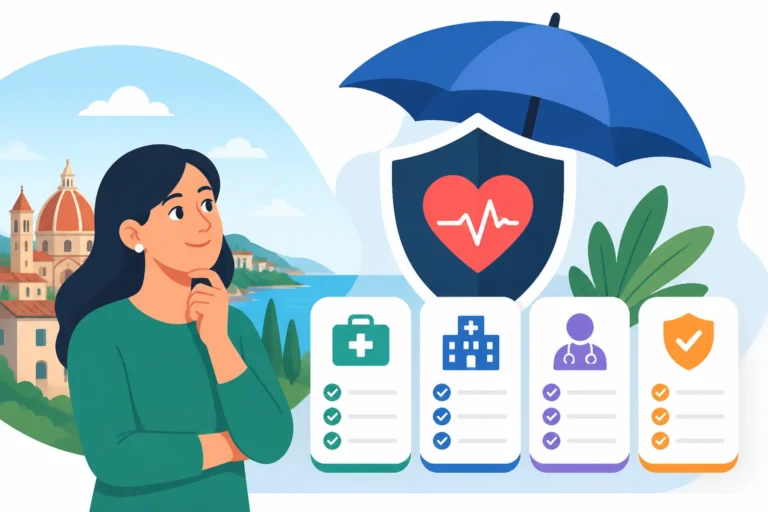
International private health plans such as Cigna Global are built for long-term expats. Depending on the plan level and add-ons you chose, they may include outpatient consultations, mental health support or wellness benefits that could touch on cessation care.
Travel-medical and nomad-style policies such as SafetyWing are generally designed around unexpected illness and injury while abroad. Planned treatment for a long-standing habit usually falls outside that core purpose.
Either way, check the policy wording, look for terms like “smoking cessation” or “nicotine dependence”, and contact the provider before you book anything you expect them to pay for.
One more point that catches people out: smoking status can affect how insurers price or underwrite cover. Answer health questions truthfully. If you quit, ask your insurer whether and when your status can be updated.
Comparing Your Options at a Glance
| Option | Who can use it | Referral needed | Cost shape | English availability |
|---|---|---|---|---|
| Public Centro Antifumo | Mainly SSN-registered residents; some accept others | Sometimes, depends on centre | Free or standard ticket co-payment | Varies, better in big cities |
| National quit helpline | Anyone in Italy | No | Free | Limited; ask at the start of the call |
| LILT courses | General public | No | Varies by local branch | Mostly Italian |
| Pharmacy nicotine replacement | Anyone | No | Paid out of pocket | Many urban pharmacists speak some English |
| Private specialist or psychologist | Anyone | No | Private fees | Good in Rome, Milan, Florence, Bologna |
| Home-country or online services | Anyone with internet access | No | Free to paid, depending on service | Native language |
Building a Quit Plan That Survives Italian Life
Knowing the services is only half the battle. The other half is setting yourself up to win in the actual rhythm of Italian days.
Medication, Prescriptions, and the Pharmacy
Combining behavioural support with medication improves your odds. Over-the-counter nicotine replacement is the simplest starting point. Patches give a steady background dose, while gum, lozenges or a spray handle sudden cravings. Many people use a patch plus one fast-acting product, but ask the pharmacist or doctor what suits you.
Prescription-only medicines for smoking cessation also exist. These require a doctor, who will consider your health history and current medications. Availability of specific products changes over time, so ask your GP or the centre what they currently prescribe. Cessation medicines are often paid for out of pocket rather than reimbursed, so ask about cost before you fill the prescription.
If you’re arriving with a quit medication from home, bring it in its original packaging with a copy of the prescription. A doctor here may be able to continue the treatment or suggest an equivalent.
Behavioural Support in English
Cravings are partly chemical and partly about habit, emotion and identity. That’s why counselling matters. If Italian-language group sessions feel impossible, look for an English-speaking psychologist who works with addiction or habit change. How to Find a Therapist Who Works in English in Italy walks through directories and practical screening questions.
For broader stress or mood issues that drive your smoking, the public mental health network and private options are explained in Mental Health Services in Italy: CSM and Private Therapy.
Consider Marco and Jenny, a couple from Toronto living in Turin. They tried to quit together twice using willpower alone. The third time, they booked a private psychologist for six video sessions, used patches from their local farmacia, and called the national helpline when cravings hit hardest. Jenny joked that the helpline counsellor’s patient, slow Italian also counted as language practice. Both are now smoke-free. Neither thinks the patches alone would have done it.
Practical Tips for Your First Month
These habits make the first weeks more survivable:
- Pick a quit date away from big bureaucratic appointments, moving days, or the August Ferragosto period, when many services close.
- Tell your bar. If you have a regular café, mention you’ve quit. The barista who knows your order may stop offering a cigarette with it.
- Rework the aperitivo. Order something different from your usual drink for the first few weeks, and sit indoors if the terrace is full of smokers.
- Expect tobacconists everywhere. The tabaccheria sign is on almost every street, and that constant visibility is a trigger. Plan an alternative route if one shop is part of your routine.
- Use the money. Track what you’re no longer spending on cigarettes and put it toward something tangible, like a weekend train trip.
- Treat slips as data, not failure. If you smoke one cigarette, note what triggered it and get back on plan the same day.
- Know your support numbers. Save the national helpline, your doctor, and any private counsellor in your phone before day one.
Quitting as an expat in Italy means working around cultural and administrative hurdles. But the tools are real, many of them are accessible regardless of your residency status, and every smoke-free day makes the next one easier.
Disclaimer
This article is for general informational purposes only and does not constitute professional advice. Laws, prices and regulations vary by location and change over time. Consult a qualified professional for guidance on your specific situation.