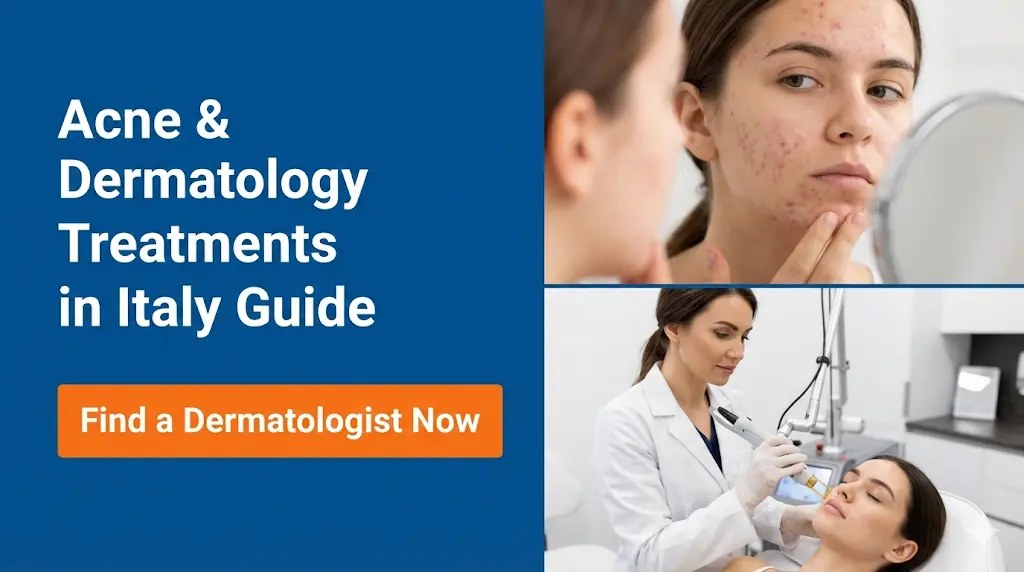
Acne and Dermatology Treatments in Italy
Navigating skincare and dermatology in a new country can be daunting. This guide explores how to access acne treatments in Italy, from public SSN dermatology referrals and specialized prescriptions to private clinics, over-the-counter pharmacy solutions, and advanced aesthetic procedures.
Disclosure: This post may contain affiliate links. We may earn a commission at no extra cost to you if you make a purchase through these links. Read full disclosure.
Introduction to Acne and Dermatology Treatments in Italy
Accessing dermatology and acne treatments in Italy requires an understanding of the two-tier healthcare system: the public Servizio Sanitario Nazionale (SSN) and the private sector. For those used to the North American or British medical models, the Italian approach might feel unique. While the public system offers highly subsidized care for pathological skin conditions, the private sector provides rapid access to the latest aesthetic technologies and English-speaking specialists.
Skin health in Italy is managed by the Dermatologo (Dermatologist). These are medical doctors who have completed a five-year specialization in dermatology and venereology. Because skin issues are often linked to internal health, Italian dermatologists frequently take a holistic view, examining everything from your digestive health to your stress levels. For expatriates, the challenge often lies in knowing how to secure an appointment, what medications are available locally, and how much these treatments cost out of pocket. This guide provides a comprehensive overview of the acne and dermatology services available in Italy, ensuring you can navigate the system confidently to achieve clear, healthy skin.
Accessing Public Dermatology Services through the SSN
The public system is excellent for treating pathological conditions like severe acne, psoriasis, eczema, and suspicious moles.
The GP Referral Process
The journey in the public system starts with your Medico di Base (General Practitioner). You cannot book a public dermatology appointment directly. During a consultation, your GP will evaluate your skin condition and, if necessary, issue an electronic referral known as an impegnativa. This referral classifies the urgency of your case. For chronic acne, you are typically given a “D” (Deferred) or “P” (Planned) priority, meaning you may wait several weeks or months for an appointment.
The Ticket System
One of the primary advantages of the public system is the cost. You will only be required to pay a small co-payment known as the ticket. This fee generally ranges from €20 to €36, depending on the region and the specific diagnostic tests performed. For those on a budget, this is the most sustainable way to manage long-term skin conditions. However, the public system focuses strictly on medical necessity; cosmetic concerns or minor “aesthetic” acne may not qualify for a referral. To understand more about the financial structure of these visits, you can review the Cost of Healthcare in Italy: What Expats Need to Know.
Private Dermatology: Speed and Aesthetic Expertise
Many expatriates choose the private sector for dermatological care. The primary drivers for this choice are speed—appointments are often available within a few days—and the ability to choose an English-speaking doctor. Furthermore, private dermatologists in Italy are often more focused on the aesthetic outcome, offering combined treatments that address both the active acne and the resulting scarring or pigmentation.
Finding a Private Specialist
Private dermatology clinics abound in major cities like Rome, Milan, and Florence. You do not need a referral from a GP to see a private specialist. You can book directly via phone or through digital platforms. In the private sector, you have much more control over your care plan, and the clinics are often equipped with the latest laser and light-based technologies that may not be available in standard public hospitals.
Cost of Private Consultations
A private dermatology consultation in Italy typically costs between €100 and €250. If the doctor performs a procedure during the visit, such as a chemical peel or a comedone extraction, the price will increase. While this is an out-of-pocket expense, many international health insurance plans cover these costs if the acne is classified as a medical condition. For more details on budgeting for these visits, see our guide on the Cost of Private Doctor Visits in Italy.
Common Acne Medications and Prescriptions
Italy follows European pharmaceutical regulations, meaning many potent acne treatments that might be available over-the-counter in other countries require a strict medical prescription here.
Topical Treatments
For mild to moderate acne, Italian dermatologists frequently prescribe topicals containing:
- Tretinoin or Adapalene: Retinoids are the gold standard for cell turnover and preventing clogged pores. Brands like Airol or Differin are commonly prescribed.
- Antibiotics: Topical clindamycin or erythromycin (often branded as Zindaclin or Eryacne) are used to reduce P. acnes bacteria.
- Azelaic Acid: Frequently prescribed for both acne and the post-inflammatory hyperpigmentation (PIH) that is common in olive-toned Mediterranean skin.
Oral Medications
For severe or cystic acne, oral interventions are common:
- Antibiotics: Oral tetracyclines (like Bassado) are often the first line of systemic defense.
- Hormonal Therapy: For women, specific birth control pills or spironolactone may be used to address hormonal fluctuations.
- Isotretinoin: Known globally as Accutane, this is available in Italy under brands like Isoriac or Roaccutan. However, the regulations are very strict. Patients must undergo monthly blood tests and, for women, pregnancy tests. These are strictly monitored by the dermatologist through a specialized “therapeutic plan.”
The Role of the Italian Pharmacy in Skincare
The Italian pharmacy (Farmacia) is a vital resource for anyone dealing with skin issues. Unlike supermarkets, Italian pharmacies are staffed by highly trained pharmacists who can provide clinical advice on dermo-cosmetics.
Dermo-Cosmetic Brands
Italian pharmacies carry a wide range of “pharmacy-grade” skincare brands that are specifically formulated for sensitive or acne-prone skin. Brands like La Roche-Posay, Avene, Vichy, and the Italian brand Rilastil are staples. Pharmacists can help you choose a non-comedogenic cleanser and moisturizer that won’t interfere with your prescription treatments.
Over-the-Counter (OTC) Solutions
While the most potent ingredients require a prescription, you can find effective OTC treatments at the pharmacy. Benzoyl peroxide (often found in Benzac) is available without a prescription and is an effective spot treatment. It is important to note that when Finding and Using Pharmacies in Italy, you should always ask for the farmacista for advice on which products are “non-comedogeno” (non-comedogenic).
Aesthetic Dermatology and Advanced Procedures
Italy is a leader in aesthetic medicine, and many dermatologists offer advanced procedures to treat active acne and acne scarring. These are almost exclusively private treatments.
Chemical Peels
Salicylic acid, mandelic acid, and glycolic acid peels are frequently used to exfoliate the skin deeply and reduce sebum production. These are usually performed in a series of 3 to 6 sessions.
Laser and Light Therapy
For post-acne scarring and active inflammation, various lasers are available:
- IPL (Intense Pulsed Light): Used to reduce redness and kill acne-causing bacteria.
- Fractional CO2 Lasers: The standard for treating deep, “pitted” acne scars by stimulating collagen production.
- Dye Lasers: Specifically target the persistent red marks (erythema) left behind after a pimple heals.
Biostimulation
A uniquely Italian approach to skin health involves biostimolazione. This involves micro-injections of hyaluronic acid, vitamins, and amino acids into the skin to improve its overall resilience and healing capacity. It is often used as a supportive treatment to help the skin recover from the drying effects of oral retinoids.
Comparison of Dermatology Access: Public vs Private
| Feature | Public System (SSN) | Private Sector |
| Referral Needed | Yes (from GP) | No |
| Wait Time | Weeks to Months | 2 – 7 Days |
| Cost | Small co-pay (€20-€36) | €100 – €250 per visit |
| English Support | Variable / Rare | Common in major cities |
| Technology | Standard Medical | High-end / Aesthetic Lasers |
| Prescription Access | Full access to medical drugs | Full access to medical drugs |
Skincare for the Italian Climate and Water
Expatriates often underestimate the impact of the local environment on their skin. Italy is known for its “hard water” (acqua dura), which contains high levels of calcium and magnesium. This can leave a film on the skin, disrupting the acid mantle and triggering breakouts.
Combatting Hard Water
Many dermatologists recommend using a thermal water spray (like Acqua Termale) after washing your face to rinse off the mineral residue. Alternatively, using a Micellar water (Acqua Micellare) as a final cleansing step can prevent the irritation caused by tap water.
Sun Protection
With its sunny climate, daily SPF is non-negotiable in Italy. However, many sunscreens can be greasy and clog pores. Look for “tocco secco” (dry touch) or “fluido opacizzante” (matifying fluid) formulations at the pharmacy. Italian dermatologists are very strict about sun protection, especially if you are using retinoids or acids, which increase sun sensitivity. Failing to protect your skin can lead to permanent dark spots, known as melasma or post-inflammatory hyperpigmentation.
Dermatology for Children and Adolescents
If you are a parent, navigating acne for your teenager involves the same SSN or private pathways. Pediatricians in Italy (Pediatra) are the first point of contact for children under 14. They can manage mild cases of acne but will often issue a referral to a pediatric dermatologist for more complex cases.
Italy has a mandatory vaccination schedule, and while skin health isn’t directly related to vaccines, maintaining an overall health record is vital for school enrollment. For older teens, the dermatologist will often discuss the psychological impact of acne, as Italian culture places a high value on “bella figura” (presenting oneself well).
Mental Health and the Impact of Acne
Acne is more than just a skin condition; it significantly impacts self-esteem and mental well-being. The stress of living in a foreign country can exacerbate skin issues, creating a frustrating cycle. If you find that your skin concerns are affecting your quality of life, it may be helpful to seek psychological support alongside your dermatological treatment.
In Italy, many private dermatology clinics work in tandem with psychologists to help patients manage the emotional toll of chronic skin conditions.
Dietary Influences on Skin in Italy
While the Mediterranean diet is generally healthy, the high consumption of refined carbohydrates (pasta and white bread) and dairy in certain Italian regions can trigger acne in some individuals. Italian dermatologists often suggest a “dieta a basso indice glicemico” (low-glycemic index diet) for acne patients.
Dairy and Skin
There is a growing awareness in Italian dermatology regarding the link between cow’s milk and acne. Specialists may recommend switching to sheep or goat cheese (like pecorino) or plant-based milks, which are widely available in Italian supermarkets today. Probiotic supplements are also frequently prescribed to improve the gut-skin axis, which is a major focus in European dermatology.
How to Get a Specialist Referral
If you decide to stay within the public system, getting the referral right is key. When you visit your GP, be prepared to describe how long you have had the acne and what treatments you have already tried. If you have a language barrier, it might be helpful to bring a list of your current products.
If the GP agrees to a referral, they will give you a code. You can then book the appointment through the Centro Unico di Prenotazione (CUP). Remember that while the public system is cost-effective, you won’t always have the same doctor at every visit, which can make managing a chronic condition like acne slightly more fragmented.
Conclusion
Acne and dermatological issues in Italy are treated with a sophisticated blend of medical expertise and aesthetic care. Whether you choose the highly subsidized public SSN path for chronic conditions or the fast-track private sector for advanced laser treatments, you have access to some of the world’s leading skin specialists.
By establishing a relationship with a local dermatologist and utilizing the professional expertise found in Italian pharmacies, you can effectively manage breakouts and protect your skin from the unique challenges of the local climate and water. Clear skin is a vital part of feeling confident in your new Italian life, and the resources are readily available to help you achieve it.
References
Primary sources (official)
- AIFA (Agenzia Italiana del Farmaco): The Italian Medicines Agency, providing information on prescription requirements for acne medications like isotretinoin. https://www.aifa.gov.it
Other helpful sources
- SIDeMaST (Società Italiana di Dermatologia): The Italian Society of Dermatology, Venereology, and Leprology, which provides resources on dermatological standards and find-a-doctor tools. https://www.sidemast.org
- Federfarma: The national federation representing Italian pharmacy owners, offering insights into dermo-cosmetic services and OTC regulations. https://www.federfarma.it
Disclaimer
The information provided in this article is for general informational and educational purposes only and does not constitute professional medical advice, diagnosis, or treatment. Healthcare protocols, wait times, and the availability of specific medications in Italy are subject to change based on regional regulations and national health policies. Always consult with a licensed dermatologist or your primary care physician (Medico di Base) before starting any new medical treatment or medication. If you experience a severe allergic reaction or a dermatological emergency, please dial the universal European emergency number 112 or proceed to the nearest emergency room.