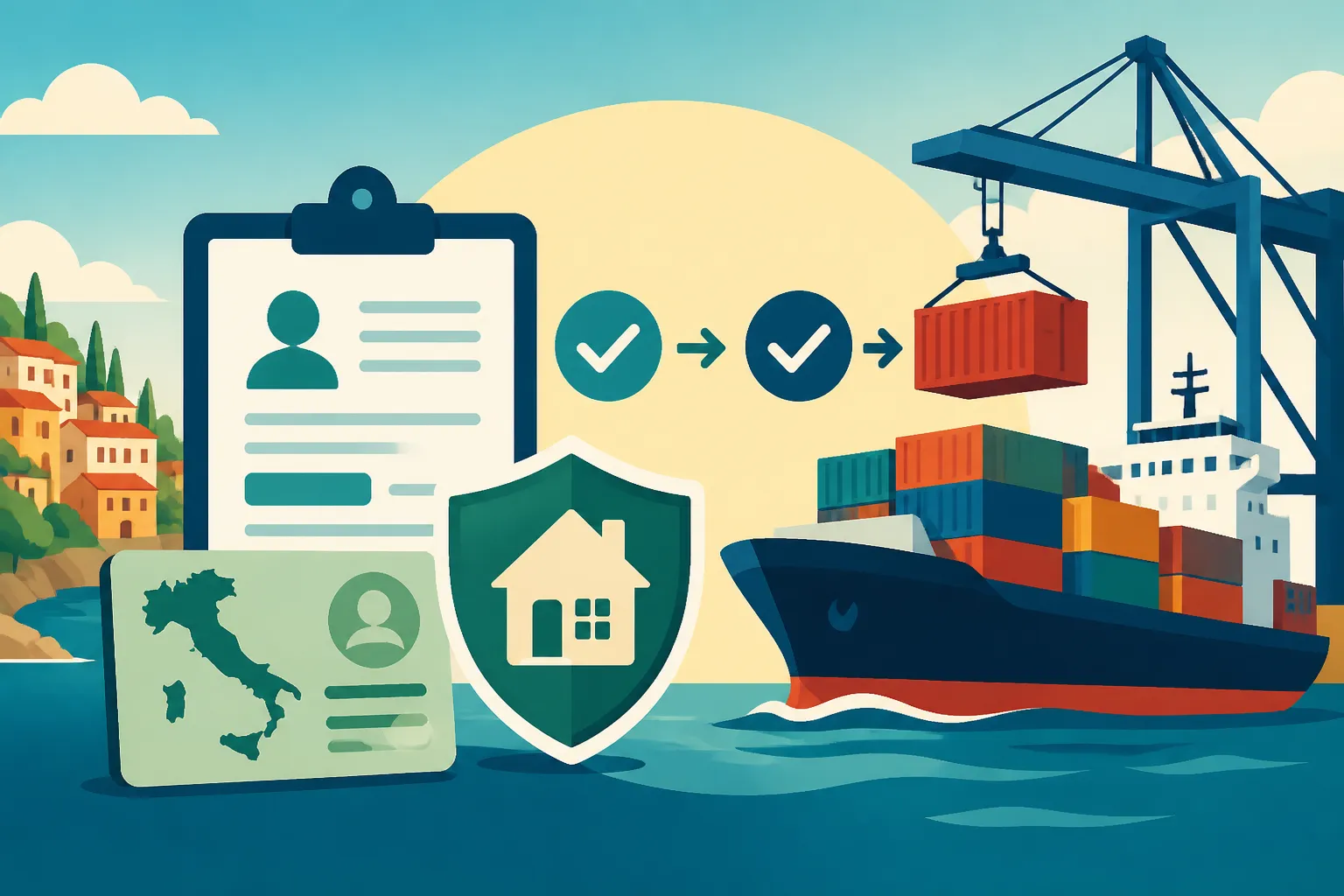
Sequencing Your Codice Fiscale and Residency Before the Container Lands
Oh, the sheer joy of moving to Italy! The romance of ancient ruins, the scent of espresso, the promise of la dolce vita… and then, BAM! You’re hit with the wall of Italian bureaucracy. It’s like a rite of passage, isn't it? One of the biggest head-scratchers for any newcomer is figuring out the exact sequence for getting your essential identification documents and declaring your new home. Should you ship your entire life before you even have a physical address? Or should you wait until you're fully settled? This guide is here to walk you through the optimal sequencing of obtaining your Codice Fiscale (tax code) and registering your residency, ensuring that your precious container of belongings doesn't end up sitting in limbo while you battle paperwork.
Disclosure: This post may contain affiliate links. We may earn a commission at no extra cost to you if you make a purchase through these links. Read full disclosure.
The Codice Fiscale: Your Golden Key to Italian Bureaucracy
Let's be brutally honest: without a Codice Fiscale, you are practically invisible in Italy. It's not just a tax identification number; it's your absolute golden ticket to just about everything. Expats often underestimate its fundamental importance, thinking it's something you get after you're all settled. Big mistake, my friend. Big, beautiful, frustrating mistake.
Why You Can't Live Without It
Imagine trying to open a bank account, sign a rental contract, get a mobile phone plan, connect utilities like electricity and gas, or even pick up a registered letter at the post office. Every single one of these actions, and countless others, will grind to a halt the moment you say, "I don't have a Codice Fiscale." It's literally the first piece of identification that almost every institution in Italy will ask for. It's a unique alpha-numeric code that identifies you to the Italian public administration, and it's non-negotiable.
When I first arrived, I thought my passport would be enough for a while. Nope! I tried to get a phone SIM card, and the guy at the shop looked at me like I'd asked for a unicorn. "Codice Fiscale?" he asked, slowly. My heart sank. It was the first of many such encounters. Having it sorted early can save you days, if not weeks, of frustration.
Getting It From Abroad vs. In Italy
So, how do you get this magical code? There are generally two paths:
- Applying via an Italian Consulate abroad: This is, hands down, the less stressful option for most expats. While you're still in your home country, you can apply for your Codice Fiscale at the nearest Italian Consulate. You'll typically need to fill out a form (Modello AA4/8), provide a copy of your passport, and often a photocopy of a visa if you're a non-EU citizen. The process can take a few weeks, sometimes even a month, depending on the consulate's workload, but you'll usually receive it via email. This allows you to land in Italy with your Codice Fiscale already in hand, ready for action.
- Applying at the Agenzia delle Entrate in Italy: This is the local tax office. Once you're on Italian soil, you can visit an Agenzia delle Entrate office. While it sounds simple, it can be anything but. You'll need to fill out the same form (Modello AA4/8), show your passport and visa/residence permit (or proof of application), and potentially provide an Italian address (though sometimes just a temporary one, like your Airbnb, can suffice). The challenge often lies in language barriers, long queues, and the need to secure an appointment, which can be tricky without an Italian phone number or someone to help you navigate the booking system. Many people try this route, only to find themselves running in circles, wishing they'd done it back home.
Having this vital document before you set foot in Italy is a game-changer. It means you can hit the ground running, rather than spending your first precious days navigating unfamiliar offices with limited Italian.
The Pre-Arrival Codice Fiscale Advantage
The true advantage of securing your Codice Fiscale before your grand arrival is the domino effect it creates. Imagine you’ve just landed, exhausted from travel, and your new Italian rental apartment is ready. With your Codice Fiscale in hand, you can immediately proceed to the Comune (city hall) to declare your residency. You can also confidently approach a bank to open an account, knowing you have the core identification they need. This proactive step helps you to How to Get a Codice Fiscale in Italy (and Why You Need One) and sets a smooth foundation for all subsequent bureaucratic tasks. Think of it as laying the first brick in your new Italian life, preventing a cascade of delays and frustrations.
Establishing Residency (Residenza): More Than Just a Roof Over Your Head
Once you have a Codice Fiscale and a place to live, your next major hurdle is establishing legal residency (residenza). This isn't just about having an address; it's about officially registering your presence with the Italian state. It's a critical step that many expats confuse with simply having a rental contract. They are related, but not the same.
The Bureaucratic Dance of Residency
Registering your residency means you are officially declaring to the Comune (municipal office) that you are living at a specific address in Italy. This process initiates your inclusion in the Anagrafe (the registry of residents) of your chosen comune. This is typically done by going to the Ufficio Anagrafe with your rental contract (properly registered with the Agenzia delle Entrate), your passport, visa (if applicable), and your shiny new Codice Fiscale. You'll fill out a form, declare your intention to reside there, and then the waiting game begins.
The comune will then send a vigile (local police officer) to your declared address to verify that you actually live there. This is not a formal interview; they usually just want to confirm you or someone from your household is present and that the address is indeed where you reside. The catch? They won't tell you when they're coming. It could be a week, it could be a month. And if they visit and you're not home, you might miss your chance, leading to further delays. This is where the initial anticipation of moving to Italy often collides with the reality of its unique administrative processes, adding a layer of anxiety to simply Registering Residency in Italy (Residenza and Anagrafe).
The Connection to Healthcare and Services
Your official residency is the gateway to so many essential services in Italy. Without it, you cannot fully access the Italian National Health Service (SSN). Once your residency is registered, you can then apply to How to Register for Italian Healthcare (SSN) as a Foreigner, choosing a medico di base (family doctor) and receiving your Tessera Sanitaria (health card). This is not just a convenience; it's a fundamental right and necessity for long-term living. Imagine a medical emergency where you're struggling with private insurance paperwork because you haven't completed your residency. It's a nightmare scenario that can be avoided by prioritizing this step.
Moreover, having registered residency is often a prerequisite for opening certain types of bank accounts, enrolling children in public schools, and even activating some utilities directly in your name, which can be a whole odyssey in itself, as explored in articles like Navigating Italian Utilities: Electricity, Water, Gas, Internet. Without residenza, you are essentially a long-term visitor, not a true resident, and the services available to you are limited accordingly.
The Waiting Game (Accertamento)
As mentioned, the "waiting game" for the vigile is one of the most nerve-wracking parts of the residency process. You're told they'll come, but not when. This means you need to ensure someone is consistently at your declared address during business hours for several weeks. This can be particularly challenging if you need to start work, explore your new city, or if you're waiting for your belongings to arrive.
It's a testament to Italy's unique blend of charm and bureaucracy. You might spend days marveling at the local piazza, only to rush back home, worried you missed the vigile knocking on your door. This period of uncertainty can feel like being stuck in administrative limbo, a stark contrast to the swift processes some expats are used to in their home countries. This is also why having a clear plan, and potentially support from logistics experts, becomes so crucial.
The Chicken and Egg Dilemma: What Comes First and Why It Matters for Your Move
This is where many expats get tangled. Which paperwork should you prioritize? Can you even start one without the other? And how does this all impact the arrival of your entire household, packed into a shipping container? The sequence of these steps is not just a suggestion; it's a strategic necessity to avoid significant delays and unexpected costs.
The Optimal Sequence for a Smoother Landing
From countless expat experiences, including my own painful lessons, the optimal sequence is clear:
- Get your Codice Fiscale from your Italian Consulate before you leave your home country. This is paramount.
- Secure your visa (if required) and a confirmed rental agreement in Italy. The rental agreement needs to be formally registered at the Agenzia delle Entrate by your landlord. You'll need proof of this registration.
- Upon arrival, immediately head to the Comune to declare your residenza. Do this as soon as you have a registered rental contract and your Codice Fiscale.
- While waiting for the vigile to verify your residency, open a bank account. Many banks will allow you to start the process with your Codice Fiscale and a registered rental contract, even if your residenza isn't fully finalized.
- Only then, when you have a solid administrative footing, should your container of belongings land.
This sequence ensures you have the necessary documentation for customs clearance, can actually receive mail regarding your container, and if needed, can access funds to pay any unexpected import duties. The Ultimate Guide to Renting and Buying a Home in Italy often details the intricacies of securing a proper rental, which is the bedrock for your residency application.
Why Delaying These Steps Causes Headaches
Delaying these critical steps can turn your exciting move into a bureaucratic nightmare. Imagine this scenario: your container arrives at the port of Livorno or Genoa. The shipping company contacts you for customs clearance. They need your Codice Fiscale. If you don't have it, your goods sit, accruing daily storage fees. Then, they might need proof of residency or even your Permesso di Soggiorno (residence permit) – which often requires a declared residenza. Each missed document means more delays, more fees, and a colossal amount of stress. You've paid good money to have your life shipped, only to have it held hostage by administrative red tape.
Without a Codice Fiscale, you can't even get a local phone number, making communication with the shipping company difficult. Without residency, getting your health card or setting up direct debits for utilities becomes a drawn-out battle. These aren't just minor inconveniences; they are fundamental roadblocks. This is precisely why having a reliable partner like Sirelo on your side, who understands these intricate Italian requirements, can be invaluable. They can help you coordinate your shipping timeline with your bureaucratic progress, saving you from these stressful and costly pitfalls.
Sirelo: Your Strategic Partner for a Coordinated Move
This is where a service like Sirelo becomes more than just a moving company aggregator; they become your strategic partner in navigating the challenging waters of Italian immigration and relocation. When you're planning an international move, especially to a country with specific administrative quirks like Italy, coordinating logistics with documentation is paramount. Sirelo understands this. They recognize that your moving container can't just arrive willy-nilly; it needs to be timed with your bureaucratic progress.
Think about it: who wants their beloved furniture sitting in a customs warehouse while they're still waiting for a vigile to knock on their door? Sirelo helps you mitigate this stress by connecting you with movers who are experienced with Italian customs regulations and the timelines involved. They can advise you on optimal shipping dates, temporary storage options if your residency takes longer than expected, and ensure that all necessary documentation, including your Codice Fiscale and proof of residenza, are ready for smooth customs clearance. Their network of reputable moving companies is chosen for their expertise in international removals, ensuring that your move to Italy is handled with the local knowledge required. They help transform what could be a logistical nightmare into a well-coordinated plan, allowing you to focus on settling into your new Italian home, not on chasing down paperwork while your belongings are stuck at the port.
Coordinating Your Move with Crucial Documentation: A Practical Timeline
Moving is complex, but with a clear sequence for your paperwork, it becomes manageable. Let's outline a realistic timeline that minimizes stress and maximizes efficiency.
Pre-Move Checklist: Codice Fiscale & Visa
Before you even start packing boxes, these are your absolute must-dos:
- Apply for your Codice Fiscale: As discussed, apply at your local Italian Consulate. Do this early, as processing times vary. This is the single most important document to secure before your plane ticket is even booked.
- Secure your long-stay visa: For non-EU citizens, your Italian visa is your entry ticket. Make sure it's the correct type for your purpose (e.g., student, work, elective residence). This will dictate your rights and responsibilities upon arrival. Understanding the nuances of various Italian visa types, such as those detailed in Permesso di Soggiorno (Italian Residence Permit) Explained, is crucial during this stage.
- Research and secure housing: Have a confirmed, legally registered rental contract in Italy before you think about shipping. Remember, a simple handshake agreement won't cut it for residency. This crucial step is often covered in resources like Italian Rental Contracts 101: 4+4, 3+2, and Transitorio.
- Plan your move with a reliable partner: This is where Sirelo comes in. Start discussions with them well in advance. They can help you understand the shipping timelines, potential customs delays, and how to best synchronize your physical move with your administrative onboarding. Their expertise in managing international relocations means they're accustomed to these very Italian intricacies, and can provide advice on when to ideally ship your goods to align with your bureaucratic progress.
Arrival & Immediate Action: Residency & Bank
Once your feet hit Italian soil, your priorities shift:
- Activate your Italian phone number: With your Codice Fiscale in hand, get a local SIM card immediately. This is essential for appointments, landlord communication, and connecting with utility providers.
- File your Dichiarazione di Residenza: The moment you have access to your registered rental property, head to the Comune's Ufficio Anagrafe. Bring your passport, visa, registered rental contract, and Codice Fiscale. This formally starts your residency process. Remember, the vigile visit is coming, so be prepared to be home!
- Open a bank account: With your Codice Fiscale and proof of address (even if it's just the registered rental contract and the dichiarazione di residenza application receipt), you can typically initiate the process of opening an Italian bank account. This is essential for receiving income, paying bills, and managing daily finances. Learn more about How to Open a Bank Account in Italy to make this step smoother.
The Logistics Link: How Your Move Company Helps
This is the point where your moving partner truly earns their stripes.
- Customs Clearance: For non-EU citizens, getting your household goods through customs typically requires your Codice Fiscale and proof of residency (or at least proof you're in the process of obtaining it, like your dichiarazione di residenza receipt). Your moving company, especially one knowledgeable about Italy like those found through Sirelo, will be able to guide you on exactly which documents are needed and when. They can help you avoid costly delays by ensuring all paperwork is ready for customs before your container arrives.
- Delivery Coordination: While your vigile is doing their rounds, your moving container might be ready for delivery. Having a competent moving company means they can offer temporary storage solutions if your residency isn't finalized, or if you need to be physically present to receive and sign for your belongings. This flexibility is crucial in Italy, where administrative timelines can be unpredictable.
- Reducing Stress: The emotional toll of a major international move is immense. Adding bureaucratic uncertainty about your possessions only amplifies it. By choosing a moving service via Sirelo, you're tapping into a network that understands these specific Italian challenges. Their ability to coordinate your move around these non-negotiable bureaucratic steps significantly reduces your stress, allowing you to focus on adapting to your new life in Italy rather than worrying about your belongings being stuck in administrative purgatory. Whether it’s providing advice on the necessary customs forms or navigating the logistical complexities of getting your possessions to your new home, a well-chosen moving partner ensures that the journey of your belongings is as smooth as your personal integration into Italian life. This comprehensive approach means your move will be less about bureaucratic headaches and more about enjoying the beauty of your new Italian chapter.
| Step | Optimal Timing | Why It's Crucial | Potential Headache if Delayed |
|---|---|---|---|
| Codice Fiscale | Before arriving in Italy (via consulate) | Required for nearly everything: visa, housing, bank, utilities, customs. | Inability to sign contracts, open bank accounts, receive mail, clear customs. |
| Visa/Permesso di Soggiorno | Before arriving in Italy (visa) | Legal right to reside and eventually get a Permesso. | Illegal stay, inability to progress with any long-term plans. |
| Registered Rental Contract | Before arriving in Italy (secured) | Foundation for residency, health system access. | Cannot declare residenza, limited access to services. |
| Italian Phone Number | Immediately upon arrival | Essential for communication, appointments, emergencies. | Isolated, unable to coordinate. |
| Dichiarazione di Residenza | Immediately upon arrival (at Comune) | Official recognition as a resident, prerequisite for SSN and other state services. | No Tessera Sanitaria, limited public services, slow Permesso process. |
| Bank Account Opening | Soon after arrival (with CF/Residency app) | Financial management, paying bills, receiving salary. | Relying on foreign banks, high fees, limited payment options. |
| Shipping Container Arrival | After CF and Residency initiated/confirmed | Ensures smooth customs clearance, prevents storage fees, avoids lost items. | Goods stuck in customs, daily fees, major stress. |
Disclaimer
The information provided in this article is intended for general guidance only and does not constitute legal or professional advice. Italian immigration laws, administrative procedures, and tax regulations are subject to change and can vary by region and individual circumstances. It is highly recommended to consult with qualified legal, immigration, or financial professionals in Italy for advice tailored to your specific situation. While every effort has been made to ensure accuracy, the author and publisher disclaim any liability for errors or omissions.