Seasonal Wardrobe Tips for Italy’s Climate
Mastering the art of the Italian wardrobe requires balancing regional climate variations with the country’s celebrated aesthetic standards. This guide provides essential tips for layering, fabric selection, and seasonal transitions to ensure you stay comfortable and stylish year-round.
Disclosure: This post may contain affiliate links. We may earn a commission at no extra cost to you if you make a purchase through these links. Read full disclosure.
Introduction
For many expatriates, the transition to living in Italy involves a significant recalibration of their closet. The geographical span of the Italian peninsula creates distinct microclimates that vary drastically from North to South. While a lightweight linen shirt might be your best friend in a Roman July, it will offer little comfort against the biting bora winds of Trieste in January. Furthermore, Italians approach seasonal dressing with a traditional rigor known as the cambio di stagione (change of season), where wardrobes are meticulously swapped twice a year to reflect the calendar rather than just the daily temperature.
Navigating these shifts requires a strategic approach to fabric, layering, and footwear. Beyond personal comfort, dressing appropriately is vital for health and social integration. In many regions, locals believe that even a slight chill can lead to the infamous colpo d’aria (a hit of air), often blamed for everything from stiff necks to digestive issues. Consequently, scarves and undershirts remain staples even in transitional weather.
This guide provides an exhaustive look at how to build a wardrobe that respects Italy’s climatic realities while adhering to the local standards of elegance. We will break down the essential items for each season, explore regional differences, and offer practical advice for maintaining your clothing in a Mediterranean environment. Whether you are Settling In Italy: Daily Life Tips for Expats or simply planning a long-term stay, understanding the local sartorial rhythm is key to feeling at home.
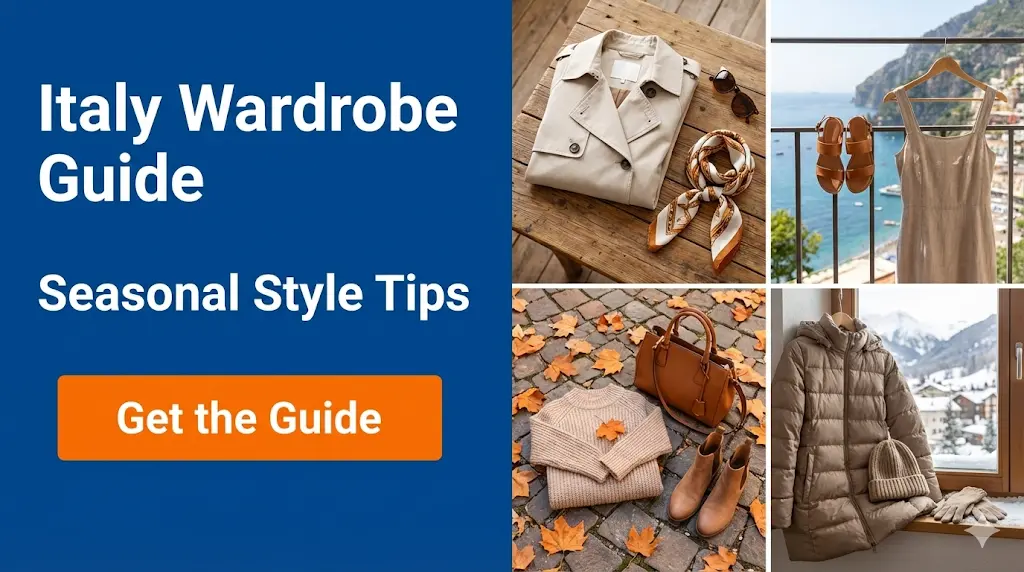
Spring: The Art of the Layer
Spring in Italy (Primavera) is a season of beautiful unpredictability. From March to May, the weather can oscillate between brilliant sunshine and sudden, heavy rain showers. In cities like Florence or Milan, mornings are often crisp and cool, while the afternoon sun can feel surprisingly intense.
Embracing Light Layers
The secret to spring comfort is layering. A lightweight trench coat or a “field jacket” is an essential piece of outerwear during this time. These items provide protection against the wind without causing you to overheat when walking between appointments. Underneath, Italians favor fine-knit sweaters in merino wool or cashmere-silk blends, which regulate body temperature effectively.
Transitional Fabrics
During the spring, you should begin introducing lighter cottons and gabardines. While it may feel warm enough for shorts, you will rarely see an Italian in anything other than long trousers before June. Chinos in pastel or earth tones are the standard for casual but polished daily wear.
Footwear for Wet Streets
Spring is also one of the rainier seasons, particularly in the North. Suede should be avoided unless treated with a high-quality water repellent. Leather loafers or high-quality leather sneakers are preferred, as they provide better protection against damp cobblestones. For those still organizing their move, checking a Moving to Italy Checklist: Essential Tasks can help ensure your seasonal footwear arrives before the rains begin.
Summer: Navigating Intense Heat and Humidity
Summer in Italy (Estate) is defined by its intensity. From June to August, the country is often under the influence of African anticyclones, bringing temperatures that can soar above 35°C (95°F), particularly in the South and the interior plains.
The Power of Linen and Seersucker
Linen is the undisputed king of the Italian summer. Its breathability and ability to wick moisture make it a necessity. While linen wrinkles easily, in Italy, this is viewed as a sign of natural elegance rather than sloppiness. Seersucker and lightweight cotton poplin are also excellent choices for staying cool in urban environments like Rome or Naples.
Modesty and Cultural Standards
When dressing for the Italian summer, keep in mind that many historic sites and churches enforce strict dress codes. Shoulders and knees must usually be covered. For women, carrying a lightweight silk or cotton scarf in your bag is a practical way to cover up before entering a cathedral. For men, lightweight trousers are vastly preferred over shorts in the city; shorts are generally reserved for the beach or very casual coastal settings.
Sun Protection and Accessories
The Italian sun is exceptionally strong. A high-quality pair of sunglasses is a mandatory accessory, both for eye health and aesthetic reasons. While wide-brimmed straw hats are popular in the countryside and on the coast, they are less common in the city center. Instead, locals rely on the shade of narrow streets and the occasional linen cap. If you are struggling with the humidity, you might want to look into Acclimating to Italian Climate: Heat, Humidity, and Health to stay safe during the peak months.
Autumn: Preparing for the Cool Down
Autumn (Autunno) usually arrives in late September and lasts through November. This season is often considered the most pleasant time for fashion in Italy, as it allows for the use of rich textures and deep colors like burgundy, forest green, and mustard.
The Return of the Scarf
As soon as the first cool breeze hits in October, the scarves come out. A lightweight wool or heavy silk scarf is the most common accessory for both men and women. It is used to protect the throat and chest, areas Italians are particularly careful to shield from the wind.
Waterproof Outerwear
November is statistically the wettest month in much of Italy. Investing in a high-quality mackintosh or a technical waterproof shell is vital. Unlike spring showers, autumn rain can be persistent and cold. Umbrellas are sold on every street corner during a downpour, but a sturdy, wind-resistant model is a better long-term investment.
Leather and Texture
Autumn is the time to bring out leather jackets and boots. Italy is world-renowned for its leather goods, and autumn is the season to showcase them. Sturdy Chelsea boots or brogues are ideal for navigating wet, uneven streets.
Winter: Guarding Against the Cold and Damp
Winter (Inverno) in Italy varies dramatically by latitude. In the North, temperatures frequently drop below freezing, and fog (nebbia) is common. In the South, winters are milder but can be incredibly damp, making the cold feel more “penetrating” than the actual temperature suggests.
The Importance of the “Piumino”
The down jacket (piumino) is the unofficial winter uniform of Italy. Brands like Moncler or Colmar are highly prized, but any high-quality down-filled coat will suffice. For a more formal look, a heavy wool overcoat in a classic navy or charcoal is a staple for the office or evening dinners.
Protecting the Core
Italians are firm believers in the maglia della salute—a lightweight cotton or wool undershirt worn beneath a dress shirt or sweater. This extra layer provides essential insulation against the damp winter air. Heavy-gauge wool sweaters, especially in ribbed knits or cable patterns, are popular throughout the winter months.
Winter Footwear
In the North, where ice and light snow are possible, rubber-soled boots are essential. In the South, waterproof leather boots remain the standard. Regardless of the region, warm socks in wool blends are necessary, as many older Italian buildings have stone or tile floors that remain cold throughout the season.
Regional Wardrobe Variations
Italy is not a monolith, and dressing for the North is very different from dressing for the South.
| Region | Summer Climate | Winter Climate | Wardrobe Essential |
| Northern Italy (Milan, Turin, Venice) | Humid and hot, occasional storms. | Cold, foggy, potential snow. | A high-quality wool overcoat. |
| Central Italy (Rome, Florence) | Very hot and dry. | Cool and rainy, rarely freezing. | A versatile trench coat. |
| Southern Italy (Naples, Sicily, Puglia) | Intense heat, Mediterranean sun. | Mild but damp and windy. | High-quality linen shirts. |
| Mountain Regions (Dolomites, Apennines) | Fresh and mild. | Heavy snow and freezing temps. | Technical thermal layers. |
The “Cambio di Stagione” Ritual
The cambio di stagione is a semi-annual event in most Italian households. Because apartment storage space is often limited, summer and winter wardrobes are swapped entirely in May and October.
- Storage Tips: Use vacuum-sealed bags to save space in wardrobes.
- Maintenance: Before storing winter wools, ensure they are cleaned to prevent moth damage.
- Footwear Care: Clean and condition your leather boots before putting them away for the summer to prevent the leather from drying out.
Shopping for the Italian Climate
While it is tempting to bring your entire wardrobe from home, many expats find that buying local clothing is more effective. Italian brands design their garments specifically for the local climate.
Local Markets vs. Boutiques
Local weekly markets are a fantastic place to find affordable, high-quality knitwear and linens. For more formal needs, Italian boutiques offer tailoring services that ensure a perfect fit—a hallmark of the Italian look.
Avoiding Synthetic Fabrics
In Italy’s humid summers and damp winters, synthetic fabrics like polyester can be uncomfortable. They don’t breathe well in the heat and don’t provide adequate warmth in the damp cold. Stick to natural fibers: cotton, linen, silk, and wool.
Conclusion
Adapting your wardrobe to the Italian climate is a journey in both practicality and style. By embracing the local tradition of layering, investing in high-quality natural fabrics, and respecting the regional variations of the peninsula, you can navigate the seasons with the same grace as the locals. Whether you are shielding yourself from a Roman heatwave or a Venetian fog, the right clothing is your first line of defense and your best tool for cultural integration.
Building a functional Italian wardrobe takes time, but the reward is a collection of timeless pieces that serve you well year after year. As you settle into your new life, pay attention to the seasonal shifts of the locals—they have had centuries to figure out exactly how to stay comfortable in this beautiful, varied landscape.
References
Primary sources (official)
- Meteo.it: Italy’s primary weather service, providing historical climate data and regional forecasts. https://www.meteo.it/
- Camera Nazionale della Moda Italiana: Insights into Italian textile standards and seasonal fashion cycles. https://www.cameramoda.it/
Other helpful sources
- The Local Italy: Practical guides on Italian customs, including the “Cambio di Stagione” and dressing for heatwaves. https://www.thelocal.it/
- An American in Rome: Expat perspectives on dressing for the Roman climate throughout the seasons. https://anamericaninrome.com/
Disclaimer
The information provided in this article is for informational purposes only. Climate patterns in Italy can vary significantly from year to year, and individual comfort levels vary. Always check current weather forecasts and local regulations before traveling or moving to a new region. Regional customs regarding dress codes in religious sites are strictly enforced and should be respected at all times.