Acclimating to Italian Climate: Heat, Humidity, and Health
Mastering the Italian climate is essential for any expat or traveler. This guide explores how to handle intense Mediterranean heat and humidity, protecting your health through traditional lifestyle adjustments, hydration strategies, and navigating the local healthcare system during the summer months.
Disclosure: This post may contain affiliate links. We may earn a commission at no extra cost to you if you make a purchase through these links. Read full disclosure.
Introduction to Acclimating to Italian Climate
Acclimating to the Italian climate involves a deep respect for the sun and an understanding of regional variations. In the north, particularly in the Po Valley, summers are characterized by afa—a heavy, stifling humidity that makes 30°C feel significantly hotter. In the south, the heat is often drier but more intense, sometimes fueled by the Scirocco winds blowing in from the Sahara. Regardless of where you settle, the peak months of July and August present specific health risks, including heat exhaustion, dehydration, and a surprising strain on the respiratory system.
Historically, Italians have developed a lifestyle designed to mitigate these environmental pressures. From the sacred ritual of the riposo (afternoon rest) to the architectural brilliance of thick stone walls and external shutters, the local culture is a roadmap for surviving the heat. However, modern expats often try to maintain their fast-paced home routines, leading to physical burnout and heat-related illnesses. Learning to slow down is the first step toward acclimation.
Furthermore, managing your health during these seasonal peaks requires a proactive approach. This involves knowing when to seek shade, how to balance electrolytes, and understanding which resources are available if the heat becomes a medical emergency. By aligning your lifestyle with the rhythms of the Mediterranean, you can enjoy the beauty of Italy without compromising your well-being. If you are new to the country, it is also worth familiarizing yourself with Healthcare in Italy: An Expats’ Guide to ensure you know how the system functions before a crisis occurs.
Understanding Regional Climate Variations
Italy’s boot-like shape creates distinct climatic zones that every resident should understand. The northern regions, encompassing cities like Milan and Bologna, experience a humid subtropical climate. During the summer, the lack of wind in the plains leads to high humidity levels that can make nights particularly uncomfortable.
Central Italy, including Rome and Florence, sees a mix of Mediterranean and continental influences. Florence, situated in a valley, is notorious among Italians for being a “hot-box” in August, where the stone buildings radiate heat long after the sun has set. Rome, while benefiting occasionally from the Ponentino breeze from the sea, still faces intense midday temperatures that can exceed 38°C.
The south and the islands (Sicily and Sardinia) have a purely Mediterranean climate. While the heat here is intense, the coastal areas often benefit from sea breezes. However, the inland areas can experience scorching temperatures. Understanding these variations helps you prepare your home and your body. For instance, those in the humid north may need to focus more on dehumidification, while those in the south must prioritize absolute sun protection and hydration.
The Cultural Response: The Riposo and Timing
One of the most significant adjustments for expats is the “Italian schedule.” Between 1:00 PM and 4:00 PM, many shops close, and streets become quiet. This is not laziness; it is a biological necessity. The sun is at its most dangerous during these hours, and the heat index is typically at its peak.
Acclimating means adopting the riposo. Instead of running errands at 2:00 PM, Italians stay indoors, often in darkened rooms with the shutters closed. This period is used for a long lunch and a rest, allowing the body to recover from the morning’s activity. If you are working as a freelancer or digital nomad, scheduling your deep work for the early morning or late evening is essential.
The social life also shifts. Italians become nocturnal in the summer. The passeggiata (evening stroll) happens after 8:00 PM when the air has cooled slightly. Dining late—often starting at 9:00 PM—is not just a fashion choice; it is a way to eat when the body is no longer struggling to cool itself down. If you find yourself struggling with fatigue during this transition, consulting with a professional can help. You can find more information on Finding Doctors and Hospitals in Italy to discuss energy levels and climate adjustment.
Hydration and the Mediterranean Diet
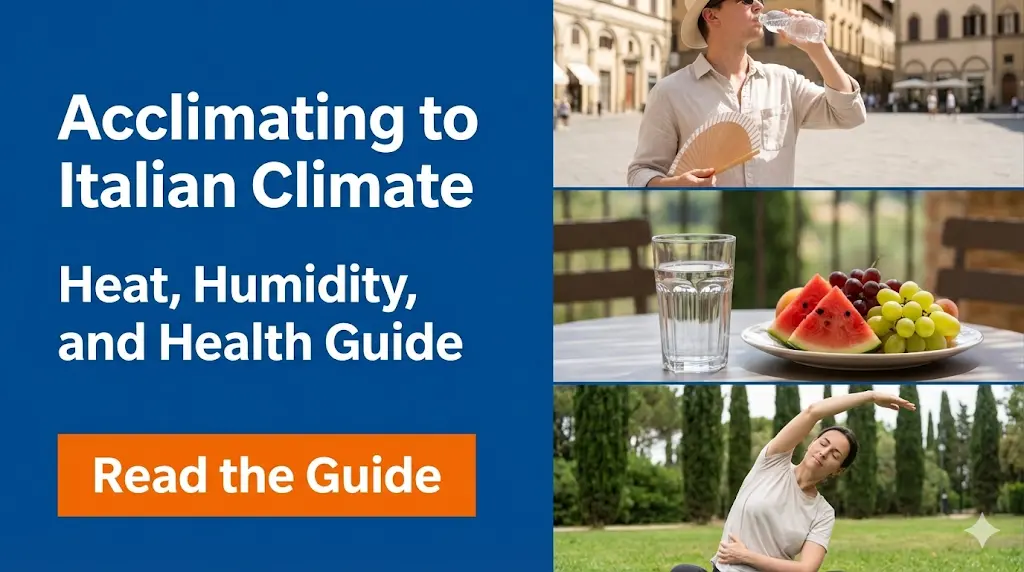
Maintaining health in the heat starts with what you put into your body. In Italy, water is not just a beverage; it is a public utility. Most Italian cities are dotted with nasoni (drinking fountains) or fontanelle that provide free, ice-cold, high-quality drinking water. Carrying a reusable bottle and refilling it constantly is the most basic health tip for any resident.
However, hydration is not just about water. When you sweat excessively in the Mediterranean humidity, you lose vital minerals. The traditional Italian diet naturally compensates for this.
- Salads and Fruit: High water-content foods like watermelon (anguria), cantaloupe, tomatoes, and cucumbers are staples.
- Saline Balance: Lightly salted foods or a bit of prosciutto can help retain necessary salts, but it is important to avoid heavy, fatty meals that require significant energy to digest, which increases internal body temperature.
- The Role of Coffee and Alcohol: While Italians love their espresso, excessive caffeine can contribute to dehydration. Similarly, while a chilled glass of white wine is tempting, alcohol impairs the body’s ability to regulate temperature.
Managing Home Temperatures: Shutters and Air Conditioning
Expats are often surprised by the lack of central air conditioning in older Italian apartments. Instead, Italians rely on “passive cooling.” This involves a strict ritual with the persiane (shutters).
To keep a home cool, you must close the shutters and windows before the sun hits that side of the building—usually by 9:00 AM. This creates a pocket of cool air inside. Windows are only opened late at night to let in the cooler evening air. If you are renting, understanding these mechanics is vital. You should also check Italian Utilities: Electricity, Water, Gas, Internet to see how running portable AC units might impact your monthly budget, as electricity costs in Italy are among the highest in Europe.
If you do use air conditioning, Italians warn against the colpo d’aria (a “hit of air”). There is a widespread cultural belief that moving suddenly from a very cold, AC-chilled room into the intense heat outside can cause muscle stiffness, digestive issues, or “stiff neck.” While scientifically debated, gradual cooling is generally better for the body’s thermoregulation.
Heat-Related Health Risks and Prevention
For those not used to temperatures consistently above 32°C with high humidity, the risk of heat exhaustion is real. Symptoms include heavy sweating, rapid pulse, dizziness, fatigue, and nausea.
Vulnerable Populations
Children and seniors are at higher risk. Italy has a very high elderly population, and the government frequently issues “Bollino Rosso” (Red Alert) warnings during heatwaves, specifically advising seniors to stay indoors. If you are caring for an older relative, it is important to look into Elder Care: Home Nurses and Assisted Living in Italy to ensure they have the necessary support during peak summer.
Practical Prevention Tips
- Dress in Natural Fibers: Linen and cotton are your best friends. Avoid synthetics that trap heat against the skin.
- Sunscreen and Hats: The Mediterranean sun is deceptively strong. Even a short walk to the grocery store can result in a burn.
- Monitor Urine Color: A simple but effective way to check hydration. It should be pale yellow.
- Avoid Midday Exercise: If you are used to a midday jog, you must move this to 6:00 AM or 9:00 PM.
Navigating the Healthcare System for Heat Issues
If you do suffer from heatstroke or severe dehydration, you need to know where to go. In Italy, the first point of contact for non-emergency issues is your Medico di Base (Family Doctor). However, during the summer, many doctors go on vacation in August.
The Guardia Medica
When your doctor is unavailable, you can use the Guardia Medica (out-of-hours medical service). They handle urgent but non-life-threatening issues.
Emergency Services
In a true emergency, such as a heatstroke where the person is confused or loses consciousness, you must dial 112. Italian emergency rooms (Pronto Soccorso) are well-equipped to handle heat-related crises, though they operate on a triage system.
Comparison of Summer Climate in Major Italian Cities
To help you prepare for where you live, the following table shows the average high temperatures and humidity levels for July/August in key locations.
| City | Average High (°C) | Average Humidity (%) | Common Summer Sensation |
| Milan | 30 – 32 | 70% | Stifling (“Afa”), heavy nights |
| Florence | 32 – 35 | 55% | Intense dry heat, valley effect |
| Rome | 31 – 34 | 60% | Hot midday, evening breezes |
| Naples | 30 – 32 | 65% | Humid but coastal breeze |
| Palermo | 30 – 33 | 60% | Intense sun, occasional desert winds |
Respiratory Health and Humidity
Humidity in Italy isn’t just a comfort issue; it can impact respiratory health. In the Po Valley, the combination of humidity and poor air circulation can exacerbate asthma or seasonal allergies.
High humidity encourages the growth of mold and dust mites. For expats moving into older, stone buildings, “rising damp” is a common issue. It is important to keep rooms ventilated and use dehumidifiers if necessary. If you find your allergies worsening during the humid months, you may need to consult an Italian specialist.
Acclimating Your Skin to the Mediterranean Sun
The “Italian Glow” is a sought-after aesthetic, but the UV index in Italy during the summer can reach dangerous levels (8-10+). Acclimating your skin requires a gradual approach.
Many expats make the mistake of spending six hours at the beach on their first free weekend. This often results in second-degree burns and long-term skin damage. In Italy, beach culture follows the sun: families arrive at 8:30 AM, leave by 12:30 PM for lunch and a nap, and return after 4:30 PM. Following this schedule is the best way to protect your skin.
If you have a history of skin issues or many moles, it is wise to schedule a screening with a local dermatologist. Most private clinics offer English-speaking services for these preventative checks.
Conclusion
Acclimation is a process of physical and cultural transformation. You cannot fight the Italian climate; you must learn to dance with it. By adopting the midday riposo, drinking from the ancient fontanelle, and respecting the power of the Mediterranean sun, you transition from a struggling “straniero” to a savvy resident.
The heat and humidity of Italy are as much a part of the landscape as the art and the history. While the first summer may feel daunting, your body will eventually adjust. The key is to listen to the local wisdom: close your shutters, eat your watermelon, and slow down. Italy has been thriving in this climate for millennia, and with the right health strategies and a bit of patience, you will too.
References
Primary sources (official)
- Ministero della Salute (Ministry of Health): Provides official bulletins on heatwaves (“Estate Sicura”) and health advice for vulnerable populations. https://www.salute.gov.it
- Protezione Civile: Monitors extreme weather events and issues alerts regarding Saharan dust and heat indexes. https://www.protezionecivile.gov.it
Other helpful sources
- Meteo.it: Italy’s primary weather resource, offering detailed “perceived temperature” and humidity maps. https://www.meteo.it
- The Local Italy: A news resource for expats that frequently publishes practical guides on surviving the Italian summer and understanding local customs. https://www.thelocal.it
Disclaimer
The information provided in this article is for informational purposes only and does not constitute medical advice. Climate acclimation varies significantly based on individual health status and pre-existing conditions. Always consult with a qualified healthcare professional before making significant changes to your physical routine or if you experience symptoms of heat-related illness. Ensure you are properly registered with the Italian healthcare system or have valid private insurance.