Physical Therapy and Rehabilitation Services in Italy
Navigating physical therapy and rehabilitation services in Italy can be complex for expatriates. This comprehensive guide explains public and private physiotherapy options, obtaining doctor referrals, treatment costs, health insurance coverage, and the unique Italian tradition of thermal therapies.
Disclosure: This post may contain affiliate links. We may earn a commission at no extra cost to you if you make a purchase through these links. Read full disclosure.
Introduction to Physical Therapy and Rehabilitation Services in Italy
Italy offers a robust and highly ranked healthcare system, the Servizio Sanitario Nazionale (SSN), which provides universal medical coverage to its citizens and legal foreign residents. However, the pathway to accessing specialized allied health services, such as physical therapy and structured rehabilitation, involves specific bureaucratic steps that can bewilder newcomers. The system operates on a blend of highly regulated public care and a rapidly expanding, modernized private sector.
Understanding the local medical terminology, deciphering the differences between public and private care pathways, and embracing unique cultural approaches to healing are essential steps for any foreigner living in the country. For instance, you will quickly learn that the Italian approach to physical therapy often involves sophisticated machinery alongside manual manipulation, and that the government even subsidizes visits to natural hot springs for specific rehabilitative cures.
This guide provides a detailed, step-by-step roadmap for securing the physical therapy and rehabilitation services you need in Italy. We will explore the vital roles of different medical professionals, explain how to navigate the public booking system, detail the costs and insurance implications of private care, and offer practical advice for finding English-speaking therapists. By familiarizing yourself with these processes, you can ensure a smooth recovery and return to enjoying the unparalleled Italian lifestyle without unnecessary pain or administrative stress.
The Italian Approach to Rehabilitation and Physiotherapy
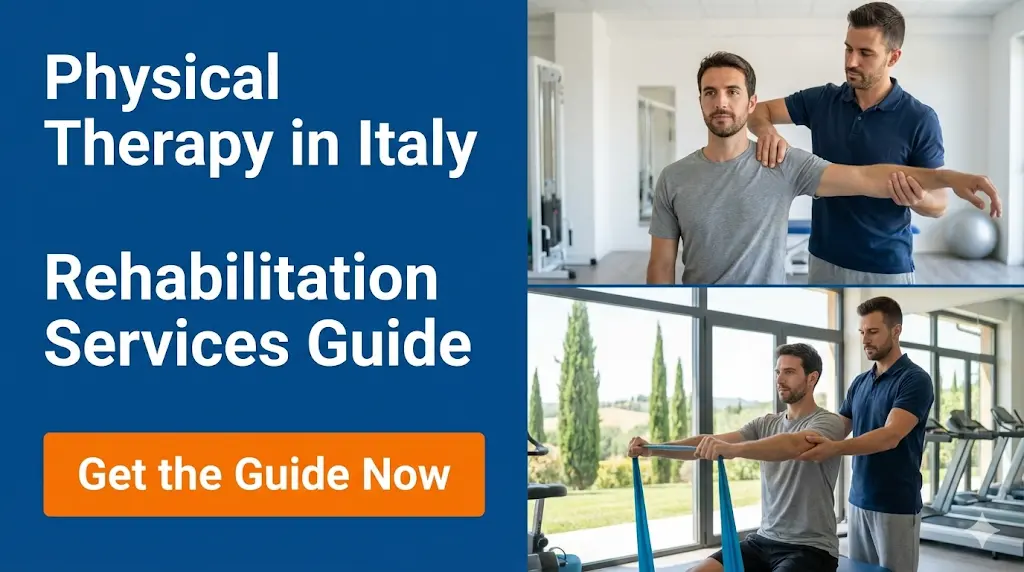
In Italy, physical therapy (known as fisioterapia) and rehabilitation (riabilitazione) are highly respected medical disciplines deeply integrated into the broader healthcare system. The Italian medical philosophy heavily emphasizes rehabilitation not just as a post-surgical necessity, but as a primary, non-invasive treatment for chronic pain, musculoskeletal disorders, and neurological conditions.
The country places a strong focus on a multidisciplinary approach. When a patient suffers a complex injury, their recovery is rarely managed by a single professional. Instead, an entire team consisting of orthopedic surgeons, physiatrists, physical therapists, and sometimes osteopaths collaborate to design and execute a comprehensive recovery plan.
Furthermore, Italian physiotherapy clinics are uniquely known for their heavy integration of advanced electro-medical devices. While manual therapy, stretching, and prescribed exercises form the core of the treatment, it is incredibly common for Italian physical therapists to utilize technologies like Tecar therapy (radiofrequency diathermy), high-intensity laser therapy, and focused ultrasound to accelerate tissue healing and manage pain.
Key Professionals in the Rehabilitation Sector
To effectively navigate the system, expats must understand the distinct roles and qualifications of the professionals providing rehabilitation services in Italy. The two most important figures you will encounter are the Fisiatra and the Fisioterapista.
The Physiatrist
The Fisiatra (Physiatrist or Physical Medicine and Rehabilitation Physician) is a fully licensed medical doctor who has completed a specialized medical residency in physical and rehabilitation medicine. In the Italian public healthcare system, the Fisiatra acts as the ultimate authority and the gatekeeper for rehabilitation services. They are responsible for diagnosing the musculoskeletal or neurological issue, prescribing medications if necessary, and designing the exact therapeutic protocol. If you need public physical therapy, you will almost always have to be evaluated by a Fisiatra first. They will write the specific prescription dictating exactly how many sessions of manual therapy, exercises, or machine-based therapies you require.
The Physical Therapist
The Fisioterapista (Physical Therapist or Physiotherapist) is the allied health professional who physically executes the rehabilitation plan. In Italy, becoming a physical therapist requires completing a rigorous three-year university degree program (Laurea in Fisioterapia) offered by the faculty of medicine, followed by mandatory registration in the national professional registry (Albo dei Fisioterapisti). They are experts in human anatomy, biomechanics, and kinesiology. While they carry out the treatments prescribed by the Fisiatra in the public sector, in the private sector, physical therapists can assess patients and develop treatment plans independently for many common ailments.
Accessing Public Physical Therapy Through the SSN
If you are a registered resident utilizing the national healthcare system, you have the right to access highly subsidized physical therapy and rehabilitation services. However, this route requires patience and strict adherence to bureaucratic protocols.
Step 1: The General Practitioner
Your journey begins with a visit to your assigned primary care physician, known as the medico di base. You must explain your physical ailments, pain, or mobility issues to them. To understand how to establish this vital medical relationship upon moving to Italy, consult our guide on Registering with an Italian Family Doctor.
Step 2: The Referral
If your general practitioner determines that your condition warrants specialist intervention, they will issue a formal electronic referral (the impegnativa or ricetta elettronica). This referral will typically be for a “Visita Fisiatrica” (a physiatric examination) or a “Visita Ortopedica” (an orthopedic examination).
Step 3: Specialist Evaluation and Prescription
Using the regional centralized booking system (CUP), you will schedule your appointment with the public specialist. During this consultation, the Fisiatra will evaluate your condition, possibly order diagnostic imaging like an MRI or X-ray, and write a detailed prescription for a “ciclo di fisioterapia” (a cycle of physical therapy). This prescription will list the specific therapies required, such as “10 sessions of motor rehabilitation” or “10 sessions of Tecar therapy.”
Step 4: Booking the Therapy
With the Fisiatra’s prescription in hand, you must return to the CUP system or contact an SSN-affiliated public rehabilitation center (centro convenzionato) to book your therapy sessions.
The primary drawback of the public system is the waiting list (lista di attesa). Unless your case is categorized as highly urgent (such as immediate post-operative rehabilitation following joint replacement surgery or stroke recovery), you may have to wait several weeks or even months to begin your public physical therapy sessions.
The Private Sector for Physical Therapy
Due to the long waiting times associated with the public system, the vast majority of expatriates, and a significant percentage of the Italian population, choose to utilize the private healthcare sector for physical therapy.
Opting for private care eliminates almost all bureaucratic friction. You do not need a referral from your general practitioner, nor do you necessarily need an initial evaluation by a Fisiatra, provided your condition is a standard musculoskeletal issue like a sprained ankle, a sports injury, or postural back pain. You can simply research a highly-rated private studio fisioterapico (physiotherapy clinic) in your area, call them directly, and book an assessment. In most major cities, you can secure a private appointment within 24 to 48 hours.
The private sector is heavily modernized, with clinics often resembling high-end wellness centers. Furthermore, private clinics are far more likely to employ multilingual staff, making it significantly easier to find an English-speaking therapist who can perfectly understand the nuances of your pain and medical history. To explore the broader implications of choosing private care, you can read about the Differences between Public and Private Healthcare in Italy.
Common Modalities and Treatments in Italy
When you attend a physical therapy session in Italy, especially in a private clinic, you will likely experience a combination of hands-on treatments and electro-medical device applications. Some of the most common modalities include:
Manual Therapy and Kinesitherapy
Chinesiterapia (kinesitherapy) is the foundation of Italian rehabilitation. This involves the therapist physically manipulating your joints, massaging soft tissues, and guiding you through specific active and passive movements to restore mobility, improve strength, and correct biomechanical dysfunctions.
Tecar Therapy
Tecarterapia is ubiquitous in Italian physical therapy clinics, yet surprisingly uncommon in North America. It is a form of endogenous thermotherapy that uses radiofrequency energy to generate heat deep within the body’s tissues. The therapist uses a handheld device to massage the affected area while the machine sends energy into the muscles, tendons, or ligaments. It is highly praised for rapidly reducing inflammation, accelerating cellular repair, and providing immediate pain relief for conditions like tendonitis, muscle tears, and osteoarthritis.
Laser and Ultrasound Therapy
High-power laser therapy (laserterapia) and therapeutic ultrasound (ultrasuonoterapia) are frequently prescribed to target localized inflammation. These machines are commonly used to treat conditions such as plantar fasciitis, epicondylitis (tennis elbow), and acute joint sprains.
Postural Re education
Many Italian physical therapists specialize in specific schools of postural re-education, such as the Mézières Method or the Souchard Method. These therapies focus on stretching and realigning the body’s muscular chains to treat chronic back pain, scoliosis, and tension headaches caused by poor posture or sedentary lifestyles.
Cost Comparison Public vs Private Physical Therapy
Understanding the financial differences between public and private rehabilitation is crucial for managing your healthcare budget as an expat.
In the public SSN system, patients pay a subsidized co-payment known as a ticket sanitario. The cost of this ticket is legally capped by the regional health authority. Some individuals, such as those with recognized chronic illnesses, severe disabilities, or low-income seniors, hold an exemption (esenzione) and receive public physical therapy completely free of charge.
In the private sector, costs are paid entirely out-of-pocket, though they are generally lower than equivalent private medical costs in the United States or Northern Europe.
Estimated Cost Table for Rehabilitation Services
| Service / Therapy Type | Public SSN Cost (Ticket Sanitario) | Private Clinic Cost (Estimated) |
| Initial Specialist Consultation (Fisiatra) | €20 – €35 per visit | €80 – €150 per visit |
| Manual Therapy / Kinesitherapy | €3 – €5 per session | €40 – €80 per session |
| Tecar Therapy / Laser Therapy | €3 – €5 per session | €30 – €60 per session |
| Standard Rehab Cycle (e.g., 10 sessions) | €36 – €46 (Maximum ticket cap per prescription) | €350 – €700 for the full package |
| At-Home Physical Therapy Visit | Free (Only for severe disability/bedridden) | €70 – €120 per visit |
Note: Public ticket caps vary slightly by region. Private costs fluctuate based on the clinic’s location, prestige, and the specific equipment utilized.
Health Insurance and Expat Coverage
Because relying on private physical therapy is so common, securing appropriate health insurance is a wise decision for any expatriate. If you hold a comprehensive international expatriate health insurance policy (such as those provided by Cigna, Allianz, or Bupa), physical therapy and rehabilitation are almost always covered under the outpatient care modules.
Most international insurers require you to obtain a referral from a general practitioner or a specialist before they will authorize reimbursement for physical therapy sessions. Once authorized, you can typically visit any private, licensed physical therapist in Italy, pay for the sessions out-of-pocket, and submit the itemized invoices to your insurance portal for reimbursement. For detailed advice on selecting the right coverage for your lifestyle, review our guide on Choosing Private Health Insurance Plans in Italy.
Tax Deductions for Physical Therapy
A highly beneficial aspect of the Italian tax system for legal, registered residents is the medical expense deduction. The Italian government allows taxpayers to deduct 19% of their out-of-pocket medical and health-related expenses from their annual income tax return (Dichiarazione dei Redditi), provided the total expenses exceed a small base threshold (currently €129.11).
Physical therapy sessions provided by a licensed fisioterapista are fully eligible for this 19% tax deduction. However, to legally claim it, you must follow strict payment rules. The payment must be “traceable” (pagamento tracciabile), meaning you must pay with a credit card, debit card, or bank transfer. Cash payments for physical therapy will void your ability to claim the deduction. Furthermore, the clinic must issue you a formal commercial invoice (fattura) or a “talking receipt” (scontrino parlante) that explicitly features your Italian tax identification number (Codice Fiscale).
The Unique Italian Tradition Thermal Baths and Cures
One of the most fascinating and culturally distinct aspects of the Italian rehabilitation landscape is the medical recognition of thermal baths (Terme). Italy is geologically blessed with hundreds of natural, mineral-rich hot springs scattered from the Alpine north to the volcanic islands of the south.
Unlike in many countries where visiting a hot spring is purely a luxury spa vacation, in Italy, thermal cures (cure termali) are deeply integrated into preventative medicine and rehabilitation. The Italian Ministry of Health scientifically recognizes the therapeutic properties of specific thermal waters and muds for treating chronic conditions.
State Sponsored Thermal Rehabilitation
Remarkably, the public SSN covers thermal therapy. Once a year, an Italian resident can ask their general practitioner for a prescription for a specific cycle of thermal treatments. For rehabilitation purposes, this usually involves fangoterapia (therapeutic hot mud treatments) or balneoterapia (immersion in mineral waters).
These treatments are prescribed for chronic orthopedic issues such as osteoarthritis, rheumatoid arthritis, osteoporosis, and severe joint stiffness. With the doctor’s prescription, the patient can visit an accredited, medically supervised thermal facility (such as those in Abano Terme, Montecatini Terme, or Ischia) and receive a full 12-day cycle of treatments, paying only the standard public ticket (roughly €55), while the state covers the rest of the medical costs.
Specialized Rehabilitation Fields
Beyond general orthopedics, Italy boasts highly advanced, specialized rehabilitation centers dedicated to complex medical fields.
Neurological Rehabilitation
Patients recovering from strokes, traumatic brain injuries, spinal cord injuries, or managing degenerative diseases like Multiple Sclerosis and Parkinson’s Disease require intense, specialized care. Italy has a network of Centri di Riabilitazione Neuromotoria (Neuromotor Rehabilitation Centers). These inpatient and outpatient facilities employ robotic-assisted gait training, hydrotherapy pools, occupational therapists, and speech-language pathologists to help patients regain maximum functional independence.
Sports Rehabilitation
Sports medicine is a massive industry in Italy, a country passionate about soccer, cycling, and skiing. Private sports rehabilitation clinics cater to both elite professionals and amateur athletes. These clinics feature indoor turf fields, advanced biomechanical motion-capture labs, and specialized athletic trainers focused entirely on safe, rapid return-to-play protocols and injury prevention.
Finding English Speaking Physiotherapists
When you are in pain, communicating the exact nature, location, and intensity of your discomfort is critical for receiving an accurate diagnosis and effective treatment. While the medical terminology may be similar in Italian, the nuances of describing pain can be lost in translation. Finding an English-speaking physical therapist is a priority for many expats.
Fortunately, in major international hubs such as Rome, Milan, Florence, and Naples, locating bilingual therapists is relatively straightforward. Many private, high-end clinics actively cater to the expatriate and diplomatic communities, heavily advertising their English-speaking staff.
To find a trusted professional, expatriates should consult the medical provider lists often published by their home country’s embassy or consulate in Italy. Additionally, utilizing digital expat community forums on platforms like Facebook is an excellent way to source personal, vetted recommendations.
Alternative and Complementary Therapies
In addition to traditional physical therapy, many expats seek alternative or complementary manual therapies, such as osteopathy and chiropractic care, to manage pain and improve mobility.
It is important to note the legal distinctions in Italy. While physical therapy is a heavily regulated, state-recognized medical profession, the legal recognition of osteopathy (osteopatia) and chiropractic (chiropratica) has historically been more ambiguous, though recent legislation is bringing them into formal medical registries.
Osteopaths are incredibly popular in Italy, widely utilized for treating back pain, neck tension, and even pediatric issues like infant colic. However, because they often operate outside the strict framework of the SSN, osteopathic and chiropractic sessions are almost exclusively private, out-of-pocket expenses and are rarely covered by standard public health prescriptions.
Conclusion
Navigating physical therapy and rehabilitation services in Italy requires an understanding of a system that beautifully balances advanced medical technology with a holistic, multidisciplinary approach to healing. Whether you are dealing with a minor sports injury or require extensive post-operative rehabilitation, the Italian healthcare landscape is fully equipped to guide you back to optimal health.
While the public SSN provides an incredible, low-cost safety net—even going so far as to subsidize rehabilitative cures in natural thermal baths—the reality of bureaucratic waiting lists prompts many expats to utilize the fast, modern, and highly accessible private sector. By understanding the distinct roles of the physiatrist and the physical therapist, securing the proper international health insurance, and ensuring your payments are tracked for valuable tax deductions, you can effortlessly manage your recovery. Embrace the active Italian lifestyle with the reassuring knowledge that world-class rehabilitation support is always within reach.
References
Primary Sources Official
- Ministero della Salute (Italian Ministry of Health): Official portal detailing the Essential Levels of Care (LEA), patient rights regarding rehabilitation services, and the regulations surrounding state-sponsored thermal therapies (cure termali). https://www.salute.gov.it
- AIFI (Associazione Italiana Fisioterapisti): The leading Italian professional association for physical therapists, providing public directories, professional standards, and information regarding the legal registry (Albo). https://aifi.net
Other Helpful Sources
- Expatica Italy: Comprehensive guides for expatriates covering the structure of the Italian healthcare system, navigating the CUP booking process, and managing out-of-pocket medical costs. https://www.expatica.com/it/healthcare/
- Federterme: The Italian Federation of Thermal Industries and Curative Waters, offering detailed resources on accredited thermal bath facilities and the specific rehabilitation therapies covered by the SSN. https://www.federterme.it
Disclaimer
The information provided in this article is for educational and informational purposes only and does not constitute official medical, legal, or financial advice. Healthcare regulations, the scope of public SSN coverage, Ticket Sanitario co-payment caps, and tax deduction laws in Italy are subject to frequent legislative updates by national and regional authorities. Always consult directly with a licensed Italian medical doctor (Medico di Medicina Generale or Fisiatra) for an accurate diagnosis and treatment plan before beginning any physical therapy or rehabilitation program. Consult a certified tax professional regarding the eligibility of your medical expenses for local tax deductions.