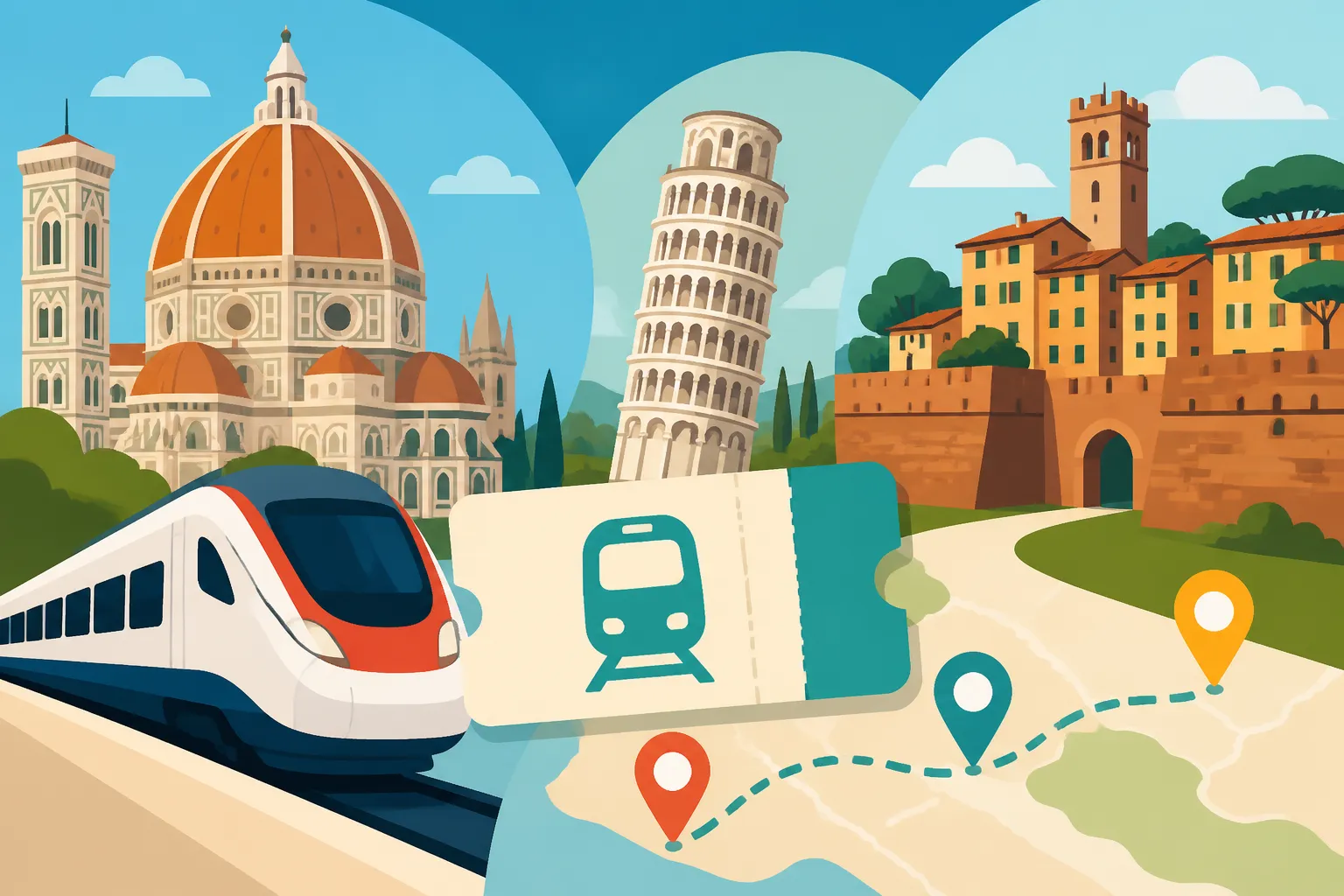
Florence to Pisa and Lucca: Regional Ticketing Explained
Ah, the romance of Italian travel! But then you hit the treni regionali system, and that romance can quickly turn into a bureaucratic puzzle, especially when you're trying to string together a few beautiful Tuscan towns like Pisa and Lucca from your base in Florence. Many an expat, myself included, has stood bewildered at a ticket machine, wondering if they've bought the right ticket, if they need to validate it, and if they'll end up with a hefty fine. This guide is here to untangle that knot, showing you exactly how to navigate regional train ticketing, with a special focus on making your journey seamless and stress-free.
Disclosure: This post may contain affiliate links. We may earn a commission at no extra cost to you if you make a purchase through these links. Read full disclosure.
The Unique Nuances of Italian Regional Train Ticketing
When you're dreaming of zipping across Italy on a high-speed Frecciarossa, you're usually looking at a completely different beast than the humble treno regionale. The regional trains are the backbone of local travel, connecting smaller towns and offering a more leisurely, often charming, way to see the country. However, their ticketing system has some crucial differences that can trip up even seasoned travelers if they're not aware.
Understanding Regional vs. High-Speed Tickets
First, let's clear up the biggest misconception: regional train tickets operate on a fixed price system. This means the fare from Florence (Firenze Santa Maria Novella) to Pisa (Pisa Centrale) is always the same, whether you buy it today or two months from now. There are no early-bird discounts or last-minute price hikes, which is a relief! This stands in stark contrast to the dynamic pricing of high-speed trains like Trenitalia's Frecciarossa or Italo, where booking far in advance can save you a bundle. You can learn more about How to Buy Trenitalia and Italo Tickets and Save Money if you're planning longer journeys.
The type of train also dictates the flexibility. Regional tickets are generally valid for a set period, usually a few hours or a day, and allow you to take any regional train on that specific route within that timeframe. High-speed tickets, however, are for a specific seat on a specific train at a specific time, and changing them often comes with fees or restrictions.
The Dreaded Validation Requirement
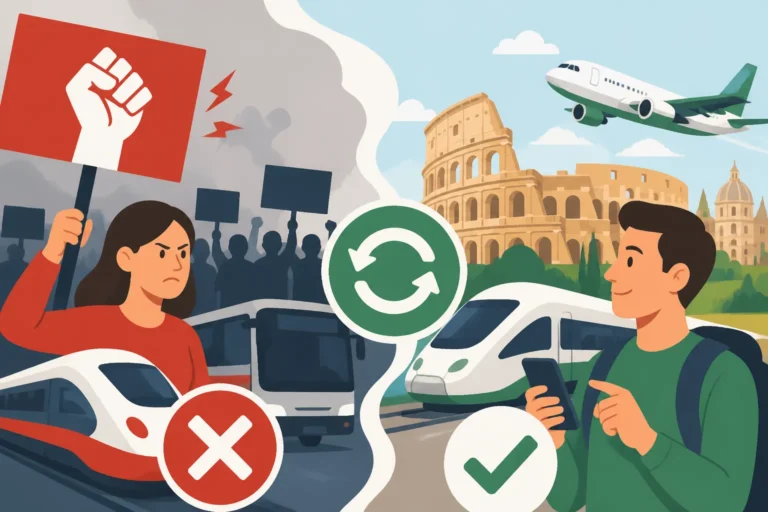
This is where many first-timers (and even some forgetful long-timers) get caught out. If you purchase a physical paper ticket for a regional train from a station counter, a ticket machine, or a tabaccheria (a tobacco shop that often sells train and bus tickets), you must validate it before boarding. This usually involves finding one of those small, green-and-white (or sometimes yellow or red) machines on the platform and inserting your ticket. It makes a satisfying whirring noise and stamps a date and time on your ticket.
Why is this so important? Because a paper regional ticket is essentially an "open" ticket. Without validation, it's impossible for the conductors to know if you've used it before or if you're attempting to travel with an expired ticket. Traveling with an unvalidated paper ticket is considered equivalent to traveling without a ticket, and the fines are substantial. I've seen tourists teary-eyed after being hit with a €50+ fine because they genuinely didn't know about the validation rule. It's a frustrating hurdle that feels designed to confuse, but it's a reality of the Italian system. For more in-depth info, check out How to Validate a Regional Train Ticket in Italy.
Your Journey: Florence to Pisa and Lucca by Regional Train
Now, let's get down to the brass tacks of planning your day trip from Florence, hitting both the Leaning Tower and the charming walled city of Lucca. This is a classic Tuscan itinerary, and it's perfectly doable by regional train.
Planning Your Route and Stops
The most logical way to visit both Pisa and Lucca from Florence is to take the train from Florence to Pisa, spend some time there, then hop on another regional train from Pisa to Lucca, and finally return directly to Florence from Lucca (though a change in Pisa is also common for the return leg).
- Florence (Firenze Santa Maria Novella) to Pisa (Pisa Centrale): This is a direct shot, usually taking about an hour to an hour and twenty minutes. Trains are frequent, typically running every 20-30 minutes. Once you arrive at Pisa Centrale, the Leaning Tower and Piazza dei Miracoli are a pleasant 20-25 minute walk or a short bus ride away.
- Pisa (Pisa Centrale) to Lucca: This leg is shorter, around 25-30 minutes, and also direct. Trains are less frequent than the Florence-Pisa route but still run regularly. Lucca's station is just outside the historic walls, making it incredibly convenient for exploring.
- Lucca to Florence (Firenze Santa Maria Novella): Depending on the time of day, you might find direct trains, or you might need to change at Pisa Centrale. The total journey time will be around 1 hour 30 minutes to 2 hours.
For navigating these routes and ensuring you see all the sights, having a clear plan is essential. Consider checking out Florence for First-Time Visitors: What to See and Skip and other regional guides to maximize your time.
The Smart Way to Book: Using Omio
This is where a service like Omio truly shines and makes your life as an expat or tourist so much easier. Imagine being able to see all your train options, compare prices (even though regional prices are fixed, it helps visualize), and book your tickets, all from one user-friendly platform in English. Not only that, but Omio provides digital tickets, which means you completely bypass the antiquated paper ticket validation step. This alone is a game-changer and saves you from those platform scramble moments.
Here’s why Omio becomes your best friend for this kind of multi-stop regional journey:
- Consolidated Search: Instead of jumping between the Trenitalia site (which can be a bit clunky for multi-leg journeys if you're not fluent in Italian) and local transport apps, Omio pulls everything together. You can search for Florence to Pisa, then Pisa to Lucca, and then Lucca back to Florence, all within the same search flow.
- Digital Tickets: As mentioned, this is huge. No need to worry about finding a validation machine that actually works, or trying to understand the instructions in Italian. Your ticket is on your phone, ready to be shown to the conductor. This is a massive relief, especially when you're rushing to catch a connection.
- English Interface: For many, navigating Italian websites or ticket machines in a foreign language adds a layer of stress. Omio removes that barrier entirely, providing clear, concise information.
- Multi-Modal Options: While trains are the clear winner for Florence-Pisa-Lucca, for other journeys or alternative plans, Omio can also show you bus options, giving you flexibility.
Here’s a step-by-step example of how to book your trip using Omio:
- Open the Omio app or website.
- Enter your first leg: "Florence" (Firenze Santa Maria Novella should pop up) to "Pisa" (Pisa Centrale). Select your desired date and approximate time.
- Review results: Omio will show you all available regional trains, their departure/arrival times, and the fixed price.
- Select your outbound ticket and proceed to checkout. You might even be able to add the return journey at this point, or you can do it as separate bookings.
- For Pisa to Lucca: Once you're done in Pisa, open Omio again. Search for "Pisa" (Pisa Centrale) to "Lucca" for your desired time. Select and book.
- For Lucca back to Florence: Again, search for "Lucca" to "Florence" (Firenze Santa Maria Novella). Omio will show you direct and indirect options. Choose what suits your schedule.
By using Omio for all your regional tickets, you're streamlining the entire process, removing common pain points, and ensuring a smoother, more enjoyable travel experience. It’s a genuine lifesaver for tackling Italian public transport.
What to Expect on Board
Regional trains in Italy are generally comfortable, though they vary in modernity. You'll find two classes (first and second), but for short regional hops, second class is perfectly fine and where most people travel. Seating is typically open, meaning no reserved seats (unless you're on a Regionale Veloce with some designated first-class seats, but even then, it's mostly open seating).
During your journey, a conductor will come through to check tickets. Simply show them the digital ticket on your phone or a printout of your Omio booking. They'll scan it, and you're good to go!
Practical Tips for Your Tuscan Train Adventure
Beyond just the tickets, there are a few other things to keep in mind to make your trip truly enjoyable.
Station Navigation and Connections
Italian train stations, even smaller ones, are generally well-signposted. Look for "Partenze" (Departures) to find your platform (binario). Electronic display boards will list train numbers, destinations, and departure times. Just remember that track numbers can sometimes change at the last minute, so keep an eye on the boards.
When changing trains at Pisa Centrale, for instance, don't assume your next train will be on the adjacent track. Give yourself ample time between connections, especially if you're unfamiliar with the station or have mobility issues. A 15-20 minute buffer is usually more than enough for regional connections.
Luggage and Comfort
Since these are short regional trips, most people travel with day packs or small suitcases. There's usually overhead storage for smaller items and racks at the end of carriages for larger bags. However, space can be limited on crowded trains, especially during peak commuter hours or major tourist seasons. Try to travel light if possible.
Comfort-wise, pack some water and perhaps a snack, especially if you're prone to getting hungry between meals. You'll find small shops or vending machines at larger stations, but it’s always good to be prepared. Also, consider that some regional trains might not have air conditioning, particularly older models in summer.
Understanding the Wider Italian Transport Network
While regional trains are ideal for Florence, Pisa, and Lucca, Italy's transport network is vast. For longer distances, you might opt for high-speed trains. When it comes to local city transport within Florence, Pisa, or Lucca, buses are generally the way to go. Platforms like Omio are fantastic because they consolidate not just train tickets but often bus options too, making it a comprehensive tool for Getting Around Italian Cities: Metro, Tram, and Buses or indeed anywhere in Italy.
Remember that Italian holidays can impact train schedules, especially on major festive days like Ferragosto. It's always wise to double-check schedules on Omio or Trenitalia's official site during these times.
Maximizing Your Day Trip Experience
You've got your tickets sorted with Omio, you know the drill for regional trains – now focus on enjoying the beauty of Tuscany!
Time Management in Pisa
Pisa is often a quicker stop for many visitors, primarily focused on the Piazza dei Miracoli (Leaning Tower, Duomo, Baptistery, Camposanto Monumentale). Allow at least 2-3 hours here to truly appreciate the architecture, climb the tower if you wish, and soak in the atmosphere. Remember to book your Leaning Tower tickets in advance online if you plan to climb, as slots fill up quickly.
Once you’ve had your fill of the leaning wonder, grab a quick bite at a casual trattoria or a paninoteca before heading to the station for your train to Lucca.
Leisurely Lucca Exploration
Lucca, with its magnificent Renaissance walls that you can walk or cycle atop, offers a different, more relaxed charm. Dedicate at least 3-4 hours here, or even longer if you wish to rent a bike and cycle the entire circuit of the walls. Explore the Piazza dell'Anfiteatro, climb the Guinigi Tower for panoramic views, and wander through its pedestrian-friendly streets. Lucca is perfect for a leisurely afternoon passeggiata and enjoying a delicious Tuscan dinner before heading back to Florence.
Consider using Omio for your return journey to Florence from Lucca to easily check real-time schedules and ensure a smooth end to your day. It’s all about making your Italian travels simple, efficient, and enjoyable, and with tools like Omio, those regional train trips become a breeze rather than a headache.
| Journey Segment | Typical Duration | Frequency | Key Feature | Ticketing Tip |
|---|---|---|---|---|
| Florence to Pisa | 1h 0m – 1h 20m | High | Direct | Book with Omio for digital ticket convenience |
| Pisa to Lucca | 25m – 30m | Medium | Direct | Essential to book next leg via Omio |
| Lucca to Florence | 1h 30m – 2h | Medium | Often direct, sometimes change at Pisa | Omio helps identify best direct route |
| Ticket Type | Regional | Fixed Price | Validation | Digital tickets (Omio) = NO validation needed |
Disclaimer
The information provided in this guide is for general informational purposes only and is subject to change. While we strive to keep information up-to-date, train schedules, prices, and regulations can change without prior notice. Always consult official sources like Trenitalia, and the booking platform Omio for the most current details before making travel plans. Travel insurance is always recommended.