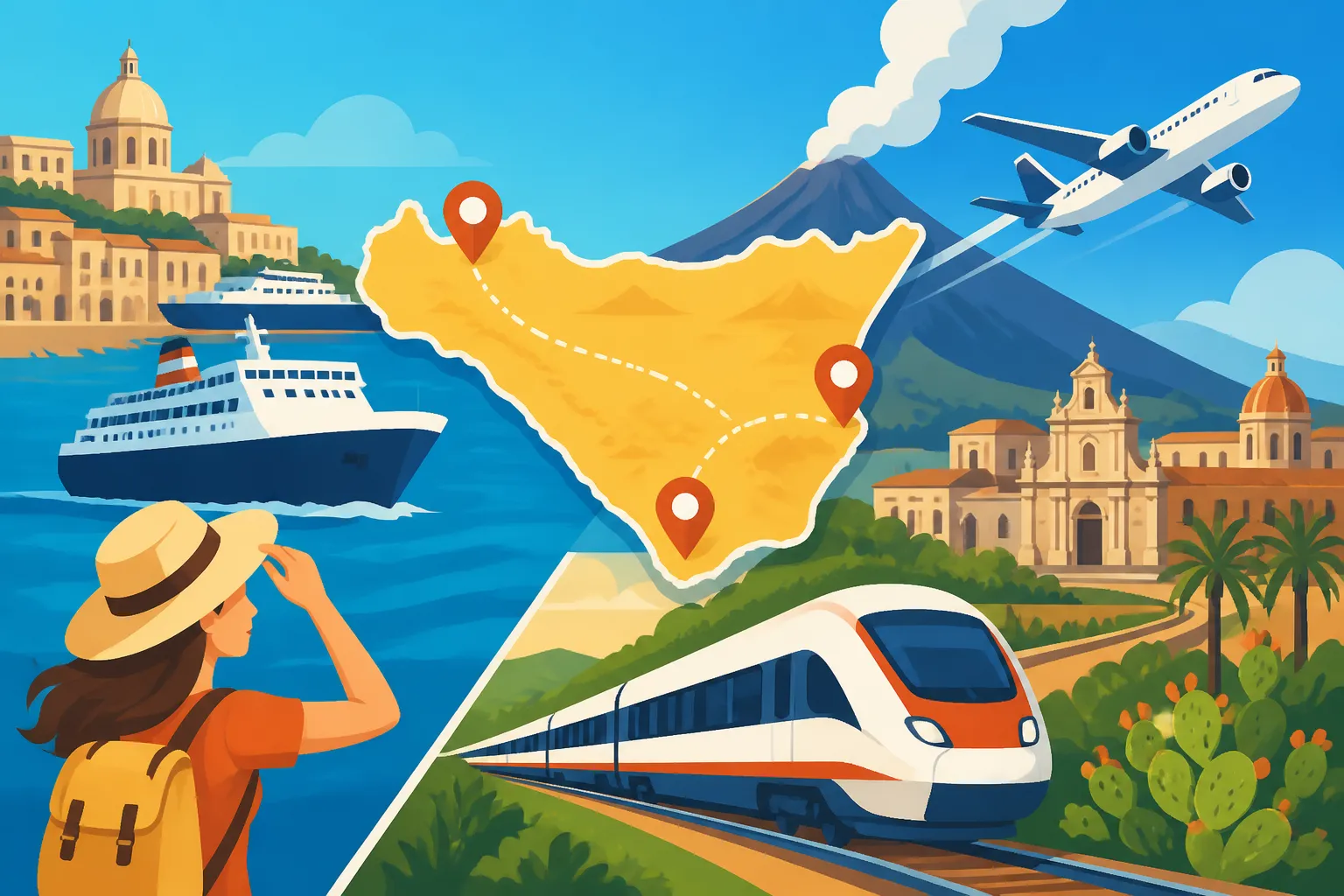
Naples to Palermo and Catania: Sicily by Ferry, Rail, and Air
Ah, the siren call of Sicily from the bustling chaos of Naples! It’s a journey many of us expats consider, whether for a quick getaway or a longer exploration, but figuring out the best way to get there can feel like navigating a maze blindfolded. This guide will cut through the confusion, exploring all your options—ferry, train, and air—from Naples to the vibrant cities of Palermo and Catania, providing you with all the nitty-gritty details to make your trip as smooth as a Sicilian cannolo. We'll also highlight how platforms like Omio can be your ultimate travel companion in comparing and booking your adventure.
Disclosure: This post may contain affiliate links. We may earn a commission at no extra cost to you if you make a purchase through these links. Read full disclosure.
The Allure of Sicily from Naples: Why the Journey Matters
For many of us living in Italy, the desire to explore more of this incredible country is constant. And Sicily, with its ancient history, stunning coastlines, and distinct culture, often sits high on the list. But getting from mainland Italy, especially from a vibrant southern hub like Naples, to this island paradise isn't always as straightforward as hopping on a high-speed train. It’s a journey that requires a bit more planning, but trust me, the reward is absolutely worth it.
Naples as Your Gateway to the South
Naples itself is a whirlwind of sensory delights—the birthplace of pizza, home to incredible archaeological sites like Pompeii and Herculaneum, and a city bursting with unapologetic Italian life. For anyone venturing further south, Naples Capodichino Airport (NAP) and its bustling port are crucial hubs. Whether you're coming from another part of Europe or even just up north in Italy, you'll likely find yourself passing through Naples when Sicily calls. It’s the closest major mainland city to the island, making it a natural starting point for many travelers.
From Naples, you can easily connect to regional train networks or hop on a bus to other destinations in Campania or Calabria, or indeed, prepare for your Sicilian adventure. The city's transport infrastructure, while sometimes appearing chaotic, is surprisingly well-connected once you understand its rhythm. Just be prepared for the typical Neapolitan energy—it’s part of the charm, even if it adds a layer of delightful pandemonium to your travel plans!
The Sicilian Promise: Palermo and Catania
Sicily isn't just one destination; it's an island of diverse landscapes and distinct urban centers, each with its own personality. When you travel from Naples, you're usually heading for one of its two largest cities: Palermo or Catania.
Palermo, the regional capital, is a grand dame of faded glory, bustling markets, and breathtaking Norman-Arab architecture. It's a city that demands you dive in headfirst, get lost in its alleys, and savor its incredible street food. From the grandeur of the Palazzo dei Normanni to the vibrant Vucciria market, Palermo is an unfiltered immersion into Sicilian life. It has a gritty charm that appeals to those looking for an authentic experience, a place where history whispers from every crumbling facade.
Catania, on the other hand, sits at the foot of Mount Etna, offering a different vibe altogether. Rebuilt in Baroque style after an earthquake in 1693, it's a city of dark volcanic stone, wide piazzas, and a youthful energy thanks to its large university. It's an excellent base for exploring the east coast of Sicily, including the stunning Taormina, Syracuse, and, of course, the magnificent volcano itself. Catania feels a bit more modern and organized than Palermo, yet still retains that undeniable Sicilian passion and warmth, particularly evident in its legendary fish market. Choosing between these two often comes down to what kind of Sicilian adventure you're craving.
Taking to the Skies: Flying from Naples to Sicily
For many, the idea of a quick hop over the Tyrrhenian Sea is the most appealing way to reach Sicily, especially if time is of the essence. Air travel offers speed and, often, surprising affordability, making it a popular choice for both tourists and residents.
The Convenience of Air Travel: Pros and Cons
The primary advantage of flying from Naples to Sicily is undeniably speed. A flight from Naples to Palermo or Catania generally takes just under an hour. Compare that to a lengthy ferry ride or a combined train-ferry journey, and it's clear why many opt for the skies. This means more time exploring Sicily and less time in transit, which can be a huge plus for shorter trips.
However, air travel isn't without its drawbacks. While the flight itself is short, you need to factor in check-in times, security, and travel to and from the airports on both ends. This can quickly add an hour or two to your journey. Then there's the baggage situation, especially with budget airlines. Those "cheap" flights can quickly become not-so-cheap once you add a checked bag or two, extra legroom, or priority boarding. For those who prioritize a stress-free experience, a crowded budget flight with strict baggage rules might not be the most relaxing start to a vacation. But for the backpacker or the light traveler, it’s often the most economical.
Navigating Naples Capodichino NAP Airport
Naples Capodichino Airport (NAP) is a relatively compact but efficient international airport located just a few kilometers northeast of the city center. Getting there is generally straightforward. You can take a taxi, which offers a fixed fare to different parts of the city, or opt for the Alibus airport shuttle. The Alibus is a public service that connects the airport directly to Napoli Centrale train station and the main port area (Molo Beverello), making it very convenient for onward travel. The journey usually takes about 20-30 minutes, depending on traffic. Tickets can be purchased directly on board or at designated sales points.
Once at the airport, check-in and security are fairly standard for European airports. During peak season, however, lines can get long, so always allow ample time, especially if you have a morning flight. The airport offers various amenities, including shops, restaurants, and lounges, so you won't be bored if you arrive a bit early.
Booking Flights and Practical Tips
When it comes to finding the best flight deals from Naples to Sicily, a platform like Omio can be incredibly useful. Omio allows you to compare flights from different airlines, including budget carriers like Ryanair and easyJet, as well as more traditional airlines such as ITA Airways and Volotea, all in one place. This saves you the hassle of checking multiple airline websites individually. You can quickly see which dates and times offer the best prices and balance convenience with cost.
Here’s a quick tip: flights tend to be cheaper if booked several weeks or months in advance, especially during the high season (summer, Easter, Christmas). Also, consider flying mid-week rather than on weekends. For flights to Palermo (PMO) and Catania (CTA), you’ll find frequent direct connections. Always double-check baggage allowances, as these can vary significantly between airlines and impact your overall cost. If you're traveling light, you might snag an incredible deal, but if you're carrying a larger suitcase, calculate those extra fees. Don't forget your ID and boarding pass, and be sure to check any specific travel requirements for Sicily, although as domestic travel within Italy, these are usually minimal.
The Classic Voyage: Ferry Travel to Sicily
For many seasoned travelers and expats, the ferry isn't just a means of transport; it's an experience in itself. There’s something undeniably romantic about sailing across the sea, especially when it’s towards a destination as iconic as Sicily. This mode of transport might take longer, but it offers a different perspective on your journey.
Why Choose the Ferry? A Unique Experience
Opting for the ferry from Naples to Sicily is choosing the journey as much as the destination. Imagine stepping aboard in the late evening, finding your cabin, and waking up to the gentle rocking of the boat and the sight of Sicily's coastline emerging from the morning mist. It’s far more relaxing than the rush of an airport, and you can stretch your legs, enjoy a meal, and even watch the stars from the deck.
One of the biggest practical advantages, especially for those relocating or planning a longer stay, is the ability to bring your car. This is a game-changer for exploring Sicily, an island where having your own wheels offers unparalleled freedom. You can load up your vehicle with all your luggage (and perhaps a few bottles of Neapolitan limoncello!) without worrying about airline baggage restrictions or rental car hassles upon arrival. Plus, if you have pets, many ferry companies are pet-friendly, often offering dedicated kennels or allowing small pets in cabins for an extra fee. It’s a truly holistic way to travel.
Major Ferry Operators and Routes
Several reputable ferry companies operate routes between Naples and Sicily. The main destinations are Palermo and Catania, with Palermo generally having more frequent direct connections.
- Grandi Navi Veloci (GNV): This is one of the most popular choices, offering daily overnight sailings from Naples to Palermo. Their ferries are large, well-equipped vessels, often featuring restaurants, bars, shops, and even cinemas. The journey usually takes about 10-11 hours, departing in the evening and arriving in Palermo early the next morning.
- Tirrenia: Another major operator, Tirrenia also provides overnight services from Naples to Palermo. Similar to GNV, their ships offer a range of amenities and different cabin options, from basic pullman seats to private cabins with en-suite bathrooms. The travel time is comparable.
For Catania, direct ferry options from Naples are less common, and often involve a longer route or a stopover. Many travelers opt to ferry to Palermo and then take a bus or train across the island to Catania, or simply choose to fly if Catania is their primary destination.
Naples has several port areas. For passenger ferries to Sicily, departures are typically from Calata Porta di Massa (for pedestrians and those taking the fast ferries to smaller islands) or Molo Immacolatella Vecchia and Varco Pisacane for larger car ferries. Always check your ticket for the exact departure point, as navigating the Naples port can be a little confusing if you're not prepared.
Booking Your Ferry and Onboard Experience
Booking your ferry tickets can also be done seamlessly through sites like Omio. Just like with flights, Omio allows you to compare different operators, departure times, and prices for your desired route. You can specify whether you're traveling with a vehicle and even choose your preferred cabin type – a crucial detail for an overnight journey.
When booking, consider the following cabin options:
- Poltrona (Armchair): A reclining seat, usually in a communal lounge. This is the most economical option but offers less privacy and comfort for sleeping.
- Cabina Interna/Esterna (Inside/Outside Cabin): Private cabins with bunk beds, often accommodating 2-4 people. "Esterna" cabins have a window, while "interna" cabins do not. These usually come with a private bathroom.
- Suite: Larger, more luxurious cabins with additional amenities.
Especially during peak season or public holidays like Ferragosto, I can't stress this enough: book your ferry tickets, especially with a car, well in advance. These routes fill up quickly, and you don't want to be left stranded. Onboard, most ferries offer dining options, from self-service cafeterias to à la carte restaurants, as well as bars and often a small shop. Make sure to factor in the cost of meals if you plan to eat on the ferry. Remember to bring anything you need for an overnight stay in a small bag, as you usually won't have access to your car during the crossing. It's a truly memorable way to arrive in Sicily, allowing you to gradually transition into island time.
The Scenic Route: Train Travel to Sicily (with a Ferry Twist)
Now, if you're truly in for an adventure and a unique Italian experience, taking the train to Sicily is an option steeped in history and engineering marvel. It's not the fastest, but it's certainly the most storied.
Understanding the Train-Ferry Connection
You might be wondering, "A train to an island? How does that work?" And that's where the magic, or rather, the fascinating reality of Italian engineering comes in. The trains don't just stop at the water's edge; they actually board a ferry. This unique intermodal journey is a testament to Italy's efforts to connect its mainland with its largest island, avoiding the need for passengers to disembark, transfer, and re-board.
The primary route involves taking a train, usually an Intercity or Intercity Notte (night train), from Naples down to Villa San Giovanni in Calabria. From there, the train cars are decoupled and loaded onto a special train ferry, which then crosses the Strait of Messina to Messina Centrale in Sicily. Once on the Sicilian side, the train cars are reconnected, and the train continues its journey to Palermo or Catania. It’s a marvel to behold and a truly memorable part of the Italian travel experience. The entire process of loading and unloading takes time, adding to the overall travel duration, but it's part of the unique charm.
The Journey from Naples to Messina and Beyond
From Napoli Centrale, you can catch direct Intercity or Intercity Notte services that take you all the way to Sicily. An Intercity Notte is particularly popular for this route, as you can book a couchette (sleeper car) or a private cabin, go to sleep in Naples, and wake up as your train is being ferried across the Strait of Messina. It's a fantastic way to cover a long distance without losing a day to travel.
The journey from Naples to Villa San Giovanni takes approximately 4-5 hours. The ferry crossing to Messina then adds another hour or so. From Messina, the train will split, with some carriages heading west towards Palermo Centrale (another 2-3 hours) and others heading south towards Catania Centrale (about 1.5-2 hours). The total travel time, including all transfers and the ferry crossing, can range from 8-12 hours for a day train, or around 10-14 hours for an overnight service, depending on the specific schedule and connections.
The scenery along the Calabrian coast can be quite beautiful, offering glimpses of rugged landscapes and the sparkling Ionian Sea. However, the true highlight is the crossing itself, where you can often step out onto the deck of the ferry (if you're on the night train, you might be asleep during this part!) and watch mainland Italy recede as Sicily approaches.
Advantages and Quirks of Rail Travel
The biggest advantage of rail travel to Sicily is the unique, almost nostalgic, experience. It’s a journey that feels like a classic European adventure, complete with the clatter of the tracks and the gentle rocking of the carriages. For those with a love for slow travel or an aversion to flying, it’s an ideal choice. It also offers more generous luggage allowances than airlines, and the convenience of staying on one mode of transport from start to finish (even with the ferry intermission).
However, it's not the fastest option, and sometimes delays can occur, especially with the intricate train-ferry operation. It’s important to manage your expectations regarding punctuality. This is Italy, after all, and while Trenitalia generally does a good job, things don't always run like clockwork. The comfort level depends on your ticket type; a couchette offers a decent night's sleep, but a regular seat on a day train can become tiresome over such a long journey.
To map out your train journey and see schedules and connections, Omio is an excellent resource. You can search for direct services from Naples to Palermo or Catania, and the platform will show you the various train types, travel times, and prices. It will also indicate if a ferry crossing is involved, helping you understand the full scope of your trip. Don’t forget to check the different classes of travel—first class can offer a bit more space and comfort, which is well worth it on a longer journey.
Comparing Your Options: Ferry, Rail, or Air?
Deciding how to travel from Naples to Sicily can feel like choosing between three very different kinds of pasta – each delicious, but suited for a different mood and occasion. Let's break down the key factors to help you pick the best one for your adventure.
Cost, Time, and Comfort: A Detailed Breakdown
Here’s a rough comparison of what you can expect when traveling from Naples to major Sicilian cities. Keep in mind that prices are highly variable based on booking lead time, season, and specific carrier, but this gives you a general idea.
| Feature | Air (to Palermo/Catania) | Ferry (to Palermo) | Rail (to Palermo/Catania) |
|---|---|---|---|
| Travel Time | ~1 hour (flight) + 1-2 hrs (airport transfers) | ~10-11 hours (overnight) | ~8-14 hours (day/night train, incl. ferry transfer) |
| Estimated Cost | €30 – €150+ (economy, one-way, excludes baggage/transfers) | €40 – €150+ (poltrona to private cabin, one-way, excludes vehicle) | €50 – €180+ (seat to sleeper, one-way) |
| Comfort | Fast but potentially cramped, airport hassle | Relaxed, possibility of private cabin/bed, onboard amenities | Unique, scenic (day), sleep in transit (night), can be slow |
| Experience | Quickest, utilitarian, often less scenic | Scenic, relaxing, unique, bring your car, overnight option | Scenic, adventurous, nostalgic, train-on-ferry novelty |
| Luggage | Strict limits, often extra fees for checked bags | Generous, especially if bringing a car | Generally good, can bring larger bags without extra fees |
| Convenience | Best for speed, but involves airport logistics | Best for car owners or relaxed travel | Best for avoiding airports, unique journey, city-center arrival |
Note: These are approximate figures for a single adult, one-way. Prices can fluctuate wildly depending on demand, how far in advance you book, and specific choices (e.g., first class train, ferry suite, extra legroom on a flight).
Whether you prioritize speed, cost, or comfort, Omio allows you to filter and compare these options side-by-side. You can input your departure and arrival points, dates, and it will present all available flights, ferry routes, and train connections, making it easy to see which mode of transport best fits your budget and schedule.
Practical Considerations for Each Mode
Beyond the basic cost and time, there are other aspects that might tip the scales for you:
- Luggage: As an expat, I know we rarely travel light! If you're carrying a lot, perhaps even relocating, the ferry or train might save you a significant amount on baggage fees and the sheer physical effort of lugging heavy suitcases through airports. Bringing your car on the ferry is a huge advantage here.
- Flexibility: Flights offer the most direct point-to-point connections, but once you're on the plane, you're pretty much stuck until you land. Ferries offer more freedom to move around, but their schedules are less frequent. Trains offer a good middle ground, with the ability to stretch your legs and access dining cars.
- The Experience Itself: Do you want to arrive quickly and efficiently? Fly. Do you want to slowly drift into your destination, watching the sea and stars? Take the ferry. Do you want a truly unique journey that's a story in itself? Take the train-ferry. Each offers a distinctly different start to your Sicilian adventure.
- Arrival Point: Flights arrive at airports outside the city centers (Palermo Falcone Borsellino – PMO; Catania Fontanarossa – CTA). Ferries arrive at the port (Palermo Porto). Trains arrive at the central train station (Palermo Centrale; Catania Centrale). Factor in your onward travel from these points to your final accommodation in Sicily. Public Transportation in Italian Cities: A Guide might be helpful here.
Making Your Decision with Confidence
No matter which option you lean towards, I always recommend using a robust platform like Omio. It’s designed specifically to help you compare and book different modes of transport across Europe, making complex journeys like Naples to Sicily much simpler. Instead of opening multiple browser tabs for airlines, ferry companies, and Trenitalia, you get all the information in one place, allowing you to quickly weigh the pros and cons for your specific travel needs.
Think about your priorities:
- Speed demons: Fly.
- Car owners or leisurely travelers: Ferry.
- Adventure seekers or eco-conscious travelers: Train.
Once you’ve made your choice, use Omio to secure your tickets. It provides a clear overview of schedules, prices, and booking options, taking the stress out of planning and letting you focus on the excitement of your upcoming trip to Sicily. Ready to explore Sicily? Head over to Omio and start planning your adventure today!
Essential Tips for Seamless Travel to Sicily
Even with your transport method chosen, a bit of insider knowledge can make all the difference when traveling within Italy, especially to an island as captivating as Sicily. Don't let the administrative or logistical quirks catch you off guard.
Booking in Advance and Seasonal Variations
This is perhaps the most crucial tip for any travel in Italy, but particularly true for popular routes like those connecting to Sicily. Regardless of whether you choose to fly, take the ferry, or travel by train, book in advance. This isn't just about saving money (though you absolutely will!), it's about securing your spot, especially if you're traveling during peak seasons:
- Summer (June-August): Italian schools are out, and everyone is on vacation. Demand for flights and ferries skyrockets, prices surge, and availability plummets. Ferries with car spaces fill up months in advance.
- Easter (Pasqua): A significant holiday, leading to heavy travel.
- Christmas/New Year: Another busy period for family visits and holidays.
- Long Weekends/Public Holidays: Any ponte (long weekend) or national holiday will see a spike in travel. Check the Italian Public Holidays calendar.
Start checking prices on Omio a few months out, especially if your travel dates are flexible. You'll get the best deals and the widest choice of options. If you're hoping for a specific cabin on an overnight ferry or a certain flight time, early booking is non-negotiable.
Navigating Sicilian Public Transport upon Arrival
Once you arrive in Palermo or Catania, whether by air, sea, or rail, you'll need to navigate the local public transport to reach your final destination. Sicilian public transport can be… an experience. It's often less reliable and comprehensive than in major northern Italian cities, but it gets the job done.
- From Palermo Airport (PMO): The Prestia e Comandè bus service runs frequently between the airport and Palermo Centrale train station, making stops at several key points in the city. The journey takes about 50-70 minutes. Taxis are also available, but confirm the fare beforehand.
- From Catania Airport (CTA): The AMT Alibus connects the airport to Catania Centrale train station and various city center stops. It’s efficient and runs frequently. Like Palermo, taxis are an option, but agree on a price first.
- From Palermo Port/Centrale Train Station: Both are centrally located, making it easy to reach most areas of the city on foot, by local bus (AMAT Palermo), or taxi.
- From Catania Port/Centrale Train Station: Also quite central. Catania has a small but growing metro system, which can be useful for certain routes, in addition to local buses (AMT Catania) and taxis.
Consider having some small euro denominations ready for bus tickets, as not all stops have ticket machines, and sometimes drivers don't carry change. And always be prepared for potential delays – that’s just part of the Italian charm!
General Travel Wisdom for Italy
Living here for years, I've picked up a few universal truths about getting around Italy, and they definitely apply to your Sicilian journey:
- Validate Your Tickets: If you buy a paper ticket for a bus or regional train, you must validate it in the small machines (usually green or yellow) at the bus stop or on the train platform before you board. Failure to do so can result in hefty fines, even if you’ve paid for the ticket. It's a common trap for foreigners, so don't fall for it!
- Patience is a Virtue: Things might not always run perfectly on time, bureaucracy can be slow, and service might not always be with a smile. Embrace it. It’s part of the authentic experience. A relaxed attitude will serve you better than mounting frustration.
- Keep an Eye on Your Belongings: In busy areas, especially train stations, ports, and crowded tourist spots, be mindful of pickpockets. This is standard travel advice anywhere, but a gentle reminder never hurts. Staying Safe in Italy: Common-Sense Tips for Travelers might offer more detailed advice.
- Learn a Few Phrases: While you’ll find English speakers in major tourist areas, making an effort with a few basic Italian phrases like "Buongiorno" (Good morning), "Grazie" (Thank you), and "Scusi" (Excuse me) will always be appreciated. It can smooth over interactions and even lead to warmer service. You might even want to brush up on some phrases using Italian Language and Everyday Communication for Visitors.
- Consider Travel Insurance: Especially for longer trips or if you're bringing valuable items, Travel Insurance for Trips to and Within Italy is always a good idea. Delays, lost luggage, or unexpected medical needs can happen, and it’s better to be prepared.
Enjoy your journey to Sicily! It’s an island that will capture your heart and leave you wanting more. With Omio to help you plan your transport and these tips in mind, you're all set for an unforgettable adventure.
Disclaimer
The information provided in this guide is for general informational purposes only and is based on typical travel conditions and available data at the time of writing. While we strive to provide accurate and up-to-date information, travel regulations, schedules, prices, and services can change frequently. We strongly advise checking the latest information from official sources (airlines, ferry companies, train operators, and government advisories) and confirming all details before making travel plans or bookings.