Finding Doctors and Hospitals in Italy
Moving to Italy brings exciting changes, but navigating the medical system can be challenging. This comprehensive guide explains how expats can find general practitioners, book specialists, locate English-speaking doctors, and access top-tier public and private hospitals across the country.
Disclosure: This post may contain affiliate links. We may earn a commission at no extra cost to you if you make a purchase through these links. Read full disclosure.
Introduction
Finding a doctor and knowing which hospital to visit during an emergency are tasks that should not be left until you are actually ill. The Italian system operates very differently from healthcare frameworks in the United States, the United Kingdom, or other parts of Europe. From securing your initial registration with the regional health authority to deciphering the color-coded triage system at the local emergency room, expatriates must proactively educate themselves on how the medical infrastructure functions.
Language barriers further complicate the process. While medical professionals in Italy are highly trained, fluency in English is not guaranteed, particularly in rural areas or within the public sector. Knowing where to find English-speaking specialists, understanding the difference between public and private care, and mastering the centralized booking systems will significantly reduce the stress associated with medical visits.
This extensive guide is designed to serve as your ultimate resource for navigating healthcare in Italy. We will walk you through the precise steps required to choose a primary care physician, explain the mechanisms of booking specialist appointments, and provide a curated list of the top hospitals catering to foreign residents. By familiarizing yourself with these procedures and preparing your documentation in advance, you can ensure that you and your family receive exceptional medical care, allowing you to fully embrace and enjoy your new Italian life. For those who are still weighing their insurance options before arrival, exploring Getting Health Insurance in Italy: Public and Private Options is a highly recommended preliminary step.

The Italian Healthcare System at a Glance
To effectively find and utilize medical services, you must first understand the structural foundation of healthcare in Italy. The national health service, known as the Servizio Sanitario Nazionale, was established in 1978 and operates on the principle of universal coverage. It is funded primarily through national and regional taxation, meaning that core medical services are provided either entirely free of charge or for a heavily subsidized co-payment.
However, the administration of this system is highly decentralized. The national Ministry of Health sets the overarching policies and guarantees essential levels of care, but the actual delivery of services is managed by regional health authorities. Depending on your region, this authority is referred to as the Azienda Sanitaria Locale or the Azienda di Tutela della Salute. Because budgets and management are handled regionally, there is a recognized disparity in healthcare infrastructure between different parts of the country.
Hospitals and clinics in northern and central regions, such as Lombardy, Veneto, and Emilia-Romagna, are widely considered to have better funding, more advanced facilities, and shorter waiting times than some of their southern counterparts. Regardless of where you live, however, emergency care is uniformly accessible and free of charge to anyone in need.
Alongside the public system runs a robust private healthcare sector. Many expats choose to utilize private clinics to bypass the waiting lists common in public hospitals, gain faster access to specialists, and secure consultations with English-speaking doctors. Having a clear picture of your budget for these out-of-pocket expenses is vital, and you can learn more by reading our breakdown on the Cost of Healthcare in Italy: What Expats Need to Know.
How to Find a General Practitioner in Italy
The cornerstone of the Italian healthcare experience is your primary care physician. In Italy, this doctor is known as the Medico di Base or Medico di Medicina Generale. For children under the age of 14, primary care is handled by a dedicated pediatrician, known as a Pediatra di Libera Scelta. Your general practitioner is your first point of contact for all non-urgent medical issues; they provide standard examinations, prescribe medications, and issue the mandatory referrals required to see specialists within the public system.
The Registration Process
You cannot simply walk into a public doctor’s office and request an appointment. You must formally register with your local health authority and select your doctor from their official roster. To do this, you need to visit the local health authority office, specifically the “Scelta e Revoca” desk, which handles the selection and changing of primary care physicians.
You will be required to present several documents to complete this registration:
- A valid Passport or EU Identity Card.
- Your Italian tax code certificate.
- Your residence permit or the official post office receipt proving you have applied for one.
- Proof of your registered address from your local municipality.
- If you are registering voluntarily rather than through an employment contract, you must bring the receipt proving you have paid the annual healthcare contribution fee.
Selecting Your Doctor
During your appointment, the clerk will present you with a list of doctors who have available space on their patient rosters within your specific postal code. It is highly advisable to do some research beforehand. You can join local expat social media groups to ask for recommendations regarding doctors who are patient, communicative, and ideally, proficient in English.
Once your selection is made, you will receive a temporary paper certificate, and shortly after, your official health card will arrive in the mail. Consultations with your assigned general practitioner are entirely free of charge.
The Role of the Out of Hours Care
Medical issues do not always adhere to standard business hours. General practitioners in Italy typically work out of small private clinics with set hours during the week. If you fall ill during the night, on a weekend, or during a public holiday when your primary doctor’s office is closed, you do not necessarily need to rush to the hospital.
Italy operates an essential out-of-hours medical service known as the Guardia Medica (or Continuità Assistenziale). This service provides free medical assistance for urgent but non-life-threatening conditions. You can call the local regional number for the out-of-hours service, and a doctor will assess your symptoms over the phone. Depending on the situation, they may offer medical advice, invite you to their clinic for an examination, or even perform a house call.
For expats living in or visiting highly popular tourist areas during the summer months, there is also a specialized branch called the Guardia Medica Turistica. This service is specifically designed to assist non-residents and international visitors, and the staff are generally more accustomed to dealing with foreign patients and handling language barriers.
Booking Specialist Doctors and Using the CUP System
When your medical needs exceed the scope of a general practitioner, you will need to see a specialist, such as an endocrinologist, gynecologist, or orthopedic surgeon. How you book this appointment depends entirely on whether you are utilizing the public or private healthcare track.
The Public Route
To see a specialist within the national health service, you must first visit your general practitioner. If they deem a specialist consultation or a diagnostic test (like an MRI or blood work) necessary, they will issue a formal referral, historically known as a “red prescription” due to the color of the paper.
With this referral in hand, you do not call the specialist directly. Instead, you must utilize the centralized booking system known as the Centro Unico di Prenotazione. You can book your appointment by calling the regional booking hotline, utilizing their online portal, or visiting a designated booking desk at a local hospital or participating pharmacy.
Wait times in the public sector can be significant, sometimes stretching into several months for non-urgent elective procedures or routine specialist check-ups. You will also be required to pay a co-pay, known as a ticket sanitario. These costs are heavily regulated; for example, in 2025, the national flat rate for a first-time specialist visit through the public system was set at €25, with follow-up visits costing approximately €17.90.
The Private Route
If you prefer not to wait, or if you do not have public healthcare coverage, you can book a specialist directly through a private clinic. You do not need a referral from a general practitioner to do this. While you will benefit from immediate availability and superior comfort, you must bear the full cost of the consultation, which typically ranges from €100 to €250 depending on the specialty and the doctor’s reputation.
Finding English Speaking Doctors
For many expatriates, the inability to communicate complex health symptoms accurately is a major source of anxiety. While a significant percentage of Italian doctors read medical literature in English, conversational fluency is less common, particularly among administrative staff and nurses in public hospitals.
Fortunately, finding an English-speaking doctor is highly achievable if you know where to look:
- Embassies and Consulates: The United States, United Kingdom, and Canadian embassies in Italy maintain publicly accessible lists of vetted, English-speaking medical professionals and facilities across the country.
- Online Booking Platforms: Websites and applications like Doctolib and MioDottore are widely used in Italy to book private medical appointments. These platforms feature advanced search filters that allow you to specifically search for practitioners who speak English.
- Expat Dedicated Medical Networks: In major cities, specialized networks cater specifically to the international community. Services like MedInAction and Doctors in Italy connect expats with English-speaking doctors for clinic visits, tele-health consultations, and even house calls, operating seamlessly with international health insurance providers.
- Expat Communities: Never underestimate the power of word-of-mouth. Joining local neighborhood groups on social media can yield fantastic recommendations for bilingual dentists, therapists, and general practitioners who have already been tested by fellow foreigners.
The Hospital System in Italy Public vs Private
The Italian hospital network is extensive and multifaceted. Understanding the different classifications of medical facilities will help you make informed decisions when seeking acute or specialized care.
Public Hospitals
Public hospitals are fully funded by the state and are the backbone of the Italian healthcare emergency response. They range from small provincial hospitals to massive urban medical centers. They are fully equipped to handle severe trauma, complex surgeries, and long-term inpatient care. While the medical expertise is exceptionally high, the physical environment can sometimes feel dated, and patients are typically placed in shared wards with limited privacy.
University Hospitals
Often referred to as Policlinici, these massive institutions are affiliated with Italy’s top medical universities. They serve as the primary hubs for advanced medical research, clinical trials, and specialized treatments. Because they are teaching hospitals, patients here benefit from cutting-edge technologies and multi-disciplinary teams of experts.
Private Clinics
Private hospitals and clinics offer a premium healthcare experience. They boast hotel-like amenities, private single-occupancy rooms, and highly personalized customer care. Many renowned surgeons divide their time between public university hospitals and private clinics.
It is also important to note that many private hospitals in Italy are classified as Privato Convenzionato. This means they hold a special agreement with the national health service. Under certain conditions, you can receive treatment at these luxurious private facilities using your public health card, paying only the standard public co-pay rather than the full private fee, provided you declare your intention to use public coverage at the time of booking.
Top Hospitals in Italy for Foreigners
Italy is home to several medical institutions that consistently rank among the best in the world. For expats seeking the highest standard of care or specialized treatments, the following facilities are highly recommended based on independent medical rankings and expat consensus.
| Hospital Name | Location | Facility Type | Key Medical Specialties |
| Policlinico Universitario A. Gemelli | Rome | University / Public | Oncology, Cardiology, Neurology |
| Grande Ospedale Metropolitano Niguarda | Milan | Public | Major Trauma, Oncology, Cardiology |
| IRCCS Ospedale San Raffaele | Milan | Private / Research | Endocrinology, Neurology, Oncology |
| Meyer Pediatric Hospital | Florence | Public | Advanced Children’s Healthcare |
| Rome American Hospital | Rome | Private | Expat Care, Multilingual Services |
| Istituto Clinico Humanitas | Rozzano (Milan) | Private / Research | Robotic Surgery, Oncology |
| Ospedale Sant’Orsola-Malpighi | Bologna | University / Public | Organ Transplants, General Surgery |
Going to the Emergency Room or Pronto Soccorso
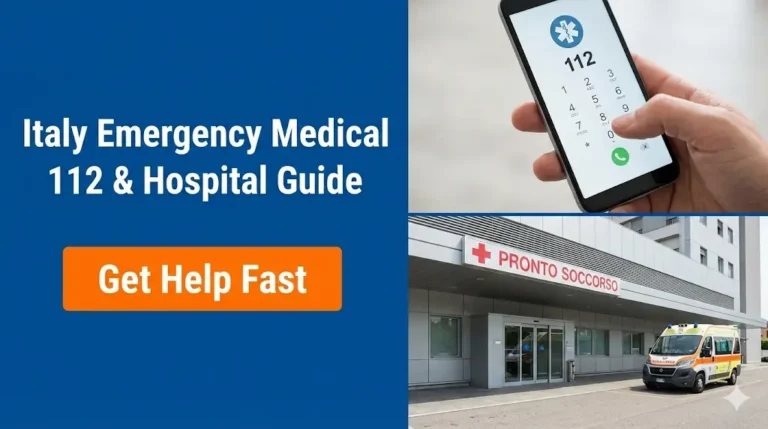
In the event of a severe accident or a sudden, critical health crisis, you must go to the emergency room, known in Italian as the Pronto Soccorso.
If you require an ambulance, you should immediately dial 112, the universal European emergency number, which can connect you to medical, fire, or police services and typically offers an English-speaking operator option. Alternatively, you can dial 118, which is the direct line for medical emergencies in Italy. For a broader overview of how to interact with these operators, be sure to review our guide on Emergency Medical Services in Italy: 112 and Hospitals.
Upon arriving at the Pronto Soccorso, you will undergo triage, where a nurse will evaluate your condition and assign you a color code that dictates your priority in the waiting room:
- Red: Immediate, life-threatening emergency. You will be seen instantly.
- Yellow: Urgent condition requiring rapid attention, but not immediately life-threatening.
- Green: Minor injuries or illnesses. You will be seen after all red and yellow codes, which can often mean waiting for several hours.
- White: Non-urgent conditions that should ideally be handled by a general practitioner. You will wait the longest and may be subject to a fee for utilizing emergency resources for a non-emergency.
Crucially, emergency care for life-threatening situations is provided free of charge to absolutely everyone in Italy, regardless of their nationality, residency status, or whether they possess health insurance.
Essential Tips for Navigating Medical Appointments
To ensure your interactions with the Italian healthcare system go as smoothly as possible, keep these practical tips in mind:
- Always Carry Your Health Card: Your Tessera Sanitaria is your passport to the medical system. You must present it at every doctor’s appointment, hospital visit, and pharmacy transaction.
- Master the Punto Giallo: When you have a specialist appointment at a public hospital, you do not usually pay the doctor directly. You must pay your co-pay (ticket sanitario) beforehand. This is often done at automated yellow kiosks located in the hospital lobbies, known as Punto Giallo machines, which accept credit and debit cards.
- Bring a Translator for Complex Issues: If you are dealing with a severe diagnosis and are visiting a public hospital where English is scarce, bring a bilingual friend or hire a professional medical interpreter to ensure you fully understand your treatment plan.
- Utilize Pharmacies for Minor Ailments: Italian pharmacists are highly trained healthcare professionals. For minor issues like seasonal allergies, a mild flu, or a rash, a visit to the local pharmacy (identified by a large, illuminated green cross) is often much faster than trying to book an appointment with your general practitioner.
- Embrace “Italian Time” with Patience: While private clinics adhere strictly to schedules, public waiting rooms operate on a more fluid timeline. It is common for general practitioners to run behind schedule. Bring a book, maintain a polite demeanor, and exercise patience.
Conclusion
Finding doctors and navigating the hospital system in Italy requires a proactive mindset, a basic understanding of local bureaucracy, and a dash of Mediterranean patience. While the initial registration processes and the reliance on centralized booking systems can feel convoluted to an expatriate, these administrative hurdles are the gateway to a deeply equitable and highly advanced medical infrastructure.
By taking the time to legally register for the national health service, carefully selecting a primary care physician, and familiarizing yourself with the distinct roles of public and private hospitals, you build a robust safety net for your new life abroad. Italy’s commitment to healthcare ensures that whether you require an emergency intervention at a world-class Policlinico or a routine consultation with a local English-speaking specialist, you will receive exceptional care. Prepare your documents, utilize the available digital tools and expat networks, and step into your Italian adventure with the confidence that your health is in excellent hands.
References
Primary sources official
- Ministero della Salute (Ministry of Health): The central government authority providing guidelines on the Servizio Sanitario Nazionale, emergency protocols, and essential levels of care. https://www.salute.gov.it/
- Agenzia delle Entrate (Italian Revenue Agency): Official portal outlining the process for obtaining the Codice Fiscale and the Tessera Sanitaria. https://www.agenziaentrate.gov.it/
Other helpful sources
- Expatica: Comprehensive guides on finding doctors, general practitioners, and understanding the CUP booking system in Italy. https://www.expatica.com/it/healthcare/
- Idealista: Detailed directories and strategies for expatriates seeking English-speaking medical professionals and utilizing embassy resources. https://www.idealista.it/en/news/
Disclaimer
The information provided in this article is for educational and informational purposes only and does not constitute official medical, legal, or financial advice. Healthcare laws, registration procedures, hospital rankings, and co-payment fees in Italy are subject to frequent changes. Always consult directly with the official Italian Ministry of Health, your local Azienda Sanitaria Locale (ASL), or a qualified medical professional for specific health concerns, emergencies, and updated administrative requirements.