Enrolling in Italy’s National Health System (SSN)
Securing Italian healthcare is a vital step for expats. This comprehensive guide explains how foreigners can register for the Servizio Sanitario Nazionale (SSN), outlines mandatory versus voluntary enrollment, details 2026 registration costs, and provides a step-by-step application walkthrough.
Disclosure: This post may contain affiliate links. We may earn a commission at no extra cost to you if you make a purchase through these links. Read full disclosure.
Introduction
The Italian national healthcare system is known as the Servizio Sanitario Nazionale, or SSN. Established to provide comprehensive medical coverage to all citizens and legal residents, the SSN operates on the principle that healthcare is a fundamental human right rather than a commercial privilege. Whether you need a routine check-up, emergency surgery, or long-term care for a chronic condition, the public system is designed to handle it either entirely free of charge or for a nominal co-payment known as a “ticket”.
As a foreigner moving to Italy, integrating into this system is not an automatic process; you must actively register. The exact path you take to enrollment depends entirely on your reasons for being in the country, your employment status, and your country of origin. For many working expats, registration is a mandatory and free process, deeply intertwined with the Italian tax system. For others, such as international students, au pairs, or retirees holding an Elective Residence Visa, accessing the SSN requires voluntary registration and the payment of a specific annual fee.
Recently, the Italian government implemented significant legislative changes that dramatically altered the financial landscape for voluntary SSN registration, making it more critical than ever to understand exactly what you owe and how to pay it before you visit the health office. This comprehensive guide is designed to demystify the entire process. We will explore the differences between mandatory and voluntary enrollment, break down the updated costs for 2026, and provide a detailed, step-by-step roadmap to obtaining your official Italian health card. By following these instructions, you can ensure that you and your family are fully protected, allowing you to enjoy your new Italian life with total peace of mind.

Understanding the Servizio Sanitario Nazionale
Before diving into the registration logistics, it is helpful to understand how the Italian healthcare system is structured. While the Ministry of Health sets the national standards and guarantees the “essential levels of care,” the actual administration of healthcare is highly decentralized.
The system is managed at the regional level by local health authorities known as ASL (Azienda Sanitaria Locale) or ATS (Agenzia di Tutela della Salute), depending on your specific region. This means that the office you visit to register, the specific forms you fill out, and even the efficiency of the service can vary depending on whether you are living in a bustling metropolis like Milan or a quiet village in Sicily.
What Does the SSN Cover
Once you are successfully registered with the SSN, your coverage is extensive. The public healthcare system generally includes:
- Primary Care: Complete access to a general practitioner (medico di base) or pediatrician for your children at no out-of-pocket cost.
- Hospitalization: Free hospital stays, inpatient treatments, and surgical procedures at public hospitals.
- Emergency Services: Free access to the Pronto Soccorso (Emergency Room) and urgent ambulance services for genuine emergencies.
- Specialist Visits and Diagnostics: Access to specialized doctors and imaging (like MRIs or blood tests) for a small, heavily subsidized co-payment (ticket sanitario).
- Prescriptions: Highly subsidized or free essential medications (Class A drugs) prescribed by your doctor.
Mandatory vs Voluntary Registration
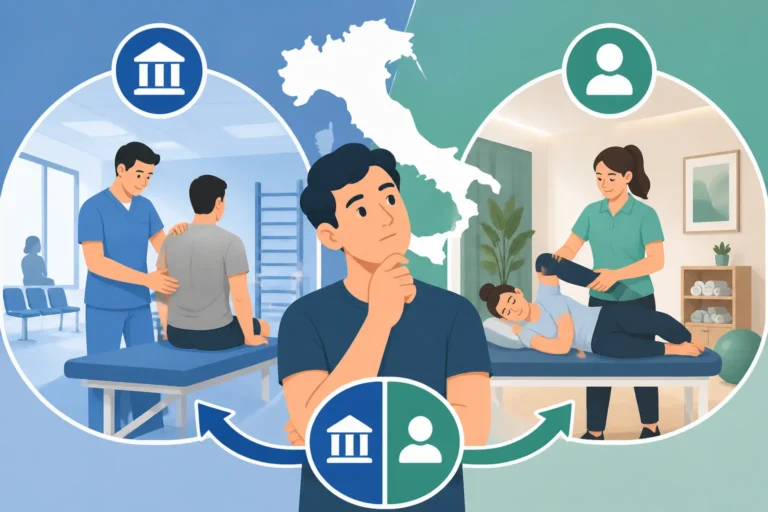
The most crucial distinction for a foreigner applying for Italian healthcare is determining whether your registration is “Mandatory” (Iscrizione Obbligatoria) or “Voluntary” (Iscrizione Volontaria). This status dictates whether your coverage is free or if you must pay an annual contribution.
Mandatory Registration Iscrizione Obbligatoria
Mandatory registration means you are legally required to be part of the SSN, and your coverage is completely free of charge at the point of enrollment. You do not pay an annual flat fee because your contributions are already being collected through your regular Italian income and payroll taxes.
You are entitled to free, mandatory registration if you fall into one of the following categories:
- You are a non-EU citizen holding a valid residence permit for subordinate work (employee) or autonomous work (freelancer/self-employed).
- You are a non-EU citizen holding a residence permit for family reasons (e.g., you are joining a spouse who is legally working in Italy).
- You are registered as legally unemployed with the local employment center (Centro per l’Impiego) and hold a valid permit allowing you to work.
- You hold a permit for asylum, subsidiary protection, or humanitarian reasons.
- You are an EU citizen legally working in Italy, or you possess an S1 form from your home country transferring your healthcare rights.
Voluntary Registration Iscrizione Volontaria
If you are residing in Italy legally but do not generate an income that is taxed by the Italian employment system, you will not qualify for mandatory registration. Instead, you must opt for voluntary registration. This is a primary avenue for many expats, particularly those who are self-sufficient.
You fall into the voluntary registration category if you are:
- A student holding a study visa/permit.
- A retiree or financially independent individual living in Italy on an Elective Residence Visa (Residenza Elettiva).
- Religious personnel.
- An au pair participating in an official cultural exchange.
- A diplomat or an employee of certain international organizations.
Voluntary registration grants you the exact same rights and level of care as mandatory registration. The only difference is how the system is funded: instead of paying through payroll taxes, you must pay a lump-sum annual fee directly to the regional health authority.
The Costs of Voluntary Registration in 2026
For many years, the cost of voluntary SSN registration was relatively low, making it an incredibly attractive option for expats. However, legislative updates implemented by the Italian government starting in 2024 significantly increased these minimum thresholds. If you are budgeting for your relocation, understanding these new costs is critical, and you may want to review our broader guide on the Cost of Healthcare in Italy: What Expats Need to Know.
Current Fee Structures
The amount you must pay depends strictly on your visa category and, in some cases, your global income:
- International Students: If you hold a study permit and do not have any dependent family members in Italy, you must pay a flat rate of €700 per year.
- Au Pairs: Individuals residing specifically on an au pair permit are subject to a flat rate of €1,200 per year.
- Elective Residence Visa Holders: For retirees and individuals of independent means, the cost is calculated based on your total global income from the previous year. The absolute minimum contribution is €2,000 per year. This minimum applies to anyone with an annual income up to €31,925.
- Higher Income Earners: If your global income exceeds €31,925, your fee increases. You will pay the base €2,000 plus an additional 4% on the income bracket between €31,925 and €51,646. The maximum possible contribution you can be charged is capped at approximately €2,788.87.
The Calendar Year Rule
One of the most important administrative quirks that expats must understand is the validity period of voluntary registration. The fee you pay covers the calendar year, meaning from January 1st to December 31st.
The Italian healthcare system does not pro-rate this fee. If you move to Italy and register in October, you must still pay the full annual fee (e.g., €700 for students or €2,000 for elective residents) for coverage that will expire just two months later on December 31st. Consequently, if you are planning a move late in the year, you might consider relying on private international health insurance for your first few months and registering for the public system in January to maximize your investment.
Step by Step Guide to SSN Registration
Registering for Italian healthcare is a highly localized process. You cannot complete this registration from your home country; it must be done in person after you arrive in Italy. Here is the step-by-step roadmap to securing your coverage.
Step 1 Obtain Your Codice Fiscale
The Codice Fiscale is your Italian tax identification number, a 16-character alphanumeric code based on your name, birthdate, and birthplace. You cannot access healthcare, sign a lease, or open a bank account without one. You can request this code through your local Italian consulate before you move, or by visiting the local Agenzia delle Entrate (Revenue Agency) upon arrival in Italy. If you are unfamiliar with this vital document, read our dedicated article: Why Codice Fiscale Is Essential for Foreigners in Italy.
Step 2 Apply for Your Residence Permit
If you are a non-EU citizen, you must apply for your residence permit within eight days of arriving in Italy. You do not need the physical plastic card to register for healthcare. The official receipt (ricevuta) you receive from the post office after mailing your application kit is legally sufficient to begin the SSN registration process. To understand the complexities of this procedure, consult our guide on the Italian Residence Permit (Permesso di Soggiorno) Explained.
If you are an EU citizen, you do not need a residence permit, but you must register your presence and official address at the local town hall’s registry office (Anagrafe) to obtain a Certificato di Residenza.
Step 3 Pay the Voluntary Contribution Fee
Note: If you are an employed worker qualifying for free mandatory registration, skip to Step 4.
If you must register voluntarily, you have to pay the annual fee before you visit the health office. This payment is typically made using a standardized tax document called a Modello F24, which you can pay at any post office or bank in Italy.
When filling out the F24 form for healthcare, you will generally use:
- Codice Regione: The specific code for your Italian region (e.g., 10 for Lombardy, 12 for Lazio).
- Codice Tributo: The tax code 8846, which specifically designates funds for the National Health Service.
- Anno di Riferimento: The current calendar year for which you are applying (e.g., 2026).
Ensure you keep the stamped receipt of this F24 payment, as it is a mandatory document for the next step.
Step 4 Visit the Local ASL Office
Locate the nearest office of your regional health authority (ASL or ATS). You need to find the specific desk labeled Scelta e Revoca (Choice and Revocation). Some regions allow you to book an appointment online, while others operate on a traditional ticketing and queue system.
You must bring a comprehensive dossier of original documents and photocopies:
- Your valid Passport or EU Identity Card.
- Your Codice Fiscale certificate.
- Your Permesso di Soggiorno (or the postal application receipt).
- Proof of your residential address in Italy (Certificato di Residenza or a signed self-declaration if allowed by your municipality).
- For mandatory registration: Your employment contract or recent pay slips.
- For voluntary registration: The stamped F24 receipt proving you paid the annual fee.
Step 5 Choose Your Doctor
During your appointment at the Scelta e Revoca desk, the clerk will present you with a list of available general practitioners (medico di base) and, if you have children, pediatricians operating in your postal code. You must select a doctor from this list. It is highly recommended to do some research beforehand or ask local expats for recommendations, particularly if you are seeking an English-speaking physician. Your assigned doctor will be your first point of contact for all medical needs and is responsible for writing referrals for specialists and diagnostic tests.
Understanding the Tessera Sanitaria
Once your registration is successfully processed, the clerk will hand you a temporary paper certificate. Do not lose this paper; it serves as your official proof of healthcare coverage and allows you to book appointments and receive subsidized medications immediately.
Within approximately 30 to 60 days, your physical plastic health card, the Tessera Sanitaria, will be mailed to your registered home address.
The Tessera Sanitaria is a dual-purpose document. The front side contains your personal details, your Codice Fiscale, and a microchip used by pharmacies to track your medical history and tax-deductible healthcare expenses. The reverse side of the card functions as the European Health Insurance Card (EHIC). This incredibly valuable feature ensures that if you travel to other countries within the European Union, the EEA, or Switzerland, you are entitled to medically necessary, state-provided healthcare under the same conditions as residents of that country.
Summary Table Registration Types and Costs
| Registration Type | Eligibility Profile | Annual Cost (2026) | Validity Period |
| Mandatory | Employees, self-employed, dependent family members, refugees. | Free (Funded via taxes) | Tied to the validity of the residence permit. |
| Voluntary | International Students without dependents. | €700 | Jan 1st – Dec 31st of the current year. |
| Voluntary | Au Pairs on cultural exchange visas. | €1,200 | Jan 1st – Dec 31st of the current year. |
| Voluntary | Elective Residence Visa holders, Retirees, Unemployed non-EU. | Minimum €2,000 (Scales up with income) | Jan 1st – Dec 31st of the current year. |
Conclusion
Registering for the Italian healthcare system as a foreigner is an undeniable bureaucratic hurdle, demanding patience, precise documentation, and a willingness to navigate local administrative offices. However, the reward for completing this process is immense. The Servizio Sanitario Nazionale provides a robust safety net that ensures you and your loved ones have access to high-quality medical care without the constant fear of exorbitant hospital bills.
Whether you are stepping into a local clinic for a routine check-up or relying on the efficiency of the Italian emergency services, being a registered member of the SSN anchors your integration into the community. By understanding your specific eligibility category, preparing for the updated costs of voluntary registration, and meticulously following the steps to secure your Tessera Sanitaria, you remove one of the most significant stressors of expatriate life. With your health coverage confirmed, you can redirect your energy toward what truly matters: embracing the vibrant culture, breathtaking landscapes, and exceptional quality of life that Italy has to offer.
References
Primary sources (official)
- Agenzia delle Entrate – Official guidelines on the issuance of the Codice Fiscale, the Tessera Sanitaria for foreign citizens, and the validity of temporary identification numbers. https://www.agenziaentrate.gov.it/
- Ministero della Salute / INMP – The National Institute for Health Migration and Poverty guide detailing the Italian National Health Service for non-EU citizens, including mandatory and voluntary registration procedures. https://www.inmp.it/
Other helpful sources
- Feather Insurance – An extensive expat guide on navigating the public healthcare system (SSN) in Italy, explaining the 2024/2026 updates to voluntary registration costs and ASL enrollment. https://feather-insurance.com/en-it/
Disclaimer
The information provided in this article is for educational and informational purposes only and does not constitute official legal, medical, or financial advice. Italian healthcare regulations, voluntary registration fees, and immigration requirements are subject to frequent legislative updates. Always consult directly with the official Italian Ministry of Health, your local ASL office, or a certified immigration professional to verify your specific eligibility, current costs, and requirements before making any financial or relocation decisions.