Availability of Gluten-Free and Special Diet Foods in Italy
Planning a trip or moving to Italy with dietary restrictions? Despite its reputation for pasta and cheese, Italy is actually a global pioneer in accommodating special diets. This comprehensive guide covers everything from celiac-safe restaurants to vegan and lactose-free dining.
Disclosure: This post may contain affiliate links. We may earn a commission at no extra cost to you if you make a purchase through these links. Read full disclosure.
Introduction
Fortunately, the reality of eating in Italy is vastly different from the carbohydrate-heavy stereotypes portrayed in foreign media. Italy is, in fact, one of the most accommodating and educated countries in the world when it comes to dietary restrictions. The Italian culinary philosophy is deeply rooted in regional traditions, relying heavily on fresh, seasonal produce, high-quality olive oil, and naturally diverse ingredients that naturally cater to a variety of diets.
Furthermore, Italy operates under strict European Union food safety and allergen labeling laws, ensuring a high degree of transparency in both supermarkets and restaurants. More importantly, the Italian approach to hospitality dictates that food is a source of joy that should be shared by everyone. Italian chefs generally take immense pride in their craft and view accommodating a dietary restriction not as a nuisance, but as a professional challenge to deliver an exceptional, safe meal. Whether you are a newly arrived expat trying to decipher supermarket labels or a tourist looking for a safe place to enjoy an authentic margherita pizza, this exhaustive guide will help you understand the widespread availability of gluten-free, vegan, lactose-free, and allergy-safe foods across the Italian peninsula.
The Gluten Free Paradise Why Italy Leads the Way
It may seem like a paradox, but the land of pasta is arguably the safest place in the world for individuals with celiac disease (known in Italian as celiachia).
The primary reason for this is statistical: Italy has one of the world’s highest rates of celiac disease, with an estimated 1.6% of the population affected by the autoimmune condition. Because of this high prevalence, the Italian medical community and the government treat celiac disease with absolute seriousness. It is not viewed as a fad diet or a lifestyle choice, but as a recognized medical condition requiring strict intervention. In recent years, Italy even passed a law mandating that children be screened for celiac disease and Type 1 diabetes to catch undiagnosed cases early.
The cornerstone of Italy’s gluten-free infrastructure is the Associazione Italiana Celiachia (AIC). Founded in 1979 by parents of celiac children, the AIC has grown into a powerful advocacy and regulatory body. The organization lobbies the government for patient rights, funds extensive medical research, and most importantly for travelers and expats, manages a rigorous certification program for the food and hospitality industry.
Financial Support for Celiac Residents The Bonus Celiachia
For expatriates planning a long-term relocation to Italy, it is crucial to understand the financial support available to residents diagnosed with celiac disease. Recognizing that a lifelong gluten-free diet is a medical necessity and that gluten-free substitute products carry a higher price tag, the Italian government, via the Servizio Sanitario Nazionale (SSN), provides a monthly financial stipend to offset these costs.
This monthly allowance, commonly referred to as the “bonus celiachia” or “buono mensile,” provides between €56 and €124 per month, depending on the patient’s age and sex.
To access this financial support, an expat must be a legal resident, possess a valid Codice Fiscale, and be formally registered with the public healthcare system. You must present an official diagnosis of celiac disease—ideally from an Italian gastroenterologist, though certified foreign diagnoses can sometimes be transcribed—to your local Azienda Sanitaria Locale (ASL). Once approved, the monthly credit is digitally loaded onto your Tessera Sanitaria (Health Card). This credit can be used specifically to purchase certified gluten-free foods, such as pasta, bread, and flour blends, at pharmacies, supermarkets, and specialized retailers. It is important to note that this allowance does not roll over from month to month, and it is strictly for residents; tourists visiting Italy are not eligible. To learn more about navigating the public health system to secure this benefit, review our guide on Healthcare in Italy: An Expats’ Guide.
Finding Gluten Free Products in Supermarkets and Pharmacies
Sourcing gluten-free groceries in Italy is incredibly straightforward. You do not need to hunt down niche health food stores; the products are ubiquitous.
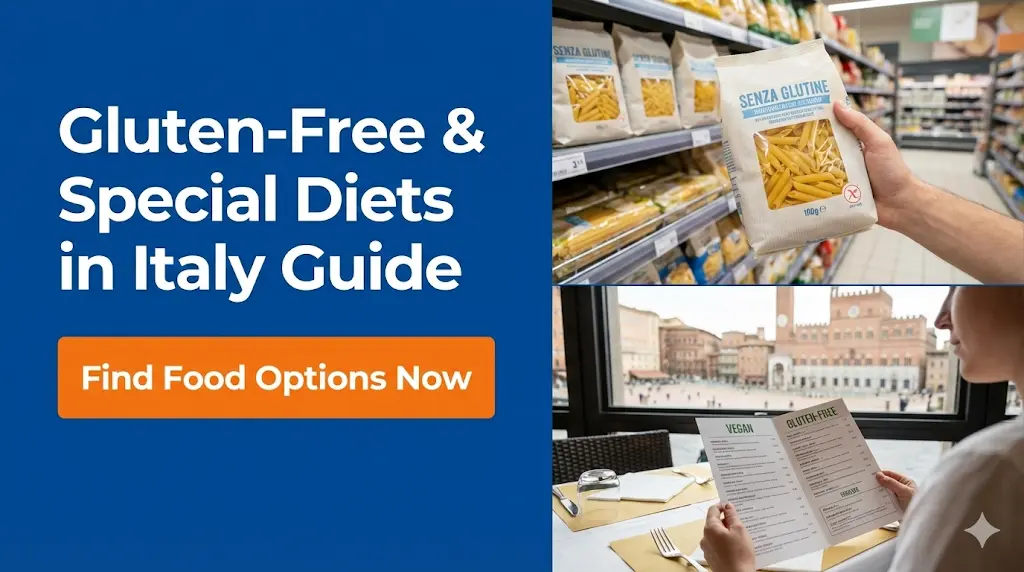
In almost every standard Italian supermarket (supermercato), you will find a dedicated aisle or section clearly marked with signs reading Senza Glutine (Without Gluten). Here, you will find high-quality gluten-free versions of Italian staples, including bronze-die extruded gluten-free pasta, pizza crusts, focaccia, cookies, and crackers.
When shopping, look for the European “Crossed Grain” symbol or the specific label indicating that the product is certified by the Italian Ministry of Health. Furthermore, European Union labeling laws strictly require any potential allergens, including wheat (grano/frumento), barley (orzo), and rye (segale), to be highlighted in bold print on the ingredient list of all packaged foods.
One aspect of Italian life that surprises many expats is the role of the pharmacy (farmacia). Because celiac disease is a medical condition, Italian pharmacies carry massive selections of specialized, premium gluten-free foods. If you are struggling to find a specific type of gluten-free flour or a safe snack, walking into a pharmacy and asking the pharmacist is often your best bet.
Dining Out Safely with Celiac Disease
Eating out in Italy as a celiac is a joyful experience rather than a stressful one. The AIC oversees the Alimentazione Fuori Casa (Eating Out) project, which certifies restaurants, pizzerias, gelato shops, and hotels that adhere to incredibly strict cross-contamination protocols.
AIC-certified restaurants typically feature separate preparation areas, dedicated fryers, and separate ovens for gluten-free pizzas to ensure absolutely no flour dust contaminates the gluten-free meals. You can easily locate these safe havens by downloading the “AIC Mobile” app. While full access is reserved for AIC members, tourists and newly arrived expats can purchase a temporary “Welcome” version of the app for a nominal fee, granting them access to the interactive map of thousands of certified venues across the country. The popular international app “FindMeGF” is also heavily populated with reviews for Italian restaurants.
When ordering, always explicitly state, “Sono celiaco/a” (I am celiac). This triggers a specific protocol in the kitchen. Even if a restaurant is not AIC-certified, stating that you have celiac disease ensures the chef understands the medical severity of your request.
Naturally Gluten Free Traditional Dishes
Beyond specialized gluten-free pasta and pizza, Italian cuisine offers a vast array of dishes that are naturally free of gluten.
- Risotto: A staple of Northern Italy, made from arborio or carnaroli rice. (Always confirm the broth used is gluten-free).
- Polenta: A comforting dish made from boiled cornmeal, often served with rich meat ragù or mushrooms.
- Farinata / Cecina / Panelle: Regional variations of a savory, naturally gluten-free flatbread or fritter made entirely from chickpea flour, olive oil, and water.
- Grilled Meats and Seafood: From Tuscan Bistecca alla Fiorentina to fresh Mediterranean catches, these are safe as long as you confirm they are not dredged in flour before grilling.
Vegan and Vegetarian Food Availability
Italy has a long, historical relationship with plant-based eating. The foundation of the Mediterranean diet relies heavily on fresh vegetables, legumes, olive oil, and grains. Long before veganism became a global trend, Italians were eating naturally vegan meals out of necessity and regional tradition. In fact, Italy consistently ranks as one of the most vegetarian-friendly countries in Europe.
However, it is important to clearly communicate your diet, as the concept of veganism (vegano) is slightly newer to traditional, rural trattorias than vegetarianism (vegetariano).
Traditional Vegan and Vegetarian Options
You do not always need to seek out a specialized vegan restaurant to eat well in Italy. Standard menus are packed with plant-based delights if you know what to look for.
- Antipasti (Appetizers): Start with Bruschetta al Pomodoro (toasted bread with tomatoes, garlic, and olive oil) or a platter of Verdure alla Griglia (grilled eggplant, zucchini, and peppers).
- Primi (First Courses): It is vital to know that dried pasta (like spaghetti, penne, and rigatoni) is generally vegan, made only from durum wheat semolina and water. However, fresh pasta (like tagliatelle, ravioli, or tortellini) is almost always made with eggs (uova). Excellent vegan pasta dishes include Spaghetti aglio, olio e peperoncino (garlic, oil, and chili), Penne all’arrabbiata (spicy tomato sauce), and simple Pasta al pomodoro. Hearty legume soups, such as Pasta e fagioli (pasta and beans), are incredibly satisfying, though you must always ask if the chef used a meat broth (brodo di carne) or added pancetta/lard for flavoring.
- Secondi (Second Courses) & Contorni (Sides): Italian menus rarely feature “fake meats.” Instead, a vegan might order several contorni, such as Carciofi alla Romana (Roman-style artichokes cooked in oil and herbs), Caponata (a sweet and sour Sicilian eggplant stew), or Fagioli all’uccelletto (Tuscan white beans in tomato and sage).
- Pizza: The most authentic Neapolitan pizza, the Pizza Marinara, is naturally vegan and dairy-free. It is topped simply with a rich tomato sauce, fresh garlic, oregano, and extra virgin olive oil. For vegetarians, the classic Pizza Margherita is widely available and universally beloved.
In major metropolitan areas like Rome, Milan, Florence, and Turin, the dedicated vegan restaurant scene is booming. You will find entirely plant-based eateries offering everything from raw vegan dining to masterful, cruelty-free recreations of traditional dishes like Carbonara using smoked tofu and specialized plant creams.
Navigating Lactose Intolerance and Dairy Free Diets
For those who are lactose intolerant (intollerante al lattosio) or following a strict dairy-free diet, Italy might seem intimidating due to its famous cheeses and gelatos. However, lactose intolerance is a common and well-understood condition among the Italian population.
Supermarket and Cafe Availability
If you are buying groceries, Italian supermarkets offer a vast array of dairy-free and lactose-free options. Look for products labeled Senza Lattosio (Lactose-Free) or Senza Latte (Dairy-Free/Without Milk). You will easily find lactose-free milk, butter, and mozzarella. For plant-based alternatives, soy milk (latte di soia), oat milk (latte di avena), and almond milk (latte di mandorla) are standard.
When ordering your morning cappuccino at a local bar, you can simply ask for a cappuccino con latte di soia or avena, as most cafes now stock plant-based milks to accommodate modern dietary trends.
The Secret of Aged Cheeses
If you suffer from a mild lactose intolerance rather than a true dairy allergy, you may be surprised to find that you can safely consume certain Italian cheeses. Authentic, long-aged cheeses like Parmigiano-Reggiano (aged for 24 to 36 months) and aged Pecorino are naturally virtually lactose-free. During the extensive aging process, the bacteria consume the lactose sugars, rendering the final product easily digestible for many people who normally struggle with dairy.
Dairy Free Gelato
You do not have to skip Italy’s most famous dessert. When visiting a gelateria, look for the sorbetto (sorbet) section. Fruit flavors like lemon (limone), strawberry (fragola), and melon (melone) are traditionally made with just fruit, sugar, and water. Furthermore, many artisanal gelato shops offer a rich, decadent dark chocolate flavor (cioccolato fondente) that is completely dairy-free. Always ask the server to confirm: “È senza latte?” (Is it without milk?).
Managing Food Allergies and Intolerances
If you suffer from severe food allergies—such as allergies to peanuts, tree nuts, shellfish, or soy—dining out requires a higher level of vigilance, but the Italian legal framework is designed to protect you.
EU Allergen Labeling Laws
Italy strictly enforces the European Union Directives regarding food labeling. Under these laws, the 14 major food allergens must be clearly declared to the consumer. These allergens include celery, cereals containing gluten, crustaceans, eggs, fish, lupin, milk, molluscs, mustard, peanuts, sesame, soybeans, sulfur dioxide and sulphites, and tree nuts.
In Italian supermarkets, you must read the ingredient labels carefully. Potential allergens will be highlighted in bold text. You should also look for cross-contamination warnings, which will read può contenere tracce di… (may contain traces of…) or prodotto in uno stabilimento dove si lavora anche con… (produced in a facility that also processes…).
In restaurants, the law dictates that allergen information must be made available to the patron. Many restaurants feature a numbering system at the bottom of their menus. Next to each dish, you will see small numbers (e.g., 1, 3, 7) that correspond to the specific allergens present in that meal. If a menu does not have this, the restaurant is legally required to provide a physical “allergen register” (registro degli allergeni) upon request, detailing exactly what is in every dish they serve.
Specific Allergy Concerns
- Tree Nuts: Pine nuts (pinoli) are the base ingredient for traditional Genovese Pesto, so those with nut allergies must avoid this sauce. Additionally, cross-contamination is a significant risk in bakeries and gelato shops, as almonds (mandorle), hazelnuts (nocciole), and pistachios (pistacchi) are heavily used in Italian desserts.
- Lupin: Lupin flour (farina di lupini) is sometimes used as a substitute or additive in commercial baked goods in Europe. If you have a peanut allergy, you may also react to lupin, so check bread labels carefully.
Emergency Preparedness
If you have an anaphylactic allergy, you must always carry your epinephrine auto-injectors (such as an EpiPen) with you at all times. You cannot purchase an EpiPen over the counter in Italy; it requires a local medical prescription from an Italian doctor (the Italian equivalents are brand names like FastJekt or Jext). If you experience a severe allergic reaction while in Italy, do not hesitate—call 112, the universal European emergency number, to dispatch an ambulance immediately. For a complete overview of what to do in a crisis, review our guide on Handling a Medical Emergency During an Italy Vacation.
Useful Italian Vocabulary for Dietary Restrictions
Clear communication is your best defense against accidental exposure. While many hospitality workers in major tourist centers speak English, speaking Italian ensures there is absolutely no misinterpretation of your medical needs. It is highly recommended to carry a professionally translated allergy card (such as those provided by organizations like Equal Eats) to hand directly to the chef.
Refer to this table for essential vocabulary to memorize or save on your smartphone:
| English Phrase | Italian Translation | Pronunciation Guide |
| I have celiac disease. | Sono celiaco (male) / Sono celiaca (female) | SO-no che-LEE-ah-co/ca |
| Gluten-free, please. | Senza glutine, per favore. | SEN-tsa GLOO-tee-neh |
| I am a vegetarian. | Sono vegetariano/a. | SO-no veh-jeh-tah-ree-AH-no/na |
| I am a vegan. | Sono vegano/a. | SO-no veh-GAH-no/na |
| I am lactose intolerant. | Sono intollerante al lattosio. | SO-no in-tol-ler-AHN-teh al lat-TOH-zee-o |
| I am allergic to… | Sono allergico/a a… | SO-no al-LER-jee-co/ca ah… |
| …peanuts / tree nuts. | …alle arachidi / alla frutta secca. | …ah-leh ah-RAH-kee-dee / ah-lah FRU-tah SEK-kah |
| Is it without dairy/milk? | È senza latticini/latte? | Eh SEN-tsa lat-tee-CHEE-nee / LAH-teh? |
| Does this contain meat/eggs? | Contiene carne/uova? | Con-tee-EH-neh CAR-neh / WOH-vah? |
| May contain traces of… | Può contenere tracce di… | Pwoh con-teh-NEH-reh TRAH-cheh dee… |
Conclusion
The thought of traveling or moving to a foreign country with strict dietary requirements can undoubtedly cause apprehension. However, Italy stands out as a shining example of how a country can fiercely protect its traditional culinary heritage while simultaneously embracing modern nutritional science and inclusivity.
From the robust legal frameworks and government stipends protecting celiac residents to the inherent, plant-forward beauty of the Mediterranean diet that caters naturally to vegans and vegetarians, Italy is a haven for mindful eaters. By familiarizing yourself with the EU allergen labeling laws, downloading the essential AIC apps, and learning a few key Italian phrases, you remove the stress from the dining table. Food is the vibrant, beating heart of Italian culture, and the country’s hospitality industry is more than equipped to ensure that you, regardless of your dietary restrictions, have a seat at the table to enjoy it safely and deliciously.
References
Primary sources (official)
- Ministero della Salute (Ministry of Health): The official governmental portal detailing national food safety laws, EU allergen regulations, and the “bonus celiachia” SSN provisions. https://www.salute.gov.it/
- Associazione Italiana Celiachia (AIC): The definitive national authority on celiac disease in Italy, managing restaurant certifications, medical research, and the essential AIC Mobile app. https://www.celiachia.it/
Other helpful sources
- Food Allergy Italia: A national non-profit organization dedicated to advocating for food allergy sufferers, providing extensive translation resources and travel advice for Italy. https://www.foodallergyitalia.org/
Disclaimer
The information provided in this article is intended for general educational and informational purposes only and does not constitute official medical advice, dietary diagnosis, or legal guidance. Food manufacturing processes, restaurant protocols, and regional government policies regarding celiac stipends are subject to change. Always consult directly with a licensed healthcare professional regarding your specific medical needs, and clearly communicate your severe allergies or dietary restrictions to restaurant staff and management before consuming any food or beverage. In the event of a severe allergic reaction, such as anaphylaxis, dial the universal European emergency number 112 immediately to dispatch medical assistance.