Delivery Day in an Italian Building: Narrow Streets, Lifts, and Permits
So, you’ve secured your dream apartment in Italy – maybe a charming place in a centro storico with a balcony overlooking a bustling piazza, or a cozy flat in a quieter neighborhood. You've navigated the tricky waters of Italian rental contracts, secured your Codice Fiscale, and now the big day approaches: delivery day. This, my friends, is where the real fun, or rather, the real sfida (challenge), begins. Forget the smooth, wide roads and spacious service entrances you might be used to; moving your precious belongings into an Italian building often requires a blend of meticulous planning, endless patience, and perhaps a touch of old-school Italian ingenuity. This guide is here to walk you through the peculiar, sometimes maddening, but always memorable journey of getting your life delivered to your new Italian home.
Disclosure: This post may contain affiliate links. We may earn a commission at no extra cost to you if you make a purchase through these links. Read full disclosure.
The Italian Delivery Dilemma: Why Moving Day Isn't a Breeze
The romance of Italian architecture is undeniable – those ancient stone buildings, winding cobbled streets, and hidden courtyards. But when it comes to logistics, especially moving large furniture or countless boxes, this very charm can become your biggest headache. Italy’s infrastructure, particularly in older cities and towns, simply wasn’t designed for modern, large-scale deliveries. This creates a unique set of obstacles that expats often find themselves unprepared for, leading to delays, unexpected costs, and a good deal of stress.
Navigating the Strade Strette (Narrow Streets)
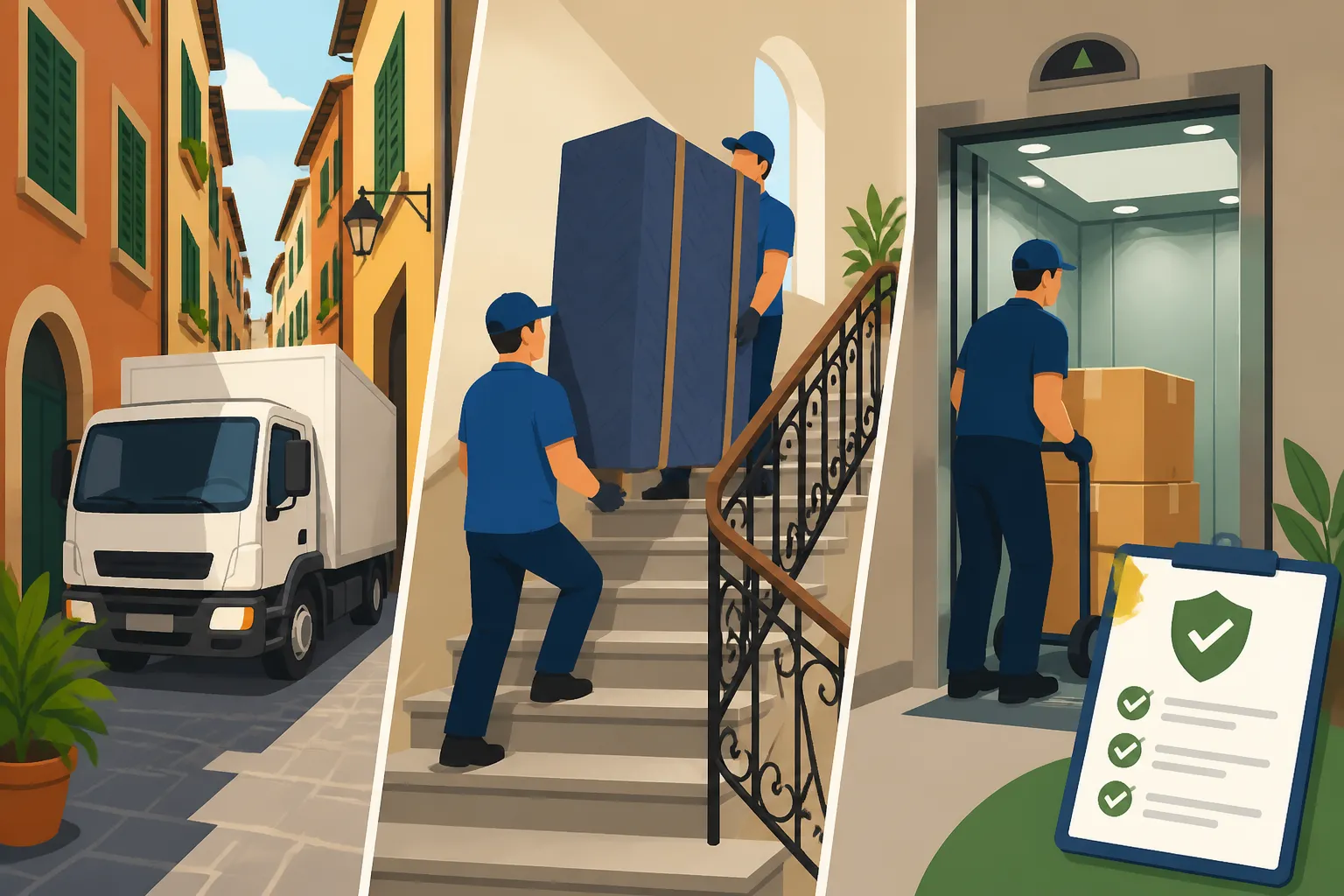
One of the first things you'll notice (if you haven't already from your apartment hunting adventures) is how incredibly narrow many Italian streets are. We're not talking about quaint little alleyways only; even main thoroughfares in historic districts can be a tight squeeze for anything larger than a compact car. Imagine a standard international removal truck, typically quite sizable, attempting to navigate these medieval pathways. It's often a scene straight out of a comedy, except you're living it.
Many Italian cities, like Florence, Bologna, or even parts of Rome, have strict Zone a Traffico Limitato (ZTLs), which are limited traffic zones designed to preserve historic centers. These zones restrict vehicle access during certain hours, and often require special permits to enter at all. A foreign moving company might not be fully aware of these local nuances, or even if they are, securing the necessary permits for a large vehicle can be a bureaucratic nightmare. I've heard stories of trucks having to unload blocks away, with movers manually carrying everything through pedestrian-only areas, adding hours, and sometimes days, to the process. This is precisely why finding a mover with local Italian expertise, easily found through platforms like Sirelo, is non-negotiable. They understand that a straightforward delivery in your home country is a tactical operation here.
The "Tiny Lift" and "Staircase Struggle" Reality
Once the truck does manage to get close, the next hurdle awaits: your building itself. If you're coming from a country where apartment buildings often have spacious service lifts or wide, straight stairwells, prepare for a cultural shock. Italian apartment buildings, especially older ones, are notorious for their compact design. The lifts (if they exist at all!) are typically small – often barely big enough for two people and a couple of shopping bags, let alone a sofa. I recall a friend trying to get her American queen-sized mattress into her Roman apartment; it took four movers, a temporary scaffolding from the outside, and an entire afternoon of her life.
And if there's no lift, or it's simply too small, you're looking at a staircase struggle. Italian staircases often twist and turn in tight spirals, with irregular steps and low ceilings. These architectural marvels are beautiful to admire but a true challenge for moving furniture. Items might need to be hoisted by ropes, carefully maneuvered at awkward angles, or even disassembled and reassembled on site. This isn't just a matter of effort; it's a risk to your furniture, the building's walls, and the movers' backs! This is why a detailed pre-move survey is critical, so your chosen mover, ideally one you vetted through Sirelo, can anticipate these specific challenges.
Bureaucracy and Permessi: The Hidden Hurdles
Ah, permessi. The word alone can send shivers down an expat’s spine in Italy. To put it simply, if your moving truck or an external lift needs to occupy public space – be it a parking spot, a sidewalk, or even a section of the street – you’ll need an occupazione suolo pubblico permit. In many historic centers, where space is already at a premium, this is a complex document to acquire. You might also need specific ZTL permits to allow the truck into restricted zones, and in rare cases, even a local police permit for temporary street closures, if the operation is particularly large or disruptive.
These permits aren't just a formality you grab on the day. They require applications to be submitted to the local Comune (municipality) or Polizia Locale (municipal police) weeks, sometimes even a month, in advance. The process varies significantly from one municipality to another, and often involves specific forms, fees, and detailed plans of the proposed "occupation." If you don't speak fluent Italian, navigating these administrative waters can be incredibly frustrating. Without the correct permits, you risk hefty fines, immediate cessation of the delivery, and worst of all, a huge truck full of your belongings stuck in the middle of an Italian street. Many reliable international moving companies found on Sirelo will handle this entire permit process for you, which is a massive relief.
Planning Your Italian Delivery: Essential Steps and Considerations
Moving to Italy is exciting, but don't let the romance overshadow the practicalities. A well-planned delivery day can save you significant stress, money, and time. It all starts long before the truck even leaves your old home.
Choosing the Right Moving Company: Experience Matters
This cannot be overstated: the choice of your moving company is paramount. This isn't just about getting the cheapest quote; it's about finding a company that truly understands the unique logistical landscape of Italy. A general international mover might handle the long-haul well, but if they don't have local partners or direct experience with Italian delivery challenges, you could be in for a rough ride.
Here's what to look for and what questions to ask:
- Italian Specialization: Does the company have a dedicated team or established local partners in Italy? They should be able to articulate their specific strategies for dealing with narrow streets, ZTLs, and difficult building access.
- Permit Management: Will they handle all necessary permits (like occupazione suolo pubblico and ZTL entry) on your behalf? Get this in writing. Ask about the timeline for permit applications, as this can dictate your entire moving schedule.
- Equipment: Do they have smaller vans or shuttle vehicles available for areas inaccessible by large trucks? Can they arrange for external lifts (scala aerea) if needed, and do they know how to secure the permits for those?
- Communication: Do they have English-speaking staff who can clearly explain the process and keep you informed? This is vital for complex international moves.
This is where platforms like Sirelo shine. They connect you with various international moving companies, many of whom have extensive experience with Italy. You can compare quotes, read reviews from other expats who've gone through similar moves, and specifically look for companies that highlight their Italian expertise. Don't underestimate the value of reviews; they often provide insights into how well a company handles the specific local challenges you'll face.
The Permit Predicament: Who Handles What?
The permit issue is often the biggest source of confusion and frustration. While it’s technically your responsibility as the person requesting the delivery, in practice, a good international moving company will manage this for you. However, it's crucial to clarify this upfront and understand the process.
Types of Permits You Might Encounter:
- Occupazione Suolo Pubblico: This is the most common. It allows your moving company to temporarily use public space (road, sidewalk) for their truck, an external lift, or even just for stacking boxes during loading/unloading. The cost and lead time vary wildly by Comune. For example, getting a permit in a busy area of Milan or Rome will be more complex and expensive than in a quiet provincial town.
- ZTL Access: If your apartment is within a ZTL, the moving truck will need a specific permit to enter. Some cities offer temporary ZTL permits for commercial vehicles, while others are incredibly restrictive. Again, your chosen mover should know these rules.
Timeline is Key: Start discussing permits with your moving company as soon as you book. These applications often take several weeks to process, and rushing them is a recipe for disaster. If your chosen moving company from Sirelo says they handle permits, great! But still, ask for proof of application and follow up to ensure everything is in order. A hypothetical scenario: a friend’s moving truck arrived in Florence, only to find the occupazione suolo pubblico permit hadn't been processed. They had to park several blocks away, causing a full day of delay and significantly increasing labor costs. Don't let this be you!
Assessing Your Italian Home: Access and Space
Before anything is packed, you need to be realistic about what will fit into your new Italian abode. This might sound obvious, but many expats bring oversized items that simply won't make it through Italian doorways or up staircases.
- Measure Everything: Get detailed measurements of your apartment's entrance, hallways, doorframes, and the interior of the lift (if applicable). Don't forget the height and width of stairwells, especially at turns. Send these measurements to your moving company.
- Furniture Assessment: Based on your measurements, identify any pieces of furniture that might be problematic. Can they be disassembled? Is it worth bringing that massive sectional sofa or perhaps better to sell it and buy something more appropriate for Italian spaces once you arrive? Many expats realize after the fact that their large American or Canadian furniture is simply not suited for Italian living.
- External Lift Feasibility: Discuss with your mover if an external lift (a scala aerea or montacarichi esterno) is an option. These can be incredibly useful for getting large items into upper-floor apartments when internal access is impossible. However, they require significant planning, space for the equipment, and additional permits for occupying public space. This is a common solution in cities like Naples or Palermo where buildings are tall and narrow.
Think ahead about how you'll furnish your new place. Perhaps you'll find that buying furniture in Italy is a better option for certain pieces, especially given the challenges of getting oversized items into your specific building. This way, you avoid the headache altogether and can enjoy browsing local shops once you've settled.
The Day of the Move: Tactics for Smooth Unloading in Italy
The planning is done, the permits are (hopefully) in hand, and the truck is on its way. Now it's game day. Even with the best preparation, moving day in Italy can throw curveballs. Being mentally prepared and having a few strategies up your sleeve can make all the difference.
Being Present and Prepared
It's absolutely crucial that you, or a trusted representative who speaks fluent Italian, is present on delivery day. While your moving company will have a capo squadra (team leader), your presence helps facilitate decision-making, especially if unexpected issues arise.
- Your Role as the Decision-Maker: Be prepared to make quick decisions. The street might be unexpectedly blocked, a neighbor might complain, or an item simply won't fit as anticipated. You'll need to decide on the spot: wait, reroute, disassemble, or even leave an item behind for later.
- Communicate with the Portinaio or Neighbors: If your building has a portinaio (doorman or building manager), make sure they are aware of the delivery and can assist with access to common areas, lifts, or even temporarily reserving a spot. If there's no portinaio, a polite heads-up to your immediate neighbors can go a long way in preventing complaints about noise or temporary obstructions. A small gesture, like a box of pasticcini (small pastries) for the building's residents, can smooth over a lot of potential friction.
- Essentials for the Day: Pack a "first night" box with absolute essentials: basic toiletries, medications, phone chargers, a few changes of clothes, important documents, and some snacks and water for yourself and the movers. Moving is thirsty work, and Italian shops might be closed when you need them most.
Remember, a positive attitude and a good relationship with your movers will serve you well. They're working hard in challenging conditions, and a little kindness goes a long way. This is where choosing a reputable company through Sirelo pays off, as you'll have experienced professionals who are used to these scenarios.
Dealing with Unexpected Delays and Challenges
Welcome to Italy, where flexibility is not just a virtue, but a survival skill. Despite all your planning, expect the unexpected. The local police might change their mind about a street closure, a car might be illegally parked, blocking access, or a particularly vocal nonna might decide the noise is unacceptable.
- Patience is Your Superpower: Delays are common. Take a deep breath. Getting stressed or angry won't make things move faster. Instead, focus on finding solutions with your team.
- Communication with Movers: Stay in constant communication with the capo squadra. Understand what the problem is and what steps they are taking to resolve it. If a permit issue arises, your mover, especially if they are a reputable one found on Sirelo, should have a plan B or at least the contacts to quickly resolve it with the local authorities.
- Local Solutions: Sometimes, an Italian neighbor might unexpectedly offer a solution – perhaps they know a side alley, or have a contact at the Comune. Embrace these moments of local solidarity.
- Be Realistic About Furniture: If a piece truly won't fit, don't force it. It's better to find a temporary storage solution or accept that it might need to be sold, rather than damaging the item, the building, or incurring huge additional costs for complex hoisting operations.
Unpacking and Settling In: The Aftermath
Once the last box is inside, and the movers wave arrivederci, take a moment. You've done it! The immediate aftermath is a mix of exhaustion and exhilaration.
- Initial Checks: Do a quick visual inspection of your furniture and boxes for any obvious damage. Report anything significant to your moving company immediately, following the terms of your moving contract and insurance.
- The Comfort of Home: Start with the essentials. Unpack your "first night" box, set up your bed, and get the kettle on. You've earned a moment of peace.
- Beyond the Boxes: Once you've unpacked, the real work of making Italy home begins. This includes connecting utilities, registering with your local Comune to formalize your residency, and settling into your new neighborhood. Remember, many of these processes, like setting up electricity in a new Italian apartment or understanding your new utility bills, can have their own unique Italian quirks. Don't be afraid to ask for help from expat forums or local friends.
Moving into an Italian building, especially an older one, is a rite of passage for expats. It’s a testament to your resilience and adaptability. When you're ready to make your big move, remember that choosing the right partner is key.
Making Your Move Easier with Sirelo
Navigating the unique challenges of an Italian delivery day doesn’t have to be a solo mission. This is where Sirelo truly becomes your hero. Think of them as your personal assistant for finding movers who are truly equipped for the Italian experience.
Sirelo is a platform dedicated to making international moves smoother by connecting you with trusted, professional moving companies. Here’s why it’s an invaluable resource for anyone planning a move to Italy:
- Access to Experienced Movers: Instead of sifting through countless websites, Sirelo lets you quickly find and compare international movers who have proven track records with moves to Italy. Many of these companies have established relationships with local Italian partners and understand the intricacies of strade strette, ZTLs, and the permesso system.
- Comparative Quotes: You can easily request and compare multiple quotes from different movers. This not only helps you find a competitive price but also allows you to compare services, ensuring you choose a company that offers comprehensive support for Italian deliveries.
- Verified Reviews: Sirelo hosts thousands of independent reviews from other expats. These real-world experiences offer invaluable insights into a mover's reliability and their specific handling of challenging moves, like those into historic Italian buildings. You can specifically look for reviews that mention successful deliveries in Italian cities or difficult access situations.
- Expert Guidance: The platform often provides resources and guides to help you understand the moving process, including advice on common pitfalls and how to prepare for your specific destination.
Don't leave your Italian delivery day to chance. By using Sirelo, you're empowering yourself to find a mover who isn't just transporting your belongings, but is also prepared to gracefully navigate the charming, yet challenging, realities of moving into your new home in Italy. Get a head start on your move and explore the moving companies on Sirelo today.
| Feature / Aspect | Typical International Expectation (e.g., North America) | Italian Reality (especially historic centers) | Impact on Delivery Day |
|---|---|---|---|
| Street Width | Wide, multi-lane roads, ample parking | Narrow, ancient streets; pedestrian-only zones | Large trucks may not fit; need shuttle vans; increased manual labor. |
| ZTLs (Traffic) | Rare, generally free access for vehicles | Common, strict, require specific permits (ZTL access, occupazione suolo pubblico) | Fines, delays, truck unloading far from building; complex permit acquisition. |
| Building Access | Wide entrances, spacious service lifts, large stairwells | Often narrow doorways, small or no lifts, winding staircases | Furniture might need disassembly, external lifts, manual hoisting; risk of damage. |
| Permits | Minimal (e.g., temporary parking permit) | Multiple permits needed for street occupation, ZTL entry | Weeks of advance application; potential for fines/stoppage if not secured. |
| Communication | Direct with mover | Often requires Italian proficiency for local authorities | Mover with local partners or Italian-speaking staff is essential. |
| Patience | Generally efficient, predictable timelines | Delays common, unexpected challenges frequent | Requires high degree of flexibility, patience, and contingency planning. |
Disclaimer
The information provided in this guide is intended for general informational purposes only and does not constitute legal, financial, or professional advice. While we strive to offer accurate and up-to-date information, specific circumstances can vary greatly. Always consult with relevant Italian authorities, legal professionals, or experienced moving companies for advice tailored to your individual situation. Laws and regulations in Italy are subject to change, and local municipal rules can differ significantly. We cannot be held responsible for any errors or omissions, or for any actions taken based on the information provided herein.